Tag Archives: Literature

Inteviews: 67-Year Old British Author Hilary Mantel – “Extraordinarily Probable Fiction” (NYT)

Excerpts from a New York Times interview (Feb 24, 2020):
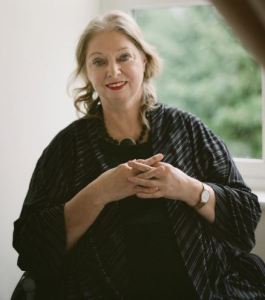
Hilary Mantel by Ellie Smith for the New York Times
“All that time I was listening to the past, and now I’m almost talking for a living,” Mantel said, “and it feels very frivolous and empty compared to the stillness that there used to be in every day.”Credit…Ellie Smith for The New York Times

“Hilary has reset the historical patterns through the way in which she’s reimagined the man,” said Diarmaid MacCulloch, an Oxford theology professor who published a new Cromwell biography in 2018. “It’s fiction which is extraordinarily probable, and it’s remarkably like the Cromwell I’d been excavating myself.”

Hilary Mantel has a recurring anxiety dream that takes place in a library. She finds a book with some scrap of historical information she’s been seeking, but when she tries to read it, the words disintegrate before her eyes.

“And then when you wake up,” she said, “you’ve got the rhythm of a sentence in your head, but you don’t know what the sentence was.”

To an unusual degree for a novelist, Mantel feels bound by facts. That approach has made her latest project — a nearly 1,800-page trilogy about the 16th-century lawyer and fixer Thomas Cromwell — more complicated than anything she’s undertaken in her four decades of writing.


Read full interview article

Reading: New York Public Library Celebrates 125 Years With “125 Books List”

New York Public Library logoThe New York Public Library is marking its 125th birthday this year—in part with this list of their favorite books written for adults from the past 125 years, which they hope will “inspire a lifelong love of reading.” 

New York Public Library Celebrates 125 Years with 125 Favorite Books List

New York Public Library Celebrates 125 Years with 125 Favorite Books List

See the full list here

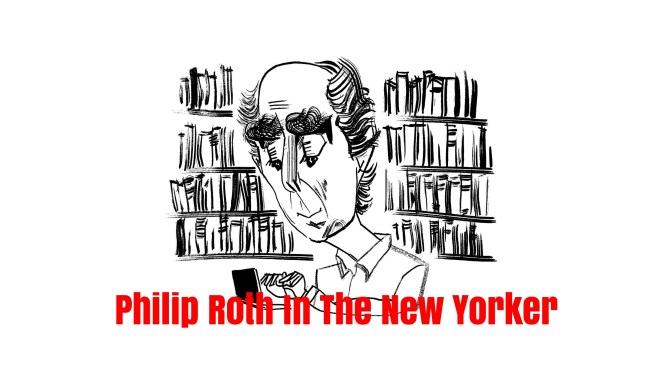
Podcasts: Playwright David Rabe Reads Philip Roth (New Yorker)

New Yorker FictionDavid Rabe joins Deborah Treisman to read and discuss “The Other Side of the Street,” by John Updike, which appeared in a 1991 issue of the magazine. 
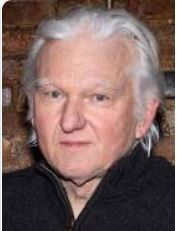
Playwright David Rabe

Rabe, a fiction writer, playwright, and screenwriter, is the author of more than a dozen plays, including the Tony Award-winning “Sticks and Bones,” “In the Boom Boom Room,” and “Hurlyburly.” He received the PEN/Laura Pels Theatre Award as a Master American Dramatist in 2014. His novels include “Recital of the Dog” and “Girl by the Road at Night.” 

Website


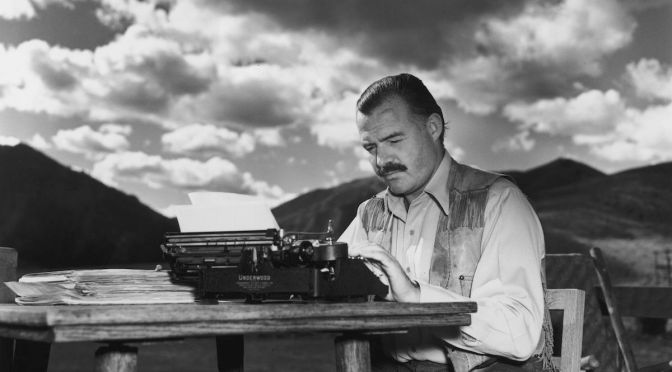
WWI Literature: A Reading Of “In Another Country” – Ernest Hemingway (1927)

“In Another Country” is a poignant short story about the casualties of war, written by Noble Prize winner Ernest Hemingway, which deals with the experiences of an injured American army officer stranded and alienated in Italy who describes in first person narrative the events and the experiences of being rehabilitated during World War 1. It is a semi-autobiographical work of fiction.

In Another Country PDF

Summary (Wikipedia)

The short story is about an ambulance corps member in Milan during World War I. Although unnamed, he is assumed to be Nick Adams, a character Hemingway made to represent himself. He has an injured knee and visits a hospital daily for rehabilitation. There the “machines” are used to speed the healing, with the doctors making much of the miraculous new technology. They show pictures to the wounded of injuries like theirs healed by the machines, but the war-hardened soldiers are portrayed as skeptical, perhaps justifiably so.

As the narrator walks through the streets with fellow soldiers, the townspeople hate them openly because they are officers. Their oasis from this treatment is Cafe Cova, where the waitresses are very patriotic.

Website

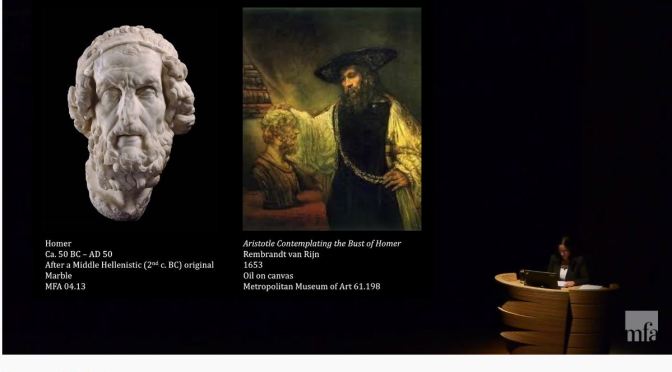
History & Literature: “Homer and the Epics”

The bard and the visual artists he inspired.

Phoebe C. Segal, Mary Bryce Comstock Curator of Greek and Roman Art

Homer is the legendary author of the Iliad and the Odyssey, two epic poems that are the central works of ancient Greek literature. The Iliad is set during the Trojan War, the ten-year siege of the city of Troy by a coalition of Greek kingdoms. It focuses on a quarrel between King Agamemnon and the warrior Achilles lasting a few weeks during the last year of the war. The Odyssey focuses on the ten-year journey home of Odysseus, king of Ithaca, after the fall of Troy. Many accounts of Homer’s life circulated in classical antiquity, the most widespread being that he was a blind bard from Ionia, a region of central coastal Anatolia in present-day Turkey. Modern scholars consider these accounts legendary.

From Wikipedia

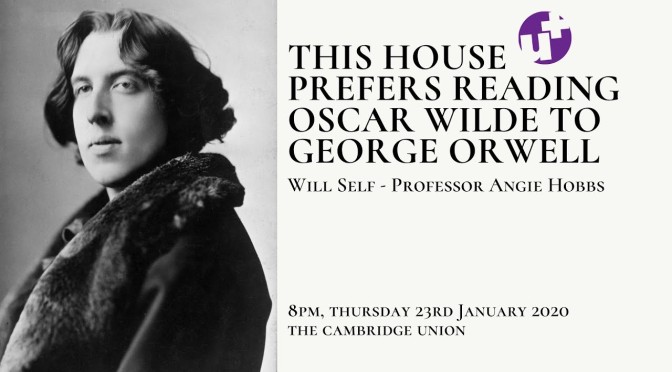
Literary Debates: “This House Prefers Reading Oscar Wilde To George Orwell” (Cambridge)

The Cambridge Union logoABOUT THE MOTION: This House Prefers Reading Oscar Wilde to George Orwell Do we prefer satire or comedy? Do we take refuge in the serious or the frivolous? Do we understand the importance of being earnest or would we rather be in room 101? These two authors demonstrate well two powerful traditions in British literature, the comic and the satirical. They both of course share in each other’s art. Some would argue that during our present global crises we should look to Orwell more than ever, others would reach for the escapism of Oscar Wilde. In a new enterprise for the Cambridge Union, we are beginning our cultural debates – and this is our first. At least for a while.
ABOUT OUR SPEAKER (Closing for the Proposition) Will Self is the author of 25 books, some of which have been translated into 25 languages. His Dorian: An Imitation is an adaptation of Oscar Wilde’s The Picture of Dorian Gray set during the AIDS crisis. He holds the Chair in Contemporary Thought at Brunel University, and lives in South London.

ABOUT OUR SPEAKER (Closing for the Abstention) Professor Angie Hobbs graduated in Classics and then a Ph.D. in Ancient Philosophy at the University of Cambridge. After a Research Fellowship at Christ’s College, she moved to the Philosophy Department at the University of Warwick. She was a judge of the Man Booker International Prize 2019 and is on the World Economic Forum Global Future Council 2018-9 for Values, Ethics and Innovation

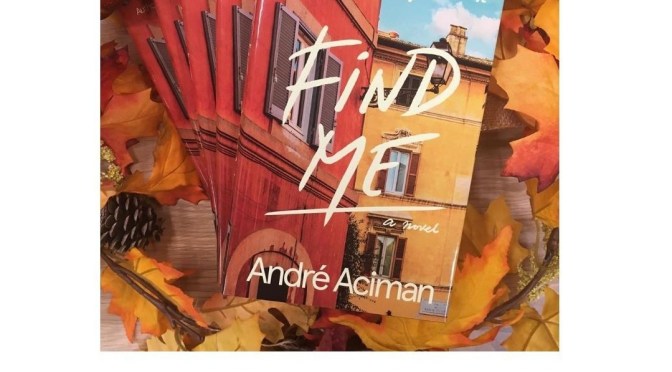
Video Interviews: 69-Year Old Professor & Author Of “Find Me”, André Aciman

André Aciman (born 2 January 1951) is an American writer. Born and raised in Alexandria, Egypt, he is currently distinguished professor at the Graduate Center of City University of New York, where he teaches the history of literary theory and the works of Marcel Proust. Aciman previously taught creative writing at New York University and French literature at Princeton and Bard College.

In 2009, he was Visiting Distinguished Writer at Wesleyan University.

He is the author of several novels, including Call Me by Your Name (winner, in the Gay Fiction category, of the 2007 Lambda Literary Award and made into a film) and a 1995 memoir, Out of Egypt, which won a Whiting Award. Although best known for Call Me by Your Name, Aciman stated in an interview in 2019 his best book to be the novel Eight White Nights.

From Wikipedia

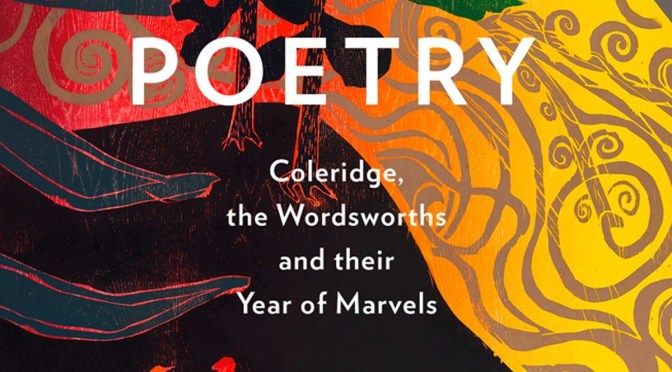
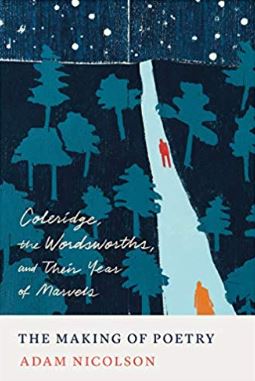
New Books: “The Making Of Poetry – Coleridge, The Wordsworths And Their Year Of Marvels”

The Making of Poetry Coleridge, The Wordsworth and Their Year of Marvels Adam Nicolson 2020 US ReleaseIn The Making of Poetry, Adam Nicolson embeds himself in the reality of this unique moment, exploring the idea that these poems came from this particular place and time, and that only by experiencing the physical circumstances of the year, in all weathers and all seasons, at night and at dawn, in sunlit reverie and moonlit walks, can the genesis of the poetry start to be understood.
June 1797 to September 1798 is the most famous year in English poetry. Out of it came Samuel Taylor Coleridge’s The Rime of the Ancient Mariner and “Kubla Khan,” as well as his unmatched hymns to friendship and fatherhood, and William Wordsworth’s revolutionary songs in Lyrical Ballads along with “Tintern Abbey,” Wordsworth’s paean to the unity of soul and cosmos, love and understanding.

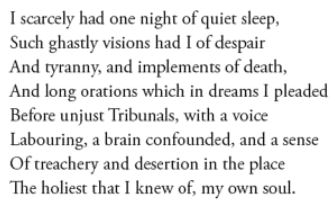
Excerpt from The Prelude by Wordsworth and Coleridge

The poetry Wordsworth and Coleridge made was not from settled conclusions but from the adventure on which they embarked, thinking of poetry as a challenge to all received ideas, stripping away the dead matter, looking to shed consciousness and so change the world. What emerges is a portrait of these great figures seen not as literary monuments but as young men, troubled, ambitious, dreaming of a vision of wholeness, knowing they had greatness in them but still in urgent search of the paths toward it.

The artist Tom Hammick accompanied Nicolson for much of the year, making woodcuts from the fallen timber in the park at Alfoxden where the Wordsworths lived. Interspersed throughout the book, his images bridge the centuries, depicting lives at the source of our modern sensibility: a psychic landscape of doubt and possibility, full of beauty and thick with desire for a kind of connectedness that seems permanently at hand and yet always out of reach.

Purchase Book

Literature: “Prometheus Unbound” By Percy Bysshe Shelley First Published 200 Years Ago In 1820

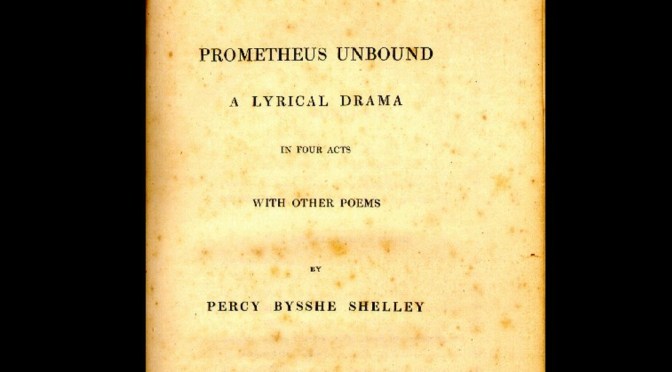
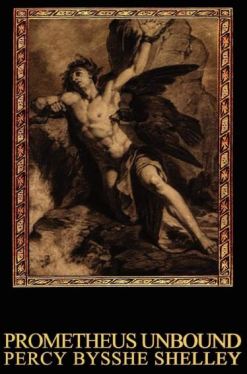
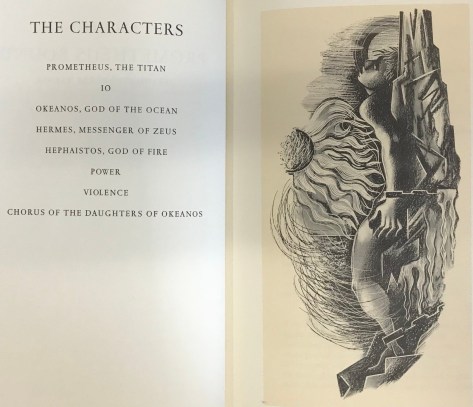
Prometheus Unbound Percy Bysshe Shelley 1820Prometheus Unbound is a four-act lyrical drama by Percy Bysshe Shelley, first published in 1820. It is concerned with the torments of the Greek mythological figure Prometheus, who defies the gods and gives fire to humanity, for which he is subjected to eternal punishment and suffering at the hands of Zeus. It is inspired by the classical Prometheia, a trilogy of plays attributed to Aeschylus. Shelley’s play concerns Prometheus’ release from captivity, but unlike Aeschylus’ version, there is no reconciliation between Prometheus and Jupiter (Zeus). Instead, Jupiter is abandoned by his supportive elements and falls from power, which allows Prometheus to be released.
Excerpt:

As you speak, your words
Fill, pause by pause, my own forgotten sleep
With shapes. Methought among these lawns together
We wandered, underneath the young gray dawn,
And multitudes of dense white fleecy clouds
Were wandering in thick flocks along the mountains
Shepherded by the slow, unwilling wind;

prometheus-unbound-percy-bysshe-shelley.jpg

Political – Prometheus, then, is also Shelley’s answer to the mistakes of the French Revolution and its cycle of replacing one tyrant with another. Shelley wished to show how a revolution could be conceived which would avoid doing just that, and in the end of this play, there is no power in charge at all; it is an anarchist’s paradise.

Shelley finishes his “Preface” to the play with an evocation of his intentions as a poet:

My purpose has hitherto been simply to familiarize the highly refined imagination of the more select classes of poetical readers with beautiful idealisms of moral excellence; aware that, until the mind can love, and admire, and trust, and hope, and endure, reasoned principles of moral conduct are seeds cast upon the highway of life which the unconscious passenger tramples into dust, although they would bear the harvest of his happiness.

From Wikipedia

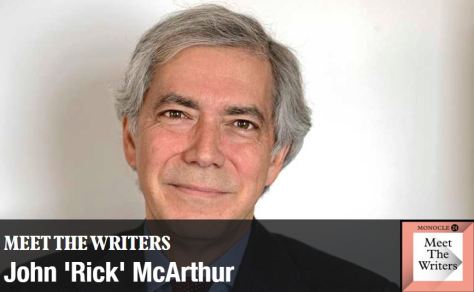
Interviews: 63-Year Old Author John ‘Rick’ MacArthur On His Book About Graham Greene

On Meet The Writers this week, Georgina Godwin talks to John ‘Rick’ MacArthur about his new book ‘Graham Greene: The Last Interview’. 

Rick is the scion of a great American philanthropic family but, in his own right, a veteran journalist, author and president of ‘Harper’s Magazine’, the second oldest continuous publication in the US. We take a look at how Graham Greene traversed the space between journalism and fiction and brought truth into sharp focus through his storytelling.

Meet The Writers John 'Rick' McArthur Monocle 24

Website