Leonardo da Vinci lived between 1452-1519. He was an Italian polymath of the High Renaissance who is widely considered one of the most diversely talented individuals ever to have lived. Performed by Chris Lines.
Tag Archives: Literature
2021 Public Domain: F. SCOTT FITZGERALD’s ‘The Great Gatsby’ (Podcast)

NPR’s Scott Simon reflects on the legacy of F. Scott Fitzgerald’s The Great Gatsby. The literary classic’s copyright expired on the first day of 2021.
The copyright on F. Scott Fitzgerald’s The Great Gatsby expired on the first stroke of 2021 and the book entered the public domain.
The classic 1925 novel of love foiled, ambitions foisted, class and betrayal sold fewer than 25,000 copies before Fitzgerald died. It has since sold nearly 30 million. I gave our daughter the copy I had in high school when she read it last year. The Great Gatsby has been turned into stage productions, an opera, five film versions, a Taylor Swift song and inspired innumerable prequels, spinoffs and variations.
In the public domain, Gatsby may now become even more familiar. Two new editions are about to come out and who knows what kind of projects — a Gatsby rom-com? Gatsby joins The Avengers? — might now get a green light, which recalls the imperishably eloquent last passage of the book: “Gatsby believed in the green light, the orgastic future that year by year recedes before us.”
Gatsby’s Jazz Age Long Island may not look like a microcosm of contemporary America. Neither does Don Quixote, The Scarlet Letter, Macbeth or Their Eyes Were Watching God. We want young readers to be able to see themselves in stories; but literature can also show us that people we don’t think are much like us at all turn out to have some of the same heart, blood and dreams. That can be the power of empathy in art.
Video Profiles: French Nobel Prize Author Albert Camus (1913 -1960)
This week, we’re putting the focus on Nobel Prize-winning French author Albert Camus. As 2020 saw France mark 60 years since his death in a car crash, Camus’s seminal work “The Plague” was unexpectedly thrust back into the spotlight by the Covid-19 pandemic.
From the UK to Japan, the 1947 novel established itself as a global sensation, topping sales charts and pushing publishers into a rushed reprint. But Camus’s prolific and multi-faceted career extends far beyond this viral hit. We tell you more about the author’s life, starting with his humble beginnings in French-ruled Algeria.
Literary Illustrators: ‘The Houses Of Sherlock Holmes’ By Matthew Rice

Dartmoor’s Baskerville Hall is one of the most famous country houses in English fiction. The arrival at its doors of Dr Watson, in the company of Sir Henry Baskerville, is a vivid piece of cinematic direction, artfully combining the Gothic horror tale with the more modern taste for detective thrillers.
Passing a ruined black-granite lodge, Watson and Baskerville go through the gates that are ‘a maze of fantastic tracery in wrought iron’ before reaching an avenue where ‘old trees shot their branches in a sombre tunnel’. The hall is a ‘heavy block’, with a projecting porch, its façade ‘draped in ivy’ within which the odd window or heraldic display can be seen.
New Periodical: “Liberties” A Journal Of Culture And Politics (Autumn 2020)
Each issue of Liberties, the Foundation’s decidedly analog quarterly publication, will feature a combination of essays from prominent writers and introduce new talent. Contributors already signed include leading voices from this country and abroad in the worlds of culture, business, entertainment, government, politics, and technology. Each edition of Liberties will also publish new poetry from both highly awarded and up-and-coming poets.
LISTEN TO INTERVIEW WITH PUBLISHER BILL REICHBLUM:
To advance independent thinking and propel new ideas, well-known figures from the worlds of arts, business, government, higher education and philanthropy today announced the formation of the Liberties Journal Foundation. Based in Washington, D.C., the Foundation is a non-partisan, not-for-profit organization that seeks to inform today’s cultural and political leaders, deepen the understanding of citizens, and inspire the next generation to participate in the democratic process and public service. The Foundation’s first initiative is a new quarterly journal, Liberties – A Journal of Culture and Politics, slated for October 2020 debut.
Founding members of the Foundation include the well-known Washington attorney, philanthropist, and former diplomat, Alfred H. Moses; chairman and CEO of cross-border trade company Quberu, Peter Bass; and, respected arts, education, and business leader, Bill Reichblum.
A book for the coat pocket, Liberties’ diverse voices celebrate one commonality: freedom of inquiry and thought.
Liberties’ editorial team reflects the mission of the Journal pairing acclaimed literary critic Leon Wieseltier as editor with Celeste Marcus, a new talent, as managing editor. Bill Reichblum is the publisher. The book will be available as a soft-cover edition, by subscription or single copy, in bookstores and online.
“The Foundation exists to meet the thirst in our country for ideas and serious thinking at a time when the daily news dominates the media and overwhelms our lives,” says Moses. “The Foundation will provide an outlet for world-renowned writers on culture and politics to reach a readership that is looking for stimulation and inspiration at a time when our lives are increasingly assailed by ephemeral trivia.”
“We believe there is a genuine need to take time to listen, to actively absorb in-depth thinking of both those with accomplished experience and the inventive new generation at the beginning of their careers,” says Reichblum. “Their creativity, insights, and perceptions can individually and collectively inspire culture and impact politics.”
New Books: ‘Billy Wilder On Assignment’ (Video)
Billy Wilder on Assignment: Dispatches from Weimar Berlin and Interwar Vienna Billy Wilder
Edited by Noah Isenberg Introduction by Noah Isenberg Translated by Shelley Frisch
Acclaimed film director Billy Wilder’s early writings—brilliantly translated into English for the first time Before Billy Wilder became the screenwriter and director of iconic films like Sunset Boulevard and Some Like It Hot, he worked as a freelance reporter, first in Vienna and then in Weimar Berlin.
Billy Wilder on Assignment brings together more than fifty articles, translated into English for the first time, that Wilder (then known as “Billie”) published in magazines and newspapers between September 1925 and November 1930. From a humorous account of Wilder’s stint as a hired dancing companion in a posh Berlin hotel and his dispatches from the international film scene, to his astute profiles of writers, performers, and political figures, the collection offers fresh insights into the creative mind of one of Hollywood’s most revered writer-directors.
Wilder’s early writings—a heady mix of cultural essays, interviews, and reviews—contain the same sparkling wit and intelligence as his later Hollywood screenplays, while also casting light into the dark corners of Vienna and Berlin between the wars. Wilder covered everything: big-city sensations, jazz performances, film and theater openings, dance, photography, and all manner of mass entertainment. And he wrote about the most colorful figures of the day, including Charlie Chaplin, Cornelius Vanderbilt, the Prince of Wales, actor Adolphe Menjou, director Erich von Stroheim, and the Tiller Girls dance troupe.
Film historian Noah Isenberg’s introduction and commentary place Wilder’s pieces—brilliantly translated by Shelley Frisch—in historical and biographical context, and rare photos capture Wilder and his circle during these formative years.
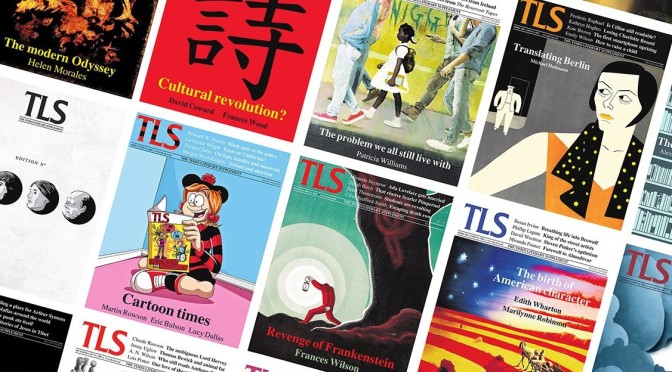
Arts & Literature: A Close Reading Of Poet Robert Frost (LRB Podcast)
In the latest episode in their series of Close Readings, Seamus Perry and Mark Ford look at the life and work of Robert Frost, the great American poet of fences and dark woods.
(August 4, 2020)
They discuss Frost’s difficult early life as an occasional poultry farmer and teacher, his arrival in England in 1912 amid the flowering of Georgian poetry, and his emergence as the first 20th-century professional poet, whose version of the American wilderness myth, full of mischief and foreboding, took him to packed concert halls and a presidential inauguration.
Best New Fiction 2020: “The Decameron Project – The New York Times Magazine”
AS THE COVID-19 PANDEMIC SWEPT THE WORLD, WE ASKED 29 AUTHORS TO WRITE NEW SHORT STORIES INSPIRED BY THE MOMENT. WE WERE INSPIRED BY GIOVANNI BOCCACCIO’S “THE DECAMERON,” WRITTEN AS THE PLAGUE RAVAGED FLORENCE IN THE 14TH CENTURY. 


Best New Fiction Books: “Shadowplay” By Joseph O’Connor – “Ingenious”
“Shadowplay” opens in Dublin in the winter of 1876, with O’Connor painting that ravishing city with a soft lyricism that Stoker himself might have envied: “Smacks heading down the estuary, trailing petticoats of nets, out towards the expanse of the sea.” Stoker, a government clerk who moonlights as a theater critic, is reeling from the visceral intensity of Irving’s performance in Dublin as Hamlet. “Eyes glowing red in the gaslight,” Irving terrifies the audience, “slinking towards the lip of the stage, left hand on hip, wiping his wet mouth with the back of his sleeve. Sneering, he regarded them. Then he spat.” (NY Times Review)
Henry Irving is Victorian London’s most celebrated actor and theater impresario. He has introduced groundbreaking ideas to the theater, bringing to the stage performances that are spectacular, shocking, and always entertaining. When Irving decides to open his own London theater with the goal of making it the greatest playhouse on earth, he hires a young Dublin clerk harboring literary ambitions by the name of Bram Stoker to manage it. As Irving’s theater grows in reputation and financial solvency, he lures to his company of mummers the century’s most beloved actress, the dazzlingly talented leading lady Ellen Terry, who nightly casts a spell not only on her audiences but also on Stoker and Irving both.
Bram Stoker’s extraordinary experiences at the Lyceum Theatre, his early morning walks on the streets of a London terrorized by a serial killer, his long, tempestuous relationship with Irving, and the closeness he finds with Ellen Terry, inspire him to write DRACULA, the most iconic and best-selling supernatural tale ever published.
A magnificent portrait both of lamp-lit London and of lives and loves enacted on the stage, Shadowplay’s rich prose, incomparable storytelling, and vivid characters will linger in readers’ hearts and minds for many years.
Novelist, screenwriter, playwright and broadcaster, Joseph O’Connor was born in Dublin. He is the author of nine novels including Star of the Sea, Ghost Light (Dublin One City One Book novel 2011) and Shadowplay (June 2019). Among his awards are the Prix Zepter for European Novel of the Year, France’s Prix Millepages, Italy’s Premio Acerbi, an American Library Association Award and the Irish Pen Award for Outstanding Achievement in Literature. His work has been translated into forty languages. In 2014 he was appointed Frank McCourt Professor of Creative Writing at the University of Limerick. Twice-Booker Prize-winner Peter Carey has written, ‘There are few living writers who can take us back in time so assuredly, through such gorgeous sentences. Joseph O’Connor is a wonder, and Shadowplay is a triumph.’
New Art Books: “Vincent’s Books – Van Gogh And The Writers Who Inspired Him”
From Hyperallergic (June 13, 2020):
In his paintings we see books on their own, or books in the company of people or other objects; small, lonely ziggurats of books, or a book beside a candle. That last juxtaposition is telling in the extreme. Vincent had a reverence for books. They were sacred ground. They have a kind of inner glow about them.
He reverenced books for their intellectual and emotional content.
He read Dickens, Carlyle, Flaubert, Balzac, Maupassant, and Zola in the original. Dickens and Carlyle were never very easy to read, then or now, but this Dutchman did so. He even read English poetry – John Keats, for example.