


‘A novelist is condemned to produce a succession of novelties, new names for characters, new incidents for his plots, new scenery,’ reflects the beleaguered hero of The Ordeal of Gilbert Pinfold, Evelyn Waugh’s portrait of the artist as a middle-aged car crash.


In 1958, a Cambridge don called Frederick J. Stopp produced a study of Waugh – uniquely, Waugh himself gave ‘generous assistance’ – which warmly endorsed the idea that he had basically ‘two books in his armoury’, the first featuring the ‘contrast between sanity and insanity’ and the second ‘sanity venturing out into the surrounding sphere of insanity, and defeating it at its own game’.
Whether this particular dualism had Waugh’s approval is unclear, but either way it doesn’t seem entirely satisfactory since the two alternatives look like variants of the same thing. Less well-disposed readers have thought that Waugh’s books divided on much more rudimentary lines: the good ones, which are funny, and the bad ones, which are pious.
There is the string of brilliant, brittle social comedies in the 1930s, and then there is whatever started happening with the publication in 1945 of Brideshead Revisited. Stopp reported, presumably with his master’s sanction, that ‘Mr Waugh’s reputation among the critics has hardly yet recovered from the blow.’ Brigid Brophy had the best joke: ‘In literary calendars, 1945 is marked as the year Waugh ended.’

/https%3A%2F%2Fdev.lareviewofbooks.org%2Fwp-content%2Fuploads%2F2023%2F07%2FQJ_LARB.jpg)
ON AN UNUSUALLY rainy evening in Los Angeles this March, at the Thomas Mann House in Pacific Palisades, two investigative reporters from Germany gave a talk about a financial scandal known as “cum-ex.” Against the backdrop of a mid-century modern terrace, its polished cement looking dull and gray in the storm, the pair flashed through a series of slides about international tax embezzlement.
A relatively small drip of funds from the German cultural ministry sometimes supports talks like these in the name of Mann’s legacy. When the capital of German literary life was exiled to Los Angeles around the Second World War, the author built a home that now still hosts salons in the name of democratic cultural exchange.
/https%3A%2F%2Fdev.lareviewofbooks.org%2Fwp-content%2Fuploads%2F2023%2F07%2FGhetto-Fights.jpg)
THE YEAR WAS 1971, the place Łódź. Journalist Hanna Krall was interviewing a pioneering heart surgeon named Jan Moll. The good doctor, apparently unhappy with the outcome of previous interviews, told Krall that everything journalists ever wrote about medicine was nonsense. So, if she wanted to avoid doing the same, he strongly suggested she have her article vetted by a certain cardiologist, a Dr. Edelman, who, said Moll, would correct her mistakes. Krall agreed and arranged a meeting. She sat down with Marek Edelman in the Grand Hotel café, where it took 15 minutes for him to read through her article.

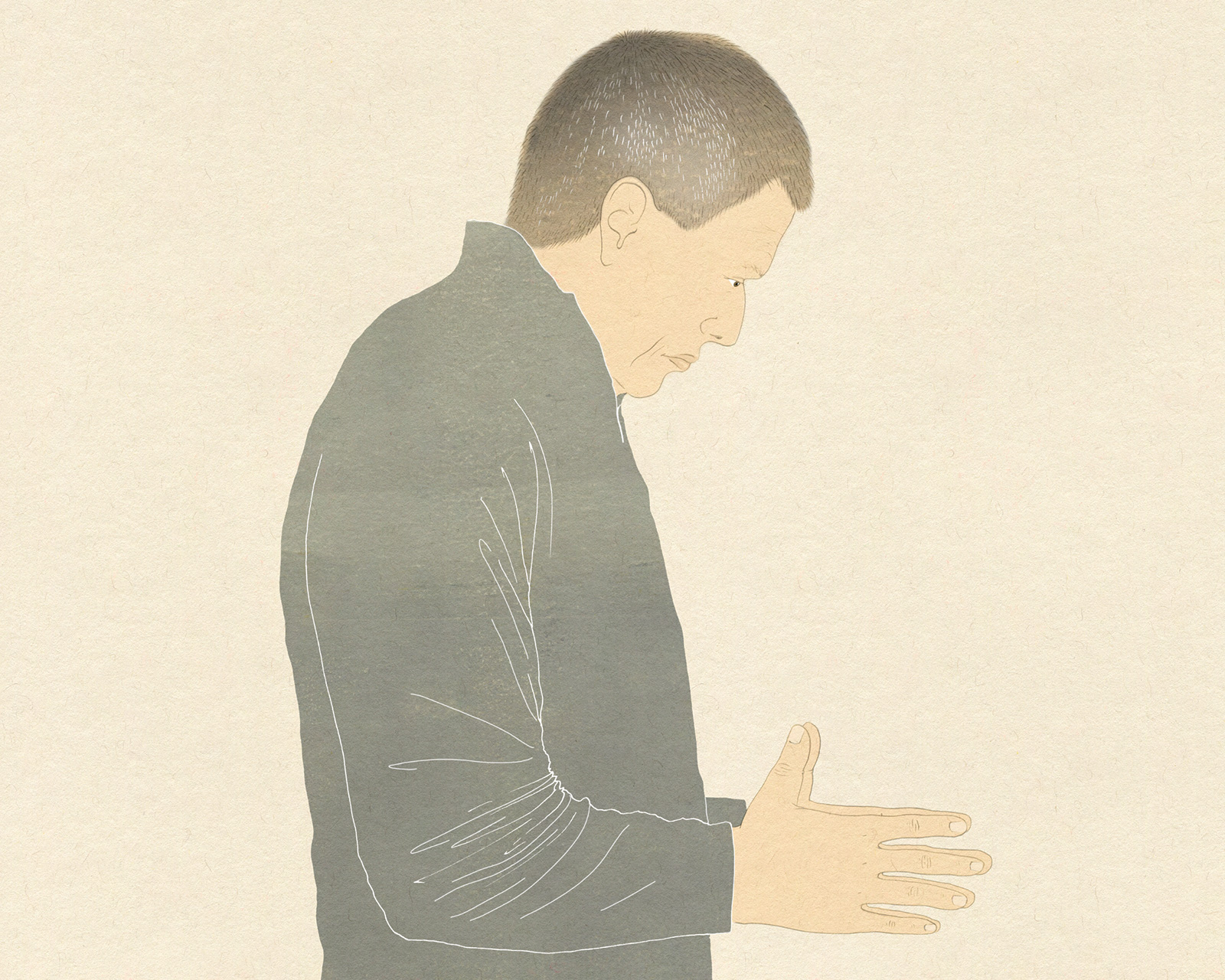
Emmanuel Carrère’s new book, Yoga, has been the subject of gossipy debate about its veracity, but it is seductively open about its own anxiety as a work of fiction.

Johannes Vermeer, one of the most intimate and quiet of artists, who is celebrated for the silence and light of his paintings, has become, paradoxically, a crowd-pleaser.
Johannes Vermeer: Faith, Light and Reflection by Gregor J.M. Weber
Vermeer and the Art of Love by Aneta Georgievska-Shine
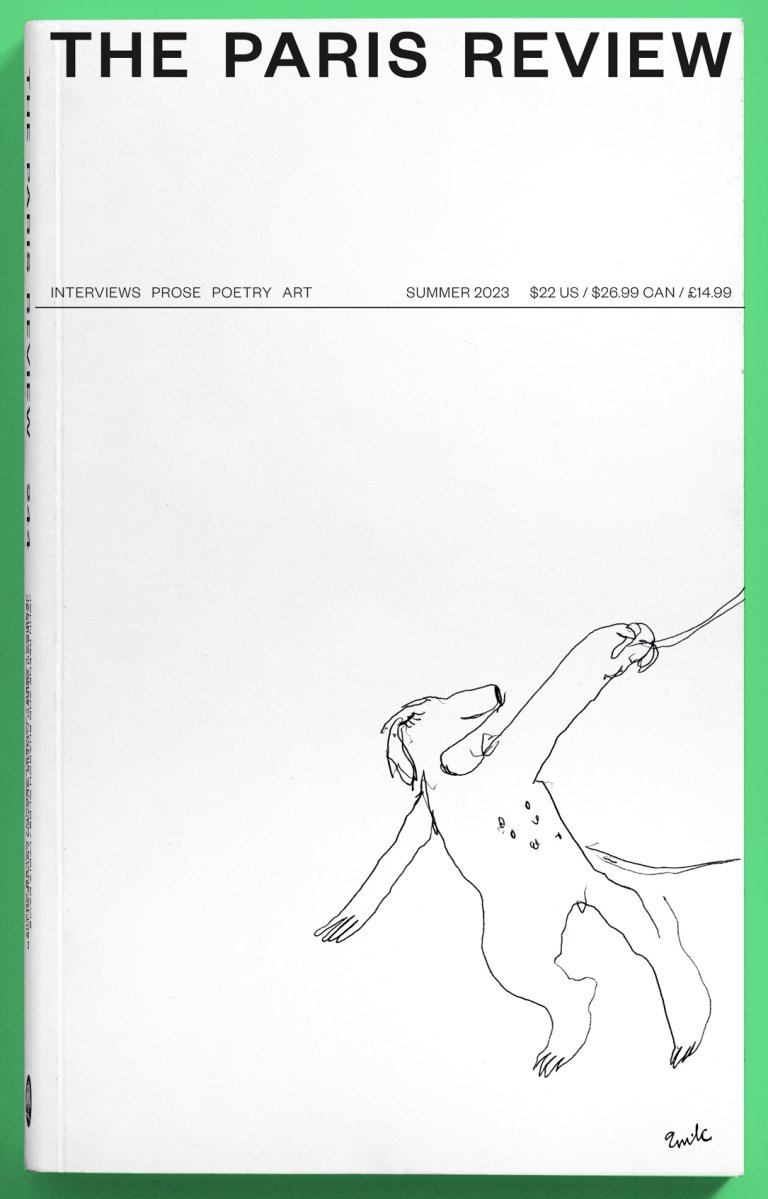

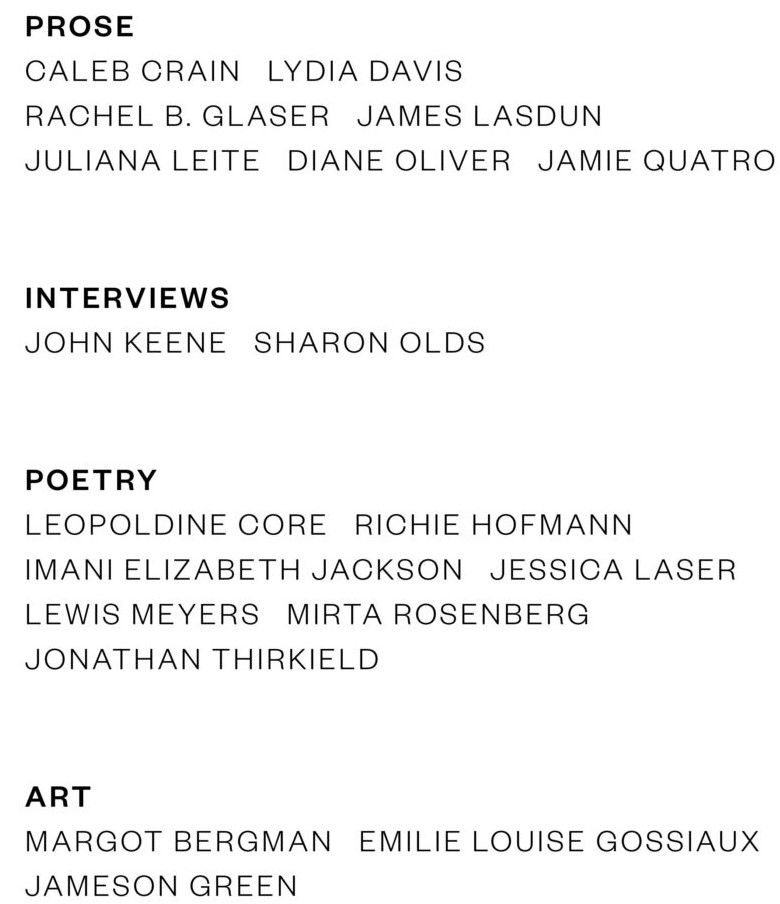
In the issue, Lydia Davis shares selections from her 1996 journal, and they often read like warm-up scales for her exquisitely off-kilter stories. (“For lunch—a huge potato and a glass of milk.”) You’ll also find masterful uses of the diary as a fictional device. The Brazilian writer Juliana Leite’s “My Good Friend,” translated by Zoë Perry, is an elderly widow’s apparently unremarkable Sunday-evening entry—“About the roof repair, I have nothing new to report”—that turns into a story of mostly unspoken decadeslong love. And James Lasdun’s “Helen” features excerpts from the journal of a woman who lives in what the narrator describes as a “state of incandescent, almost spiritual horror,” and whose crippling self-consciousness doesn’t protect her from humiliations the reader can see coming.
Also in issue no. 244, John Keene, in an Art of Fiction interview with Aaron Robertson, describes how blogging heralded his recovery as a writer after losing drafts of several of the stories that eventually became Counternarratives. And Sharon Olds, in an Art of Poetry interview, tells Jessica Laser about the need to keep one’s art and biography separate, especially when they are clearly not. Keeping a diary might be therapeutic, Olds explains, but “writing a poem to understand yourself better would be like making a cup with no clay, or maybe like having the clay but not making the cup.” She concludes, “If I had to choose between a poem being therapeutic and it being a better poem, I’d want it to be a better poem.”

Index, A History of the: A Bookish Adventure from Medieval Manuscripts to the Digital Age by Dennis Duncan
In his new history of the index, Dennis Duncan traces its evolution through the constantly changing character of reading itself.
In 1941 an ambitious Philadelphia pediatrician, the wonderfully named Waldo Emerson Nelson, became the editor of America’s leading textbook of pediatrics. For the next half-century the compilation of successive editions of this large volume advanced his career, consumed his weekends, and encroached heavily on his domestic life.
By Steve Coll
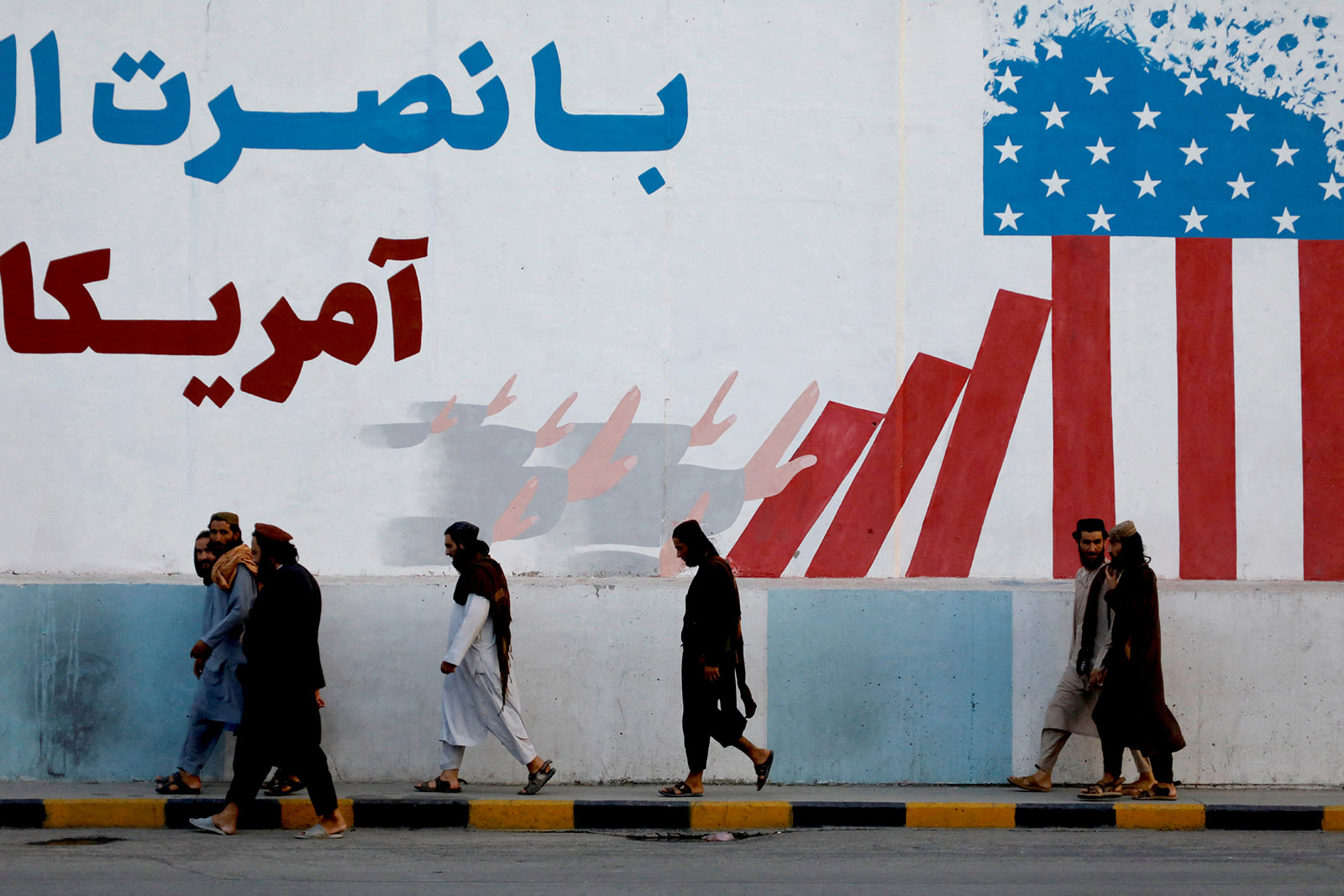
The Return of the Taliban: Afghanistan After the Americans Left by Hassan Abbas
Hassan Abbas’s book surveys the second Islamic Emirate’s ideology and leading personalities and probes its internal tensions.
Nearly two years after the Taliban’s return to power in Kabul, the UN refers to the regime only as “the de facto authorities,” to avoid any hint of formal recognition of the Islamic Emirate of Afghanistan, as the Taliban call their government. By any name, the Taliban today control Afghanistan’s territory, as well as federal ministries and local administrations. They also preside over a nation in severe crisis. Food insecurity haunts at least half of the population; a country shattered by more than four decades of war again faces the shadow of famine.
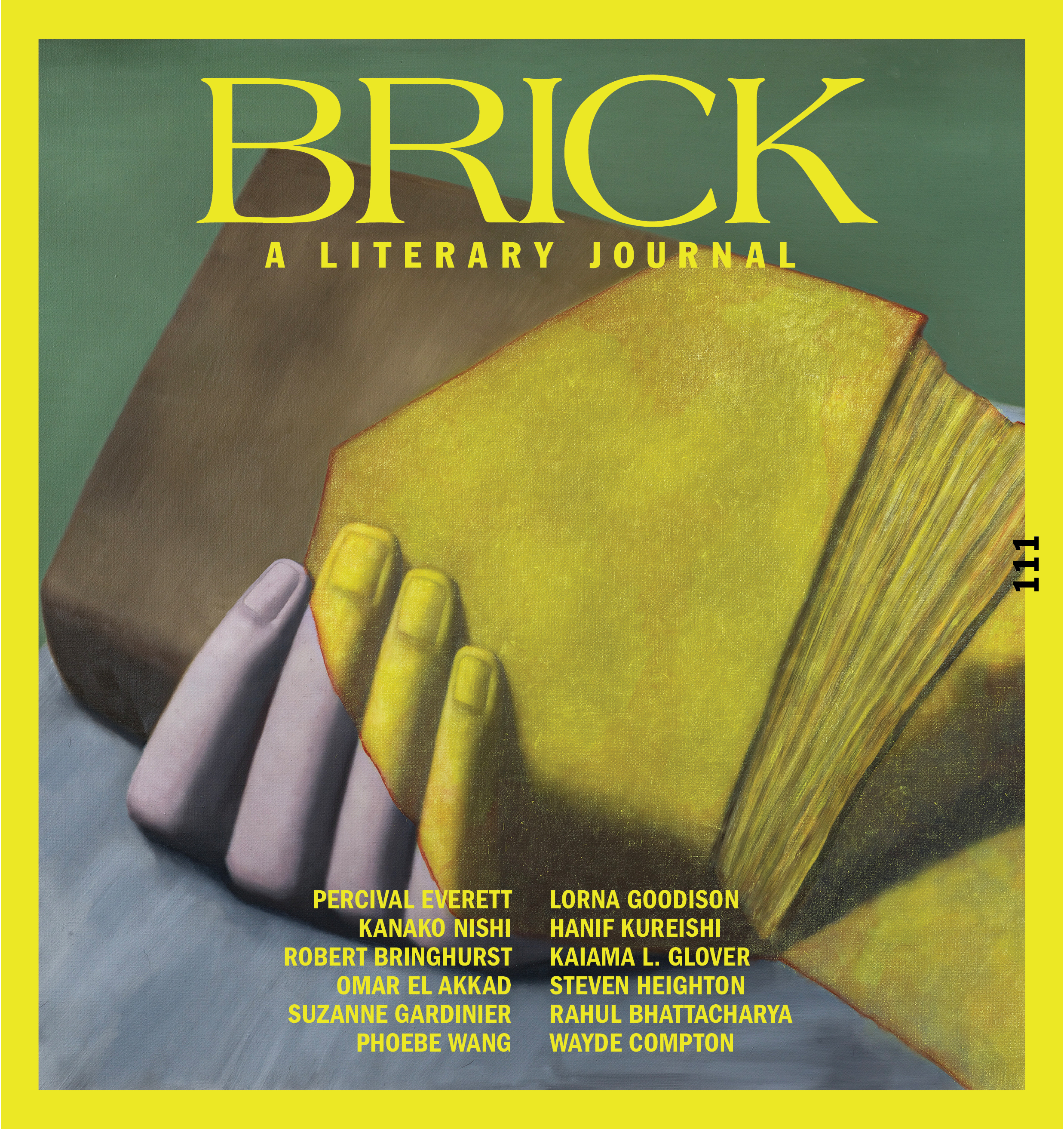

BRICK LITERARY JOURNAL (SUMMER 2023)
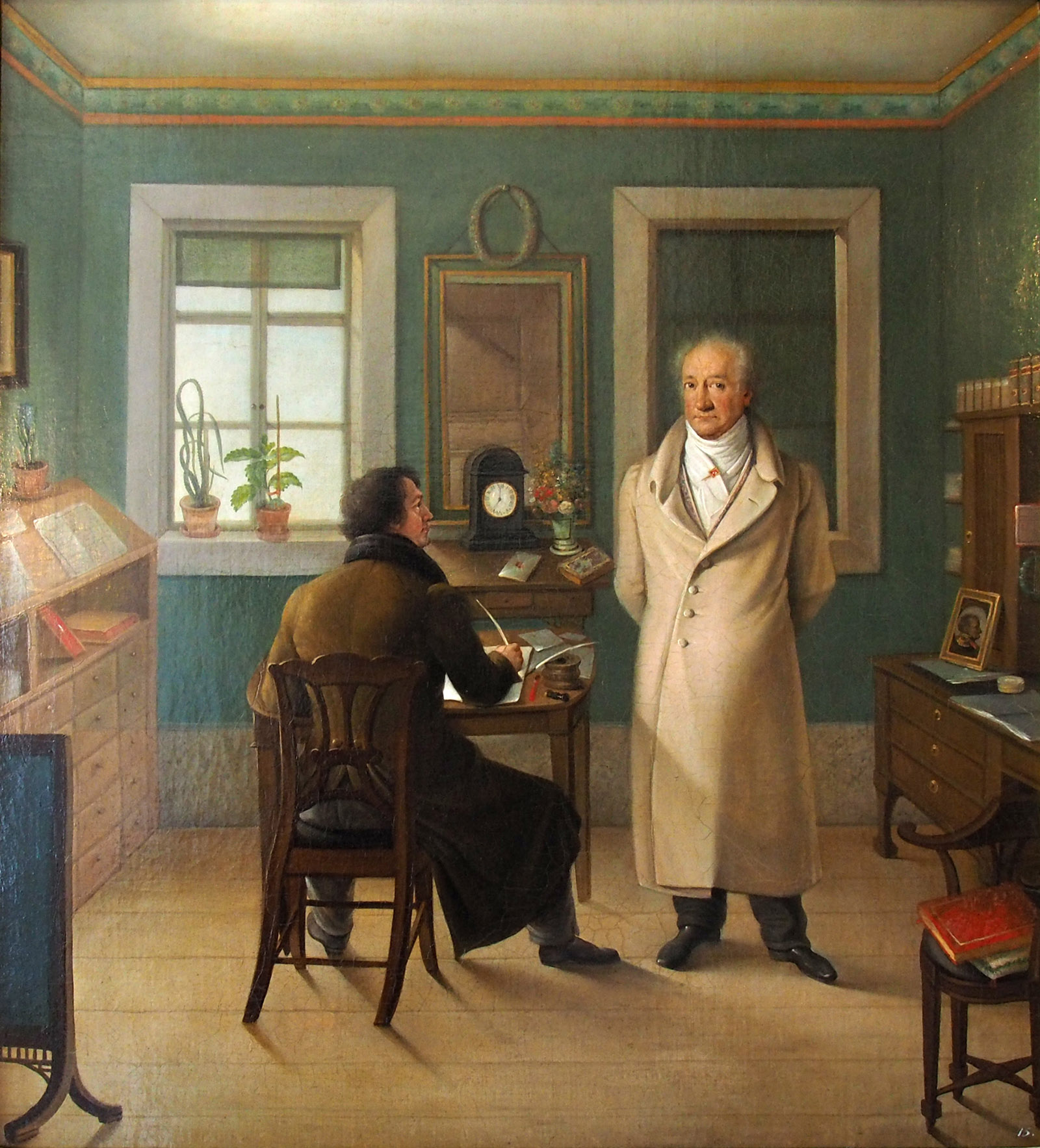
In Johann Eckermann, Goethe found an amanuensis made in heaven.
Conversations with Goethe: In the Last Years of His Life by Johann Peter Eckermann, translated from the German by Allan Blunden, with an introduction and notes by Ritchie Robertson
A strange time to publish—strange time to publish anything—a translation of Eckermann’s Conversations with Goethe (or should that be Goethe’s Conversations with Eckermann?), in six hundred static, major-key pages that can easily feel like twice as many. The big man, himself by now somewhat fallen on hard times, recorded by the little acolyte.
A new book reveals the split personality of the biotech industry: an altruistic enterprise that creates breakthrough treatments for patients in need, and a bare-knuckle business that seeks to generate astronomic profits and stop competitors from developing better treatments.
For Blood and Money: Billionaires, Biotech, and the Quest for a Blockbuster Drug by Nathan Vardi

A research scientist for Pharmacyclics, Sunnyvale, California, 2013. In For Blood and Money, Nathan Vardi writes that when Pharmacyclics—which developed ibrutinib, a treatment for chronic lymphocytic leukemia—was bought by the pharmaceutical giant AbbVie in 2015 for $21 billion, ‘the deal…set the new high-water mark for success in the biotechnology industry.’
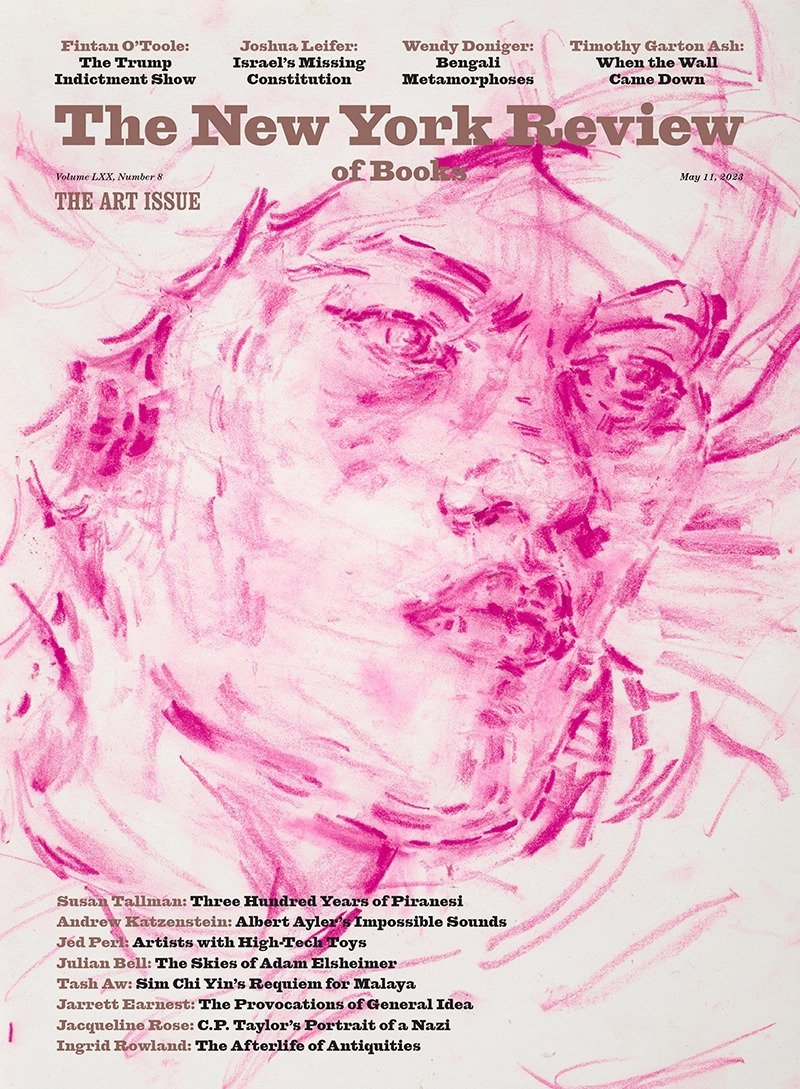
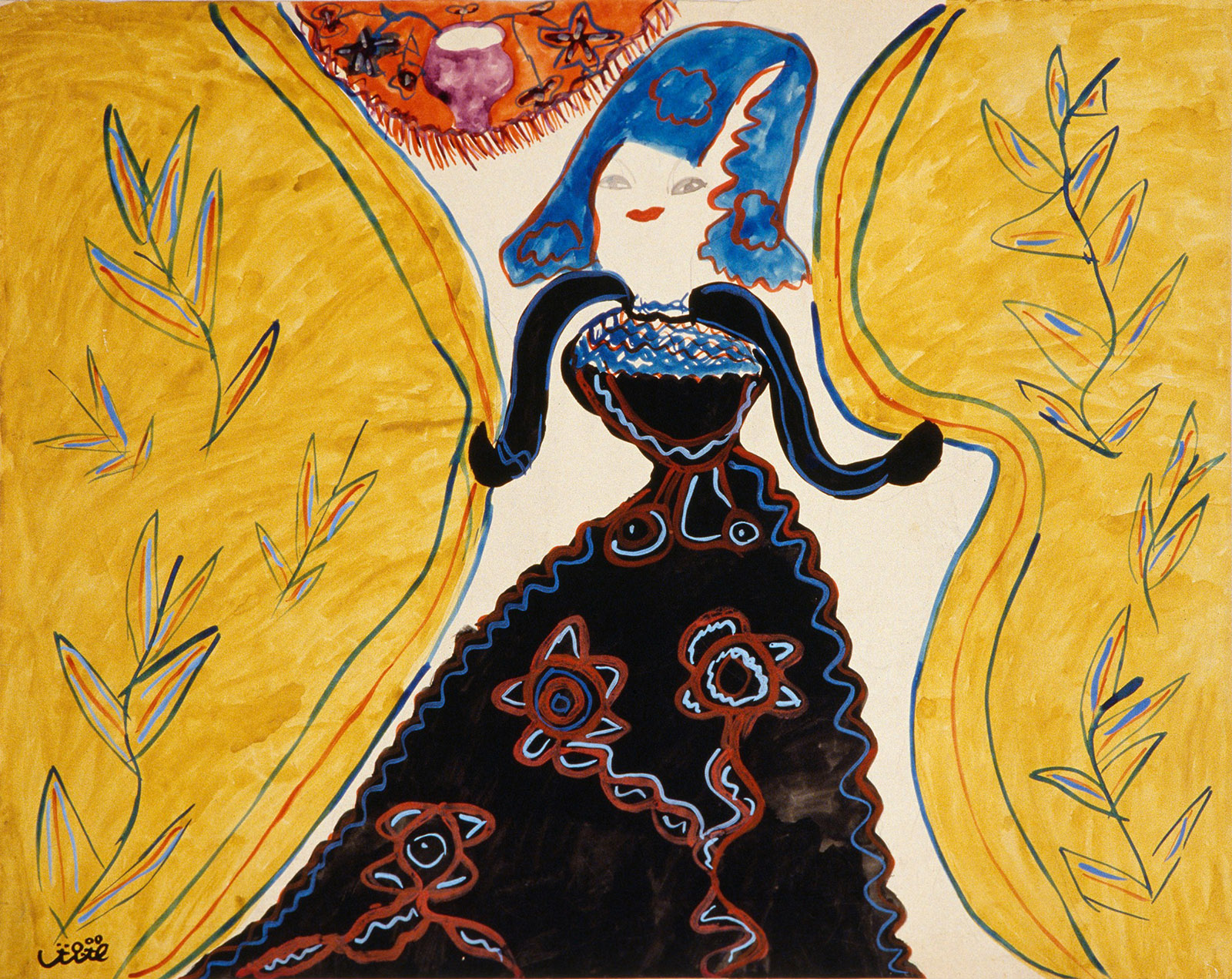
An exhibition of the Algerian painter’s work liberates it from the political symbolism of late colonialism.
In November 1947 a fifteen-year-old prodigy from colonial Algeria named Baya, described variously as Kabyle, Berber, Muslim, and Arab, exhibited her gouaches and clay sculptures at the Parisian gallery of the art dealer Aimé Maeght. Yves Chataigneau, the French governor of Algeria, and Si Kaddour Benghabrit, the rector of the Paris Mosque, were the sponsors of the exhibition, and the opening attracted some of the most influential cultural figures of postwar Paris: the writers Albert Camus, François Mauriac, and André Breton; the painters Henri Matisse and Georges Braque; the designer Christian “Bebè” Bérard.
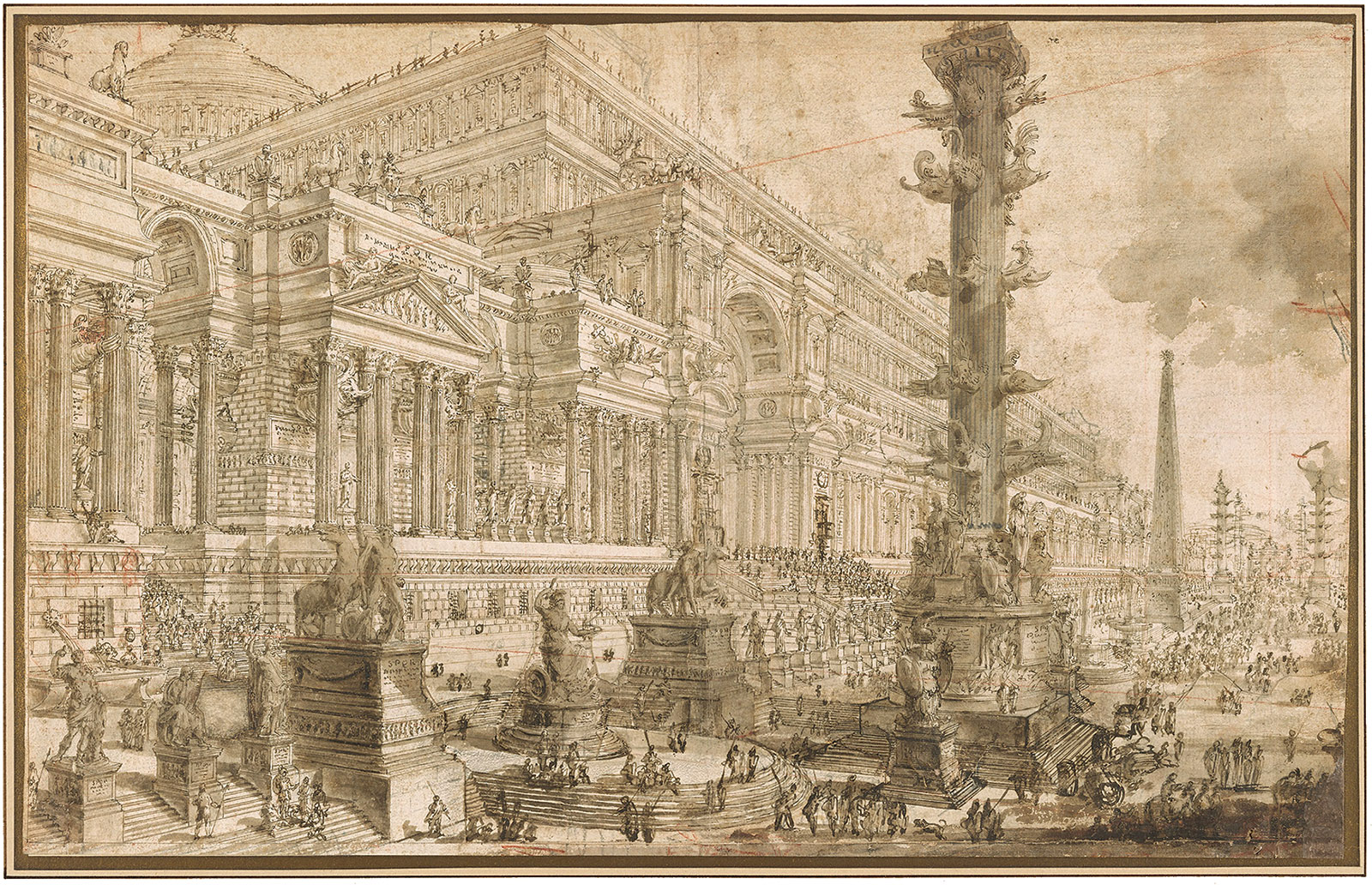
For generations, Giovanni Battista Piranesi’s prints of Roman views defined the popular image of the Eternal City. A profusion of new exhibitions and publications shows why he still speaks to us.
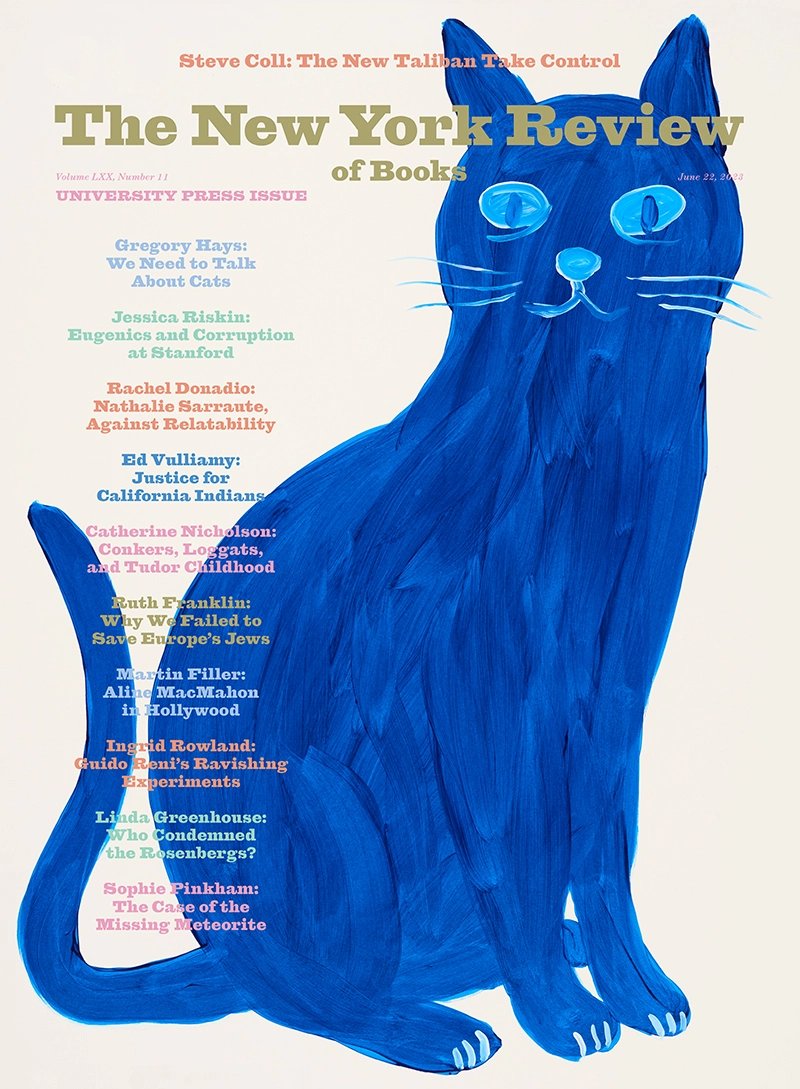
Also in the issue: Jacqueline Rose on C. P. Taylor’s final play, Colin B. Bailey on the Impressionists’ decorations, Wendy Doniger on Bengali tales from the mangrove forests, Christopher Benfey on the Black American potters of the nineteenth century, Jed Perl on high-tech high art, poems by Sasha Debevec-McKenney, Mosab Abu Toha, and Cyrus Console, and much more.



 Boomers Daily