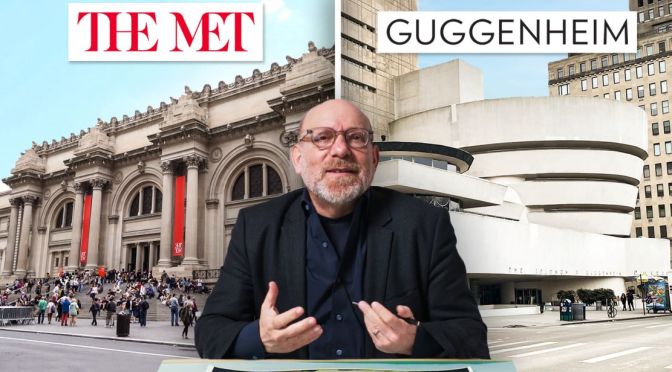
Architectural Digest (November 9, 2023) – From the epic halls of The Metropolitan Museum of Art to the Frank Lloyd Wright-designed Guggenheim, New York City is home to some of the most famous museums in the world, each one looking completely different from the next.
Today Michael Wyetzner of Michielli + Wyetzner Architects returns to AD for an in-depth look at how the iconic museums and art galleries of NYC developed their unique designs and became some of the city’s best landmarks.
Director: Hiatt Woods; Director of Photography: Charlie Jordan; Editor: Alex Mechanik; Host: Michael Wyetzner
The Art Newspaper April 27, 2023: This week: AI and art. We explore some of the key aspects relating to artificial intelligence and its use in the art world: the works being made using AI technologies and exploring their impact; anxieties about machines replacing humans; the idea of AIs being able to think and create independently; and whether we can truly grasp the significance and possible effects of the technologies and those who control it, and more.
Host Ben Luke talks to Noam Segal—an associate curator at the Solomon R. Guggenheim Museum, New York, whose focus is on technology-based art—about AI, its history in art, its social and environmental effects, and how artists are using it today. The Art Newspaper’s live editor, Aimee Dawson, talks to the artist and writer Gretchen Andrew about making art with AI and together they explore its wider application across the art world.
And this episode’s Work of the Week is Pseudomnesia: The Electrician, an image made using AI by the photographer Boris Eldagsen. The piece caused controversy earlier this month when it was awarded a prize at the Sony World Photography Awards, which Eldagsen refused to accept. The researcher and photographer Lewis Bush discusses the work, the controversy and wider questions around AI and photography.
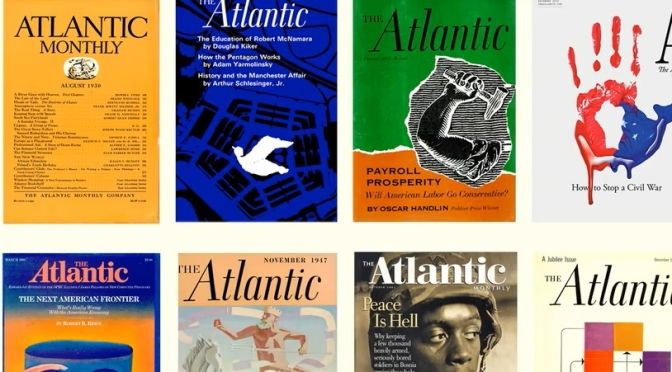
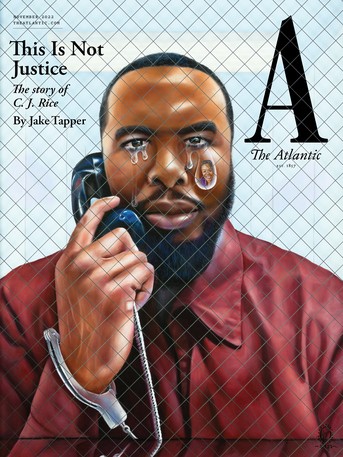
The empty promise of the Sixth Amendment, Siegfried & Roy’s rise and fall, a Guggenheim scapegoat, and independence for Puerto Rico. Plus stopping election deniers, Atlanta hip-hop, Orhan Pamuk, ABBA Voyage, a bygone Boston, new fiction, and more.
Countryside, The Future is an exhibition addressing urgent environmental, political, and socioeconomic issues through the lens of architect and urbanist Rem Koolhaas and Samir Bantal, Director of AMO, the think tank of the Office for Metropolitan Architecture (OMA).
A unique exhibition for the Guggenheim Museum, Countryside, The Future will explore radical changes in the rural, remote, and wild territories collectively identified here as “countryside,” or the 98% of the Earth’s surface not occupied by cities, with a full rotunda installation premised on original research. The project presents investigations by AMO, Koolhaas, with students at the Harvard Graduate School of Design; the Central Academy of Fine Arts, Beijing; Wageningen University, Netherlands; and the University of Nairobi. The exhibition will examine the modern conception of leisure, large-scale planning by political forces, climate change, migration, human and nonhuman ecosystems, market-driven preservation, artificial and organic coexistence, and other forms of radical experimentation that are altering landscapes across the world.
Rem Koolhaas (Rotterdam, 1944) founded OMA in 1975 together with Elia and Zoe Zenghelis and Madelon Vriesendorp. He graduated from the Architectural Association in London and in 1978 published Delirious New York: A Retroactive Manifesto for Manhattan. In 1995, his book S,M,L,XL summarized the work of OMA in “a novel about architecture”. He co-heads the work of both OMA and AMO, the research branch of OMA, operating in areas beyond the realm of architecture. His built work includes the Qatar National Library and the Qatar Foundation Headquarters (2018), Fondation Galeries Lafayette in Paris (2018), Fondazione Prada in Milan (2015/2018), Garage Museum of Contemporary Art in Moscow (2015), the headquarters for China Central Television (CCTV) in Beijing (2012), Casa da Musica in Porto (2005), Seattle Central Library (2004), and the Netherlands Embassy in Berlin (2003). Current projects include the Taipei Performing Arts Centre, a new building for Axel Springer in Berlin, and the Factory in Manchester. Koolhaas directed the 2014 Venice Architecture Biennale, is a professor at Harvard University, and is preparing a major exhibition for the Guggenheim museum to open in 2019 entitled Countryside: Future of the World.
This year marks the 60th anniversary of Frank Lloyd Wright’s building for the Solomon R. Guggenheim Museum. Since opening its doors on October 21, 1959, the architectural icon has inspired countless visitors and is widely seen as Wright’s masterpiece.
From its opening to the present day, the Solomon R. Guggenheim Museum has been an unparalleled physical and cultural presence in the New York landscape.
Over the course of the sixteen-year period between the commissioning of the Solomon R. Guggenheim Museum in 1943 and its 1959 opening, the project underwent a series of revisions. The iconic spiral form remained primarily unchanged, but a close reading of documents in the Guggenheim Museum Archives sheds additional light on an array of obscure details that were designed out over time to accommodate budgetary, programmatic, and structural needs and constraints.



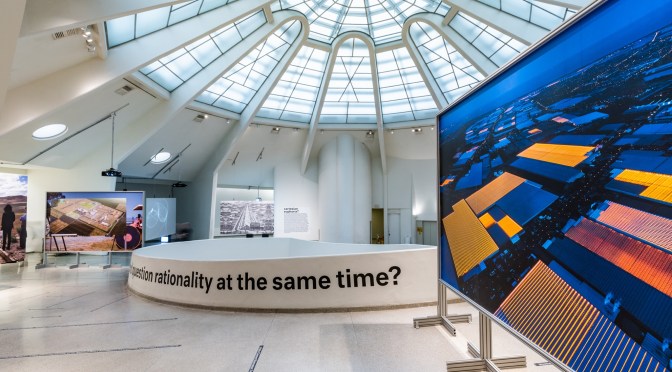
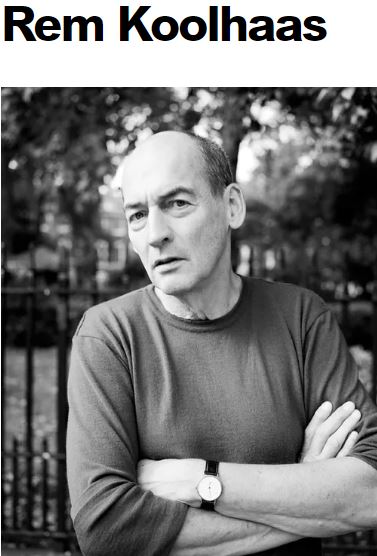 by AMO, Koolhaas, with students at the Harvard Graduate School of Design; the Central Academy of Fine Arts, Beijing; Wageningen University, Netherlands; and the University of Nairobi. The exhibition will examine the modern conception of leisure, large-scale planning by political forces, climate change, migration, human and nonhuman ecosystems, market-driven preservation, artificial and organic coexistence, and other forms of radical experimentation that are altering landscapes across the world.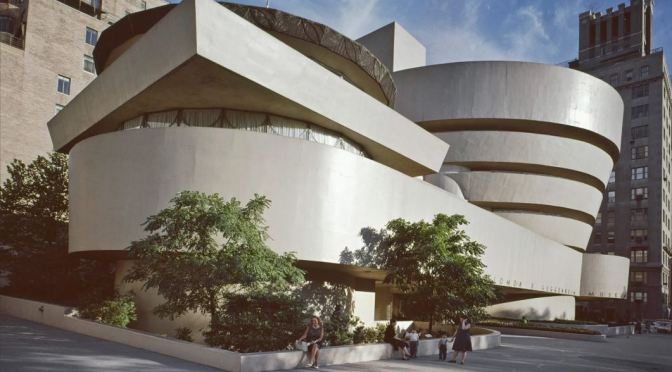
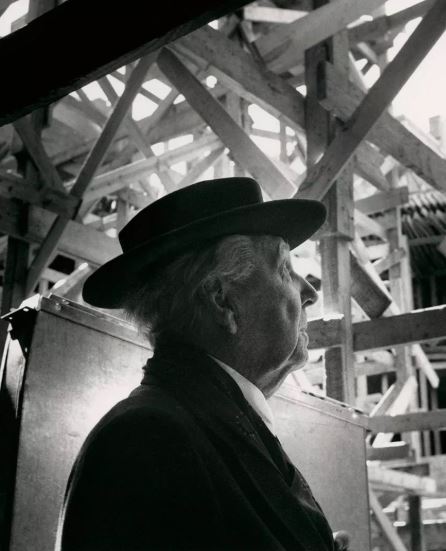 This year marks the 60th anniversary of Frank Lloyd Wright’s building for the Solomon R. Guggenheim Museum. Since opening its doors on October 21, 1959, the architectural icon has inspired countless visitors and is widely seen as Wright’s masterpiece.
 Boomers Daily