
Tag Archives: German Artists

Photography Exhibitions: ‘Bernd & Hilla Becher’- The Splendor Of The Everyday

CBS Sunday Morning (March 26, 2023) – To photographers Bernd and Hilla Becher, the rapidly vanishing industrial architecture of Western Europe and North America were works of art. The German couple’s documentary images of transmission towers, gas tanks, blast furnaces and smokestacks – structures that signified the end of an industrial era – are being celebrated in a comprehensive retrospective now at the San Francisco Museum of Modern Art. Lee Cowan offers us a tour.

Bernd & Hilla Becher

logo red

December 17, 2022–April 2, 2023

The renowned German artists Bernd and Hilla Becher (1931–2007; 1934–2015) changed the course of late twentieth-century photography. Working as a rare artist couple, they focused on a single subject: the disappearing industrial architecture of Western Europe and North America that fueled the modern era.

Their seemingly objective style recalled nineteenth- and early twentieth-century precedents but also resonated with the serial approach of contemporary Minimalism and Conceptual art. Equally significant, it challenged the perceived gap between documentary and fine art photography.

Exhibition Preview
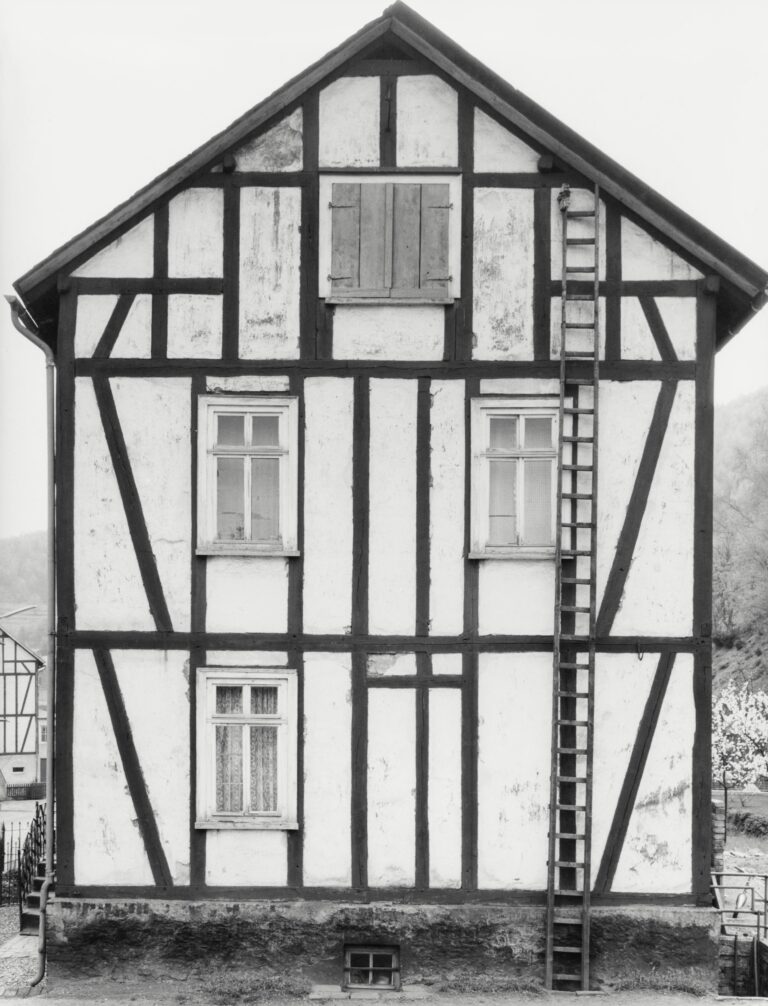
Bernd and Hilla Becher, Framework House, Auf der Hütte 45, Gosenbach, Siegen, Germany, 1961; The Metropolitan Museum of Art, New York, purchase, Vital Projects Fund Inc. gift, through Joyce and Robert Menschel, Denise and Andrew Saul Fund, Louis V. Bell, Harris Brisbane Dick, Fletcher, and Rogers Funds and Joseph Pulitzer bequest, and Jade Lau gift, 2018 (2018.463); © Estate Bernd & Hilla Becher, represented by Max Becher
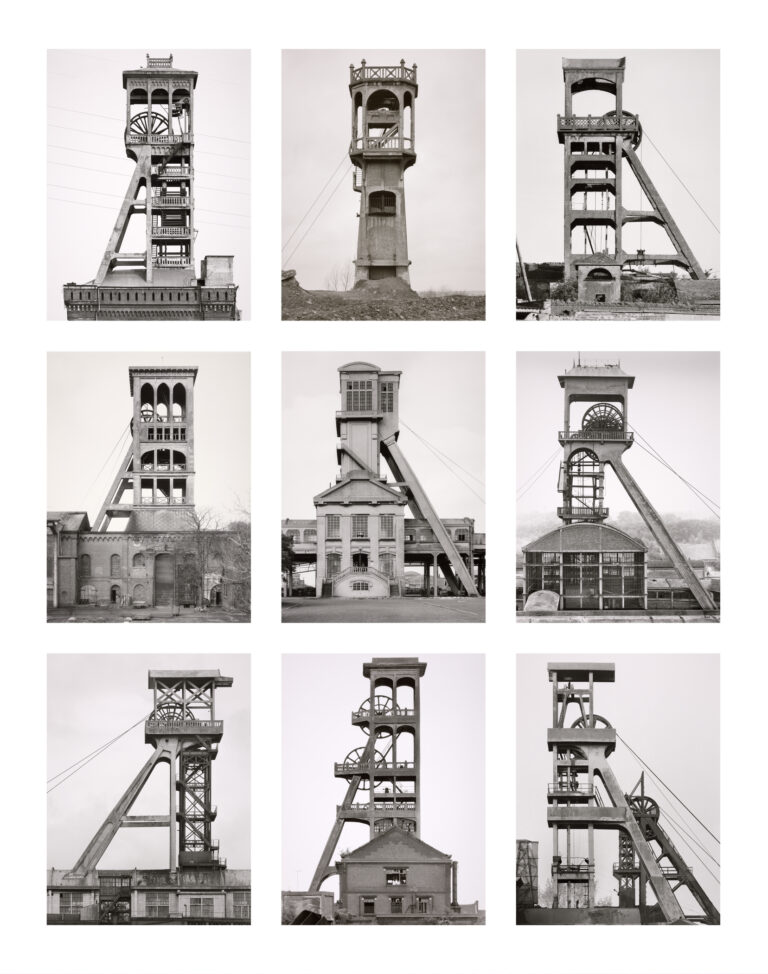
Bernd and Hilla Becher, Fördertürme, Belgien, Frankreich (Winding Towers, Belgium, France), 1967-1988; The Doris and Donald Fisher Collection at the San Francisco Museum of Modern Art; © Estate of Bernd and Hilla Becher; photo: Don Ross
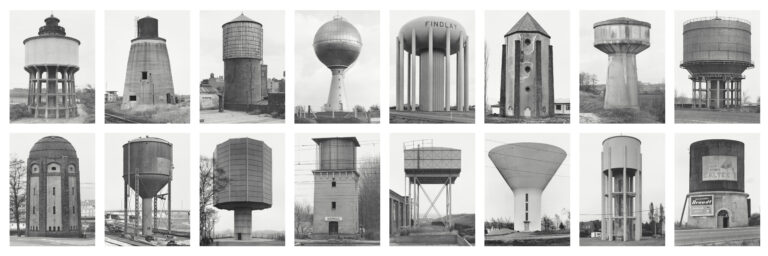
Bernd and Hilla Becher, Water Towers (Germany, France, Belgium, United States, and Great Britain), 1963–80; The Metropolitan Museum of Art, New York, Warner Communications Inc. Purchase Fund, 1980 (1980.1074a–p); © Estate Bernd & Hilla Becher, represented by Max Becher
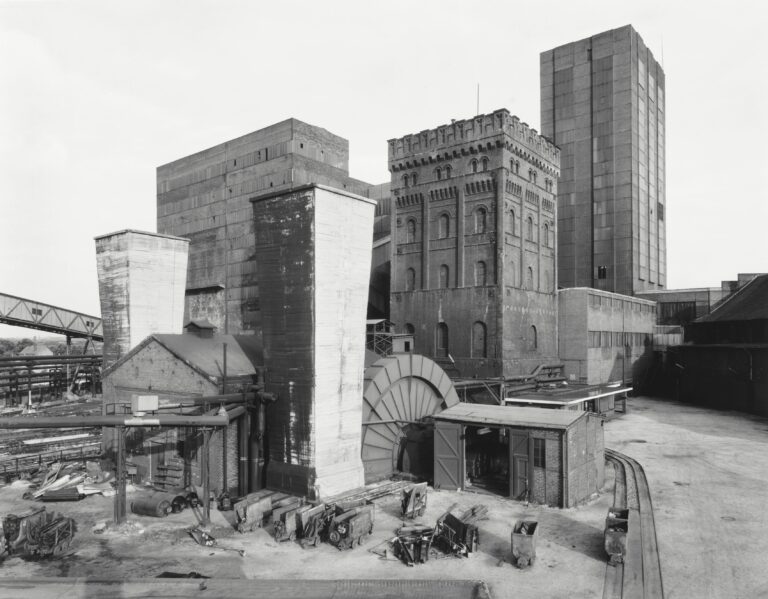
Bernd and Hilla Becher, Zeche Hannover, Bochum-Hordel, Ruhr Region, Germany, 1973; The Metropolitan Museum of Art, New York, purchase, Vital Projects Fund Inc. gift, through Joyce and Robert Menschel, 2011 (2011.67); © Estate Bernd & Hilla Becher, represented by Max Becher
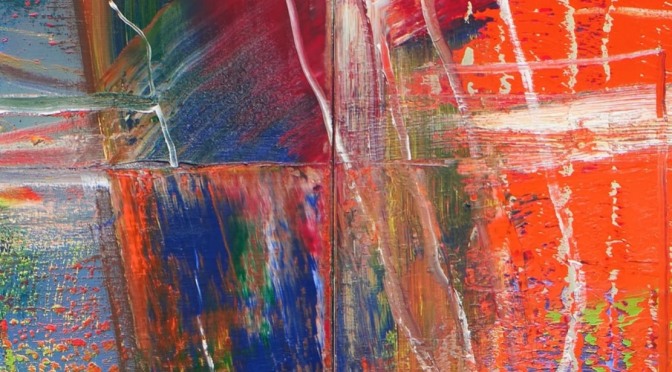

Inside Art: ‘Abstraktes Bild, 1986’ By Gerhard Richter

Sotheby’s (February 3, 2023) – Reminiscent of a landscape, or the strata of a Monet waterlily painting, the horizontal swathes of paint migrate across Abstraktes Bild in wave like-motion across the breadth of the canvas. Texture, colour and structure are here deployed with spectacular force, with the gliding scrape of the squeegee revealing the kaleidoscopic architectural structure of the artist’s underpainting.

It is a masterpiece created during the critical year of 1986, which saw the artist’s first large-scale touring retrospective and was also the year in which Richter first took up the squeegee as his principal compositional tool. He has only ever produced 24 Abstraktes Bild of this magnitude (with a width greater than 380 cm), of which half of these reside in museum collections across the globe.

Gerhard Richter was born in 1932 in Dresden, Germany. Throughout his career, Richter has negotiated the frontier between photography and painting, captivated by the way in which these two seemingly opposing practices speak to and challenge one another. From exuberant canvases rendered with a squeegee and acerbic color charts to paintings of photographic detail and close-ups of a single brushstroke, Richter moves effortlessly between the two mediums, reveling in the complexity of their relationship, while never asserting one above the other.

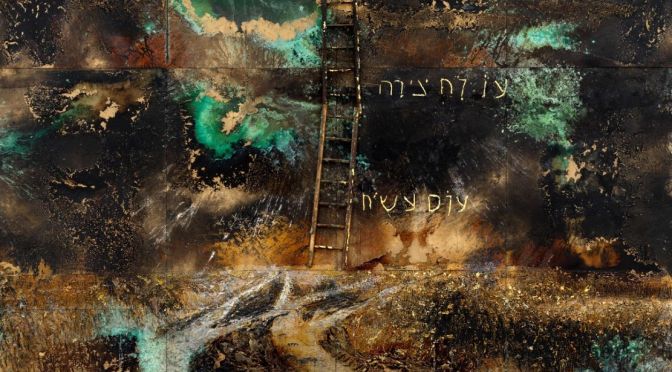
Top New Art Exhibitions: ‘Anselm Kiefer – Exodus’

ANSELM KIEFER – Exodus

November 19, 2022–March 25, 2023
Gagosian at Marciano Art Foundation, Los Angeles

Gagosian is pleased to announce Exodus, an exhibition of new work by Anselm Kiefer in New York and Los Angeles, opening on November 12 at 555 West 24th Street, New York, and on November 19 at Gagosian at Marciano Art Foundation, 4357 Wilshire Boulevard, Los Angeles.
The large-scale paintings on view in New York and Los Angeles employ a wide range of materials including paint, terra-cotta, fabric, rope, wire, found objects, sediment of electrolysis, and metal—including copper and gold leaf. Mixing the abject and the exalted, these works are imbued with gesture, a sense of metamorphosis, and alchemical symbolism.

Kiefer’s syncretic approach to materials extends to his understanding of history, literature, and mythology as forces that inform the present. In this new body of work, he incorporates inscriptions in Hebrew from the book of Exodus, with thematic references to its narrative blended with a diversity of other sources. Full of symbolic thresholds between peoples, places, and times, the paintings are metaphysical allegories that meditate on loss and deliverance, dispossession and homecoming.

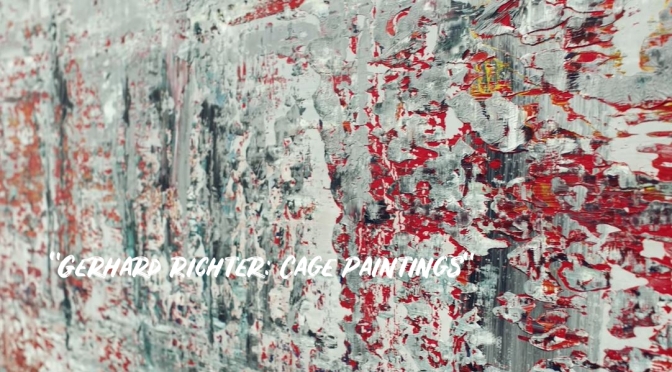
Art Exhibitions: ‘Gerhard Richter – Cage Paintings’

“Gerhard Richter: Cage Paintings”—an exhibition presented by Gagosian in New York and Beverly Hills—with Hans Ulrich Obrist and Richard Calvocoressi, featuring a musical performance and reading by Patti Smith and new choreography created and performed by Rashaun Mitchell + Silas Riener to music by John Cage in response to the work.

Gerhard Richter is a German visual artist. Richter has produced abstract as well as photorealistic paintings, and also photographs and glass pieces. He is widely regarded as one of the most important contemporary German artists and several of his works have set record prices at auction. 

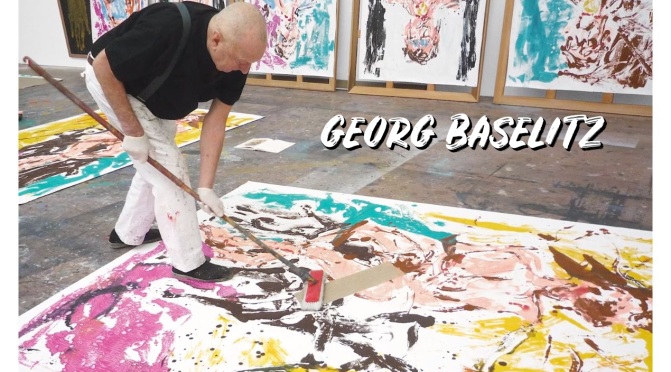
Artist Profile Videos: German Painter Georg Baselitz (Gagosian)

Richard Calvocoressi narrates a tour of an exhibition of new paintings by Georg Baselitz in San Francisco, describing the visual effect of these luminous compositions and explaining their relationship to earlier works by the artist: http://on.gagosian.com/4lzd0i9

Georg Baselitz (born 23 January 1938) is a German painter, sculptor and graphic artist. In the 1960s he became well known for his figurative, expressive paintings. In 1969 he began painting his subjects upside down in an effort to overcome the representational, content-driven character of his earlier work and stress the artifice of painting. Drawing from myriad influences, including art of Soviet era illustration art, the Mannerist period and African sculptures, he developed his own, distinct artistic language.

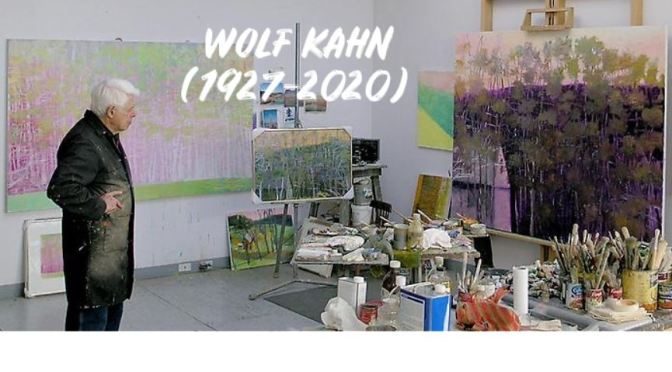
Artist Tribute: Wolf Kahn (1927-2020) – “Lust For Life”

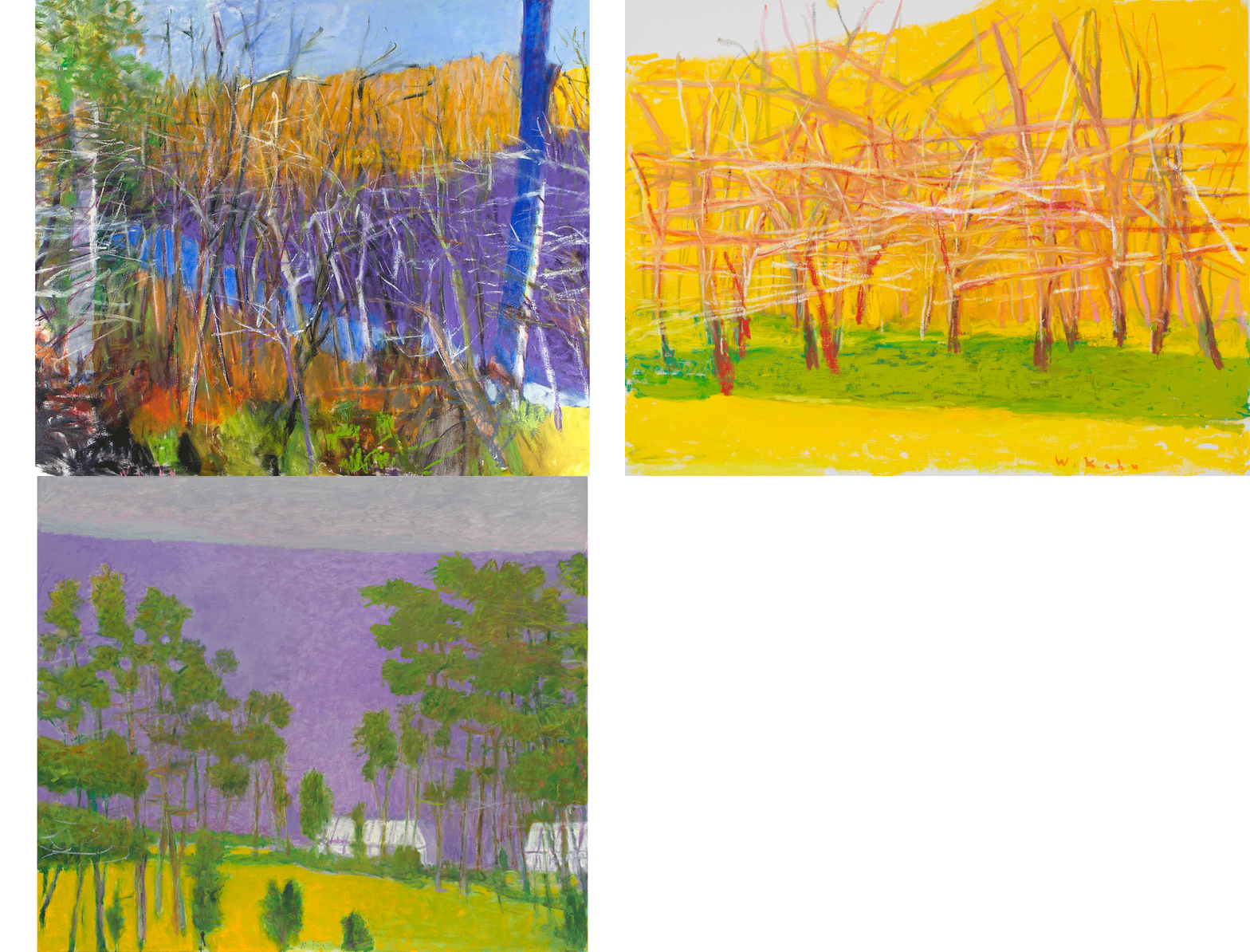
“I have a good relation with black,” says Wolf Kahn. This is not obvious. The painter stands in front of an unfinished oil—a pattern of trees, a slice of sky—and nothing of it argues “black”; we are in the realm of Gerard Manley Hopkins’s “skies of couple-colour” and “rose moles all in stipple.” The world here evoked is luminous, bright, and the act of witness is an act of celebration. Colors laid down on the canvas are some of Kahn’s signature colors: purple, alizarin crimson, lemon yellow, phthalo green.

The painter’s shock of hair is white, his eyes are a bright blue. Trim yet sturdy, eighty-five, he wears faded blue jeans and an old plaid shirt “I like the bottom left of this painting,” he says, “the bottom right needs work. But nature in general is quite generous in providing material for one’s imagination; I will return to it later, when you go.”

Seven years later and after his death, a black-rimmed condolence card seems no more appropriate now than then. An exuberant artist, this master of shape and color always had “a good relation with black.” So I, along with legions, mourn him—but I also want to celebrate his life-long act of witness and (to borrow a phrase applied to a predecessor) flat-out “Lust for Life.”

(From BrooklynRail June 2020)

Wolf Kahn was a German-born American painter. Kahn, known for his combination of Realism and Color Field, worked in pastel, oil paint, and printmaking. He studied under Hans Hofmann, and also graduated from the University of Chicago.

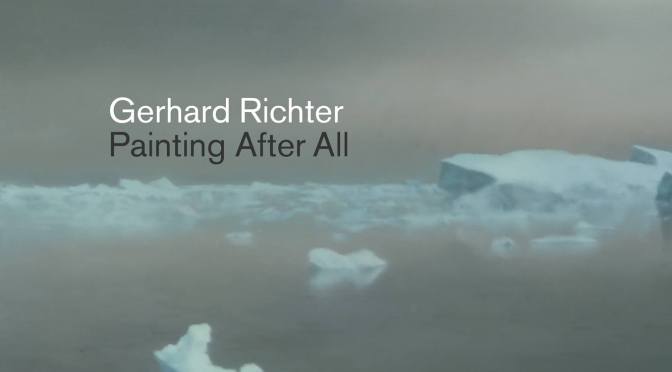
Exhibitions: 88-Year Old Gerhard Richter “Painting After All” – Landscape As A Site Of Memory (The Met)

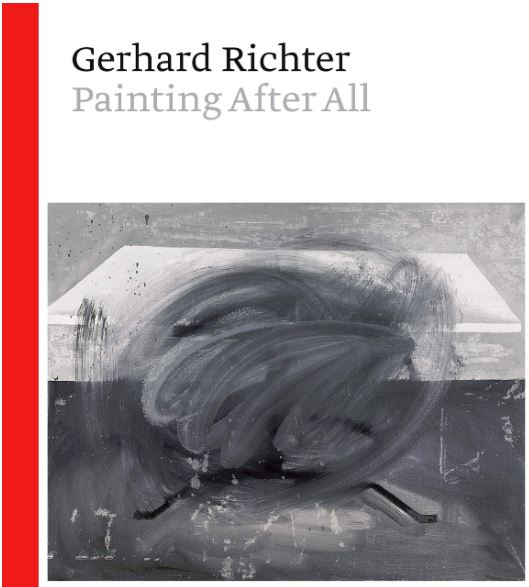
Gerhard Richter Painting After All March 2020Over the course of his acclaimed 60-year career, Gerhard Richter (b. 1932) has employed both representation and abstraction as a means of reckoning with the legacy, collective memory, and national sensibility of post–Second World War Germany, in both broad and very personal terms.
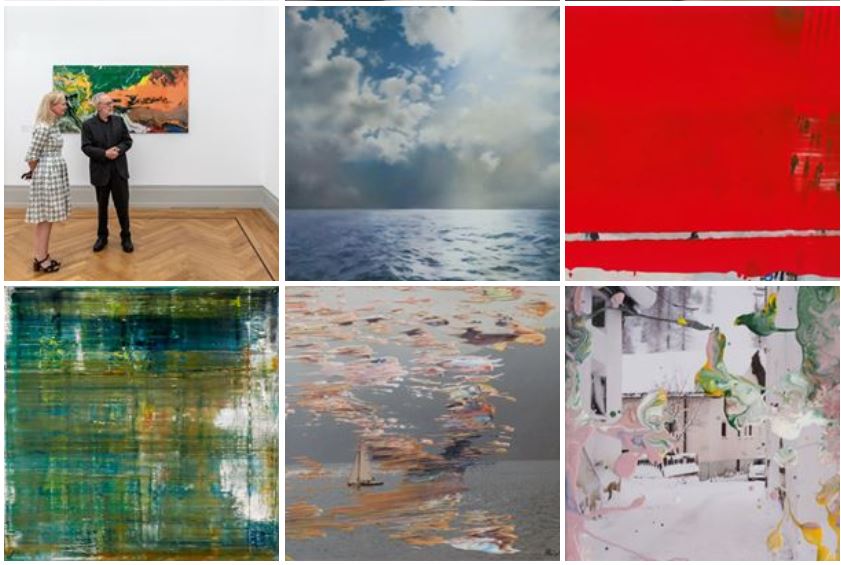
This handsomely designed book features approximately 100 of his key canvases, from photo paintings created in the early 1960s to portraits and later large-scale abstract series, as well as select works in glass.

Gerhard Richter Paintings Facebook

Metropolitan Museum Of ArtNew essays by eminent scholars address a variety of themes: Sheena Wagstaff evaluates the conceptual import of the artist’s technique; Benjamin H. D. Buchloh discusses the poignant Birkenau paintings (2014); Peter Geimer explores the artist’s enduring interest in photographic imagery; Briony Fer looks at Richter’s family pictures against traditional painting genres and conventions; Brinda Kumar investigates the artist’s engagement with landscape as a site of memory; André Rottmann considers the impact of randomization and chance on Richter’s abstract works; and Hal Foster examines the glass and mirror works. As this book demonstrates, Richter’s rich and varied oeuvre is a testament to the continued relevance of painting in contemporary art.

Metropolitan Museum of Art website

Gerhard Richter was born in Dresden on 9th February 1932, the first child of Horst and Hildegard Richter. A daughter, Gisela, followed four years later. They were in many respects an average middle-class family: Horst worked as a teacher at a secondary school in Dresden and Hildegard was a bookseller who liked to play the piano.1 In an interview with Robert Storr, Richter described his early family life as “simple, orderly, structured – mother playing the piano and father earning money.”2

In 1935, Horst accepted a teaching position at a school in Reichenau, a town which today is known as Bogatynia in Poland, at the time located in the German province Saxony. Settling in Reichenau was a drastic change for the family, which was accustomed to the vivid cultural life of the larger Dresden.3 Yet, it was also a move which would keep the family largely safe from the coming war. In the late 1930s Horst was conscripted into the German army, captured by Allied forces and detained as a prisoner of war until Germany’s defeat. In 1946, he was released and returned to his family, who had again relocated, this time to Waltersdorf, a village on the Czech border.