MONOCLE RADIO (February 5, 2025): As Ahmed al-Sharaa, Syria’s transitional president, meets Turkey’s Recep Tayyip Erdogan in Ankara, we ask: what role is Turkey seeking to play when it comes to regional security?
Then we discuss Benjamin Netanyahu’s trip to the White House to see Donald Trump. Plus, a ceasefire in the Democratic Republic of the Congo, former Nato chief Jens Stoltenberg makes a comeback in Norwegian politics and press freedom in Czechia.
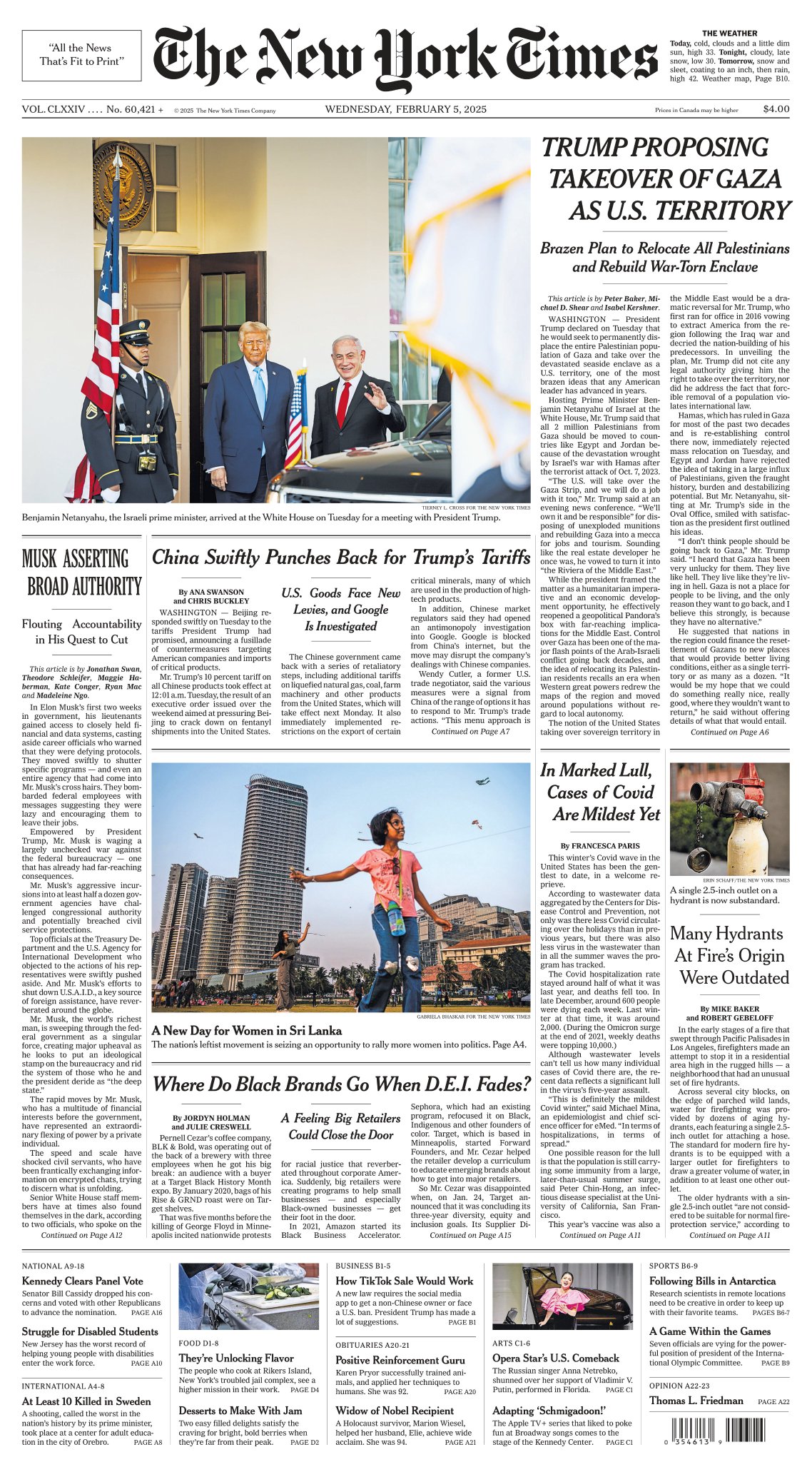
The billionaire is creating major upheaval as his team sweeps through agencies, in what has been an extraordinary flexing of power by a private individual.
The billionaire has used the social media site to boast of victories, lash out at enemies and conduct polls for the initiative he calls the Department of Government Efficiency.
After a 10 percent tariff on Chinese products took effect on Tuesday, China announced retaliatory measures, including tariffs and an investigation of Google.
Senate Panel Pushes Through Kennedy’s Nomination Along Party Lines
Senator Bill Cassidy, a Republican torn between his concerns as a doctor and supporting President Trump, voted to send Robert F. Kennedy Jr.’s nomination as health secretary to the full Senate.
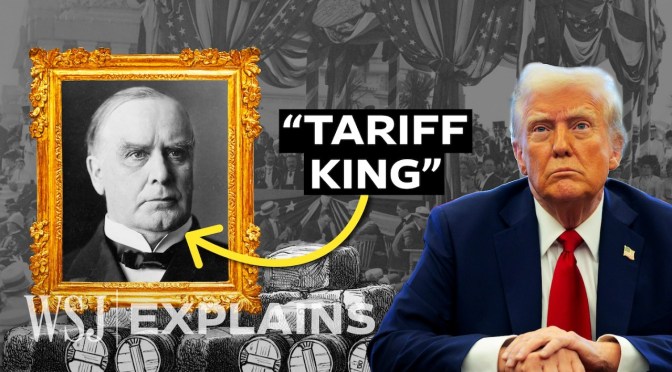
The ‘McKinley Tariffs’ were some of the largest hikes in U.S. history, but in his second term, McKinley changed his mind, and argued for more free international trade as a way of helping the U.S. economy. WSJ explores how McKinley used tariffs, how Trump is following a similar playbook and why McKinley. Actually came to speak out against them.
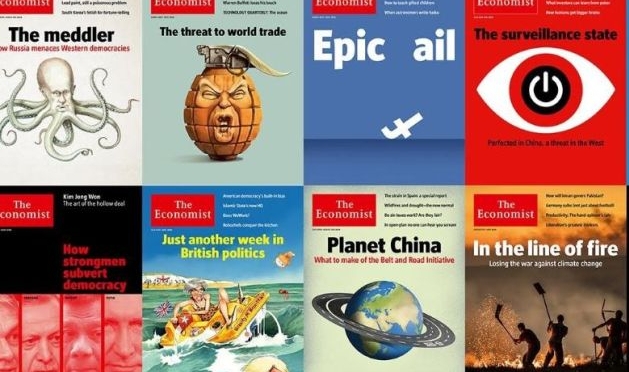
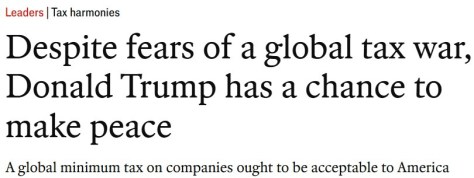
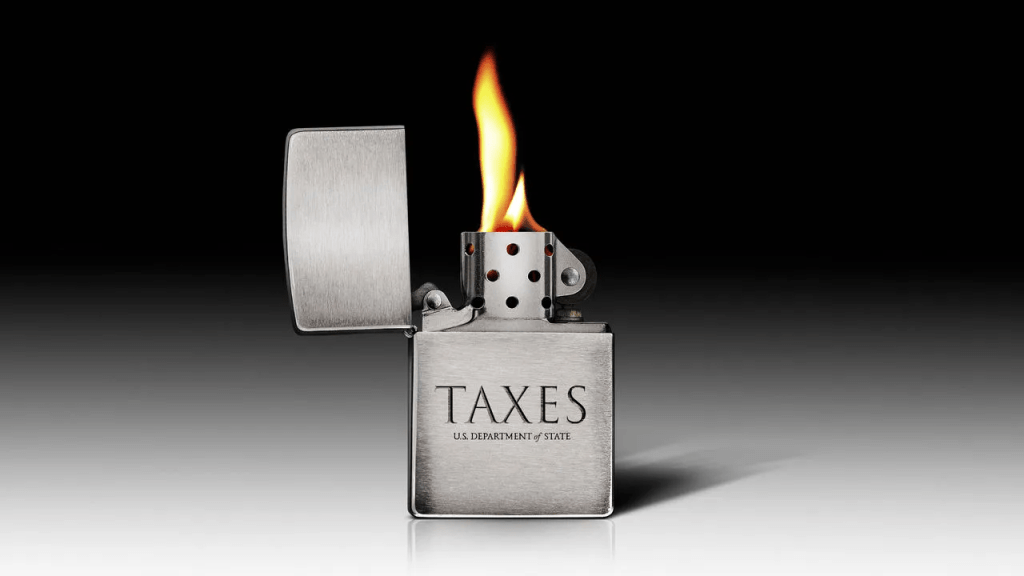
THE ECONOMIST MAGAZINE (February 3, 2025): That Donald Trump may unleash a global trade war is a frightening but familiar risk. Less well understood is the danger that he may also provoke a tax war. One of his first actions on returning to the White House was to warn other countries that if they adopt tax policies America dislikes, he may double tax rates on their companies and even their citizens.
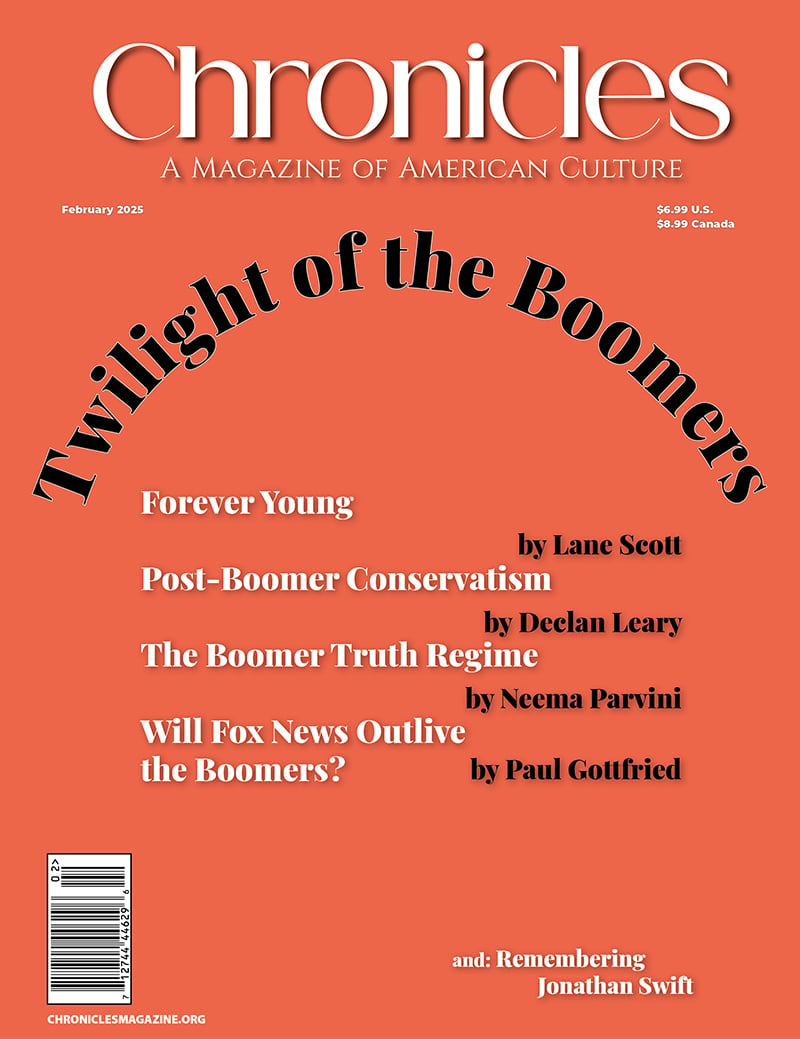
Baby boomers have safeguarded and perpetuated a grand myth through which they interpret past and present events, and derive motivations. Myth is one hell of a drug.
Baby boomer conservatism arose during the salad days of American capitalism, the apex of American military might, and the drama of the Cold War. That’s all gone and the young right stands at a crossroads.
MONOCLE RADIO (February 4, 2025): As the trial of South Korea’s impeached president continues, Monocle’s Seoul correspondent, Jeyup S Kwaak, and John Nilsson-Wright join Emma Nelson to discuss what comes next.
Also on the programme: is USAID doomed? We delve into the global consequences of freezing US aid. Then: after an eight-month wait, Belgium has a new government. What took it so long? Plus: all the winners from Sundance Film Festival and the Critics’ Choice Awards with Karen Krizanovich.
A growing number of countries, including American allies, are striking trade deals as the Trump administration erects a higher fence around its global commerce.
Guantánamo Bay Prepares for President Trump’s Migrant Surge
About 300 servicemembers have arrived in recent days as the base faces its most drastic changes since the Pentagon opened a prison there after the Sept. 11 attacks.
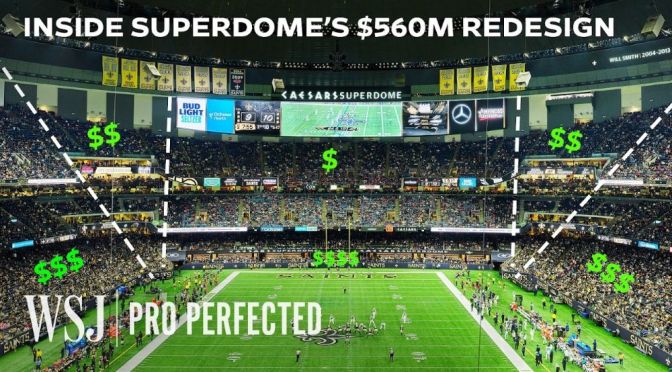
The Wall Street Journal (February 3, 2025): The New Orleans Superdome is set to host Super Bowl LIX between the Kansas City Chiefs and the Philadelphia Eagles. The stadium’s latest $560M renovation–from the concession stands to the seating bowl–helped save it from demolition after Hurricane Katrina.
Chapters: 0:00 Evolving stadiums 0:52 Superdome history 1:32 The path to your seat and crowd control 3:33 New concession stands 4:54 The seating bowl 6:42 What’s next for stadium innovation?
NFL games have increasingly become more expensive with the addition of amenities like luxury field suites and club lounges, but all of these redesigns are done in order to increase revenue and efficiency. WSJ spoke with the architect behind the Superdome’s plan, who explains how stadium design is evolving to create more revenue streams.
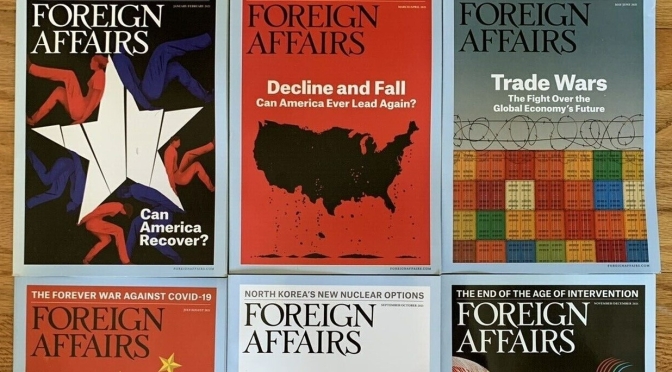
FOREIGN AFFAIRS MAGAZINE (February 3, 2025): Donald Trump begins his presidency with ambitions of being a peacemaker. He laid out this vision in his inaugural address, declaring that his administration “will measure our success not only by the battles we win but also by the wars we end, and perhaps most importantly, by the wars we never get into.” Later that day, he basked in the success of the hostage cease-fire deal in Gaza, including by bringing the families of Israeli hostages to the inaugural parade. “We’re getting a lot of people out in a short period of time,” he proclaimed.
There is no doubt that Trump helped secure the cease-fire deal. But to be a peacemaker who transforms the Middle East, he has more work to do. The main issues he confronts are Gaza and Iran. In Gaza, Israel and Hamas have different views of what is required to achieve the second phase of the deal, which would save the remaining hostages and produce a permanent cease-fire. Iran, meanwhile, is accelerating its nuclear program—with its “foot on the gas pedal” according to Rafael Grossi, the head of the International Atomic Energy Agency. Tehran thus continues to existentially threaten Israel. Both issues are likely to dominate upcoming talks between Trump and Israeli Prime Minister Benjamin Netanyahu at the White House.
DAVID MAKOVSKY is the Director of the Program on Arab-Israel Relations at the Washington Institute of Near East Policy and an Adjunct Professor of Middle East Studies at Johns Hopkins University School of Advanced International Studies. He served as a Senior Adviser to the special envoy of Israeli-Palestinian negotiations in the Office of the Secretary of State during the Obama administration.
DENNIS ROSS is Counselor at the Washington Institute for Near East Policy and a Professor at Georgetown University. A former U.S. Envoy to the Middle East, he served in senior national security positions in the Reagan, George H. W. Bush, Clinton, and Obama administrations.
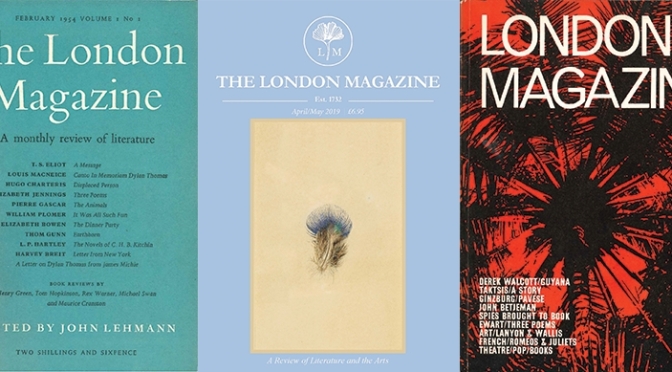
‘I don’t think character exists anymore’, Rachel Cusk declared in a 2018 interview. This was not the first time Cusk appeared to be announcing the atrophy of the traditional novel. In a 2014 interview with The Guardian, Cusk stated she was ‘certain autobiography’ was ‘increasingly the only form in all the arts’. Inversely, fiction and its conventional preoccupation with ‘making up John and Jane’, Cusk argued, was only becoming more ‘ridiculous’, ‘fake and embarrassing’. It is precisely this disregard for literary orthodoxy that runs through Cusk’s widely acclaimed trilogy of autofictional novels – Outline (2014), Transit (2016) and Kudos (2018).
My twin brother calls from the hospital. He’s finished his blood draw and wants to know the word in Portuguese for watermelon. I recite the word for him – melancia – though my brother’s mind isn’t likely to keep hold of it. Zach can no longer keep a hold of his house keys or his phone, which he left yesterday in the bathroom sink. Before we hang up, I ask him to please wait for me in the lounge area for outpatient services, not to wander outside the hospital.
Jacqueline Feldman’s Precarious Lease: The Paris Document – out from Fitzcarraldo Editions on 30 January – delivers captivating literary reportage on Parisian squats of the early 2010s. Feldman introduces us to people who transformed abandoned buildings into homes, shelters and hubs for artistic creation. With echoes of Agnès Varda’s work, Feldman’s prose is compassionate and honest, acknowledging her own role as an observer. She answered these questions by email about her fifteen-years-long project, begun in 2009.
News, Views and Reviews For The Intellectually Curious





 Boomers Daily