Tag Archives: DW Documentary

Documentary: ‘Fukushima – The Age Of Radioactivity’

The USS Ronald Reagan cruised into a radioactive cloud from the Fukushima nuclear power plant in March 2011. Sailors on the aircraft carrier were exposed to radiation. This documentary looks at the event and what came before it. The discovery of the atom and radioactivity are among the most important advances in 20th Century science. This film provides a comprehensive, historical examination of a century of radioactivity. At the same time it remembers the victims – from the Curies to Fukushima.

The film-makers visit Japanese families who sued Tepco, the operator of the Fukushima reactor, after their children developed thyroid cancer following the tsunami and subsequent nuclear disaster. Sent to help tsunami victims, sailors from the USS Ronald Reagan give detailed accounts of what happened on board the carrier. Radiation victims on both sides of the Pacific recount their difficulties in getting information. The film also introduces others harmed by industrial and military secrecy over the issue. Among them are fishermen and veterans exposed to radiation during the nuclear bomb tests on Bikini Atoll, Hiroshima survivors and young women who worked with radium in US factories in the 1920s. Radioactivity is invisible and odorless, yet very harmful to life. A Japanese doctor tells viewers how radioactivity affects the human body, why it causes cancer, and what can be done to shield people against it.
Culture: ‘Guinea-Bissau – A Matriarchy Rules’ (Video)

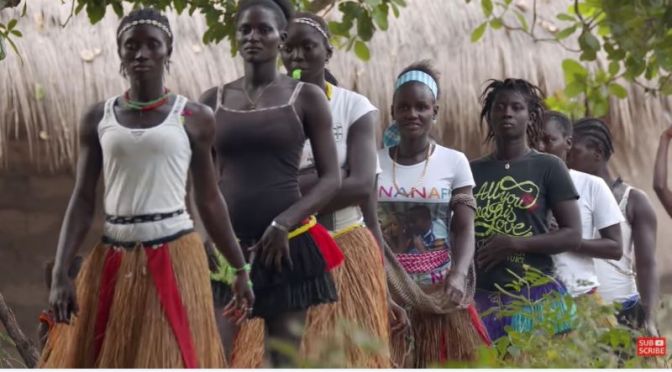
A matriarchy rules on one of the Bijagos Islands off the coast of Guinea-Bissau. The tribe of the same name lives on Orango, one of the most populated islands in the archipelago. Women dominate public and private life there. This documentary focuses on the women of the Bijagos tribe of Guinea-Bissau. Unlike many women in traditional and modern societies elsewhere, they pick their husbands, propose marriage and own their homes.

In addition to being responsible for raising children, they also act as high-priestesses in animist ceremonies, organize work, guard the keys to the rice stores, lead their families and ensure there are descendants to continue the line. The Bijagos revere women, who are believed to be in charge of the balance between the worlds of the living and the dead. A matriarchy of this kind is unusual, not only for Africa but around the world. Even though this culture has persisted for centuries, aspects of Western lifestyles are starting to gain a foothold. Rising rates of school attendance could contribute to the demise of the community’s traditions. Future generations will determine whether the Bijagos can retain their culture.

Guinea-Bissau is a tropical country on West Africa’s Atlantic coast that’s known for national parks and wildlife. The forested, sparsely populated Bijagós archipelago is a protected biosphere reserve. Its main island, Bubaque, forms part of the Orango Islands National Park, a habitat for saltwater hippos. On the mainland, the capital, Bissau, is a port with Portuguese colonial buildings in its old city center. 

World Economy: ‘China’s New Silk Road’ (Video)

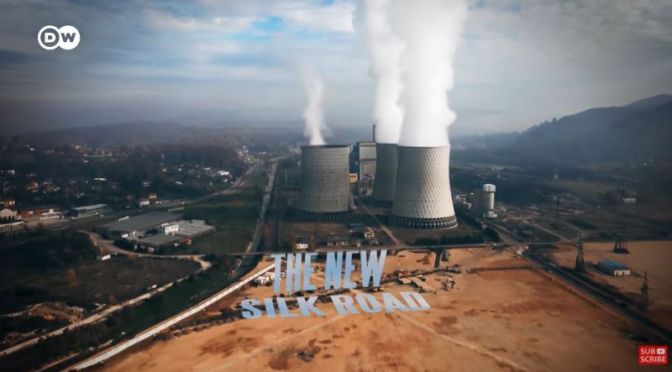
The “New Silk Road” is an enormous Chinese international development project. It’s a trade network that involves Asia, Africa, and Europe — and more than 70 countries are already involved. It may turn the old world order upside down. China is investing in bridges, port facilities, railroads, and roads around the world. Beijing is spending several hundred billion euros on what it calls the “Silk Road Economic Belt.” Eastern European and the Balkan countries in particular are interested in Chinese loans and investments, as they look beyond the EU for sources of capital. In turn, the region is attractive to China because of its strategic position as a gateway to the West. A new coal-fired power plant is being built in Tuzla, Bosnia, with the help from China. But not everyone is in favor of the project. While the new plant will emit fewer emissions which will have a positive effect on air-quality, some question the country’s decision to commit to using coal for decades to come.

Analysis: Multiresistant Bacteria That Outsmart Antibiotics (Video)

Antimicrobial resistance is one of the greatest medical challenges of our time. Among the causes are industrial livestock farming, poor hygiene in hospitals, and the misuse of antibiotics. This documentary looks at approaches to fighting multiresistant strains of bacteria.

Each year 33,000 people in Europe die after becoming infected with bacteria that are resistant to antibiotics. Hygiene specialist Dr. Ron Hendrix has been working for years to prevent outbreaks of infectious disease in hospitals. Dr. Hendrix says that he and other experts in the Netherlands recognized early on that they’d have to fight the spread of bacteria just as actively as they would the actual infection.

Hendrix has convinced a number of German hospitals to re-open their diagnostic laboratories, as well. In the early 2000s, many of these labs had been shut down as a cost-cutting measure. And farmers in Denmark voluntarily chose to sharply reduce their use of antibiotics, after evidence showed that intensive livestock farming caused multiresistant bacteria to multiply.

Infectious disease specialist Dr. Patrick Soentjens was able to convince Belgium’s health ministry to allow the use of “phages” to treat stubborn antimicrobial resistant pathogens. Phages are special viruses that kill bacteria. Dr. Soentjens is certain that this well-known, but largely forgotten option could save many lives. Belgium has become the first western European country where phages have been officially recognized as a legitimate medical treatment.

Train Travel: ‘Kyushu – Southern Japan’ (Video)

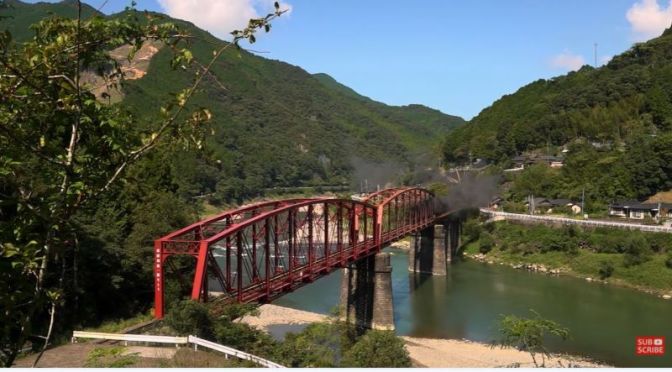
Kyushu is said to be the wellspring of Japanese civilization. Yet few tourists visit the southernmost of Japan’s main islands. This documentary contrasts modern Japanese cities with traditional customs in the countryside.

The rail journey begins in Fukuoka – a city with a metro population of 2.5 million – and ends at the southern tip of the island, in the city of Ibusuki. As the train rolls along, it travels through time – and reveals the amazing diversity and contrasts of the most southerly of Japan’s four main islands. The trip provides spectacular landscape views, as well as deep insight into a foreign culture, and its ancient traditions and modern lifestyles. In the West, Kyushu is one of the lesser-known regions in the “Land of the Rising Sun.”

Even for the Japanese, the green, mountainous island is seen mostly as a holiday spot. Europeans rarely visit this part of the country – but there are plenty of restaurants and cafes that have names like “Wolfgang,” “Bavaria,” or “Côte d’Azur.” Travel guides say that these words sound “European” to Japanese.

The family of the emperor, or Tenno, comes from Kyushu as well. This is also where the dynasties of the proud warrior class, the samurai, have their roots. And there are a number of active volcanoes on Kyushu. One of the most famous is Mount Aso. Its caldera – the cauldron-like hollow at the top — has a circumference of about 120 kilometers.

Green Investment: ‘Can It Stop Global Warming?’

A new generation of investors wants to force businesses to become environmentally-friendly. Even climate conservationists know that money talks, but can green investments really save the world? Green investment rewards companies that use sustainable production practices and protect the environment. At the same time, companies that pollute or contribute to global warming are deprived of funds.

The strategy converts the once secondary issue of the environment into hard, cold cash. Antonis Schwarz is 30 years old — and an investor, philanthropist, and activist. His slogan is “cash against climate change.” Schwarz, like many other wealthy millennials, sees climate change as the key variable when it comes to investing money. These people intentionally put their cash into companies and projects that protect the environment. Schwarz believes that those who are well-off have a special responsibility to follow this strategy. He says, “When you are able to change something and you don’t, you’re complicit. We all have to become fully involved, so we can prevent a climate disaster.”

This philosophy can be summed up with the following question: “What’s the point of having loads of money if it becomes worthless because you’re living on a planet that’s becoming increasingly chaotic?” Institutional investors have more money at their disposal than wealthy private individuals do. Their approach is also changing — and not out of pure idealism. Extreme weather events caused by climate change, for example, are bad for business. They can force corporations to write off billions in damages.

This documentary goes behind the scenes to take a closer look at the financial markets. How well does “impact investing” work? Can investors really move large, powerful corporations to change their strategies? Politicians have so far failed to do precisely that.

Extreme Sports: Norway’s ‘Finnmarksløpet Dogsled Race’ – Europe’s Toughest

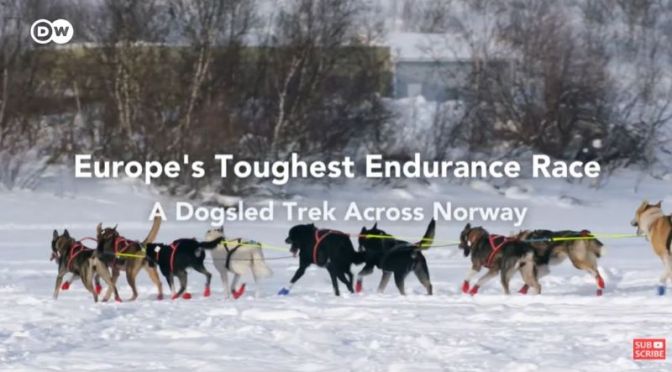
The Finnmarksløpet in Norway is the longest and toughest dogsled race in Europe. Among this year’s competitors are Ben Voigt from Germany and 20-year-old native Hanna Lyrek. It’s a race that is always full of surprises and setbacks.

Investigations: Chinese Telecomunications Giant Huawei – High Tech or Spy?

Telecommunications giant Huawei is said to be one of the most powerful companies in China. But Huawei has been accused of systematic espionage, and some Western governments doubt whether the company is truly independent of the Chinese government.

This documentary investigates concerns about Huawei and internet security. The company is a major player in the manufacture of smartphones, and enjoys a technological lead in the development of the super-fast 5G broadband network worldwide. But the US and some other Western countries suspect that Huawei works closely with the Chinese government on espionage and sabotage operations.

Has Huawei becomne a pawn in the trade war between the US and China? The arrest of Huawei chief financial officer Meng Wanzhou in Canada in 2018 — at the request of US authorities — marked the climax of the conflict between Huawei and Washington. Some European countries also have concerns about the company.

Does Huawei really have close ties to the Chinese government? And what are the benefits and risks for those foreign clients who choose to work with this 5G giant?

Documentary: ‘The Battle Over Antarctica’ (Video)

The world’s major powers agree: the resources of Antarctica should be exploited peacefully. They have promised to promote peace and scientific research in Antarctica, and to protect its environment. But is this spirit real, or just a lot of talk?

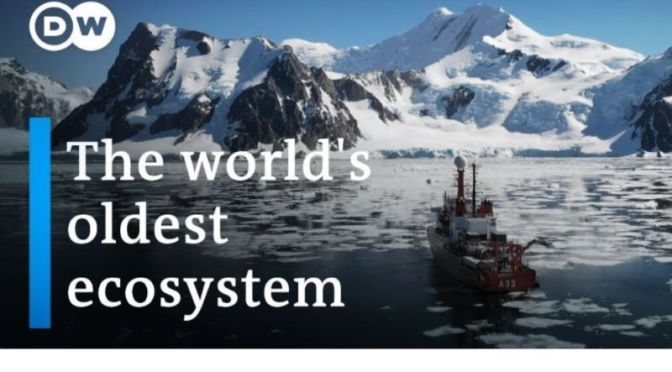
This documentary features interviews with researchers, activists, diplomats, and military personnel from Spain, Russia, Portugal, Chile, Argentina, and the United States. There’s been much debate over how to share control of resources in Antarctica, which is the world’s oldest ecosystem. Critics say that behind the scenes, a game of high-stakes poker is underway. Could this competition end in armed conflict? Or will Antarctica serve as a model for peaceful international cooperation? This film addresses these complicated issues with in-depth analysis, accompanied by magnificent images of the Antarctic landscape. The documentary’s soundtrack was composed by Javier Weyler, former drummer of the Welsh rock band, the Stereophonics.

Arctic Journey: From Greenland To Alaska

Two film crews explore the spectacular wilderness of the Arctic. The people who live there face dramatic changes.

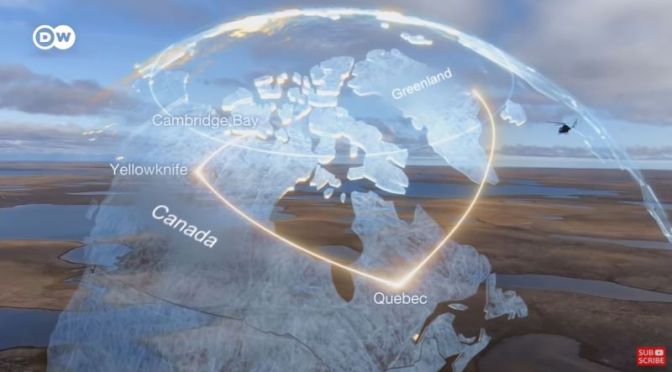
Part two takes viewers from East Greenland to Alaska. The region around the North Pole is one of the greatest and least-known wildernesses in the world – and it’s rapidly changing due to global warming. 350 people, most of them Inuit, live in Ittoqqortoormiit in Greenland. The nearest settlement is on neighboring Iceland. Almost 800 kilometers of Arctic Ocean separate the two islands. The film team accompanies an Inuit family through Scoresby Sound, a fjord system on the eastern coast of Greenland.

They travel hundreds of kilometers in small boats through pack ice, passing icebergs as high as skyscrapers. On the way they meet whalers who are hunting for narwhals in summer. In this Inuit culture, narwhal skin and polar bear goulash have ensured survival for thousands of years. Greenpeace and WWF activists want to stop whaling and polar bear hunting – but this poses a threat to the indigenous way of life on Greenland.

On the expedition through the world’s largest fjord system, the team learns about the consequences of global warming: melting permafrost and a rapid increase in greenhouse gases. The changes are worrying. Some say they have brought benefits to the far north — the ice breaks up earlier and so too does the hunting season. However, the risks outweigh this benefit. The knowledge and way of life that have been passed down from generation to generation may soon be unsustainable.