
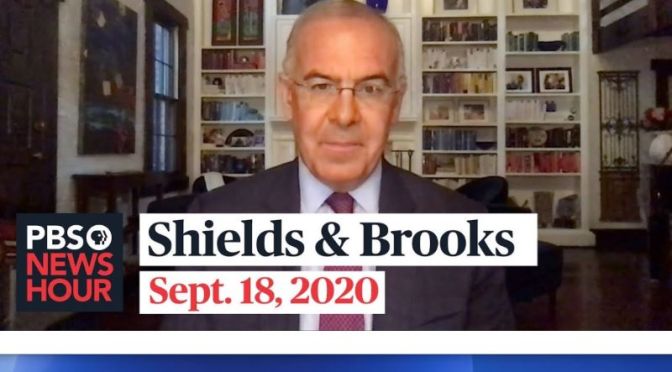
Syndicated columnist Mark Shields and New York Times columnist David Brooks join Judy Woodruff to discuss the week in politics, including President Trump’s vaccine rhetoric, the administration’s political manipulation of science, Joe Biden’s campaign message for working-class voters and Trump’s approach to U.S. history education.
Tag Archives: Covid-19

Morning News Podcast: Reassessing Forests And Fires, College Reopenings

Nearly 3.5 million acres of land have burned in California, making this the largest wildfire season recorded in the state’s history – and it’s only September. Fires are still raging up the entire west coast, air quality remains unhealthy, and entire forests have been decimated.
Our relationship with forests and fire is changing and will play a big role in how forests evolve.
- Plus, how colleges are reopening without a surge in infections.
- And, with the start of the Jewish New Year, synagogue High Holy Day services are going virtual.
Guests: Axios’ Bryan Walsh, Alison Snyder, and Erica Pandey and Benjy Renton, senior at Middlebury College.
New Science Podcasts: Covid-19 And The Decline Of Prison Populations

Staff Writer Kelly Servick joins host Sarah Crespi to discuss how jail and prison populations in the United States have dropped in the face of coronavirus and what kinds of scientific questions about public health and criminal justice are arising as a result.
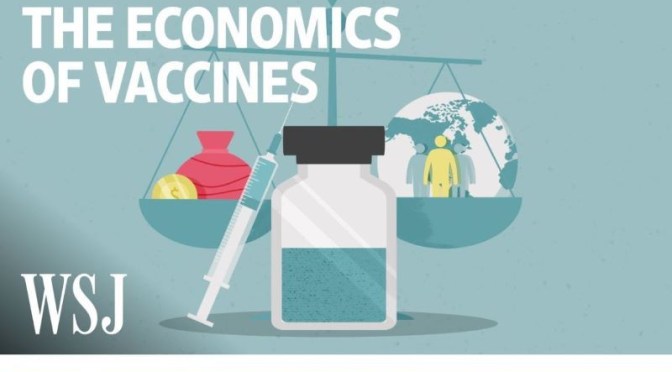
Research:”The Costs Of A Covid-19 Vaccine” (Video)
As government and private money pour into the global race for a Covid-19 vaccine, drugmakers are under great pressure to keep the shot affordable while also keeping investors happy. WSJ explains what this means for the final price tag of the jabs.
Illustration: Crystal Tai

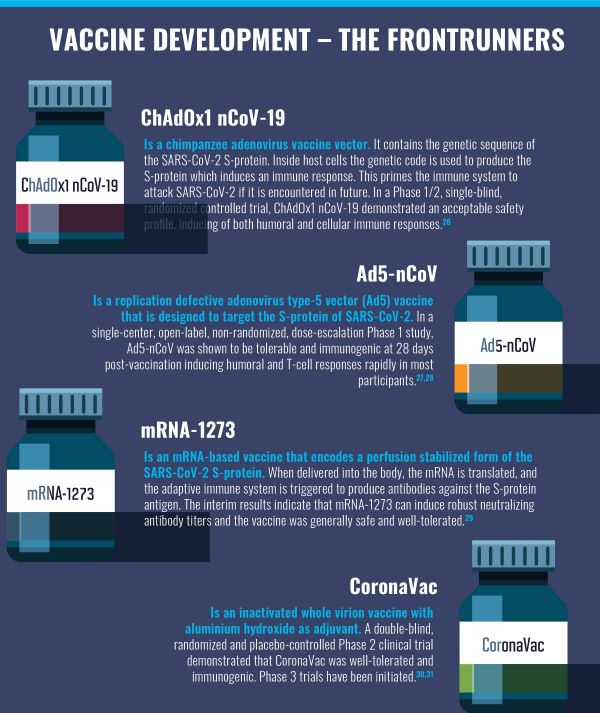
Infographics: “Covid-19 Antibodies & Antigens”


Top Science Podcasts: The Vikings Migration Mapped, Covid-19 Trial Is Halted, Tiniest Ultrasound Device

Nature podcast discusses: Mapping the migration of the Vikings, a leading Covid-19 vaccine trial was abruptly halted and the world’s smallest ultrasound device.
In this episode:
00:45 Following the Viking footprint across Europe
To better understand who the Vikings were, and where they went, researchers have mapped genomes from hundreds of archaeological artifacts. Research Article: Margaryan et al.
08:00 Coronapod
Phase III trials of a leading coronavirus vaccine were abruptly paused last week – we discuss how news of the event leaked out, and the arguments for transparency in clinical trials. News: A leading coronavirus vaccine trial is on hold: scientists react; News: Scientists relieved as coronavirus vaccine trial restarts — but question lack of transparency; If you are involved in a clinical trial for a coronavirus vaccine or treatment, please fill in our survey.
21:05 Research Highlights
A burnt grain silo gives insight into ancient tax collection, and how hummingbirds survive the cold Andean nights. Research Highlight: Ancient tax collectors amassed a fortune — until it went up in smoke; Research Highlight: Why some of the world’s zippiest birds go stiff and cold every night
23:40 Ultra-tiny ultrasound
Scientists have developed an ultrasound detector which is smaller than the wavelength of sound it detects, providing highly detailed imaging at a cellular level; Research Article: ; Research Article: Shnaiderman et al.
29:53 Briefing Chat
We discuss some of the latest stories highlighted in the Nature Briefing. This week we talk about why California has an orange hue, and the strangeness at the edge of the Solar System. Forbes: The Science Behind Mysterious Orange Skies In California; BBC Future: The weird space that lies outside our Solar System

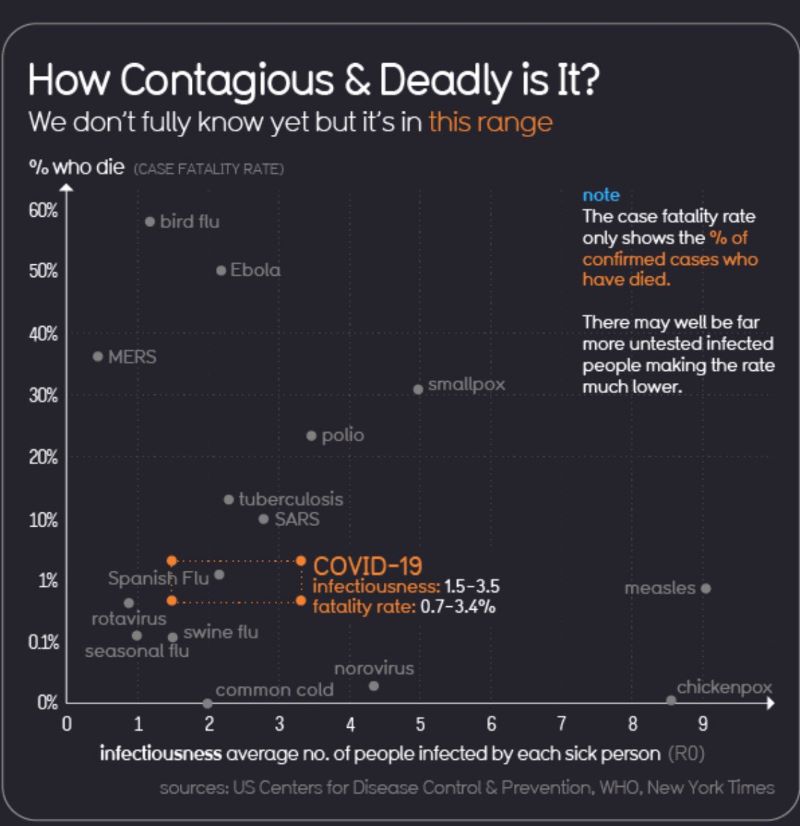
Covid-19 Infographics: “Riskiest Activities, How Contagious & Deadly It Is”


World News Podcast: California Fire Deaths, Afghanistan Peace Talks & India’s Covid Cases Soar

CBC Radio reports: The search for the dead in California wildfires, peace talks for Afghanistan, a surge of Covid cases in India and other top news.
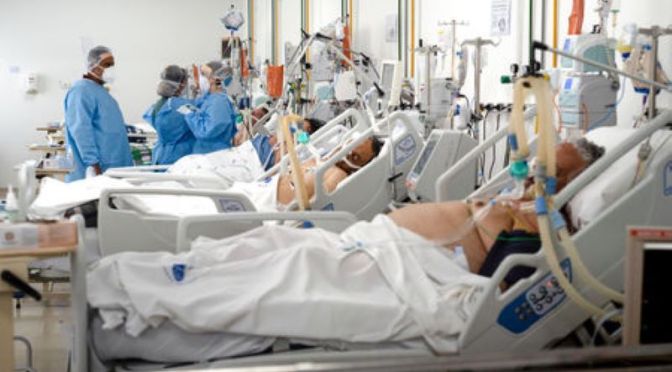
Covid-19 Studies: 77% Of Hospitalized Patients Are Overweight Or Obese
But on its own, “BMI [body mass index] remains a strong independent risk factor” for severe COVID-19, according to several studies that adjusted for age, sex, social class, diabetes, and heart conditions, says Naveed Sattar, an expert in cardiometabolic disease at the University of Glasgow. “And it seems to be a linear line, straight up.”
- For starters, the blood of people with obesity has an increased tendency to clot—an especially grave risk during an infection that, when severe, independently peppers the small vessels of the lungs with clots
- Immunity also weakens in people with obesity, in part because fat cells infiltrate the organs where immune cells are produced and stored, such as the spleen, bone marrow, and thymus, says Catherine Andersen, a nutritional scientist at Fairfield University. “We are losing immune tissue in exchange for adipose tissue, making the immune system less effective in either protecting the body from pathogens or responding to a vaccine,” she says.
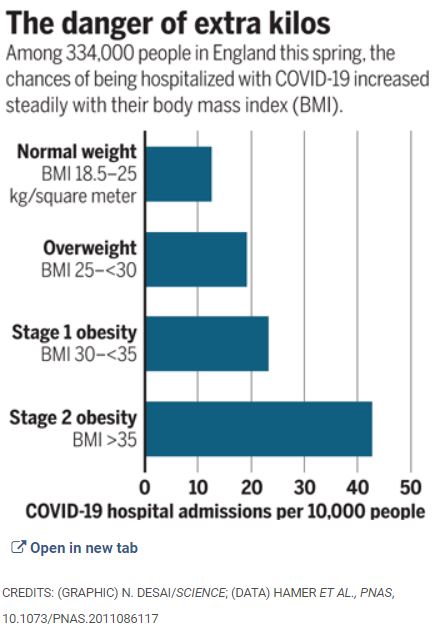
The impact extends to the 32% of people in the United States who are overweight. The largest descriptive study yet of hospitalized U.S. COVID-19 patients, posted as a preprint last month by Genentech researchers, found that 77% of nearly 17,000 patients hospitalized with COVID-19 were overweight (29%) or obese (48%). (The Centers for Disease Control and Prevention defines overweight as having a BMI of 25 to 29.9 kilograms per square meter, and obesity as a BMI of 30 or greater.)
Top New Science Podcasts: Cooling Computer Chips, Covid-19 & Avalanches

Nature looks at: Keeping electronics from overheating, Covid-19 changes, and how to include minority populations in genetic analyses.
In this episode:
00:46 Cool computers
Keeping components cool is a major hurdle when it comes to increasing electronic power. This week, we find out about a new way to integrate tiny microfluidic channels directly into circuits, to help keep them cool. Research Article: van Erp et al.
06:57 Coronapod
By comparing coronavirus genomes taken from people around the world, researchers are getting an idea of how SARS-CoV-2 is changing as it spreads. We discuss a particular genetic mutation that rapidly became dominant early in the pandemic, and the effect it may have had on the outbreak. News: The coronavirus is mutating — does it matter?
21:41 Research Highlights
How rock avalanches can cause destructive air blasts, and melting glaciers cause lakes to grow. Research Highlight: The violent blasts that can add to an avalanche’s devastation; Research Article: Shugar et al.
23:59 The people left out of genetic studies
Minority populations are often underrepresented in genetic study recruitment. However, even when data about them is collected it may go unused. We find out why, and what can be done about it. Comment: Don’t ignore genetic data from minority populations
30:51 Briefing Chat
We discuss some of the latest stories highlighted in the Nature Briefing. This week we discuss how bacterially-infected mosquitoes could curb dengue fever, and some surprisingly large black holes. Nature News: The mosquito strategy that could eliminate dengue; Nature News: ‘It’s mindboggling!’: astronomers detect most powerful black-hole collision yet
 Boomers Daily