
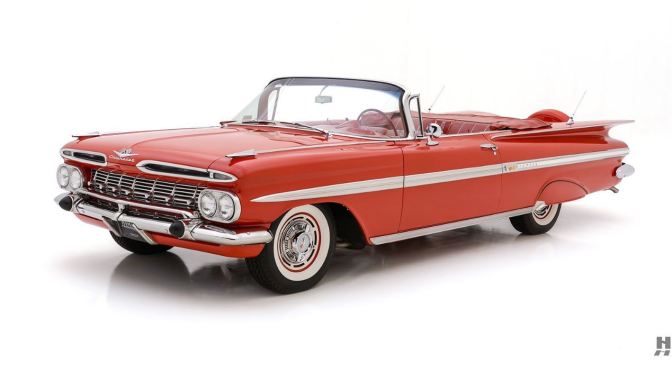
 The Chevrolet Impala is a full-size car built by Chevrolet for model years 1958 to 1985, 1994 to 1996, and 2000 onward. The Impala is Chevrolet’s popular flagship passenger car and is generally among the better selling American made automobiles in the United States.
The 1959 Chevrolet Impala was redesigned. Sharing bodyshells with lower-end Buicks and Oldsmobiles as well as with Pontiac, part of a GM economy move, the Chevrolet’s wheelbase was 1-1/2 inches longer. Using a new X-frame chassis, the roof line was three inches lower, bodies were two inches wider, and curb weight increased. Its tailfins protruded outward, rather than upward. The taillights were a large “teardrop” design at each side, and two slim-wide nonfunctional front air intake scoops were added just above the grille,
 The Impala became a separate series, adding a four-door hardtop and four-door sedan, to the two-door Sport Coupe and convertible. Sport Coupes featured a shortened roof line and wrap-over back window. The standard engine was an I6, while the base V8 was the carryover 283 cu in (4.6 L), at 185 hp (138 kW). Optional were a 283 cu in with 290 hp (220 kW) and 348 cu in (5.7 L) V8 up to 335 hp (250 kW). Standard were front and rear armrests, an electric clock, dual sliding sun visors, and crank-operated front vent windows. A contoured hooded instrument panel held deep-set gauges. A six-way power seat was a new option, as was “Speedminder”, for the driver to set a needle at a specific speed and a buzzer would sound if the pre-set was exceeded.
From Wikipedia

 The Cord 810, and later Cord 812, was a luxury automobile produced by the Cord Automobile division of the Auburn Automobile Company in 1936 and 1937. It was the first American-designed and built front wheel drive car with independent front suspension. It followed the 1934 Citroën Traction Avant and the Cord L-29, both of which also had front wheel drive. Both models were also the first to offer hidden headlights.
 The styling of the Cord 810 was the work of designer Gordon M. Buehrig and his team of stylists, which included young Vince Gardner and Alex Tremulis. While the first American front-wheel-drive car with independent front suspension, it had an archaic tube rear axle with semi-elliptic rear springs. Power came from a 4,739 cc (289 cu in) Lycoming V8 of the same 125 hp (93 kW) as the L-29. The semi-automatic four-speed transmission (three plus overdrive) extended in front of the engine, like on a Traction Avant. This allowed Buehrig to dispense with the driveshaft and transmission tunnel; as a result, the new car was so low it required no running boards. It had a 125 in (3,175 mm) wheelbase (shared with several 812 body styles), and in 1936 came in four models: the entry-level sedan at US$1995, the Beverly sedan ($2095), Sportsman ($2145), and Phaeton ($2195). The 1937 812s had the same models, priced $2445, $2545, $2585, and $2645, plus two more, on a 132 in (3,400 mm) wheelbase, the $2960 Custom Beverly and $3060 Custom Berline.
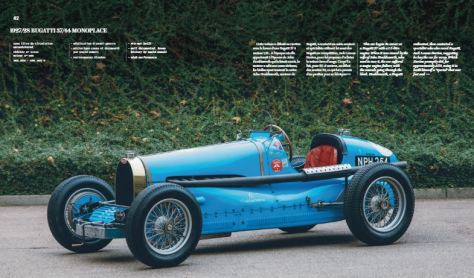 The annual salon is Paris provides manufacturers with a stage on which to show off their commitment to preserving their precious pasts, dealers the chance to set out their stalls and signal their intentions for the coming year and humble enthusiasts like us an opportunity to ogle thousands of collectable cars ranging from the affordable and the obscure to the rare and the downright priceless.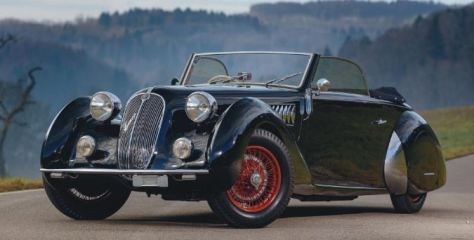
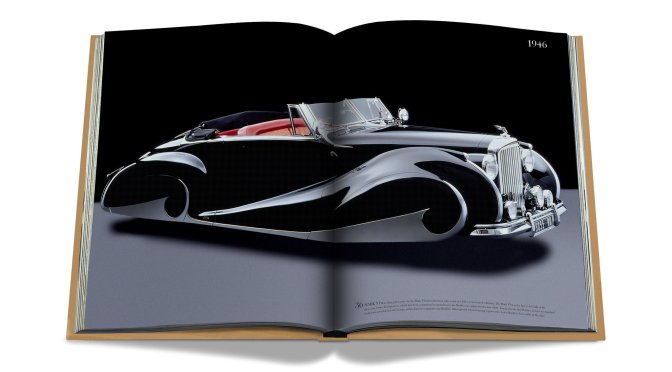
 Assouline presents yet another fascinating volume dedicated to the preeminent British car brand—Bentley: 100. Housed in a hand-stitched leather bound, limited edition case, this all-inclusive work presents an exhaustive list of the one hundred single most important and groundbreaking Bentley models, with detailed critiques and explanations relating to each automobile’s unique engineering excellence and the various creative avenues Bentley may have taken during the manufacturing process.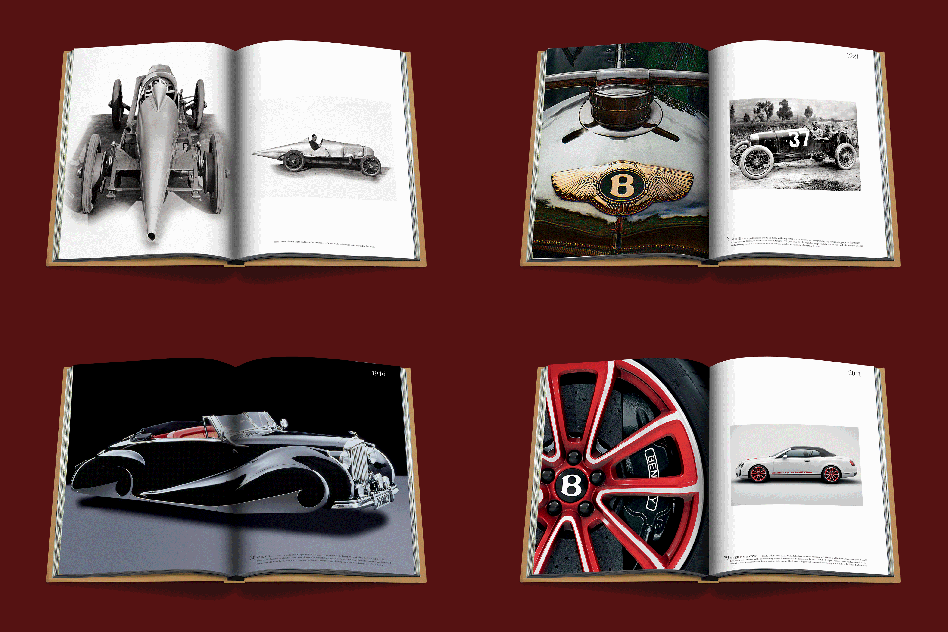
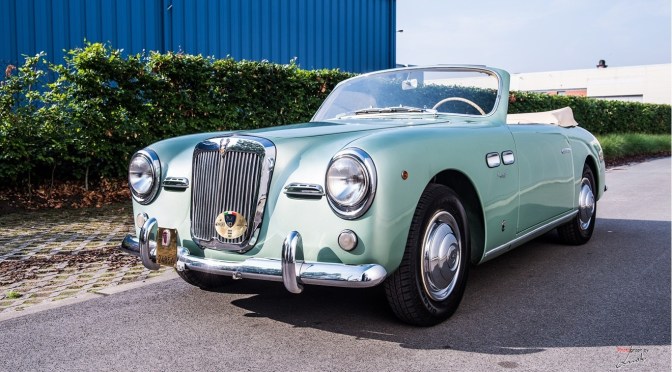
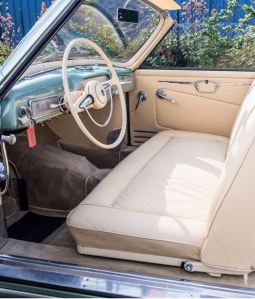 The Siata Daina is an Italian car produced by Siata from 1950-1958. The Daina was available as a coupé or a convertible and had custom bodies by Stabilimenti Farina, Bertone and other coach builders.
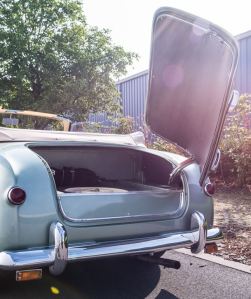 were made as well) but when they closed in 1953, Bertone took over production with a coupe model of their own design called the “Sport”.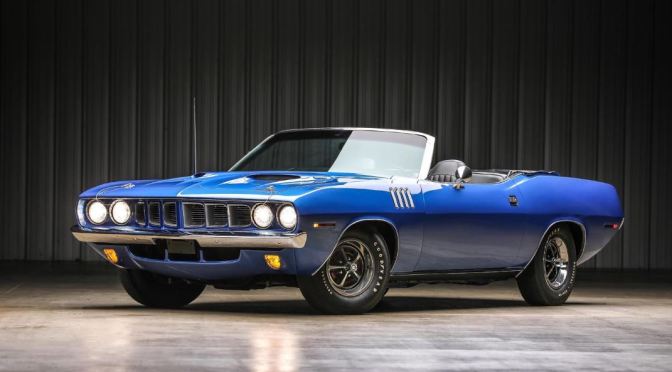
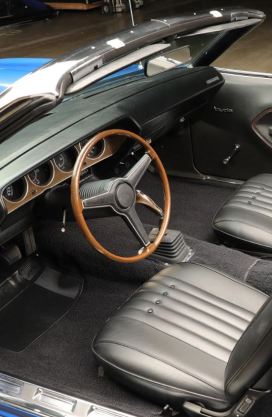 The Plymouth Barracuda is a two-door
  The redesign for the 1970 Barracuda removed all its previous commonality with the Valiant. The original fastback design was deleted from the line and the Barracuda now consisted of coupe and convertible models. The all-new model, styled by John E. Herlitz, was built on a shorter, wider version of Chrysler’s existing B platform, called the E-body. Sharing this platform was the newly launched Dodge Challenger; however no exterior sheet metal interchanged between the two cars, and the Challenger, at 110 inches (2,794 mm), had a wheelbase that was 2 inches (51 mm) longer than the Barracuda.


 Boomers Daily