
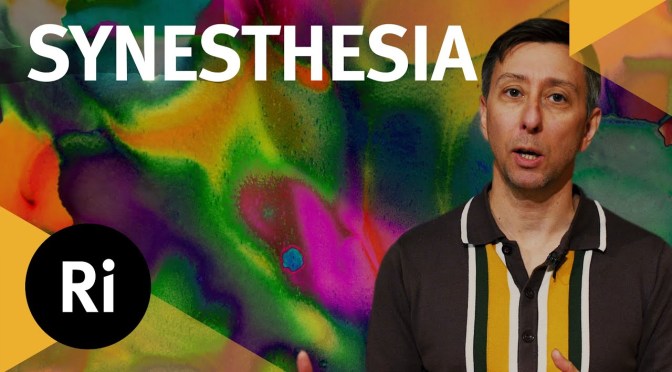
Can you imagine if each word had its own colour, or you could ‘see’ different types of music?
Synesthetes can experience the ordinary world in some pretty extraordinary ways. In this video Jamie Ward explains the variety of different ways in synesthesia can manifest itself, and what is happening in the brains of those who experience it.
Jamie Ward is Professor of Cognitive Neuroscience at the University of Sussex. He has written books a number of books about neuroscience and synesthesia.
Synesthesia is a perceptual phenomenon in which stimulation of one sensory or cognitive pathway leads to involuntary experiences in a second sensory or cognitive pathway. People who report a lifelong history of such experiences are known as synesthetes. Awareness of synesthetic perceptions varies from person to person.[7] In one common form of synesthesia, known as grapheme–color synesthesia or color–graphemic synesthesia, letters or numbers are perceived as inherently colored. In spatial-sequence, or number form synesthesia, numbers, months of the year, or days of the week elicit precise locations in space (for example, 1980 may be “farther away” than 1990), or may appear as a three-dimensional map (clockwise or counterclockwise). Synesthetic associations can occur in any combination and any number of senses or cognitive pathways.
From Wikipedia
 “These results are exciting, as they suggest that people may potentially prevent brain shrinking and the effects of aging on the brain simply by becoming more active,” said study author Yian Gu, Ph.D., of Columbia University in New York and a member of the American Academy of Neurology.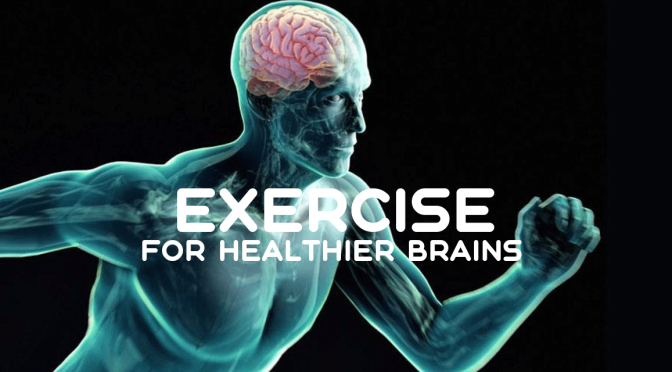
 In conclusion, increased CRF (cardiorespiratory fitness) following this six-month intervention was associated with enhanced brain glucose metabolism in the PCC (posterior cingulate cortex), a region linked to AD, and cognition among late-middle-aged individuals at risk for AD. If these findings are supported by a larger-scale study, this would provide strong evidence that adults at risk for AD may enhance brain function and cognition by engaging in aerobic exercise training.
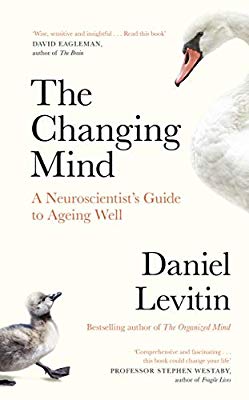 Challenging widely held assumptions about the diminishing abilities of an ageing brain, leading neuroscientist Daniel Levitin argues that we should view getting older as a beneficial experience rather than a form of cognitive entropy. Persuasively argued and consistently surprising, The Changing Mind will alter your perception of the relationship between age and intellect.
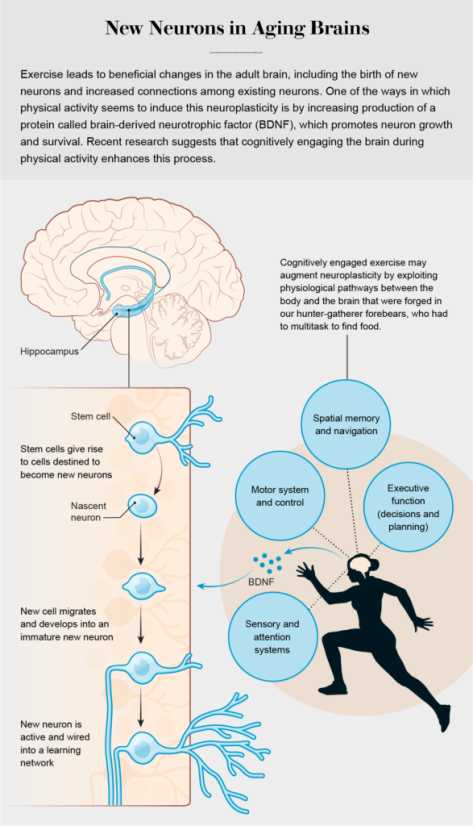
 And what if older neurons were replaced wholesale with new stem cells? They might scramble different sectors of the brain by destroying the new connections between the originals. Fiddle with those, and who knew what mayhem might follow? Memories, learning, and other cerebral functions that the brain had grown accustomed to might simply vanish. On the other hand, in the case of a disease like Alzheimer’s, maybe new memories would be better than no memories at all.


 Boomers Daily