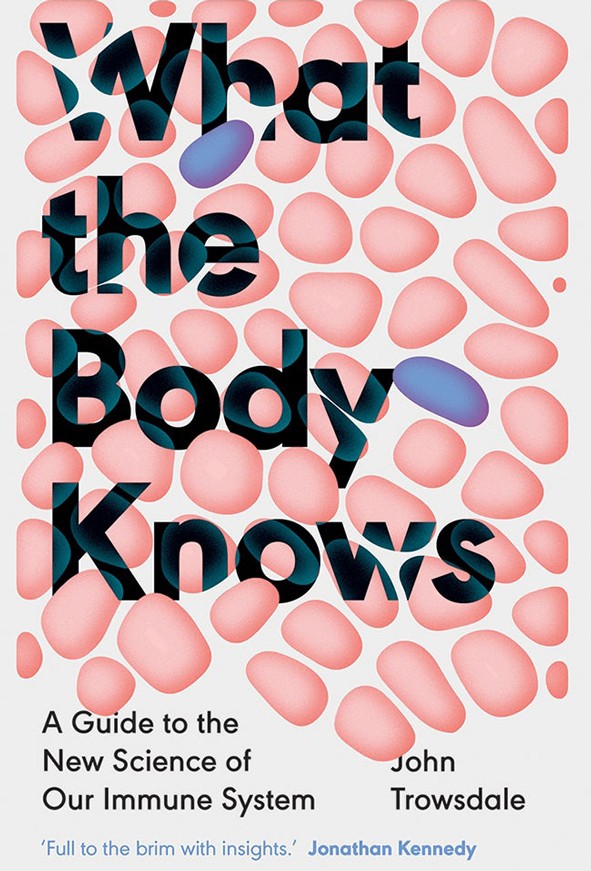
To understand the body, “we might picture the heart as a pump, the brain as a kind of computer, the lungs as bellows, the kidney as filters”. But what about the immune system — asks immunologist John Trowsdale in his engaging analysis. It has no straightforward analogy, operating simultaneously as an antiviral software, a surveillance camera, a weapons system and a way to share resources. The system is “unobtrusive yet extensive, nowhere and everywhere, redundant yet essential, powerful yet remote”.
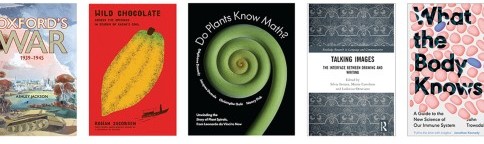
Wild Chocolate
Rowan Jacobsen Bloomsbury (2024)
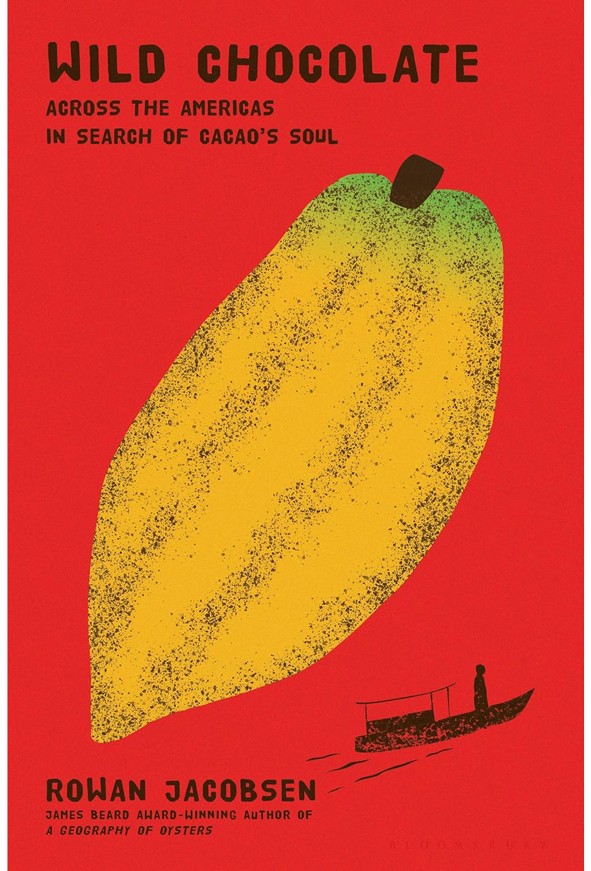
When residue inside decorative pots from ancient Mexico was analysed, it yielded traces of cacao — early evidence of cocoa consumption. The Spanish word chocolate might have been influenced by the Nahuatl (Aztec) cacahuatl, or cacao water. Journalist Rowan Jacobsen’s appealing book explores wild chocolate’s history as he travels through Central and South America, meeting chocolate makers, activists and Indigenous leaders who revive the bean’s variety in taste and prestige, lost during its modern industrial manufacture.
Talking Images
Eds Silvia Ferrara et al. Routledge (2024)
The logo of the Beijing 2008 Paralympic Games was a figure with a red dot ‘head’, blue ‘body’ and single, straight green ‘leg’ — adapted from the Chinese character zhi, meaning ‘birth, life’, ‘arrival’ and ‘achievement’. It is one of a huge variety of “talking images” in a collection edited by three scholars interested in writing. Images range from Palaeolithic symbols and ancient Mesopotamian pictograms to modern Chinese calligraphy and Indian comics. The book traces links between images, marks, language and writing.
Do Plants Know Math?
Stéphane Douady et al. Princeton Univ. Press (2024)
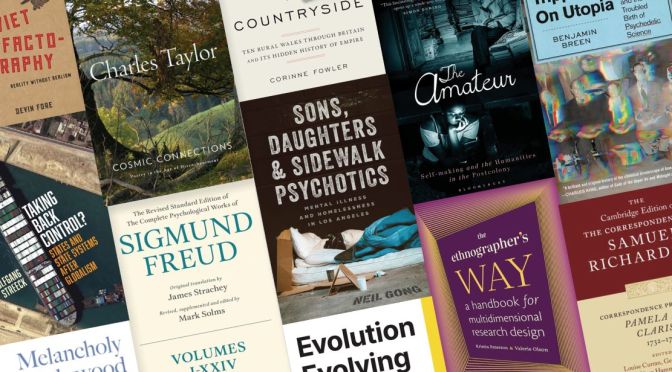
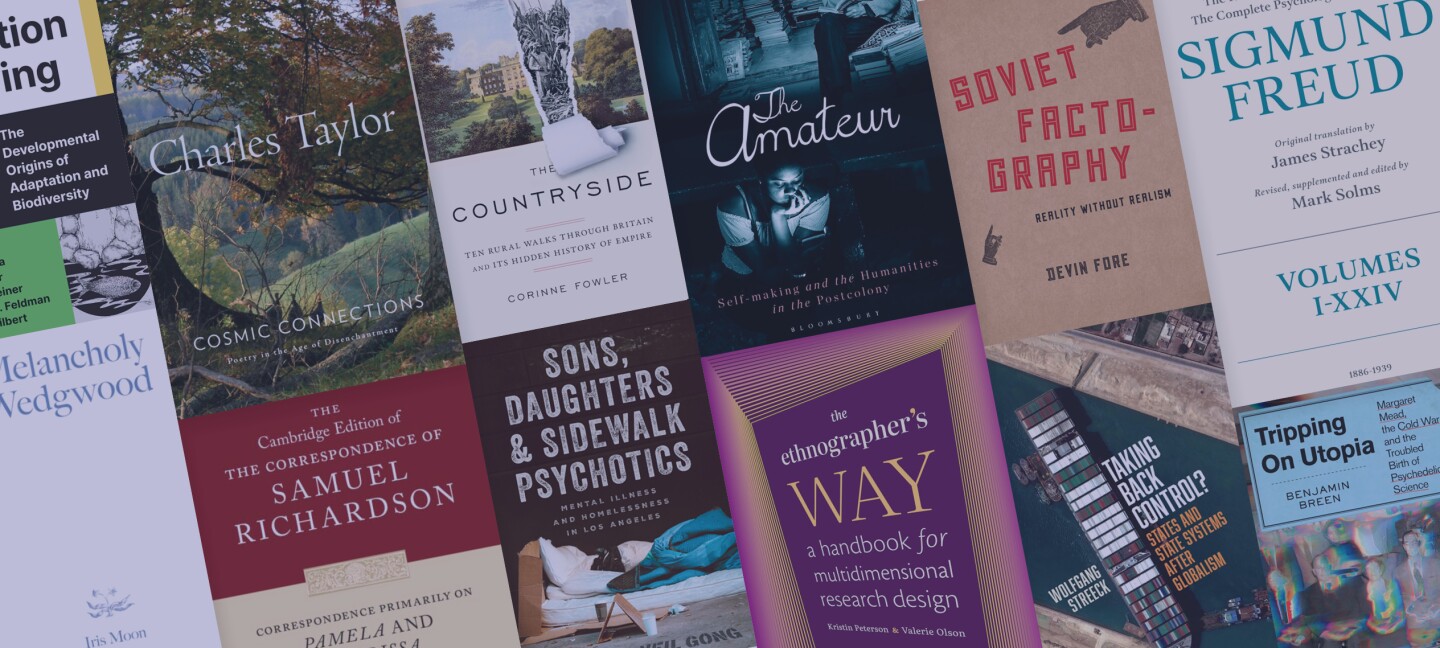
Charles Taylor’s revelatory Cosmic Connections: Poetry in the Age of Disenchantment (Harvard University Press, 2024) draws together different strands from Taylor’s storied philosophical career to present a new account of Romantic poetry. “Philosophy moves us because it convinces us; poetry convinces us because it moves us.” Taylor asks what it would mean to take seriously poetry’s ambition to reveal new dimensions of the world through the resources of image and symbol. Readers of Friedrich Hölderlin or William Wordsworth are familiar with the feeling that a poem is true or right in some deep sense, without being able to defend or even describe that rightness in philosophical terms. Consider the climax of Wordsworth’s “Lines Composed a Few Miles Above Tintern Abbey,” which serves as Taylor’s central example. The poet discerns
A motion and a spirit, that impels All thinking things, all objects of thought, And rolls through all things.
A New Theory of Evolution
By Jessica Riskin
Evolution Evolving: The Developmental Origins of Adaptation and Biodiversity (Princeton University Press, 2024) makes for an exhilarating reading. It is not just a book but an intellectual revolution. The authors show that the experiences and behaviors of living beings shape the course of evolution. You might find it strange that this would be a revolutionary idea. You might wonder how it could possibly be otherwise: How could the experiences and behaviors of living beings have no bearing whatsoever on the course of evolution?
Adventures With Books
By Priya Satia
Debate about the role of Western education in Britain’s colonies and former colonies (including the United States) is as old as the British empire itself. Those ever-evolving debates have, in turn, been studied for decades by historians, literary scholars, sociologists, and other scholars trained in the Western system that has become a global inheritance. Saikat Majumdar’s The Amateur: Self-Making and the Humanities in the Postcolony (Bloomsbury Academic, 2024) opens up a startlingly fresh perspective on these debates, attending to the unexpected and agonistic ways in which this education system shaped particular individuals whose work has had profound impact around the world.
Psychedelic Rabbit Holes
By Susan Stryker
I came for the acid, and stayed for the deep roots of gender theory that I found in Benjamin Breen’s Tripping on Utopia: Margaret Mead, the Cold War, and the Troubled Birth of Psychedelic Science (Grand Central Publishing, 2024). Admittedly, gender is not the main focus of Breen’s book. But in using the personal, professional, and intellectual partnership of Margaret Mead and Gregory Bateson to structure the narrative of this work of breathtaking originality, Breen reveals the kernel of a far-flung constellation of ideas and contexts that has rewired my brain’s understanding of the gender concept’s origins.
What does political revolution require of writers, artists, photographers, and filmmakers? How do they transform their ways of making in order to keep pace with such upheaval? In Soviet Factography: Reality Without Realism (University of Chicago Press, 2024), Devin Fore uncovers an entire archive of radical responses to these questions in the wake of the Russian Revolution of 1917, revealing a fascinating array of original strategies to record a world turned upside down. We follow all manner of “factographic” authors and artists (writer Sergei Tret’iakov and filmmaker Dziga Vertov are only the best known) as they scramble to register the revolution as immediately as possible. Their aim is not to arrest this transformation but, on the contrary, to dynamize it anew, to carry it forward into all areas of life, private and public, subjective and social. This riveting study of “reality in revolution” pressures our understanding of both terms; it also shows us how a reordering of any society involves a refashioning of its individuals.
Corinne Fowler’s enjoyable and thought-provoking The Countryside: Ten Rural Walks Through Britain and Its Hidden History of Empire (Scribner, 2024) achieves many things with an admirably light touch. Combining her lifelong passion for walking with her pathbreaking work linking England’s buildings and landscapes to the nation’s imperial past, she explores the many ways in which rural Britain was indelibly shaped by its overseas endeavors. She highlights how money, people, and rural industries closely connected the Cotswolds to Calcutta, the Scottish Highlands to Jamaica, Cornwall to West Africa and the Americas, and so on.
Ego, Redux
By Jonathan Lear
It surprised me to discover that The Revised Standard Edition of the Complete Psychological Works of Sigmund Freud (Rowman & Littlefield, 2024) is distinguished by its fidelity to two authors, not just one. Over 30 years in the making — though time was wasted with in-fighting among psychoanalysts — The Revised Standard Edition (RSE) aims to reanimate the distinctive translation into English of James Strachey. This is striking because so many of Strachey’s choices — for example, translating Ich as “Ego,” or Besetzung as “cathexis” — have been the subject of intense criticism. Why, the criticism goes, translate the wonderfully colloquial German that Freud used into a Latinized, “scientific” English? And why not use the occasion of a revised edition to make corrections?
Neil Gong’s Sons, Daughters, and Sidewalk Psychotics: Mental Illness and Homelessness in Los Angeles (University of Chicago Press, 2024) does what the best ethnographies do: provide the reader with an empathetic understanding of its subject. Gong’s comparative work provides a portrait of “sidewalk psychotics” in Los Angeles and compares their experiences to the children of elite families who have similar mental-health struggles.
For those on the street, the aim of most social programs begins with getting them housed. Gong follows people from homelessness into apartments and finds that our social programs of “tolerant containment” do little to tackle mental-health challenges. Policies and programs that focus on housing first are meant to provide a wider range of services, and through detailed observations Gong shows that this rarely happens. The mantra seems to be: get housed, and hopefully the rest will take care of itself. Once housed, people are quite free from intervention or monitoring, including free from programs that might help them address their mental health.
In 1660, the first national post was established in England. By the Victorian age, there were 12 mail deliveries a day in London; friends could dash off a letter in the morning and expect to continue an exchange until late at night. Today, the personal letter in its physical form is largely extinct. But in the era of WhatsApp chats and exchanges on X, its legacy has never been more obvious. Far more than the novel, confession, or diary, the letter is the literary genre at the origins of the modern self: social rather than solitary, reactive rather than reflective, on the cusp of public and private life.
Wolfgang Streeck’s Taking Back Control?: States and State Systems After Globalism (Verso, 2024) may not make for particularly cheerful reading for the holidays. But it is essential for any scholar seeking to make sense of a range of current trends: the ongoing retreat from 1990s-style globalization, the crisis of liberal democracy, and the rapid return of hot wars, cold wars, and trade wars to a world that just yesterday claimed to have overcome them all. It was written before Donald Trump was re-elected as president of the United States, but it helps make sense not only of the recent U.S. election but the broad trend of elections over the last decade and a half, from roughly the start of the financial crisis of 2007-8 down to the present, and not only in the United States but around the world.
It is a bold move to write a biography in 2024 of an artist like Josiah Wedgwood, a British man of the 18th century. Iris Moon knows as much. She describes her book Melancholy Wedgwood (The MIT Press, 2024) as an “experimental biography,” by which she implies something more than defiance of the genre’s conventions. Wedgwood is most familiar today as the name attached to your grandmother’s prized vase. To a narrower audience, he is known as the ceramics entrepreneur whose successful factory embodies the emergence of modern capitalism in England. Neither of those stories is at the heart of Melancholy Wedgwood.
The circumstances that you bring to read — that bring you to read — shape how you receive a text. It just so happens that I was reviewing a stack of grant applications and planning an ethnographic writing course for next term when I stumbled upon The Ethnographer’s Way: A Handbook for Multidimensional Research Design (Duke University Press, 2024), by the anthropologists Kristin Peterson and Valerie Olson. This research-design manual, whose title is a play on Julia Cameron’s The Artist’s Way, is unconventional in many ways: It eschews a linear, hierarchically constructed style of formulating “scientific” research proposals and encourages a collective, creative, and conceptual approach to research design that pushes back against the demands of the neoliberal university and the idea of the “lone, isolated anthropologist.” It’s even a little woo-woo. (The authors admit as much). Peterson and Olson’s model for building and working in community from the inception of a research project aims to “mitigate disheartening experiences of disconnection that occur throughout institutionalized landscapes, such as those between professors and students, people working inside and outside of bounded organizations, and those with expertise versus those with experience.”
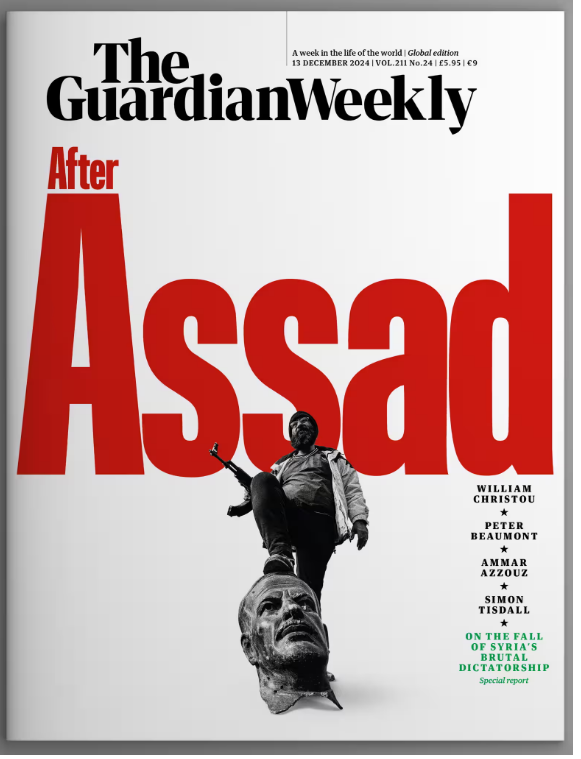
Not even the most optimistic of rebels could have predicted the rapid collapse, last weekend, of the Assad dynasty that ruled Syria with an iron fist for more than 50 years. Yet while there was relief and joy both inside Syria and among the nation’s vast displaced diaspora, it was also accompanied by apprehension over what might come next.
1
Spotlight | Russia and Ukraine wait warily for Trump transition The idea of the US president-election as a saviour for Ukraine, as unlikely as it may seem, holds an appeal for an exhausted nation without a clear path to victory. Shaun Walker and Pjotr Sauer report
2
Environment | The jailed anti-whaler defiant in face of extradition threat Capt Paul Watson talks to Daniel Boffey about his arrest on behalf of the Japanese government, his ‘interesting’ Greenland prison, and separation from his children
3
Feature | The growing threat of firearms that can be made at home One far-right cell wanted to use 3D-printed guns to cause ‘maximum confusion and fear’ on the streets of Finland. Could the police intercept them in time? By Samira Shackle
4
Opinion | Farage is lying in wait. Britain can’t afford for Starmer to fail It is not enough for the Labour leader’s ‘milestones’ to be achieved. Voters must feel the improvement in their daily lives, says Guardian columnist Jonathan Freedland
5
Culture | The best books of 2024 From a radical retelling of Huckleberry Finn to Al Pacino’s autobiography, our critics round up their favourite reads of the year
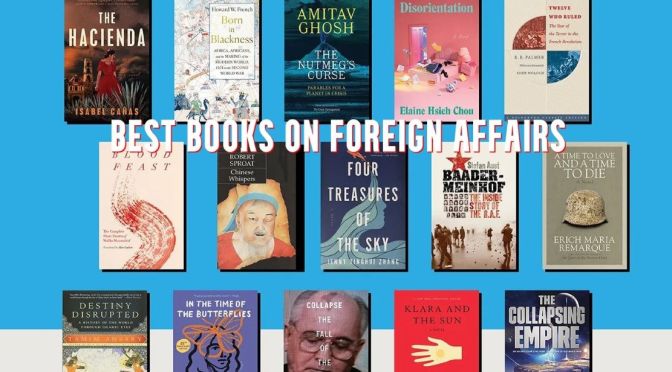
Foreign Policy Magazine(December 8, 2023): The Best of Books 2024 on international politics, economics, and history that were featured in the magazine this year, selected by Foreign Affairs’ editors and book reviewers.
In a revelatory book, Farrell and Newman describe how the United States has turned its control over information networks into a hidden tool of economic domination—and warn of the risks of Washington’s weaponization of data power for ordinary people, as well as for the global financial system.read the review
In a major reconsideration of Cold War history, Radchenko examines the Soviet Union’s competing ambitions for revolution, security, and legitimacy—and how Soviet leadership, blinded by its own hubris and aggression, set the stage for the downfall of the USSR. read the review
Kahan argues that what unifies liberals across the centuries, including those involved in building and defending liberal democracy today, are their efforts to build societies free from the fear of arbitrary power. He sculpts a masterful and beautifully written history of liberalism’s long intellectual journey. read the review
In this sobering study, Levitsky and Ziblatt demonstrate how the United States’ enduring constitutional order—one forged in a pre-democratic age—increasingly thwarts the will of an expanding multicultural majority in favor of a shrinking rural white minority.read the review
Focused on the sophisticated and networked world of autocracy, dictatorship, and tyranny, Applebaum argues that what separates hardcore autocratic states, such as China and Russia, from softer illiberal and authoritarian regimes, such as those in Hungary, India, and Turkey, is the ruthlessness and reach of their dictatorial power and their deep hostility to the Western-led democratic world.read the review
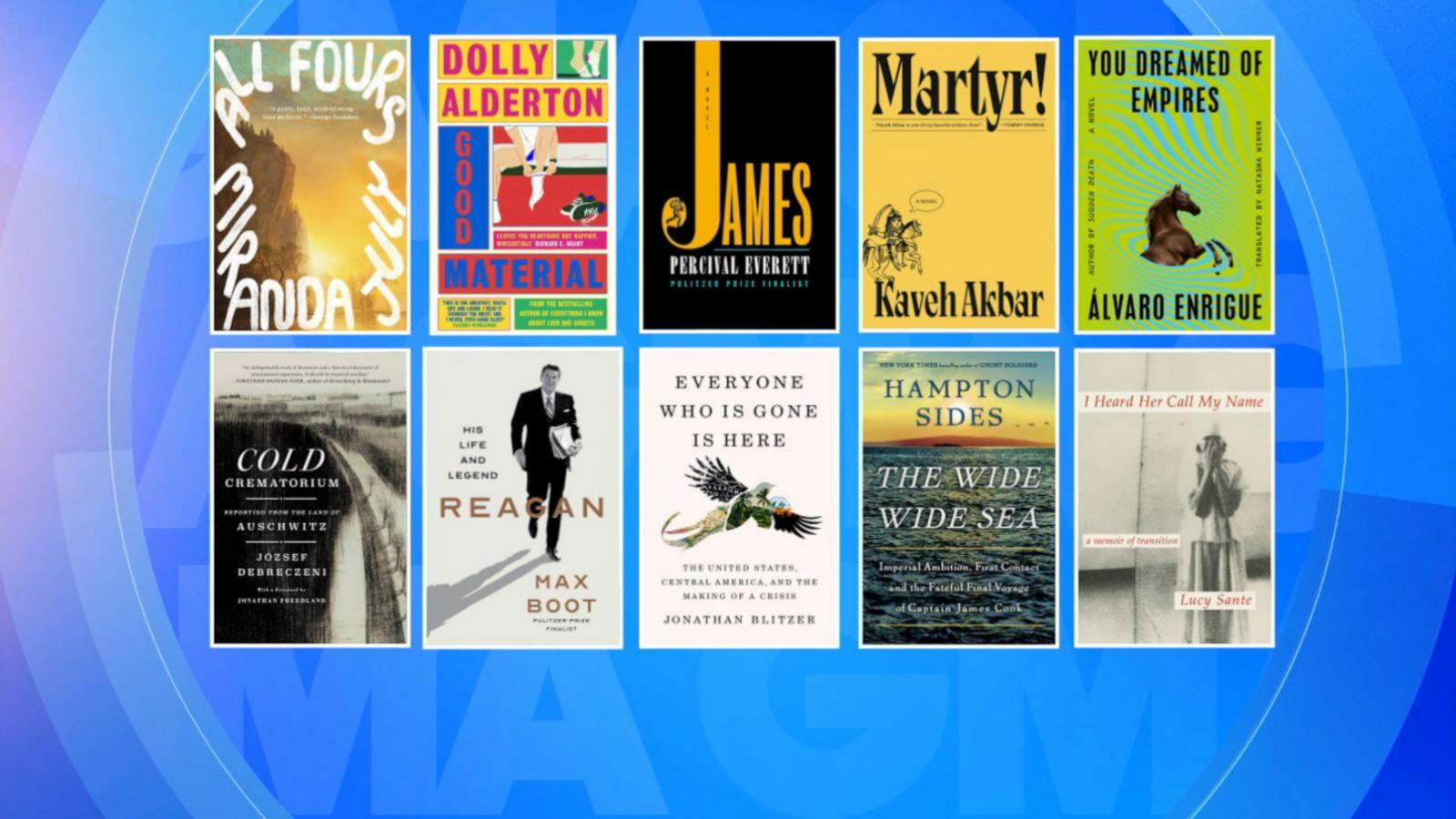
July’s second novel, which follows a married mother and artist who derails a solo cross-country road trip by checking into a motel close to home and starting an affair with a younger rental-car worker, was the year’s literary conversation piece, dubbed “the talk of every group text — at least every group text composed of women over 40” and “the first great perimenopause novel” in just two of many articles that wrestled with its themes. Sexually frank and laced with the novelist’s loopy humor, the book ends up posing that most universal question: What would you risk to change your life? Read our review.
In Alderton’s brisk, witty novel, a 35-year-old struggling comedian in London tries to make sense of a recent breakup at the same moment when the majority of his friends seem to be pairing off for life. Cue snappy dialogue, awkward first dates and a memorable quest for a new home; toss clichéd gender roles, the traditional marriage plot and a ho-hum happily ever after. Not only does Alderton cement herself as a latter-day Nora Ephron, she also puts her own mark on the classic romantic comedy form. There are no second fiddles in “Good Material”; every character sings. And there is a deeper message, revealed in a surprise twist, having to do with independence, adventure and charting your own course. Read our review.
It takes a lot of ambition, skill and vision to reinvent one of the most iconic books in American letters, but Everett demonstrates he possesses those virtues in spades in “James.” The novel is a radical reworking of Mark Twain’s “Huckleberry Finn,” telling the story not from Huck’s perspective, but from the point of view of the enslaved man who accompanies Huck down the Mississippi River: Jim (or, as he clarifies, James). From James’s eyes, we see he is no mere sidekick but rather a thinker and a writer who is code-switching as illiterate and fighting desperately for freedom. Everett’s novel is a literary hat trick — a book that highlights the horrors in American history and complicates an American classic, all while also emerging as a work of exquisite originality in its own right. Read our review.
Cyrus Shams, an Iranian American aspiring poet and recovering drug addict, wallows in a post-college malaise in a fictional Midwestern town. He’s working dead-end jobs and halfheartedly attending A.A., while grieving his parents’ deaths and, increasingly, fantasizing about his own. Cyrus is lost and sad, but this captivating first novel, by an author who is himself a poet, is anything but. As Akbar nudges Cyrus closer to uncovering a secret in his family’s past, he turns his protagonist’s quest for meaning — involving a road trip to New York and a revelatory encounter in the Brooklyn Museum — into an indelible affirmation of life, rife with inventive beauty, vivid characters and surprising twists of plot. Read our review.
History has long been Enrigue’s playground, and his latest novel takes readers to 16th-century Tenochtitlan, or what is now Mexico City. Hernán Cortés and his men have arrived at Moctezuma’s palace for a diplomatic — if tense and comically imbalanced — meeting of cultures and empires. In this telling, it’s Moctezuma’s people who have the upper hand, though the emperor himself is inconveniently prone to hallucinogenic reveries and domestic threats. The carnage here is devilishly brazen, the humor ample and bone-dry. Read our review.
Debreczeni, 39 when he was deported from his native Hungary to what he calls “the Land of Auschwitz,” would later memorialize the experience in a book that defies easy classification. First published in 1950, “Cold Crematorium” is a masterpiece of clinical, mordant observation. In a cattle car he watches a fellow deportee whose hand retains the gestures of a chain-smoker; newly arrived at Auschwitz, he encounters the lousy barroom piano player he avoided back home. This is more than gallows humor; it’s a stubborn fight to stay human and place the unimaginable in the context of the known. Look elsewhere for platitudes — Debreczeni witnessed, and reported, the best and worst of mankind and showed it to us to use as we will. Read our review.
Blitzer, a staff writer at The New Yorker, presents a timely analysis of the situation at America’s southern border, placing the blame for today’s screaming headlines, detainee camps and unaccompanied minors firmly on post-Cold War U.S. policy. His kaleidoscopic narrative moves between the Central American insurgencies that flooded this country with refugees, and the shifting and frequently incoherent policies that worsened the fallout. We meet morally pragmatic domestic politicians, a tireless activist who’s moved from El Salvador to Chicago, Los Angeles teenagers ensnared in gang pipelines. None of it is simple; all of it has a terrible cost. Blitzer handles his vast topic with assurance and grace, never losing sight of the human element behind the global crisis. Read our review.
When the veteran literary and cultural critic came out as transgender in 2021 at the age of 66, she described in an email to her loved ones the devastating realization that her “parallel life” — the one presented to her by a “gender-swapping” app that showed her how she would have looked as a girl and then a woman at various junctures in her life — had passed her by. “Fifty years were under water, and I’d never get them back.” As she reflects on her upbringing as the “only child of isolated immigrants,” her early adulthood in 1970s New York and her career of seeking truths through writing while hiding an important truth about herself, Sante fearlessly documents a transformation both internal and external, one that is also a kind of homecoming. Read our review.
This elegant biography of the 40th president stands out for its deep authority and nimble style. Boot, a historian and foreign policy analyst, grew up idolizing Ronald Reagan, but after a decade of interviews and research, he finds himself asking whether his onetime hero paved the way for Donald Trump, the man whose ascent to power led Boot to abandon the right. The book is a landmark work that shows how Reagan emerged from his New Deal roots to become a practiced Red baiter and racist dog whistler before settling into the role of the optimistic all-American elder statesman. “It is no exaggeration,” Boot writes, “to say that you cannot fully comprehend what happened to America in the 20th century without first understanding what happened to Ronald Reagan.” Read our review.
In this masterly history, Sides tracks the 18th-century English naval officer James Cook’s third and final voyage across the globe, painting a vivid and propulsive portrait that blends generations of scholarship with the firsthand accounts of European seafarers as well as the oral traditions of Indigenous Pacific islanders. The story begins in Britain as the last embers of the Enlightenment are going out, a time when curiosity and empathy gave way to imperial ambition and moral zeal. Between tales of adventure on the open ocean, complex depictions of Polynesian culture and colorful scenes of a subarctic frost littered with animal life, Sides expertly probes the causes of Cook’s growing anger and violence as the journey wears on and the explorer reckons with the fallout of what he and others had wrought in expanding the map of Europe’s power. Read our review.
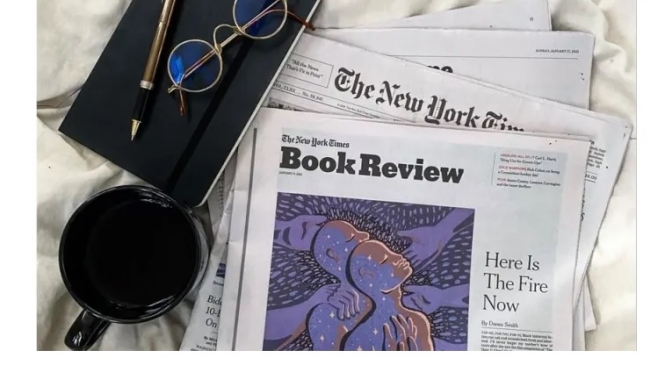
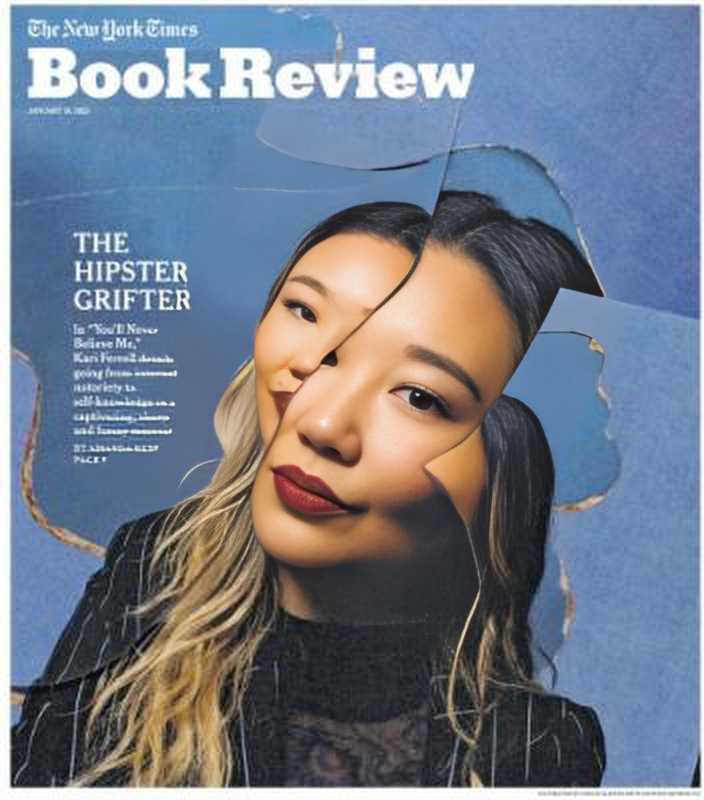
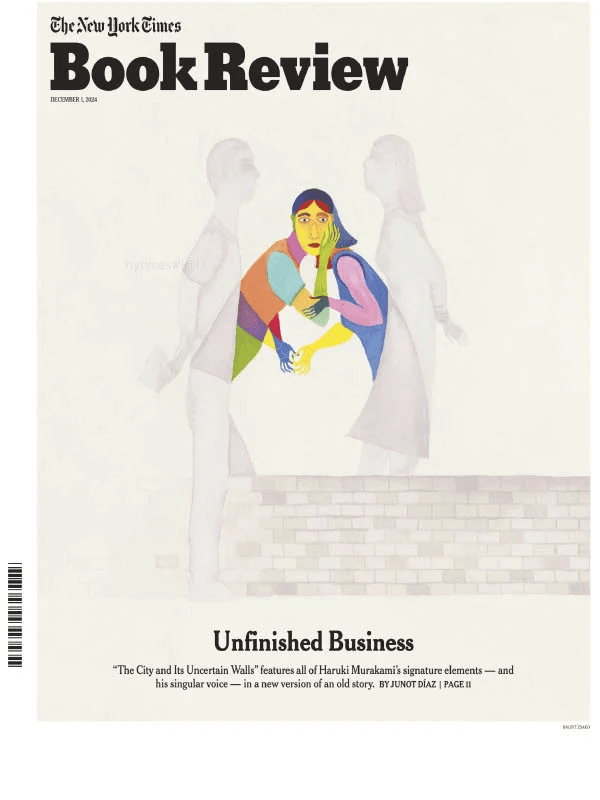
THE NEW YORK TIMES BOOK REVIEW (December 1, 2024): The latest issue features ‘Unfinished Business’ – “The City and Its Uncertain Walls features all of Haruki Murakami’s signature elements — and his singular voice — in a new version of an old story.
“The New India,” by Rahul Bhatia, combines personal history and investigative journalism to account for his country’s turn to militant Hindu nationalism.
The scholar of Palestinian history talks about what has and has not surprised him about the world‘s response to Israel‘s assault on Gaza.
Under the Spanish Volcano
A recent exhibition at the Prado showcased artists engaging with the ferment and conflict of turn-of-the-century Spain.
‘The Look of Shame’
The French director Catherine Breillat has spent her career insisting on women’s agency and reclaiming taboo desires—sometimes with troubling implications.
News, Views and Reviews For The Intellectually Curious















 Boomers Daily