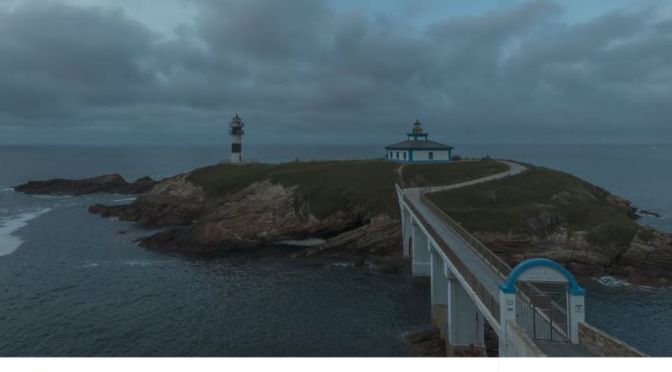
Filmed and Edited by: Martin Zalba
Timelapse of the coastlines of Spain.

Filmed and Edited by: Martin Zalba
Timelapse of the coastlines of Spain.
Filmed and Edited by: Ellis Van Jason
Madeira is home to some of the world’s most beautiful landscapes! Enjoy this 4K FPV visual journey across Portugal’s volcanic island of Madeira. This relaxation film was created from a completely new perspective that will make you feel like a bird soaring over Madeira. From the jagged mountain ridges to dramatic coastal cliffs, Madeira’s landscape has so much to offer. Filmed by the Incredibly Talented Ellis Van Jason. He is one of the world’s best cinematic FPV Pilots. He made a shorter cinematic FPV version that will blow your mind –
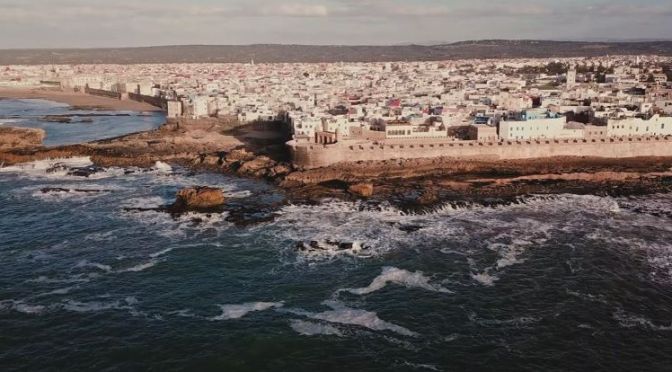
Morocco, a North African country bordering the Atlantic Ocean and Mediterranean Sea, is distinguished by its Berber, Arabian and European cultural influences. Marrakesh’s medina, a mazelike medieval quarter, offers entertainment in its Djemaa el-Fna square and souks (marketplaces) selling ceramics, jewelry and metal lanterns. The capital Rabat’s Kasbah of the Udayas is a 12th-century royal fort overlooking the water.
Cinematographer: Octavian Visterniceanu
Editor: Kristina Russu
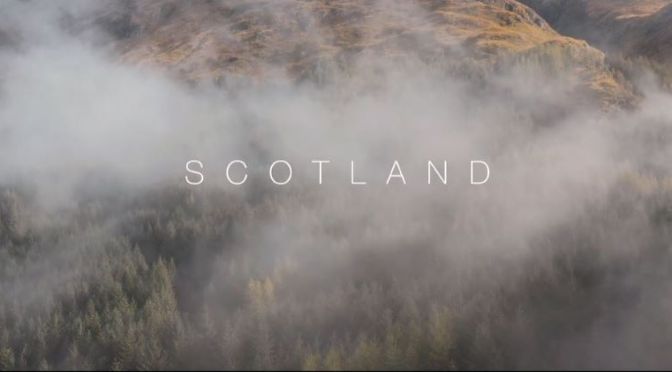
Scotland is a country that is part of the United Kingdom. Covering the northern third of the island of Great Britain, mainland Scotland has a 96-mile (154 km) border with England to the southeast and is otherwise surrounded by the Atlantic Ocean to the north and west, the North Sea to the northeast and the Irish Sea to the south. In addition, Scotland includes more than 790 islands; principally within the Northern Isles and the Hebrides archipelagos.
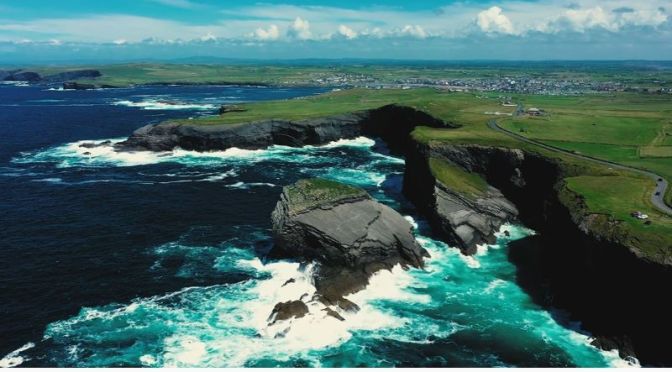
Ireland is an island in the North Atlantic. It is separated from Great Britain to its east by the North Channel, the Irish Sea, and St George’s Channel. Ireland is the second-largest island of the British Isles, the third-largest in Europe, and the twentieth-largest on Earth.
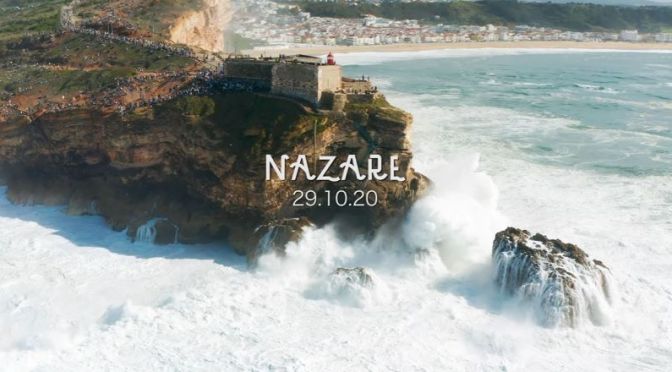
Nazaré is a municipality in Oeste region and Leiria District, in historic Estremadura province of Portugal.
It is one of the most popular seaside resorts in the Silver Coast (Costa de Prata). The population in 2011 was 15,158 in an area of 82.43 km². The present mayor is Walter Chicharro, a member of the Socialist Party. The municipal holiday is on 8 September, as part of the Our Lady of Nazaré Festival, a ten-day religious and secular celebration with processions, bullfights, fireworks, folk dancing and a fair.
The town consists of three neighbourhoods: Praia (along the beach), Sítio (an old village, on top of a cliff) and Pederneira (another old village, on a hilltop). Praia and Sítio are linked by the Nazaré Funicular, a funicular railway.
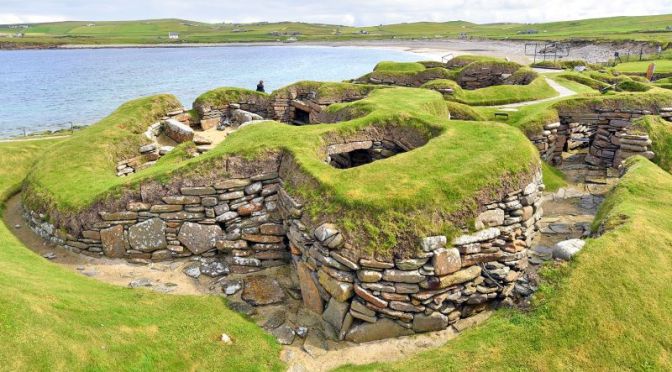
The Orkneys, an archipelago of islands off the northern coast of Scotland, are home to some of the greatest neolithic treasures in western Europe: from the settlement of Skara Brae to the Ness of Brodgar.
Skara Brae is a stone-built Neolithic settlement, located on the Bay of Skaill on the west coast of Mainland, the largest island in the Orkney archipelago of Scotland. Consisting of eight clustered houses, it was occupied from roughly 3180 BC to about 2500 BC and is Europe’s most complete Neolithic village.
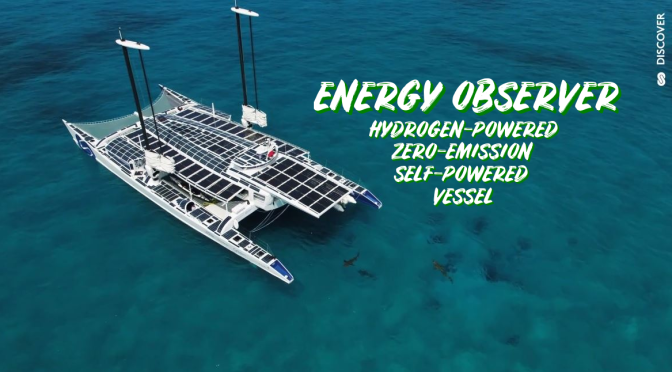
Lookback at the highlights of the first transatlantic of Energy Observer! 5,000 nautical miles traveled in self-sufficiency thanks to renewable energy and hydrogen, bearing in mind the very specific context. A technologic and human challenge in extreme conditions which proved the performance of our embarked technologies.
Filmed and Edited by: Marco Equitani
This is my last work entirely shot in Faroe Islands and that means that travel around the world during Covid-emergency is possible if you respect some simple rules.
Do not be afraid to travel, do not close yourself at home with the fear of other people, if you respect yourself and other people with simple rules, you can explore the world in safety, we have to fight for our freedom!
I arrived in Vagar Airport on September 18th and after customs routine we all were immediately tested for Covid-19 and they invited us to self quarantine for at least 24 hours or until we get the result; luckily all the passengers were negative and I got the result after 8 hours, so I was free, even if I have to be tested again in six days.
After the negative test I was free to travel around those amazing islands and start making pictures and timealapse sequence.
To be honest, make a timelapse in Faroe Islands is not easy at all, weather changes every five minute and sometimes I had to restart to capture a scene several times; take a single picture is much easier, you just wait for the rain to stop and you can take your picture, but when you have to take 400/500 photos avery two seconds, weather can suddenly change and destroy your job.
By the way I succed, I was patient and I tried to chose the best moment to capture the best situation nature gave me, but due to extreme weather changes I decided to shot even when light was not perfect because maybe that could be my olny chance.
Faroe Islands are amazing but you have to fight with weather much more than other places like Iceland or Norway.
I was also very lucky with Aurora Borealis, infact isn’t common to see northern light from Faroe Islands, they are they are low in latitude with respect to the Arctic Circle, sky is always cloudy for 300 days per year and to see a good Aurora show you need at least a 4kp Aurora…and it was like that, it, nature gave me a 4kp Aurora and a cloud coverage between 70%-80% so I could see Aurora very good, even if I can’t compare with some clear skyes of Norway or Iceland.
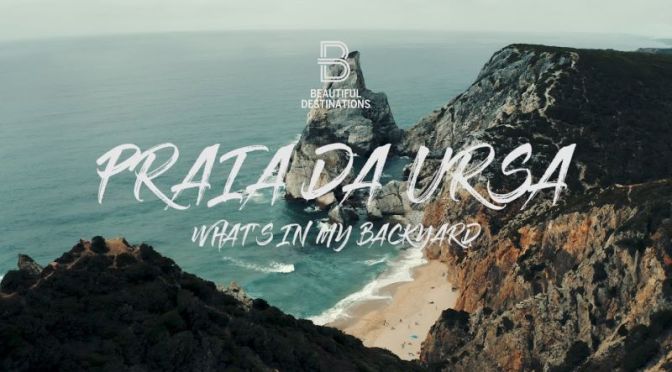
Set on the Atlantic west coast just north of Cabo da Roca is a little gem of a beach – Praia da Ursa. Unspoilt and wild, this little beach is often cited as one of the most beautiful in the area. The name of the beach comes from the “Rocha da Ursa” (bear rock) one of two huge sea stacks at the northern end of the beach. It is said that the rock resembles a bear with its cub, although I can’t quite see this myself!
This beach is a little off the beaten track and access is difficult to say the least. It involves a bit of a scrabble down a steep sided valley with plenty of loose rocks under foot. Maybe this is why Praia da Ursa is one of the area’s unofficial naturist beaches.


 Boomers Daily