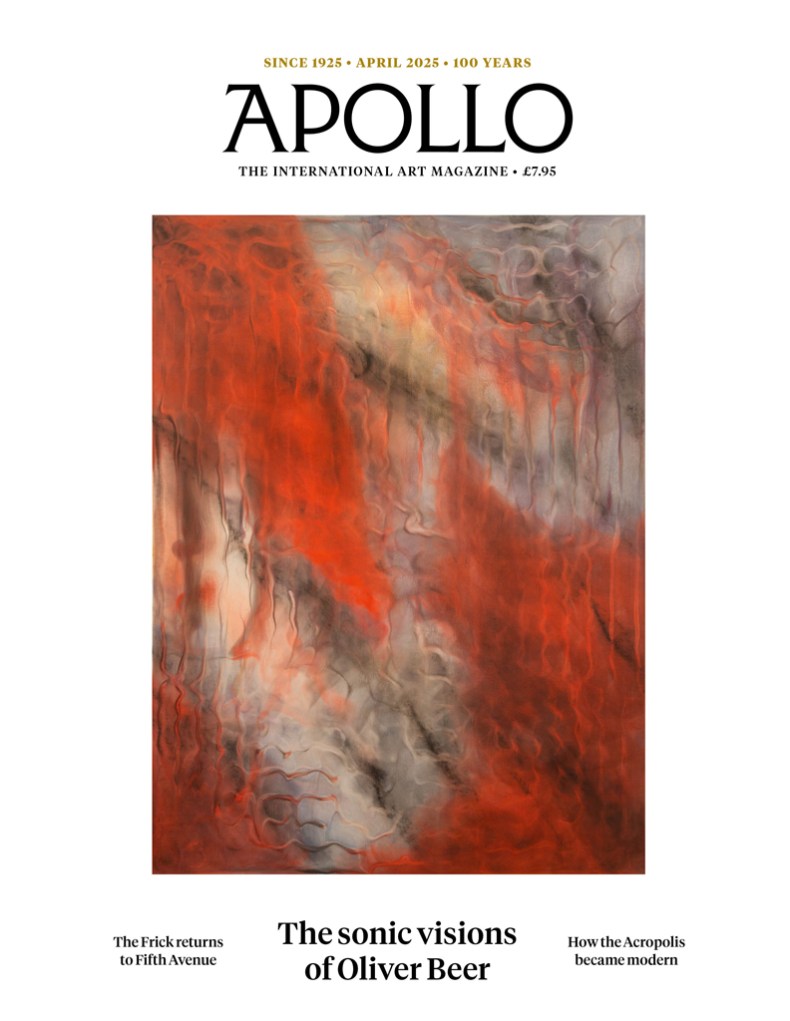
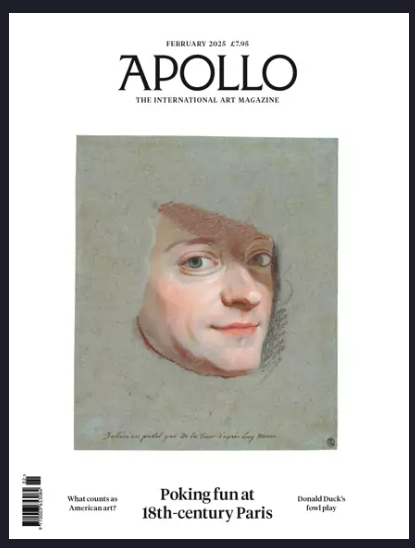
APOLLO MAGAZINE (March 31, 2025): The April 2025 issue features ‘The sonic visions of Oliver Beer’; The Frick returns to Fifth Avenue and How the Acropolis became modern….
The Frick returns to Fifth Avenue
An interview with Oliver Beer
How the Acropolis became modern
In praise of ‘degenerate’ art
Also: The duchess who scandalised Spain, why the market for women’s art is slowing, Dutch paintings at Apsley House, how Bugatti built a style icon, the sensational designs of Alphonse Mucha, and a preview of Art Dubai; reviews of Gertrude Abercrombie in Pittsburgh, Medardo Rosso in Vienna, and a history of image-eating. Plus: Will Wiles on a French avant-garde portrait with a family connection
THE WEEK IN ART (March 14, 2025): After a challenging year in which international galleries, auction houses and museums have been forced to scale back their operations and make redundancies on an alarming scale, a slower, more considered approach to business seems to be emerging.
So are we into an era of longer, more in-depth exhibitions and bespoke events concerned more with authentic connection than flashy spectacle? Ben Luke talks to Anny Shaw, a contributing editor at The Art Newspaper. In the Netherlands, just as in the US, cuts by far-right politicians to international development seem likely to have a huge impact on arts projects. As Tefaf, the major international art fair opens in the Dutch city of Maastricht, we talk to Senay Boztas, our correspondent based in Amsterdam, about fears of a funding crisis. And this episode’s Work of the Week is one of the greatest paintings ever made: The Hunters in the Snow (1565) by Pieter Bruegel the Elder. It is part of an exhibition called Arcimboldo – Bassano – Bruegel: Nature’s Time, which opened this week at the Kunsthistorisches Museum in Vienna. The museum’s director, Jonathan Fine, tells us more.
Arcimboldo–Bassano–Bruegel: Nature’s Time, Kunsthistorisches Museum, Vienna, until 29 June
Including a new golden age at Versailles, Cycladic art over the centuries, the dangers of living in Los Angeles, Tracey Emin’s passion for painting, what new EU import laws will do to the art market, and a preview of TEFAF Maastricht; plus reviews of modernism in Brazil, the drawings of Henri Michaux, and the essays of Svetlana Alpers. And: Tessa Hadley on Bellini’s shocking depiction of the making of a martyr
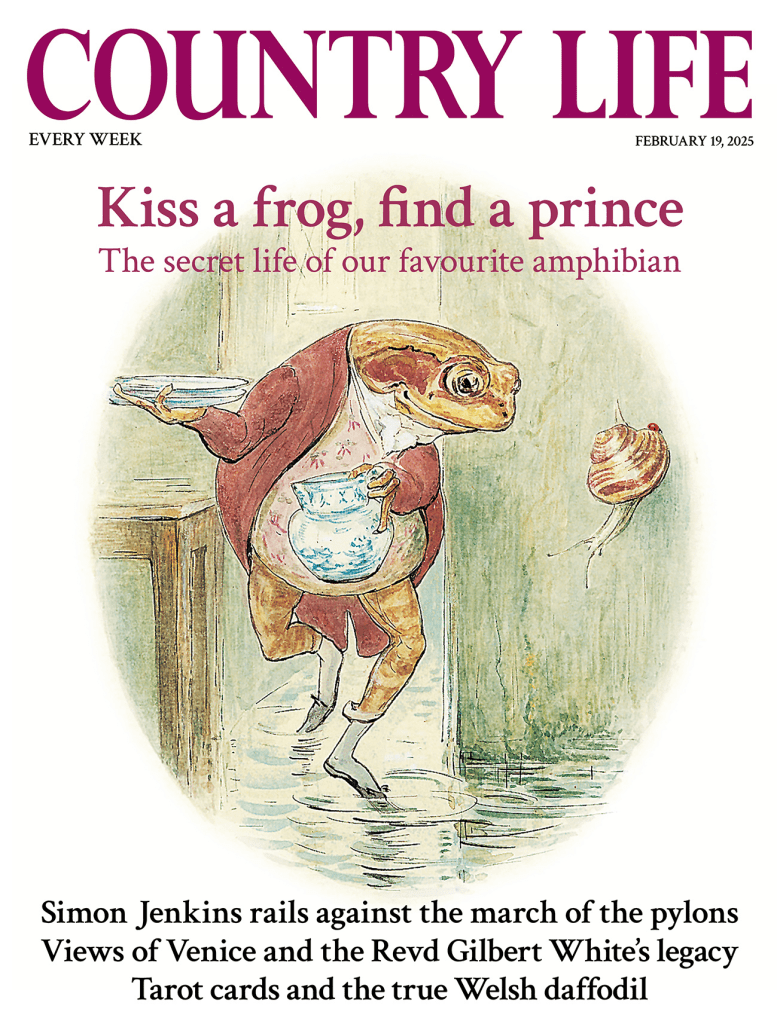
Kate Green celebrates the Revd Gilbert White, the original ecologist whose 1789 book on flora and fauna has never been out of print
Mad as a box of frogs
Our amphibious friends were once thought to possess mystical powers and they now aid the advance of medicine, as Ian Morton discovers
The ghost of golden daffodils
David Jones traces the fall and rise of the Tenby daffodil — all but extinct in the wild, but making a return as a cultivated bloom
The lure of Venice
Matthew Dennison investigates Britain’s long-standing love affair with the Italian maritime republic, fuelled by Canaletto’s enchanting, kaleidoscopic vedute
Playing the fool
Who could have foreseen the influence of tarot cards down the ages? Deborah Nicholls-Lee delves into decks and divination
Dr Ximena Fuentes Torrijo’s favourite painting
The Ambassador of Chile picks a vast, dreamlike Surrealist work that portrays a turbulent world.
A sense of delight
John Goodall marvels at the outstanding array of new and restored buildings on the grand Aldourie estate in Inverness-shire
Snakes and snails and puppy-dog tales
Matthew Dennison pays tribute to Peter and Iona Opie, who pre-served much-loved folklore and fairy tales for future generations
The good stuff
Work out in style with Hetty Lintell’s elegant exercise picks
Interiors
Amelia Thorpe shares the best of London Design Week wares, plus an elegant room with a view
Shaping the view
Tiffany Daneff admires the vista of rural Northamptonshire from the delightful Modernist garden created for a converted cart house
Foraging
Listen in as John Wright shares his thoughts on wood ears, the fungus with a gelatinous texture
Arts & antiques
Thomas Girtin’s exquisite landscapes were a match for Turner before the artist was cut down in his prime, reveals Carla Passino
History triumphs over invention
A brilliantly acted historical play conquers overproduced Greek mythology for Michael Billington
The UK’s status as a world leader in creative industries will be in peril if we fail to nurture art-and-design skills in our schools, argues Tristram Hunt
Let’s fall in love
Laura Parker investigates the boxing, croaking, crooning, dad dancing and even murder that passes for courtship ritual in the animal kingdom
Beauty and the blimp
Could a new airship designed in Britain deliver eco-friendly aviation, asks Charles Harris
Interiors
Amelia Thorpe picks out glass acts in world of garden rooms, greenhouses and orangeries
Soup-er charged
Tom Parker Bowles reveals how to beef up a boozy, hot-as-Hades French onion soup
A leap in the dark
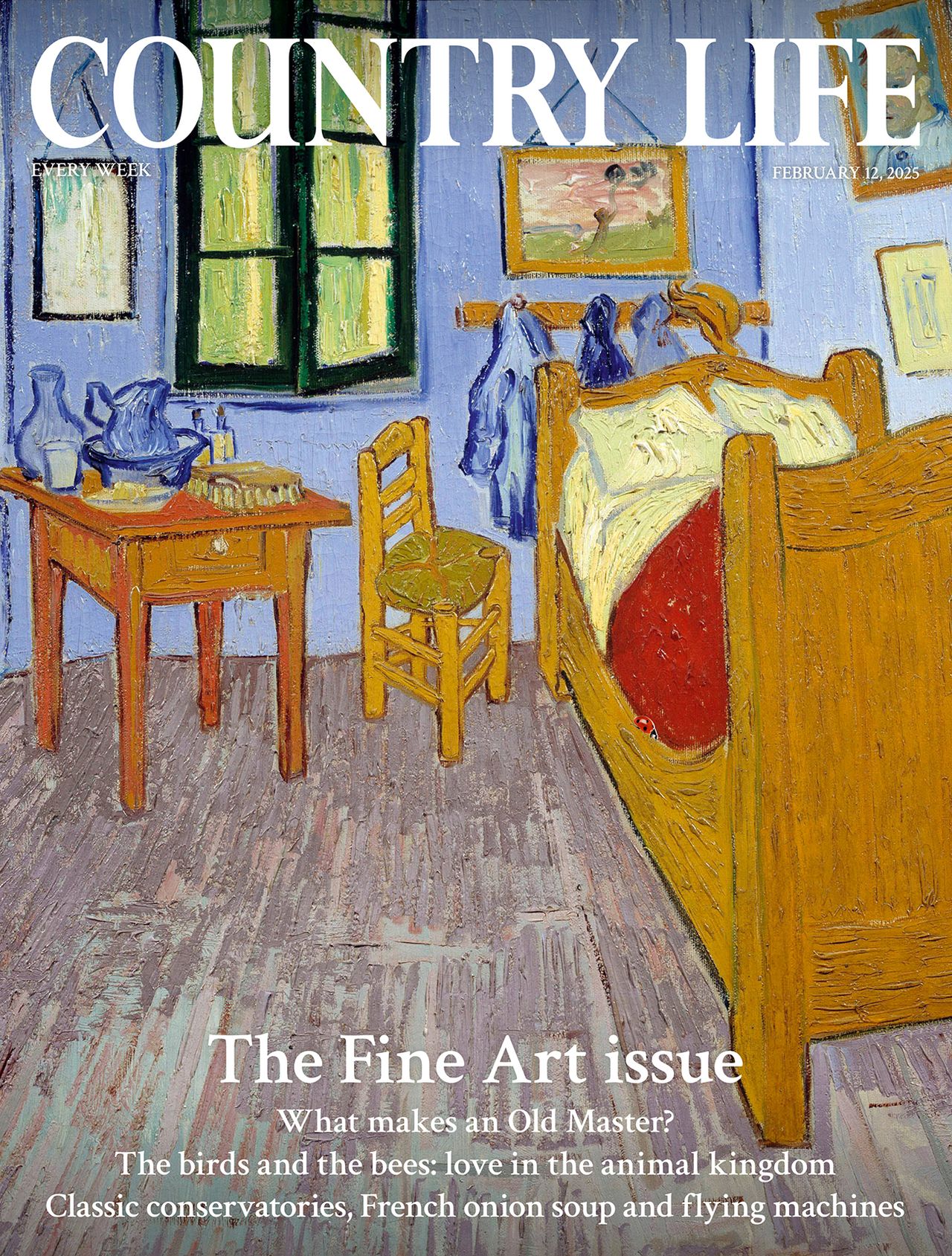
The play of light and shade has long defined Western art. Michael Hall examines what Constable called ‘the chiaroscuro of nature’
The Duke of Richmond’s favourite painting
The owner of Goodwood picks a work that reflects the sporting history of the West Sussex estate
Three wishes for food and farming
Minette Batters calls for the UK to set a self-sufficiency target for producing its own food
Nature and nurture
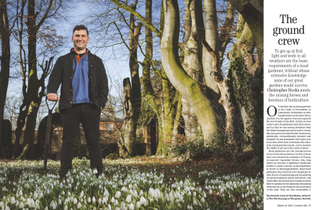
In the final article of a three-part series, Tim Richardson ponders the innovation and imagination behind the wonderful grounds at Bramham Park, West Yorkshire
The legacy
Amie Elizabeth White applauds altruistic John Ritchie Findlay, who paved the way for Scotland’s National Portrait Gallery
The good stuff
Hetty Lintell backs a winner with a range of horseshoe jewellery
Light work
Tiffany Daneff is dazzled by the transformation of a dark London garden into a light-filled oasis
Foraging
Winter mushrooms are a rarity, but the striking velvet shank earns John Wright’s approval as a welcome addition to game pie
Arts & antiques
Carla Passino marvels at the masterpieces amassed by Swiss collector Oskar Reinhart as the works go on show in London
Wick me up before you go-go
The wick trimmer’s work was never done in candlelit times, discovers Matthew Dennison
The author of ‘A Chance Meeting’ talks to Apollo about the reissue of her dazzlingly original account of more than a century of artistic endeavour in the United States
The designer’s wallpaper patterns are so familiar that they’re in danger of being taken for granted – but there’s still plenty to discover if we look more closely
THE ART NEWSPAPER (January 17, 2025): This week: the Los Angeles wildfires. The Art Newspaper’s West Coast contributing editor in LA, Jori Finkel, tells our associate digital editor, Alexander Morrison, about the devastation in Southern California, and its effect on artists and institutions.
The World Monuments Fund (WMF), the independent organisation devoted to safeguarding global heritage has released its biennial World Monuments Watch, a list of 25 sites that are potentially threatened. The aim of the list is, according to the WMF to “mobilise action, build public awareness, and demonstrate how heritage can help communities confront the crucial issues of our time”. Ben Luke talks to John Darlington, the director of projects for WMF Britain, who also reflects on the future of the organisation’s project to train Syrian refugees in stonemasonry skills, in the wake of the change in government in Syria. And this episode’s Work of the Week is All About Painting in Colour: An Illustrated Book, a portfolio in two volumes made by the leading artist of the late Edo period in Japan, Katsushika Hokusai. The last of his drawing manuals, made by the artist at the very end of his life, it features in a new book, Hokusai’s Method. We talk to Ryoko Matsuba, one of the authors of the new book.
Hokusai’s Method, with texts by Kyoko Wada and Ryoko Matsuba, is published by Thames and Hudson. It is out on 23 January in the UK, and priced £35, and on 4 February in the US, priced $45.
The Art Newspaper’s book The Year Ahead 2025, an authoritative guide to the year’s unmissable art exhibitions, museum openings and significant art events, is still available to buy at theartnewspaper.com for £14.99 or the equivalent in your currency. Buy it here.
THE ART NEWSPAPER (January 10, 2025): A 2025 preview: Georgina Adam, our editor-at-large, tells host Ben Luke what might lie ahead for the market. And Ben is joined by Jane Morris, editor-at-large, and Gareth Harris, chief contributing editor, to select the big museum openings, biennials and exhibitions.
Exhibitions:
Site Santa Fe International, Santa Fe, US, 28 Jun-13 Jan 2026; Liverpool Biennial, 7 Jun-14 Sep; Folkestone Triennial, 19 Jul-19 Oct; Ruth Asawa: A Retrospective, San Francisco Museum of Modern Art, 5 Apr-2 Sep; Museum of Modern Art (MoMA), New York, 19 Oct-7 Feb 2026; Gabriele Münter, Guggenheim Museum, New York, 7 Nov-26 Apr 2026; Musée d’Art Moderne de Paris, 4 Apr-24 Aug; Elizabeth Catlett: a Black Revolutionary Artist, Brooklyn Museum, New York, until 19 Jan; National Gallery of Art (NGA), Washington DC, 9 Mar-6 Jul; Art Institute of Chicago, US, 30 Aug-4 Jan 2026; Ithell Colquhoun, Tate Britain, London, 13 Jun-19 Oct; Abstract Erotic: Louise Bourgeois, Eva Hesse, Alice Adams, Courtauld Gallery, London, 20 Jun-14 Sep; Michaelina Wautier, Kunsthistorisches Museum, Vienna, 30 Sep-25 Jan 2026; Radical! Women Artists and Modernism, Belvedere, Vienna, 18 Jun-12 Oct; Dangerously Modern: Australian Women Artists in Europe, Art Gallery of South Australia, Adelaide, 24 May-7 Sep; Art Gallery of New South Wales, Sydney, 11 Oct-1 Feb 2026; Lorna Simpson: Source Notes, Metropolitan Museum of Art, New York, 19 May-2 Nov; Amy Sherald: American Sublime, SFMOMA, to 9 Mar; Whitney Museum of American Art, New York, 9 Apr-Aug; National Portrait Gallery, Washington DC, 19 Sep-22 Feb 2026; Shahzia Sikander: Collective Behavior, Cincinnati Art Museum, 14 Feb-4 May; Cleveland Museum of Art, US, 14 Feb-8 Jun; Cantor Arts Center, Stanford, US, 1 Oct-25 Jan 2026; Jenny Saville: The Anatomy of Painting, National Portrait Gallery, London, 20 Jun-7 Sep; Linder: Danger Came Smiling, Hayward Gallery, London, 11 Feb-5 May; Arpita Singh, Serpentine Galleries, London, 13 Mar-27 Jul; Vija Celmins, Beyeler Collection, Basel, 15 Jun-21 Sep; An Indigenous Present, ICA/Boston, US, 9 Oct-8 Mar 2026; The Stars We Do Not See, NGA, Washington, DC, 18 Oct-1 Mar 2026; Duane Linklater, Dia Chelsea, 12 Sep-24 Jan 2026; Camden Art Centre, London, 4 Jul-21 Sep; Vienna Secession, 29 Nov-22 Feb 2026; Emily Kam Kngwarray, Tate Modern, London, 10 Jul-13 Jan 2026; Archie Moore, Queensland Gallery of Modern Art, 30 Aug-23 Aug 2026; Histories of Ecology, MASP, Sao Paulo, 5 Sep-1 Feb 2026; Jack Whitten, Museum of Modern Art, New York, 23 Mar-2 Aug; Wifredo Lam, Museum of Modern Art, Rashid Johnson, Solomon R. Guggenheim Museum, New York, 18 Apr-18 Jan 2026; Adam Pendleton, Hirshhorn Museum and Sculpture Garden, Washington DC, 4 Apr-3 Jan 2027; Marie Antoinette Style, Victoria and Albert Museum, London, 20 Sep-22 Mar 2026; Leigh Bowery!, Tate Modern, 27 Feb- 31 Aug; Blitz: the Club That Shaped the 80s, Design Museum, London, 19 Sep-29 Mar 2026; Do Ho Suh, Tate Modern, 1 May-26 Oct; Picasso: the Three Dancers, Tate Modern, 25 Sep-1 Apr 2026; Ed Atkins, Tate Britain, London, 2 Apr-25 Aug; Turner and Constable, Tate Britain, 27 Nov-12 Apr 2026; British Museum: Hiroshige, 1 May-7 Sep; Watteau and Circle, 15 May-14 Sep; Ancient India, 22 May-12 Oct; Kerry James Marshall, Royal Academy of Arts, London, 20 Sep-18 Jan 2026; Kiefer/Van Gogh, Royal Academy, 28 Jun-26 Oct; Anselm Kiefer, Ashmolean Museum, Oxford, 14 Feb-15 Jun; Anselm Kiefer, Van Gogh Museum, Stedelijk Museum, Amsterdam, 7 Mar-9 Jun; Cimabue, Louvre, Paris, 22 Jan-12 May; Black Paris, Centre Pompidou, Paris, 19 Mar-30 Jun; Machine Love, Mori Art Museum, Tokyo, 13 Feb-8 Jun
News, Views and Reviews For The Intellectually Curious



 Boomers Daily