

COVID-19 has dealt a harsh blow to countless retailers, many of which were already struggling. However, RH, formerly Restoration Hardware, is doing rather well. The company’s stock price had cratered in March 2020 and struggled in early April, as forced lockdowns endangered retail. But by December 2020, shares had rebounded and risen more than 110 percent since the beginning of the year. RH is now ambitiously trying to turn it into a global luxury brand providing an array of services.
Tag Archives: Analysis
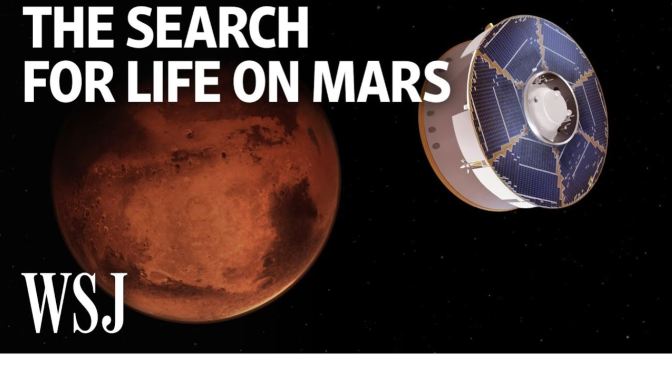
Space Programs: ‘The Search For Life On Mars’
China, the UAE and the U.S. all have spacecraft visiting Mars in February to study the Red Planet. WSJ explains how out-of-this-world technology is being used by NASA’s Perseverance and China’s Tianwen-1 in the search for evidence of life beyond our planet. Photo: NASA
Electric Vehicles: ‘The EV Charging Problem’ (Video)
A Tesla Supercharger is a 480-volt direct currentfast-charging technology built by American vehicle manufacturer Tesla, Inc. for their all-electric cars. The Supercharger network was introduced on September 24, 2012 with six Supercharger stations.[1] As of December 31, 2020, Tesla operates over 23,277 Superchargers in over 2,564 stations worldwide[2] (an average of 9 chargers per station). There are 1,101 stations in North America, 592 in Europe, and 498 in the Asia/Pacific region.[3] Supercharger stalls have a connector to supply electrical power at maximums of 72 kW, 150 kW or 250 kW.[4]
The original V1 and V2 Tesla supercharging stations charge with up to 150 kW of power distributed between two cars with a maximum of 150[21][22] kW per car, depending on the version.[23][14][24] They take about 20 minutes to charge to 50%, 40 minutes to charge to 80%, and 75 minutes to 100% on the original 85 kWh Model S. The charging stations provide high-power direct-current (DC) charging power directly to the battery, bypassing the internal charging power supply.[25]
In September 2017, Tesla announced the availability of urban Superchargers. The urban Superchargers are more compact than the standard Supercharger stalls, and will be primarily deployed in urban areas such as mall parking lots and garages. Compared to the standard Superchargers, urban Superchargers have a maximum power delivery of 72 kW. Instead of 150 kW distributed between two vehicles at a Supercharger A/B stall pair, each Urban Supercharger stall provides dedicated 72 kW capacity.[26]
A few of the Tesla supercharging stations use solar panels to offset energy use and provide shade.[27] Tesla plans to install additional solar power generation at Superchargers.

Analysis: ‘How Could A Digital Health Passport Work?’ (WSJ Video)
Airports in Paris and Singapore as well as airlines including United and JetBlue are experimenting with apps that verify travelers are Covid-free before boarding. WSJ visits an airport in Rome to see how a digital health passport works. Photo credit: AOKpass

Analysis: ‘Can Air Flights Go Green?’ (Video)
Covid-19 has caused the worst crisis in aviation’s history. Is this the industry’s moment for a green reset—and which technologies offer the best hope?

Media Streaming: ‘How Disney+ Quickly Became A Top-Tier Player’ (WSJ)
The launch of Disney+ has brought a bit of magic to a company whose stock had taken a nosedive after the coronavirus shut down theme parks and movie theaters. WSJ explains how Disney’s streaming platform has become a top competitor in an already crowded field. Photo illustration: Jacob Reynolds/WSJ
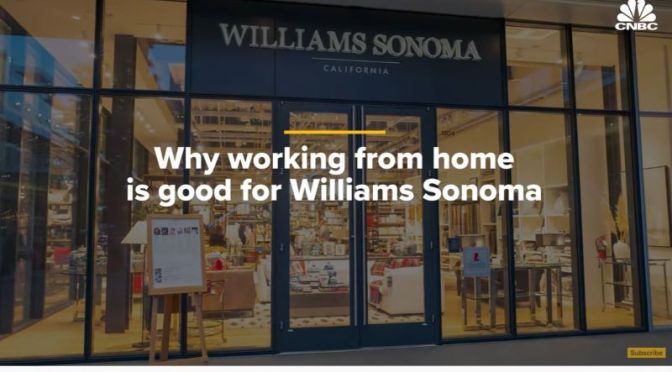
Business Analysis: ‘Work From Home’ & The Rise Of Williams Sonoma (Video)
In the midst of the pandemic, Williams-Sonoma has stood out as a company, its stock price reaching a new all-time high in January 2021, despite many businesses declining. Paired with its strength in e-commerce, the company’s ongoing success is due in large part to consumers staying at home more than ever before. Still, the company faces potential headwinds as the shift to online shopping impacts home furnishing sales and rivals like online furniture retailer Wayfair increase their market share. As a retailer known for its brick-and-mortar locations, can the brand keep up its success?

Covid Vaccine: ‘What Went Wrong With U.S. Rollout’
The U.S. coronavirus rollout has been anything but smooth. States are reporting limited supply of vaccines, leading them to delay appointments and close clinics to the public. Some states lack staff and essential resources to get the job done. With little guidance from the previous White House administration on how to effectively administer vaccines, it’s up to states and local health officials to get the job done. President Joe Biden announced the administration will buy 200 million more vaccines and institute a national vaccine program to vaccinate 100 million doses in his first 100 days. But can it be done? Here’s what went wrong with the U.S. coronavirus vaccine rollout and how a new White House plans to turn things around.
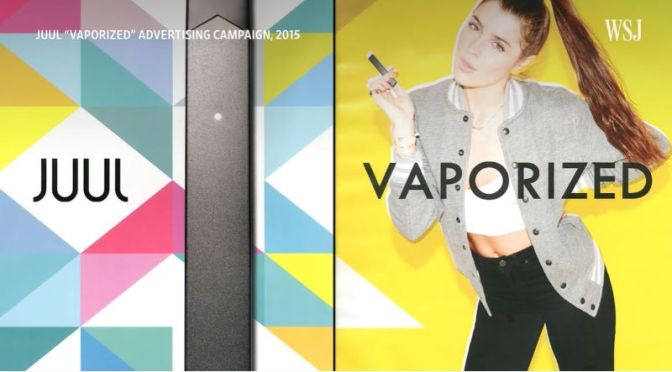
Analysis: The Rise & Fall Of E-Cigarette Maker ‘Juul’
In 2017, Juul catapulted to the top of the e-cigarette market. But the company’s valuation has fallen just as quickly, as a series of crises have led to hundreds of lawsuits alleging that the company marketed its products to teens. Photo Illustration: Jacob Reynolds/WSJ

Analysis: ‘Can Prefab Homes Fix U.s. Affordable Housing Crisis?’ (Video)
The affordable housing crisis in the United States continues to be a problem and it’s only getting worse. And in places like San Francisco, where construction costs are some of the highest in the world, overcoming the housing shortage seems impossible. However, one solution is gaining traction that could dramatically reduce the cost and time to build new housing – factory-built apartments.
 Boomers Daily