

‘Editor’s Picks’ Podcast (September 11, 2023) – Three essential articles read aloud from the The Economist. This week, how much will artificial intelligence affect the elections of 2024? Also, the ways cynical leaders are using scaremongering tactics both to win and to abuse power (9:35) and why everyone wants to own an airline these days (17:00).
Tag Archives: Airlines

World Economic Forum: Top Stories- August 5, 2023

0:15 Half of Gen Z & Millenials live paycheck to paycheck – A new survey asked young people their biggest concerns. The cost-of-living crisis came out top. Many say they’ve been forced to take on side jobs to make ends meet or postpone big life decisions such as buying a house. And the extra stress is taking its toll. 46% of Gen Zs and 39% of millennials feel anxious at work all or most of the time and levels of burnout are on the rise. Their second biggest concern is unemployment.
1:51 This start-up recycles household batteries – The Better Battery Company sells batteries in special packaging. Its batteries are white at the positive end and blue at the negative. Inside the box, the batteries are arranged in rows with the white end upturned. When each battery runs out, you put it back in the box the other way up so it’s easy to see which are used and which are new. When the box is filled with spent batteries, you return it using a free postage label and the Better Battery Company sends them off to be recycled.
3:01 AI translates K pop hits into 6 languages – K-pop stars have recorded songs in Japanese and English before but a simultaneous 6-language release is a global first. Right now, the pronunciation correction process takes ‘weeks or months’, according to HYBE. But one day, AI could translate songs in real-time. This isn’t the only way AI is changing the music industry. Streaming platforms use AI to analyse users’ listening habits to pick the perfect playlist AIs are even composing their own music or being employed as collaborators.
4:48 New airline tires can cut pollution – Airless tyres could cut pollution and make punctures a thing of the past. Made of shape memory alloy, these tyres are puncture-proof, sustainable, and easier to recycle.
_____________________________________________
The World Economic Forum is the International Organization for Public-Private Cooperation. The Forum engages the foremost political, business, cultural and other leaders of society to shape global, regional and industry agendas. We believe that progress happens by bringing together people from all walks of life who have the drive and the influence to make positive change.
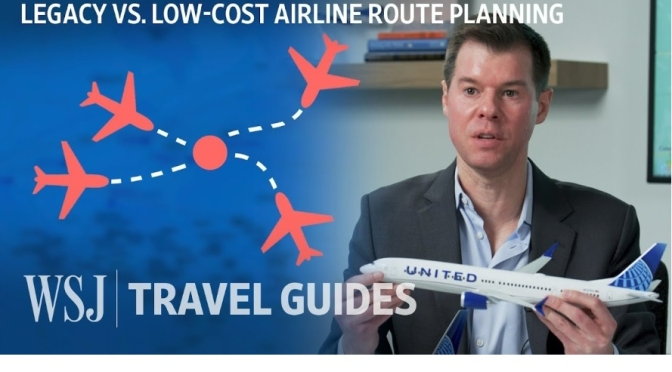
Airline Travel: Legacy Vs Low-Cost Carriers (WSJ)

Video timeline: 0:00 Meet Patrick Quayle, a global network planning executive 0:27 The hub-and-spoke network structure 2:50 The linear route system, point-to-point 4:45 When to update route networks
It turns out legacy airlines like American and Delta and low-cost airlines like Southwest and Spirit use different models when planning their route networks. WSJ asked United’s global network planning expert to explain how airlines plan and manage their routes.

Morning News: Russia Hits East Ukraine, Elections In Philippines, Air Transport
Ukrainian MP Lesia Vasylenko gives us the latest on the ground in Kyiv and we hear an update on Russia’s military strategy. Plus: the Philippines prepares for next month’s presidential elections, and transport news.
Analysis: Why Airlines Aren’t More Profitable
Passenger airlines are a crucial industry in the global economy, but the sector is also extremely volatile. Running a passenger airline is an asset-intensive industry with narrow profit margins.
Despite the risks, the industry has experienced some periods of consistent growth, which can lull investors into a false sense of security. Watch the video above to learn whether investors should steer clear of the sector and why passenger airlines struggle to stay profitable.
Video timeline: 0:00 – Introduction 1:35 – Industry shocks 6:16 – Business models 8:28 – Deregulation and consolidation 12:55 – Industry outlook
Billionaire investor Warren Buffett once called himself an “air-o-holic” because of how tempted he is to invest in commercial airlines. But he learned the hard way, twice, that the industry can be a risky bet. Airline stocks have been on a wild ride since the beginning of the pandemic, which shows just how volatile the sector can be. “It seems that airlines once or twice a decade are hit with these really hard-to-process exogenous shocks, whether it’s something like 9/11 or the Great Recession,” said Adam Gordon, managing director and partner at Boston Consulting Group’s Airline Practice. The passenger airline industry is already asset-intensive, with narrow profit margins. Despite the risks, the industry has experienced some periods of consistent growth. Airlines saw big growth in profits for about a decade prior to Covid, which analysts attribute to the airlines restructuring post-9/11. These periods can lull investors into a false sense of security. In 2017, the CEO of American Airlines said he was confident the business was never going to lose money again. Airline stocks may be appealing to investors because the industry is crucial to the global economy. “If you just step back and you think about what service airlines are offering, they’re putting you in a metal tube, taking you up to 40,000 feet, and transporting you in relative or absolute comfort at hundreds of miles an hour to get from point A to point B. And if you think about the substitutes for that service, like, there really aren’t any,” said Gordon. “So it’s kind of surprising to me that an industry that delivers that kind of a service and does it with an absolutely impeccable operational and safety record is able to come under such pressure,” he added.
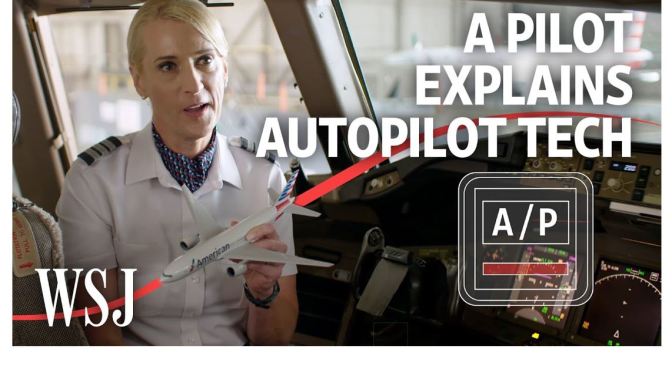
Aviation: A Pilot Explains Autopilot Technology
Think of autopilot like cruise control on a car. Autopilot is used on nearly every flight, but it’s not obvious just what it does. American Airlines Capt. Sonya Laxo explains the tech behind autopilot, how it’s used and why it isn’t really “auto.” Photo Illustration: Laura Kammermann

Morning News: Airlines To Aid Refugees, Vaccinating Youths, Blue-Light Glasses
A.M. Edition for Aug. 23. WSJ’s Karina Shah looks at where different countries stand with youth vaccination rates. The Pentagon orders U.S. airlines to help evacuate Americans and Afghan partners from the country.
At least 21 people are dead after flash flooding in Tennessee. Tropical Depression Henri makes landfall. Bitcoin miners go elsewhere amid a crackdown in China. And, blue-light glasses: a fashion accessory or a necessity?
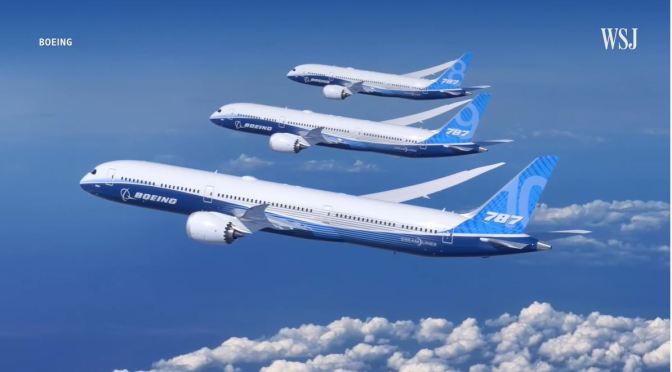
Analysis: Boeing 787 Dreamliner Problems
Inventories of the wide-body planes are piling up, as deliveries remain halted A new defect on Boeing’s Dreamliner aircraft surfaced in July, the latest in a series of issues that arose late last summer. Deliveries of the popular plane are now halted, pressuring Boeing’s profits. WSJ’s Andrew Tangel explains how Boeing got here. Photo: Bloomberg News

Air Travel: The Rise Of Emirates (CNBC Video)
Emirates, the long-haul carrier known for its luxury services, has set new standards for the way we travel. Like airlines everywhere, the carrier has been battered by the coronavirus pandemic. To keep customers safe and on board, Emirates adopted a variety of new protocols. The company also pivoted to cargo shipments to keep itself afloat. So will Emirates bounce back from the economic fallout pummeling the airline industry?

Supersonic: ‘Concorde – Fall Of A Legend’ (Video)
The Concorde was one of the most spectacular passenger aircraft ever built. But 113 people died when a French Concorde crashed in July 2000. Soon afterward, the era of the supersonic passenger plane came to an end.
The legend of the Concorde lives on, not least because it was a technical marvel. For 30 years, it thundered across the Atlantic at the speed of a bullet: Concorde could outrun the clock, arriving in New York earlier than it had departed Paris or London. Only a few could afford to fly at double the speed of sound: executives, pop stars and luxury vacationers who didn’t balk at ticket prices of around $10,000.
The disaster occurred on July 25, 2000, near Paris. It still raises questions. Few know that on that fateful day two Concordes left Paris for New York due to a high number of passengers flying to board a cruise. Travelers had the ability to switch their booking between two flights, a decision that would cost some of them their lives. This documentary tells the eventful story of supersonic flight, including other planes like the Soviet TU-144, known as “Konkordski”. Plans for a new supersonic passenger jet have long been in the works. The first prototypes are on the way, but air travelers still have a while to wait before they can again reach supersonic speeds.
 Boomers Daily