Wall Street Journal (July 3, 2023) – Artificial intelligence doesn’t just make fantastical images. For white-collar workers, generative AI like ChatGPT can make jobs easier by creating drafts of documents or presentations.
Video timeline:0:00 AI software 0:42 Why white-collar jobs? 2:01 AI and job cuts 3:52 What’s next?
Initial images, video and product designs could be taken over by machine learning tech. In fact, one report says nearly 4,000 workers lost their jobs in May to AI. Dropbox cut 16% of its workforce in part to invest more in the tech, while IBM sees a future where 30% of clerical work could be taken over by AI.
WSJ explains why AI may take some white-collar jobs – but also add new ones.
FAST channels have brought back old-school TV channel guides—and plenty of advertising. But the shows are free and incredibly varied. Media execs are taking note.
In this week’s cover story, Lynsey Addario takes us to a Ukrainian town where an 11-year-old is navigating a childhood transformed by war. Plus, a profile of the Christian pop star Marcos Witt and an investigation into how federal law targets thousands of women on anti-addiction medications.
In a Ukrainian town, an 11-year-old navigates a childhood transformed by war.
In a town near the Eastern front lines of the Donbas region of Ukraine, an 11-year-old boy named Yegor’s days were as predictable as they could be, given the unpredictability of war.
A string of uncanny videos show what generative A.I. and advertising have in common: They chew up the cultural subconscious and spit it back at us.
By Mac Schwerin
Even if I didn’t work in advertising, I would be a connoisseur of commercials. You’re probably one, too. Think of all the tropes you’ve ingested over the years — the forest-green hatchbacks conquering rugged Western landscapes, the miles of mozzarella stretched by major pizza chains. These are the images that let you know what kind of pitch you’re watching, so you won’t be confused when the brand shows up.
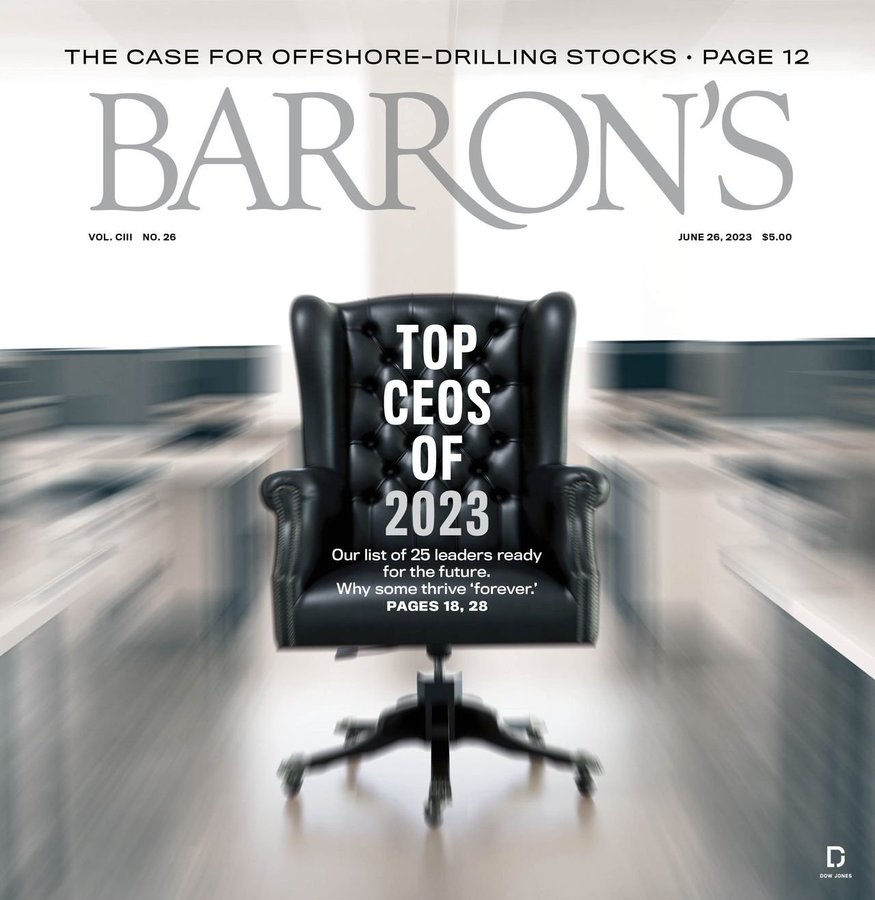
The industry looks headed for a major rebound, defying expectations of a long-term decline. Stocks such as Diamond Offshore Drilling and Noble could surge 50% or more.
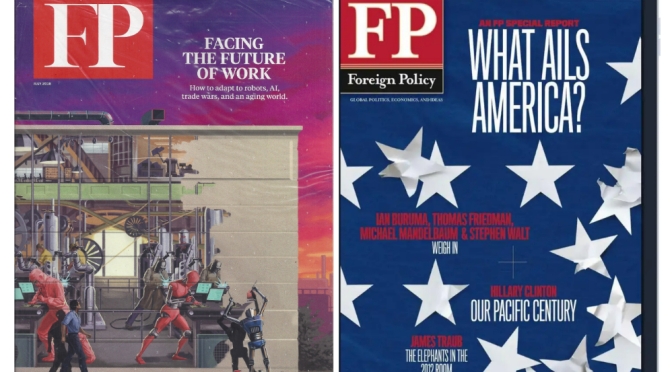
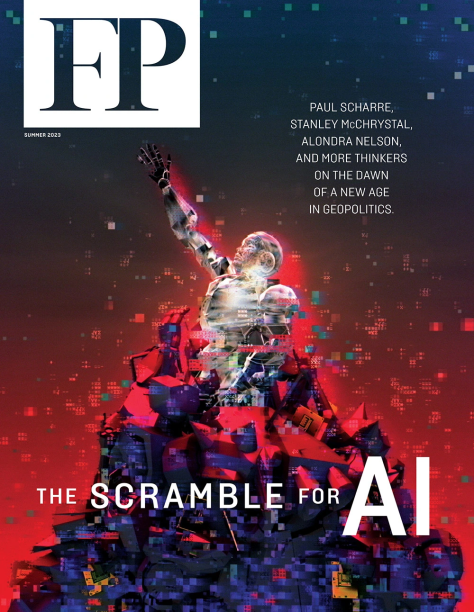
Foreign Policy Magazine – Summer 2023: Artificial intelligence is suddenly everywhere. It seems as though no conversation about jobs, education, health care, technology, or politics happens without an inevitable question about how AI could disrupt it all.
‘Editor’s Picks’ Podcast (June 12, 2023) – Three essential articles read aloud from the latest issue of The Economist. This week, why India is indispensable to America, how to make Britain an AI superpower (10:35) and Lula’s unsustainable plans to save the Amazon (18:45).
India does not love the West, but it is indispensable to America
India’s prime minister has been afforded the honour of a state visit by President Joe Biden. Mr Modi will be one of the few foreign leaders, along with Winston Churchill, Nelson Mandela and Volodymyr Zelensky, to address a joint session of Congress more than once.
Rishi Sunak’s enthusiasm is welcome. But his plans for Britain fall short
Britain, says Mr Sunak, will harness ai and thus spur productivity, economic growth and more. As he told an audience in London this week, he sees the “extraordinary potential of ai to improve people’s lives”.
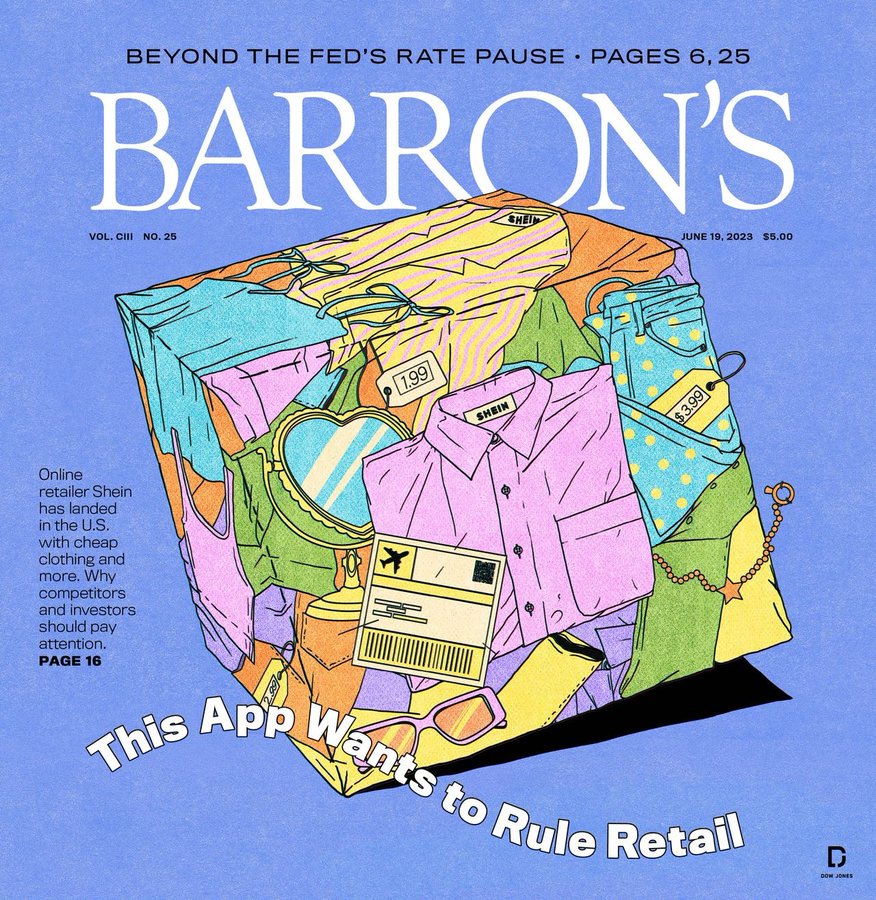
The controversial China-founded retailer is growing into a global titan. Analysts say that many Western competitors are ignoring the app—at their peril.
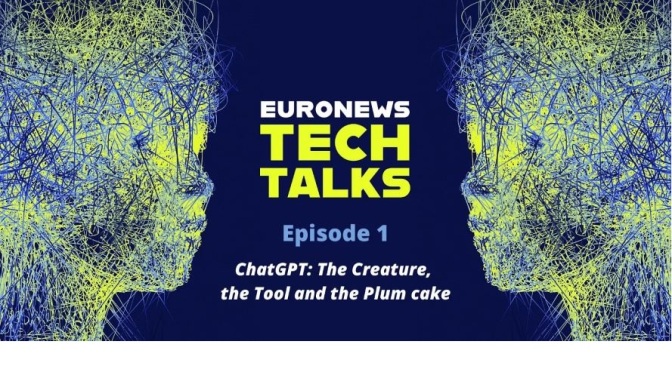
euronews (June 15, 2023) – What does it mean to be human? An age-old philosophical question, thrown into the spotlight by the rise of #AI, which has managed to pass the sentience test created by Alan Turing.
In this first episode of Euronews Tech Talks, an Italian programmer delegates code-writing, a French artist reinvents her practice, a Cypriot student brainstorms, and a German teacher ignites minds.
Released a mere six months ago in November, ChatGPT has already become the fastest-growing consumer application. With this rapid growth, how is AI affecting life across Europe?
The education system is scrambling to catch up with #AI, but it’s not all doom and gloom for teachers. Dr. @sabinehauert and Dr. Matthew Glanville tell us about the benefits of this technology in the classroom, and how it can help diverse learners achieve their goals
Harvard Business Review (June 12, 2023) – Gen AI and the New Age of Human Creativity: How revolutionary technology can enhance, rather than replace, our powers of imagination.
There is tremendous apprehension about the potential of generative AI—technologies that can create new content such as audio, text, images, and video—to replace people in many jobs. But one of the biggest opportunities generative AI offers to businesses and governments is to augment human creativity and overcome the challenges of democratizing innovation.
Having studied TV signals in East Germany from the 1960s to 1989 and rates of entrepreneurship there after German reunification, the researchers found that people in households with access to West German broadcasts were more likely than other East Germans to launch companies later in life.
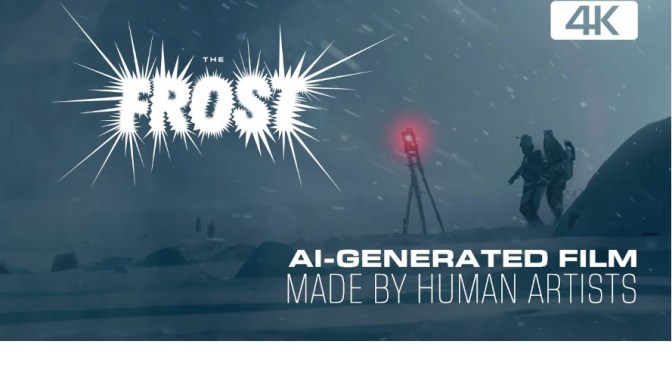
The Frost is a 12-minute movie in which every shot is generated by an image-making AI. It’s one of the most impressive—and bizarre—examples yet of this strange new genre. You can watch the film below in an exclusive reveal from MIT Technology Review.
MIT Technology Review (June 2023) – The Frost nails its uncanny, disconcerting vibe in its first few shots. Vast icy mountains, a makeshift camp of military-style tents, a group of people huddled around a fire, barking dogs. It’s familiar stuff, yet weird enough to plant a growing seed of dread. There’s something wrong here.
“Pass me the tail,” someone says. Cut to a close-up of a man by the fire gnawing on a pink piece of jerky. It’s grotesque. The way his lips are moving isn’t quite right. For a beat it looks as if he’s chewing on his own frozen tongue.
Welcome to the unsettling world of AI moviemaking. “We kind of hit a point where we just stopped fighting the desire for photographic accuracy and started leaning into the weirdness that is DALL-E,” says Stephen Parker at Waymark, the Detroit-based video creation company behind The Frost.
News, Views and Reviews For The Intellectually Curious




















 euronews

 Harvard Business Review


 Boomers Daily