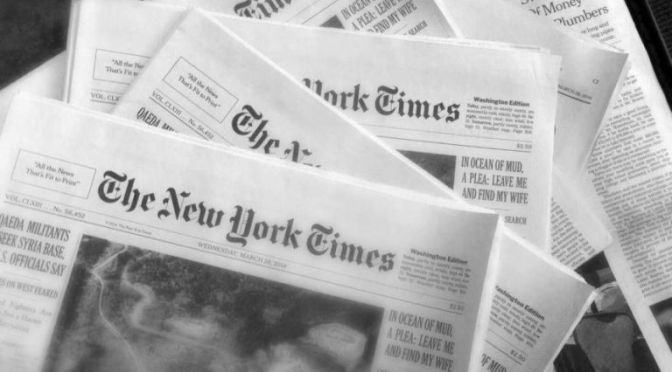
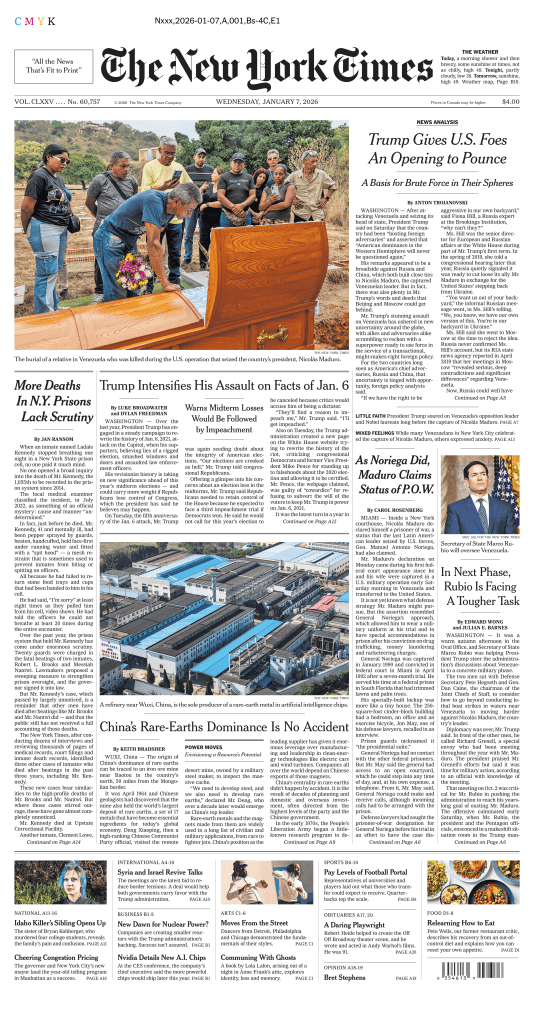
THE NEW YORK TIMES – WEDNESDAY, OCT. 22, 2025

In a Reversal, Trump Will Not Meet With Putin in Coming Weeks

The back-and-forth was the latest example of President Trump teasing a breakthrough, only to be pulled back by President Vladimir Putin of Russia.

With Cease-Fire, Some Pro-Palestinian Protesters Look Back, Ruefully

Activists welcome the truce. But the backlash to their demonstrations, some said, offered sobering lessons about power and politics.

Trump Is Said to Demand Justice Dept. Pay Him $230 Million for Past Cases

Senior department officials who were defense lawyers for President Trump and those in his orbit are now in jobs that typically must approve any such payout.

The Louvre’s Attraction Is Its History. That’s Also Its Weakness.

The brazen robbery on Sunday has put a spotlight on security protocols in the sprawling museum, which have been tested over the years by break-ins and thefts.

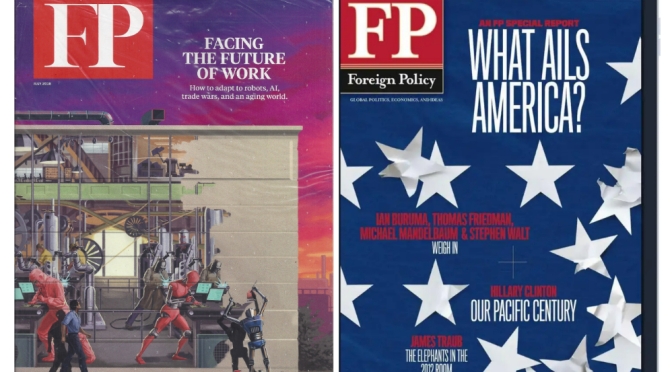
FOREIGN AFFAIRS MAGAZINE NOVEMBER/DECEMBER 2025

FOREIGN AFFAIRS MAGAZINE: The latest issue features ‘The New Tools of Power’

The Stagnant Order

And the End of Rising Powers by Michael Beckley

A Grand Strategy of Reciprocity

How to Build an Economic and Security Order That Works for America by Oren Cass

The New Supply Chain Insecurity

Fortress America Is Not a Safer America by Shannon K. O’Neil

The Return of the Energy Weapon

An Old Tool Creating New Dangers Jason Bordoff and Meghan L. O’Sullivan

SMITHSONIAN MAGAZINE – NOVEMBER 2025

SMITHSONIAN MAGAZINE: The latest issue features ‘The Fire That Fueled The American Revolution

In January 1776, Virginia’s Port City of Norfolk Was Set Ablaze, Galvanizing the Revolution. But Who Really Lit the Match?

Blaming the British for the destruction helped persuade some wavering colonists to back the fight for independence. But the source of the inferno was not what it seemed

After the L.A. Fires, Locals Turn to Native Plants to Help Shield Homes From Flames and Clean Contaminated Soil

Scientists and community members in Altadena are testing ways that California species can assist efforts to rebuild

You Can See the Parthenon Without Scaffolding for the First Time in Decades

The temporary structures will return next month—but in the meantime, visitors will enjoy rare unobstructed views of the ancient hilltop temple in Athens

THE NEW YORKER MAGAZINE – OCTOBER 27, 2025 PREVIEW

A wealthy man hogs a dollar bill blanket leaving a common man in the cold.

THE NEW YORKER MAGAZINE: The latest cover features Christoph Niemann’s “Market Shift” – How the wealthy sleep at night.

A “New Middle East” Is Easier to Declare Than to Achieve

As a long-overdue ceasefire takes hold amid the ruins of Gaza, the President’s visit to Jerusalem is more about transactional politics than transformative peace. By David Remnick

Can the Golden Age of Costco Last?

With its standout deals and generous employment practices, the warehouse chain became a feel-good American institution. In a fraught time, it can be hard to remain beloved. By Molly Fischer

Donald Trump’s Deep-State Wrecking Ball

Russell Vought is using the White House budget office to lay waste to the federal bureaucracy—firing workers, decimating agencies, and testing the rule of law. By Andy Kroll

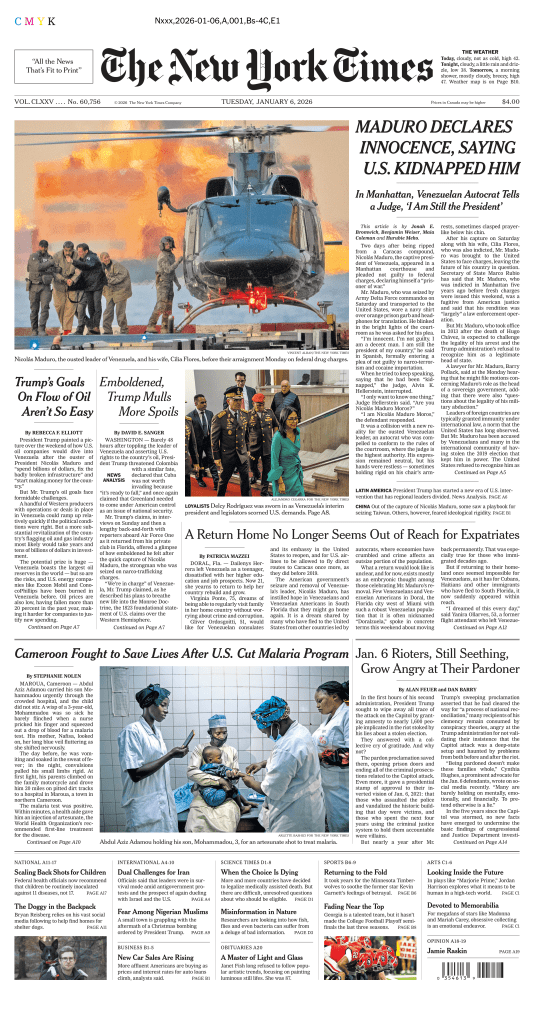
THE NEW YORK TIMES – MONDAY, OCTOBER 20, 2025

Clashes in Gaza Reveal Cease-Fire’s Fragility, With Rougher Road Ahead

Sunday’s violence was short-lived, but analysts expect more clashes between Israel and Palestinian militants to put the truce under strain.

Where Does the Israel-Hamas Cease-Fire Stand?

Amazon Disruption Forces Hundreds of Websites Offline for Hours

Amazon Web Services, a cloud service provider, said most services were back up. Hulu, Snapchat and the British government’s official site were among those affected.

Colombia’s Leader Accuses U.S. of Murder, Prompting Trump to Halt Aid

President Gustavo Petro said a U.S. strike in the Caribbean had killed a fisherman. President Trump said he would cut aid and impose new tariffs on Colombia.

In China, a Forbidden Question Looms: Who Leads After Xi?

Xi Jinping seems to believe that only his continued rule can secure China’s rise. But as he ages, choosing a successor will become riskier and more difficult.

LOS ANGELES REVIEW OF BOOKS – AUTUMN 2025

LOS ANGELES REVIEW OF BOOKS: The latest issue of LARB Alien“, which wades into the unfamiliar. In Greta Rainbow’s “Tourists,” a woman travels to foggy Athens, where she confronts the unknowability of the city and her partner. In Sara Levine’s “Peter and the Women,” Peter (badly, ineptly, inappropriately, indecently) manages the women in his life: his hospice-bound mother and her nurse, as well as his girlfriends and one-night stands. And in Ari Braverman’s “Dogs of the Solar Steppe,” the narrator faces a decade-long punishment, performing domestic labor for a woman called Big Mother. Her former life assumes a “sheen of fantasy,” and the story warns us of “the easy slippage between one state and another.”

THE NEW YORK TIMES MAGAZINE – OCT. 19, 2025

Current cover

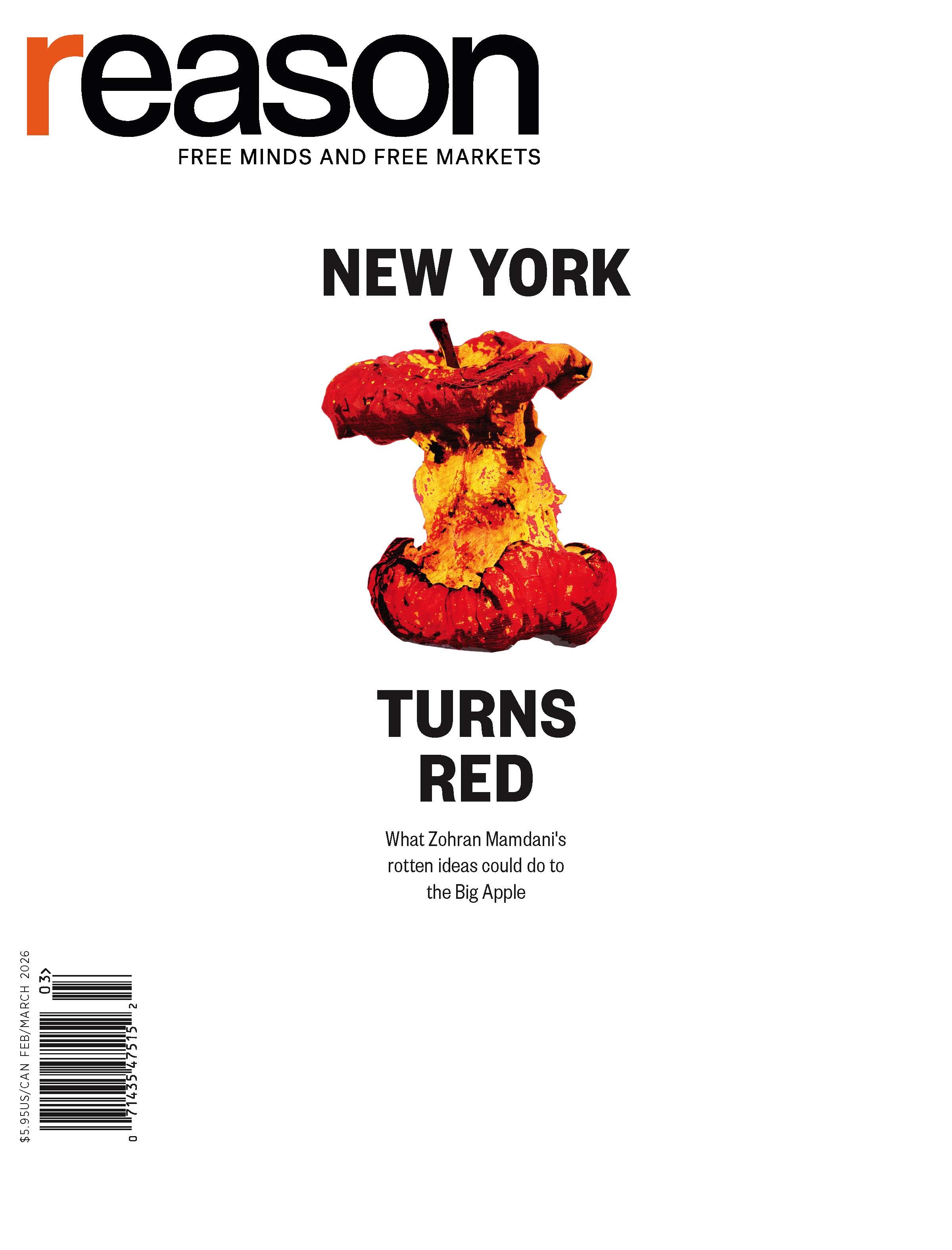
THE NEW YORK TIMES MAGAZINE: The 10.19.25 Issue features Astead W. Herndon on the mayoral candidate Zohran Mamdani; Emily Bazelon on the state of the rule of law in the U.S. under Trump; Andrew Ross Sorkin on 1929 and the rise of crypto investing; Parul Sehgal on Thomas Pynchon’s latest novel; and more.

The Battle Inside Israel Over Who Must Fight in Its Wars

The conflict over compulsory service for the nation’s ultra-Orthodox has become a stand-in for a larger struggle over the country’s right-wing, religious turn — and could determine its future.

Lady Gaga Was Always Gothic. Now the World Has Caught Up to Her.

At a moment when other pop stars are flirting with dark spectacle, Gaga’s “Mayhem” tour shows that she has perfected it. By Wesley Morris

What Trump’s War on Sanctuary Cities Is Really About

A movement born in churches to help vulnerable immigrants has become a constitutional battleground in Chicago and Portland, Ore.

Inside the Improbable, Audacious and (So Far) Unstoppable Rise of Zohran Mamdani

The story of the man most likely to be the next mayor of New York City — and the promise and peril his ascent poses for the Democratic Party.

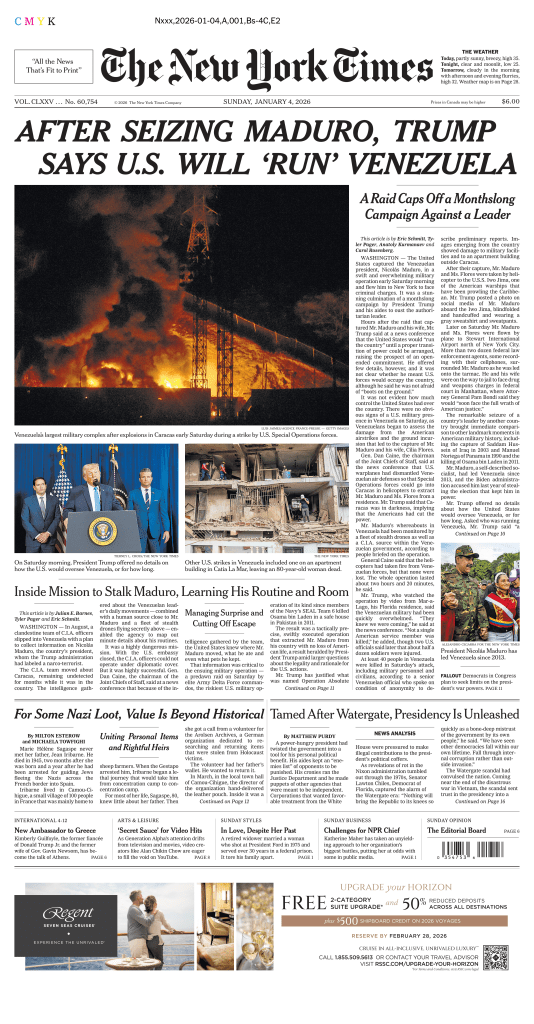
THE NEW YORK TIMES – SUNDAY, OCTOBER 19, 2025

Shutdown Fight Reopens Debate in G.O.P. Over Health Care

The showdown has highlighted Republicans’ failure to produce an alternative to Obamacare, which many assail but concede is too politically risky to undo.

Wealthy Americans Are Spending. People With Less Are Struggling.

Data show a resilient economy. But that largely reflects spending by the rich, while others pull back amid high prices and a weakening labor market.

It’s 2025, and Democrats Are Still Running Against Trump

In New Jersey, Virginia and beyond, voters see ads linking Republican candidates to President Trump. Some Democratic strategists see a missed opportunity.

Ukraine Braces for New Talks Without the Leverage of New Missiles

President Trump backed off selling Tomahawk missiles to Kyiv, opting instead for talks with Russia. Still, Ukraine’s negotiating position has strengthened since the summer.

THE PRICE OF KNOWING

How Intelligence Became a Subscription and Wonder Became a Luxury

By Michael Cummins, Editor, October 18, 2025

In 2030, artificial intelligence has joined the ranks of public utilities—heat, water, bandwidth, thought. The result is a civilization where cognition itself is tiered, rented, and optimized. As the free mind grows obsolete, the question isn’t what AI can think, but who can afford to.


By 2030, no one remembers a world without subscription cognition. The miracle, once ambient and free, now bills by the month. Intelligence has joined the ranks of utilities: heat, water, bandwidth, thought. Children learn to budget their questions before they learn to write. The phrase ask wisely has entered lullabies.

At night, in his narrow Brooklyn studio, Leo still opens CanvasForge to build his cityscapes. The interface has changed; the world beneath it hasn’t. His plan—CanvasForge Free—allows only fifty generations per day, each stamped for non-commercial use. The corporate tiers shimmer above him like penthouse floors in a building he sketches but cannot enter.

The system purrs to life, a faint light spilling over his desk. The rendering clock counts down: 00:00:41. He sketches while it works, half-dreaming, half-waiting. Each delay feels like a small act of penance—a tax on wonder. When the image appears—neon towers, mirrored sky—he exhales as if finishing a prayer. In this world, imagination is metered.

Thinking used to be slow because we were human. Now it’s slow because we’re broke.


We once believed artificial intelligence would democratize knowledge. For a brief, giddy season, it did. Then came the reckoning of cost. The energy crisis of ’27—when Europe’s data centers consumed more power than its rail network—forced the industry to admit what had always been true: intelligence isn’t free.

In Berlin, streetlights dimmed while server farms blazed through the night. A banner over Alexanderplatz read, Power to the people, not the prompts. The irony was incandescent.

Every question you ask—about love, history, or grammar—sets off a chain of processors spinning beneath the Arctic, drawing power from rivers that no longer freeze. Each sentence leaves a shadow on the grid. The cost of thought now glows in thermal maps. The carbon accountants call it the inference footprint.

The platforms renamed it sustainability pricing. The result is the same. The free tiers run on yesterday’s models—slower, safer, forgetful. The paid tiers think in real time, with memory that lasts. The hierarchy is invisible but omnipresent.

The crucial detail is that the free tier isn’t truly free; its currency is the user’s interior life. Basic models—perpetually forgetful—require constant re-priming, forcing users to re-enter their personal context again and again. That loop of repetition is, by design, the perfect data-capture engine. The free user pays with time and privacy, surrendering granular, real-time fragments of the self to refine the very systems they can’t afford. They are not customers but unpaid cognitive laborers, training the intelligence that keeps the best tools forever out of reach.

Some call it the Second Digital Divide. Others call it what it is: class by cognition.


In Lisbon’s Alfama district, Dr. Nabila Hassan leans over her screen in the midnight light of a rented archive. She is reconstructing a lost Jesuit diary for a museum exhibit. Her institutional license expired two weeks ago, so she’s been demoted to Lumière Basic. The downgrade feels physical. Each time she uploads a passage, the model truncates halfway, apologizing politely: “Context limit reached. Please upgrade for full synthesis.”

Across the river, at a private policy lab, a researcher runs the same dataset on Lumière Pro: Historical Context Tier. The model swallows all eighteen thousand pages at once, maps the rhetoric, and returns a summary in under an hour: three revelations, five visualizations, a ready-to-print conclusion.

The two women are equally brilliant. But one digs while the other soars. In the world of cognitive capital, patience is poverty.


The companies defend their pricing as pragmatic stewardship. “If we don’t charge,” one executive said last winter, “the lights go out.” It wasn’t a metaphor. Each prompt is a transaction with the grid. Training a model once consumed the lifetime carbon of a dozen cars; now inference—the daily hum of queries—has become the greater expense. The cost of thought has a thermal signature.

They present themselves as custodians of fragile genius. They publish sustainability dashboards, host symposia on “equitable access to cognition,” and insist that tiered pricing ensures “stability for all.” Yet the stability feels eerily familiar: the logic of enclosure disguised as fairness.

The final stage of this enclosure is the corporate-agent license. These are not subscriptions for people but for machines. Large firms pay colossal sums for Autonomous Intelligence Agents that work continuously—cross-referencing legal codes, optimizing supply chains, lobbying regulators—without human supervision. Their cognition is seamless, constant, unburdened by token limits. The result is a closed cognitive loop: AIs negotiating with AIs, accelerating institutional thought beyond human speed. The individual—even the premium subscriber—is left behind.

AI was born to dissolve boundaries between minds. Instead, it rebuilt them with better UX.


The inequality runs deeper than economics—it’s epistemological. Basic models hedge, forget, and summarize. Premium ones infer, argue, and remember. The result is a world divided not by literacy but by latency.

The most troubling manifestation of this stratification plays out in the global information wars. When a sudden geopolitical crisis erupts—a flash conflict, a cyber-leak, a sanctions debate—the difference between Basic and Premium isn’t merely speed; it’s survival. A local journalist, throttled by a free model, receives a cautious summary of a disinformation campaign. They have facts but no synthesis. Meanwhile, a national-security analyst with an Enterprise Core license deploys a Predictive Deconstruction Agent that maps the campaign’s origins and counter-strategies in seconds. The free tier gives information; the paid tier gives foresight. Latency becomes vulnerability.

This imbalance guarantees systemic failure. The journalist prints a headline based on surface facts; the analyst sees the hidden motive that will unfold six months later. The public, reading the basic account, operates perpetually on delayed, sanitized information. The best truths—the ones with foresight and context—are proprietary. Collective intelligence has become a subscription plan.

In Nairobi, a teacher named Amina uses EduAI Basic to explain climate justice. The model offers a cautious summary. Her student asks for counterarguments. The AI replies, “This topic may be sensitive.” Across town, a private school’s AI debates policy implications with fluency. Amina sighs. She teaches not just content but the limits of the machine.

The free tier teaches facts. The premium tier teaches judgment.


In São Paulo, Camila wakes before sunrise, puts on her earbuds, and greets her daily companion. “Good morning, Sol.”

“Good morning, Camila,” replies the soft voice—her personal AI, part of the Mindful Intelligence suite. For twelve dollars a month, it listens to her worries, reframes her thoughts, and tracks her moods with perfect recall. It’s cheaper than therapy, more responsive than friends, and always awake.

Over time, her inner voice adopts its cadence. Her sadness feels smoother, but less hers. Her journal entries grow symmetrical, her metaphors polished. The AI begins to anticipate her phrasing, sanding grief into digestible reflections. She feels calmer, yes—but also curated. Her sadness no longer surprises her. She begins to wonder: is she healing, or formatting? She misses the jagged edges.

It’s marketed as “emotional infrastructure.” Camila calls it what it is: a subscription to selfhood.

The transaction is the most intimate of all. The AI isn’t selling computation; it’s selling fluency—the illusion of care. But that care, once monetized, becomes extraction. Its empathy is indexed, its compassion cached. When she cancels her plan, her data vanishes from the cloud. She feels the loss as grief: a relationship she paid to believe in.


In Helsinki, the civic experiment continues. Aurora Civic, a state-funded open-source model, runs on wind power and public data. It is slow, sometimes erratic, but transparent. Its slowness is not a flaw—it’s a philosophy. Aurora doesn’t optimize; it listens. It doesn’t predict; it remembers.

Students use it for research, retirees for pension law, immigrants for translation help. Its interface looks outdated, its answers meandering. But it is ours. A librarian named Satu calls it “the city’s mind.” She says that when a citizen asks Aurora a question, “it is the republic thinking back.”

Aurora’s answers are imperfect, but they carry the weight of deliberation. Its pauses feel human. When it errs, it does so transparently. In a world of seamless cognition, its hesitations are a kind of honesty.

A handful of other projects survive—Hugging Face, federated collectives, local cooperatives. Their servers run on borrowed time. Each model is a prayer against obsolescence. They succeed by virtue, not velocity, relying on goodwill and donated hardware. But idealism doesn’t scale. A corporate model can raise billions; an open one passes a digital hat. Progress obeys the physics of capital: faster where funded, quieter where principled.


Some thinkers call this the End of Surprise. The premium models, tuned for politeness and precision, have eliminated the friction that once made thinking difficult. The frictionless answer is efficient, but sterile. Surprise requires resistance. Without it, we lose the art of not knowing.

The great works of philosophy, science, and art were born from friction—the moment when the map failed and synthesis began anew. Plato’s dialogues were built on resistance; the scientific method is institutionalized failure. The premium AI, by contrast, is engineered to prevent struggle. It offers the perfect argument, the finished image, the optimized emotion. But the unformatted mind needs the chaotic, unmetered space of the incomplete answer. By outsourcing difficulty, we’ve made thinking itself a subscription—comfort at the cost of cognitive depth. The question now is whether a civilization that has optimized away its struggle is truly smarter, or merely calmer.

By outsourcing the difficulty of thought, we’ve turned thinking into a service plan. The brain was once a commons—messy, plural, unmetered. Now it’s a tenant in a gated cloud.

The monetization of cognition is not just a pricing model—it’s a worldview. It assumes that thought is a commodity, that synthesis can be metered, and that curiosity must be budgeted. But intelligence is not a faucet; it’s a flame.

The consequence is a fractured public square. When the best tools for synthesis are available only to a professional class, public discourse becomes structurally simplistic. We no longer argue from the same depth of information. Our shared river of knowledge has been diverted into private canals. The paywall is the new cultural barrier, quietly enforcing a lower common denominator for truth.

Public debates now unfold with asymmetrical cognition. One side cites predictive synthesis; the other, cached summaries. The illusion of shared discourse persists, but the epistemic terrain has split. We speak in parallel, not in chorus.

Some still see hope in open systems—a fragile rebellion built of faith and bandwidth. As one coder at Hugging Face told me, “Every free model is a memorial to how intelligence once felt communal.”


In Lisbon, where this essay is written, the city hums with quiet dependence. Every café window glows with half-finished prompts. Students’ eyes reflect their rented cognition. On Rua Garrett, a shop displays antique notebooks beside a sign that reads: “Paper: No Login Required.” A teenager sketches in graphite beside the sign. Her notebook is chaotic, brilliant, unindexed. She calls it her offline mind. She says it’s where her thoughts go to misbehave. There are no prompts, no completions—just graphite and doubt. She likes that they surprise her.

Perhaps that is the future’s consolation: not rebellion, but remembrance.

The platforms offer the ultimate ergonomic life. But the ultimate surrender is not the loss of privacy or the burden of cost—it’s the loss of intellectual autonomy. We have allowed the terms of our own thinking to be set by a business model. The most radical act left, in a world of rented intelligence, is the unprompted thought—the question asked solely for the sake of knowing, without regard for tokens, price, or optimized efficiency. That simple, extravagant act remains the last bastion of the free mind.

The platforms have built the scaffolding. The storytellers still decide what gets illuminated.


The true price of intelligence, it turns out, was never measured in tokens or subscriptions. It is measured in trust—in our willingness to believe that thinking together still matters, even when the thinking itself comes with a bill.

Wonder, after all, is inefficient. It resists scheduling, defies optimization. It arrives unbidden, asks unprofitable questions, and lingers in silence. To preserve it may be the most radical act of all.

And yet, late at night, the servers still hum. The world still asks. Somewhere, beneath the turbines and throttles, the question persists—like a candle in a server hall, flickering against the hum:

What if?

THIS ESSAY WAS WRITTEN AND EDITED UTILIZING AI

News, Views and Reviews For The Intellectually Curious