

From a Jetsetter.com online review:
 Despite the overwhelming presence of boutique inns along the Atlantic, they’re not a strictly East Coast commodity. Case in point: Sonoma’s Farmhouse Inn.
The 25-room property, located just 30 minutes from Calistoga and Napa Valley, attracts visitors from near and far with guest rooms done up in homey, (you guessed it) farmstead-style decor (think: plaid throws and rustic tree limb end tables, all adhering to a neutral palette of white, beige, and brown), brightened up by bouquets of fresh seasonal flowers.  Beyond its aesthetically-pleasing interiors, the inn also knows a thing or two about food—starting with a nightly turndown service that includes homemade cookies and milk, and ending with the Farmhouse Restaurant, an onsite Michelin-starred, farm-to-table dining experience with killer dishes like peach salad, chanterelle tortellini, and wild Alaskan halibut.
To read more: https://www.jetsetter.com/magazine/the-coziest-inns-ever/?

 At first glance, Stephen Wilkes’ photographs look like a single moment in time. It is only upon closer inspection that viewers discover that each of his works is actually the result of shooting thousands of photographs from a stationary position over the course of a day and stitching them together digitally to create one cohesive panorama. The painstaking task of editing all of this information and whittling it down into one image can take months to complete, but the results capture a sense of place that can’t be expressed by a single frame alone.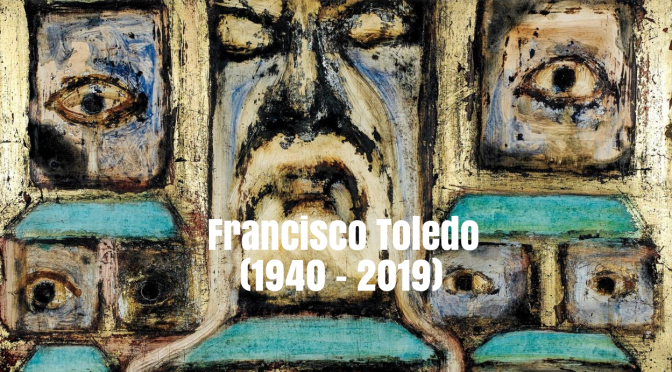
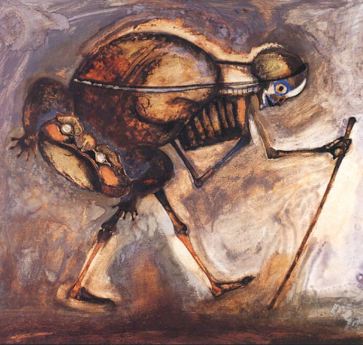 Though his paintings and sculptures sell all over the world for fabulous prices, he has not enriched himself. He lives simply, with his wife, Trine Ellitsgaard Lopez, an accomplished weaver, in a traditional house in the middle of Oaxaca, and has used his considerable profits to found art centers and museums, an ethnobotanical garden and at least three libraries.
 Toledo, whose origins were obscure and inauspicious, was the son of a leatherworker—shoemaker and tanner. He was born in Mexico City, but the family soon after moved to their ancestral village near Juchitán de Zaragoza in the Isthmus of Tehuantepec, nearer to Guatemala than to Mexico City—and being ethnically Zapotec, nearer culturally to the ancient pieties of the hinterland too.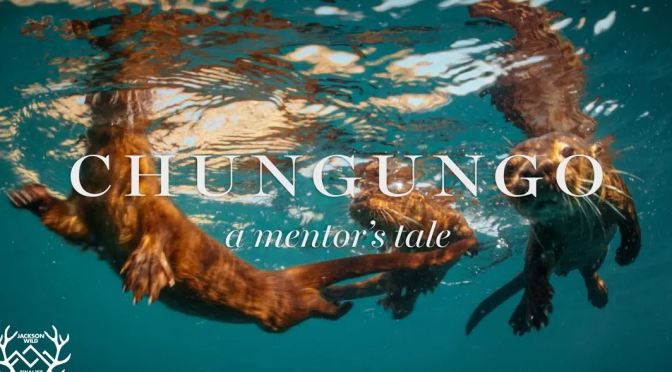

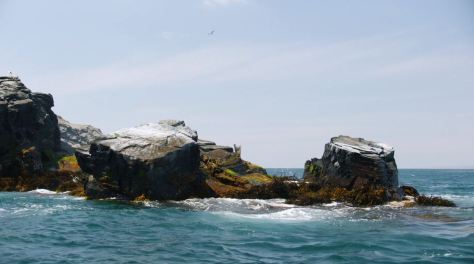
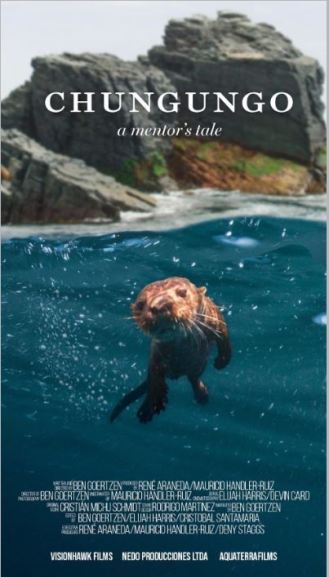 An endangered, South American Marine Otter mother and her two pups act as a vehicle into a poetic exploration of the threshold between comfort and action. Through blending traditional blue-chip cinematography with a philosophical narration the smallest marine mammal in the world is used as a mentor to teach humans about trusting their internal compass and confronting difficult questions. From showing a caring mother, to a playful sibling bond, to the kelp forests that nourish their entire ecosystem, this film aims to build empathy for animals as complex beings with more depth than we give them credit for.
 The team found 85% of people first diagnosed with dementia were diagnosed by a non-dementia specialist physician, usually a primary care doctor, and an “unspecified dementia” diagnosis was common.
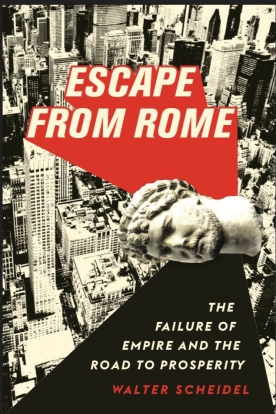 The fall of the Roman Empire has long been considered one of the greatest disasters in history. But in this groundbreaking book, Walter Scheidel argues that Rome’s dramatic collapse was actually the best thing that ever happened, clearing the path for Europe’s economic rise and the creation of the modern age. Ranging across the entire premodern world, Escape from Rome offers new answers to some of the biggest questions in history: Why did the Roman Empire appear? Why did nothing like it ever return to Europe? And, above all, why did Europeans come to dominate the world?
 This year at Düsseldorf, the Erwin Hymer Group debuted the

 On “Travel Man,” Ayoade is fun to look at (snappy suits, thick-framed glasses, expression of amused diffidence) and fun to listen to. (Of a monastery turned hotel in Naples, he says, “As well as modish guff, like a rooftop pool and a spa, it retains attractive old shiz, like staircases dug into the hillside.”) His persona is warmly amused, broadly skeptical, and gently astringent—i.e., British. He’s not a joiner. His intros conclude with him saying, in that episode’s particular city and with that episode’s particular guest, “We’re here, but should we have come?”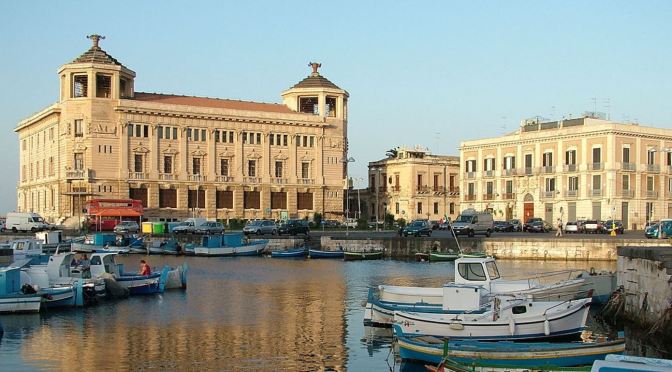
 A passeggiata, or evening walk, around the perimeter of Ortigia reveals many notable structures and stories. Start from the Parco Letterario Elio Vittorini, on the eastern side, and head clockwise. As waves crash against the rocks below the sea wall, you’ll pass crenelated lookout points and the chiseled facade of the 17th-century Chiesa dello Spirito Santo, before finding yourself in the palm-planted gardens of the 13th-century Castello Maniace.
 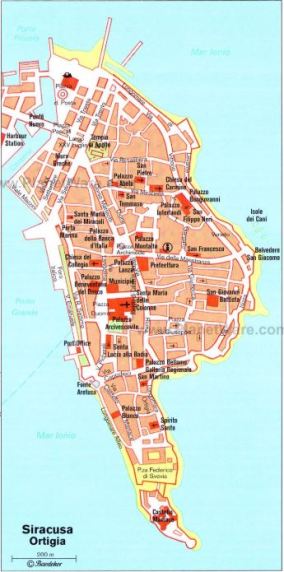 Ithe southeastern Sicilian city that Cicero called “the greatest and most beautiful of all Grecian cities” achieved a size and status in the ancient world that made it a rival of major powers like Athens and Carthage. Takeovers and makeovers by Romans, Byzantines, North Africans, Normans and others left their marks as well, influencing everything from religious art to the region’s distinctive savory-sweet-sour cooking style. Much of the ancient city has crumbled since Cicero’s day, though the ruins can still be explored in Syracuse’s celebrated archaeological park and museum. But the main attraction today is the historical center of Syracuse: Ortigia island, a maze of narrow streets, ornate Baroque churches and centuries-old palazzi.
 Researchers have identified how Salmonella ‘persister’ cells can spread antibiotic resistance genes in mice intestines.
  Boomers Daily