Researchers say they’ve successfully plunged human livers to subzero temperatures and then warmed them back up.
The “supercooled” organs were still in good shape after 27 hours, adding nearly a day to how long livers can last outside the body.
The supply of donor hearts, kidneys, and livers from accident victims is sharply limited. In the US, a nationwide system of registries and transplant centers coordinates to move them around by air in coolers for what are invariably emergency surgeries.
The research is part of a wider effort to learn how to keep organs operational outside the body for longer periods of time.
Vim’s solution curates top providers and pairs patients with those providers, leveraging a combination of online booking and referral coordination. On the provider side, it algorithmically analyzes referral patterns to bring to light trends without disrupting workflows, ultimately toward the goal of guiding patients to value-based health solutions in virtual networks.
Vim says it has access to 10,000,000 patient profiles and 150,000 providers through major U.S.-based health plan partners. In the next 12 months, it loftily intends to “meaningfully reduce” the $1 trillion of excess cost in health care in the U.S. by targeting inconsistencies in treatment.
…this prototype is powered by a 10.5 amp hour (AH) lithium battery, which can reach speeds of just over 12 miles per hour and power the vehicle for around 12 miles on a single charge.
Hyundai has plans to integrate a regenerative braking system in the future, which would convert waste kinetic energy from the scooter’s brakes into electricity used to power it. The company claims this could increase its range by up to seven per cent.
Hyundai has created a prototype scooter that folds down to the size of a backpack and can be charged in a car using the energy created while driving. The scooter has been designed for use with future Hyundai or Kia models, which would come with designated storage and charging compartments.
The domed capsule is the brainchild of naval architect Jean-Michel Ducancelle, who was inspired by the floating saucer in the 1977 Bond film The Spy Who Loved Me. Under development for the last 15 years, this 21st-century version is outfitted with five south-facing solar panels that soak up the sun and power the electric motors and mechanical systems.
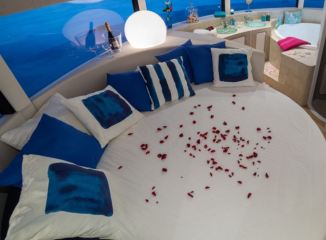
Half-boat, half-futuristic pod, the Anthenea is a bold take on sea-bound tourism. While we’ve already seen everything from an underwater Maldives hotel to an elevating floating home, the 538-square-foot Anthenea is being billed as “the world’s first eco-luxe floating hotel suite” (that can also be used as a spa, restaurant, night club, or really whatever the buyer can dream of).
From an InterestingEngineering.com online article:
“Remote procedures have the potential to transform how we deliver care when treating the most time-sensitive illnesses such as heart attack and stroke. The success of this study paves the way for large-scale, long-distance telerobotic platforms across the globe, and its publication in Lancet’s EClinicalMedicine demonstrates the transformative nature of telerobotics,” said in a press statement Mark Toland, President and Chief Executive Officer of Corindus Vascular Robotics.
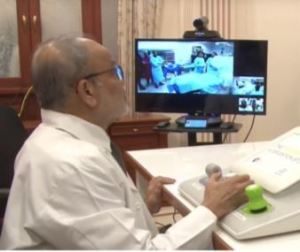
A surgeon in India has performed a series of five percutaneous coronary intervention (PCI) procedures on patients who were on operating tables 32 kilometers (20 miles) away from him. The event marks the first long-distance heart surgery.
The operation was performed in patients who have atherosclerosis, a condition where plaque builds up in the blood vessels and restricts blood flow. In this special remote procedure, a robot called the CorPath GRX robot and controlled by the surgeon inserted a small instrument called a stent in order to open blood vessels in the heart.
Designed as an augmented reality and spatial audio work downloadable as an app for mobile devices, it is both a site specific public artwork and a digital archive of these species, using tools and platforms from a range of fields including video games, computer generated images and film. Inspired by ecological science-fiction and scientific research, Kudsk Steensen creates a form of ‘slow media’ that uses the technological to foster attention rather than distraction.
...a journey to both see and hear five of London’s species: London plane trees, bats, parakeets, azure blue damselflies and reedbeds.
Kudsk Steensen has collaborated with the field recordist and sound designer Matt McCorkle to represent five species as sound. The audio and visuals within the project are drawn directly from organic source material gathered from a period of embedded research within Kensington Gardens and Hyde Park. These organic materials are then transformed through digital processes to be re-embedded within the same context.
This year at Düsseldorf, the Erwin Hymer Group debuted the VisionVenture concept. Built on a Mercedes chassis, the VisionVenture is a forward-thinking camper that looks more like a high-end apartment than a striped-down adventure rig.
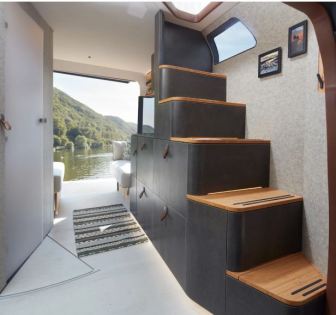
To accomplish this, the camper’s interior uses warm bamboo, gray felt, and leather, mixing woods with other materials to add interest. The living area is located in the rear with two white sofas and a center dining table that folds down below the passenger-side bench. The stand-out feature of the living room is the panoramic rear window and large side windows. Fold out the rear door, drop a lower gate and the van boasts its own rear deck—complete with slide-out electric grill.
It’s an impressive lounge area, and the kitchen goes even further with a flush cooktop, sink, refrigerator, and ample storage. The styling is fresh too, with modular, deck-like wall paneling that works to hang plants or cooking equipment as needed. Integrated next to the kitchen is a compact slate-colored staircase—reminiscent of tiny house design—that boasts storage, motion-activated lighting, and access to an inflatable pop-up sleeping area. The upstairs bed sleeps two and takes advantage of big views through the rear roll-up window.
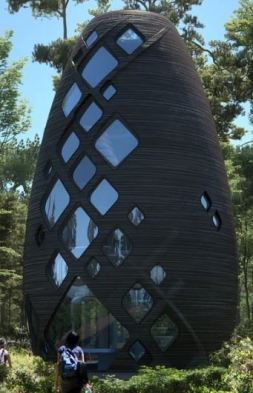
AI spacefactory — the architects behind the NASA–award-winning mars habitat — is now launching ‘TERA’, a space-tech habitat designed for off-grid living on earth. designed to be a ‘B&B unlike any other’, ‘TERA’ will be a high-tech, luxe eco-home nestled in the woods of upstate new york with sweeping views of the hudson river. ‘we realized the materials and technology we developed for long-term missions on mars had the potential to be leaps and bounds more sustainable than conventional construction on earth,’ said david malott, AI spacefactory’s CEO and chief architect. ‘TERA will challenge everything we know about architecture and construction. it could transform the way we build on earth – maybe even save our planet.’
developed from the same designs and 3D printing technologies behind the AI spacefactory’s NASA-award-winning ‘MARSHA’ mars habitat, ‘TERA’ is designed to be minimally invasive to its surrounding environment. it can be broken down, recycled and re-printed elsewhere, without leaving any trace. the ‘multi-planetary architectural and technology design agency’ hopes to curb the massive footprint of conventional building practices that rely on energy-and waste-intensive materials. in its realization,
Giovannoni describes it as “immersive omnidirectional” sound with richer bass. “It feels like you’re inside the song,” says one wide-eyed subject in Inmergo’s user testing video.
Water rather than air carries sound in designer Rocco Giovannoni’s Inmergo headphones, which promise rich audio even for people who are hard of hearing.
A 2019 graduate of the Royal College of Art’s MA in Design Products, Giovannonidesigned the soft silicone headphones to improve upon current bone-conduction audio technology.
The e-bike surprisingly doesn’t look like one, especially given that the rear-wheel motor is concealed from view, and the Flit’s cylindrical battery was designed to beautifully slide into a hollow space inside the bike’s frame, hiding it from view. The bike has a unique way of also integrating suspension into it that allows the rear wheel to easily absorb any shock brought about by cycling on roads, pavements, or even rocky, gravel-y paths. Engineered to perfection by Dave Henderson, who’s background includes being an engineer at Jaguar Land Rover, the Flit-16 maximizes rigidity within a minimal design that further reduces down thanks to its three main hinges that allow you fold or unfold your e-bike in just 10 seconds.
Touted as a new generation of foldable e-bikes, and with enough awards to prove just how ground-breaking it is, the FLIT-16 is the good old electrically assisted bicycle in a brand new avatar. Designed to help you ‘flit’ across the city from A to B, the bike comes fitted with a 220W Bafang rear hub motor that boosts your ride for up to 50 kilometers (30 miles) on a single charge. When you’re not riding it, the bike folds down at two separate points to become small enough to store under your table, yet still retaining its ability to be wheeled around wherever you go.


 Researchers say they’ve successfully plunged human livers to subzero temperatures and then warmed them back up.
 Vim’s solution curates top providers and pairs patients with those providers, leveraging a combination of online booking and referral coordination. On the provider side, it
  Vim says it has access to 10,000,000 patient profiles and 150,000 providers through major U.S.-based health plan partners. In the next 12 months, it loftily intends to “meaningfully reduce” the $1 trillion of excess cost in health care in the U.S. by targeting inconsistencies in treatment.
 …this prototype is powered by a 10.5 amp hour (AH) lithium battery, which can reach speeds of just over 12 miles per hour and power the vehicle for around 12 miles on a single charge.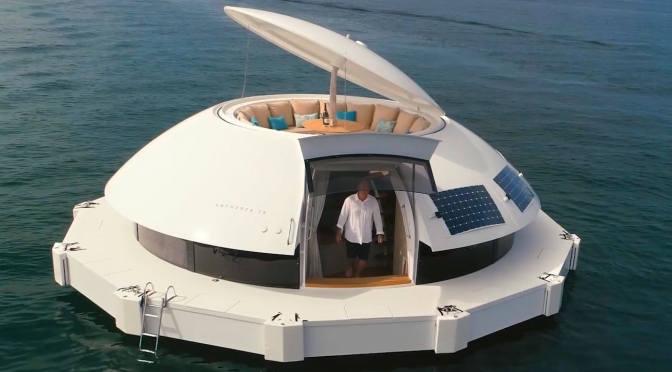
 The domed capsule is the brainchild of naval architect Jean-Michel Ducancelle, who was
 “Remote procedures have the potential to transform how we deliver care when treating the most time-sensitive illnesses such as heart attack and stroke. The success of this study paves the way for large-scale, long-distance telerobotic platforms across the globe, and its publication in Lancet’s EClinicalMedicine demonstrates the transformative nature of telerobotics,”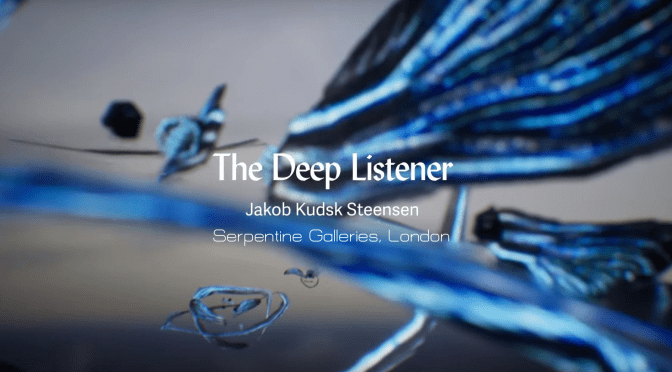
 Designed as an augmented reality and spatial audio work downloadable as an app for mobile devices, it is both a site specific public artwork and a digital archive of these species, using tools and platforms from a range of fields including video games, computer generated images and film. Inspired by ecological science-fiction and scientific research, Kudsk Steensen creates a form of ‘slow media’ that uses the technological to foster attention rather than distraction.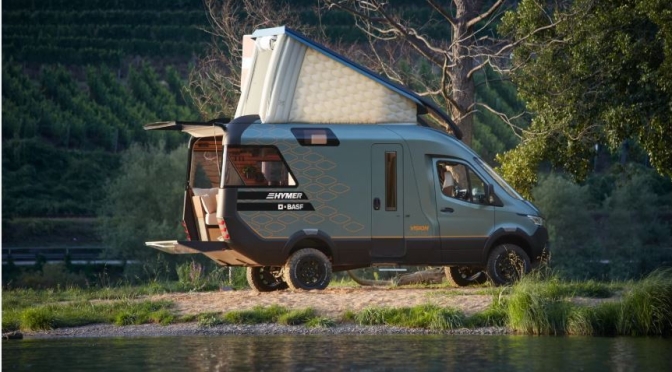
 This year at Düsseldorf, the Erwin Hymer Group debuted the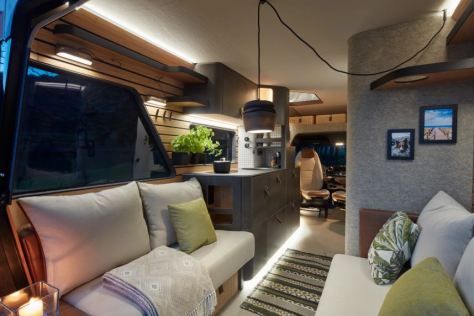

 AI spacefactory — the architects behind the
  developed from the same designs and 3D printing technologies behind the
 Giovannoni describes it as “immersive omnidirectional” sound with richer bass. “It feels like you’re inside the song,” says one wide-eyed subject in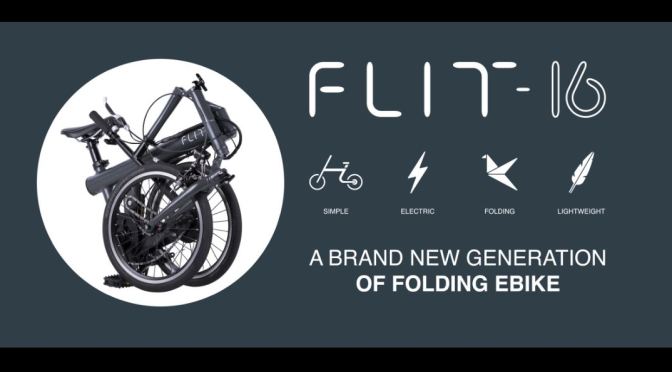
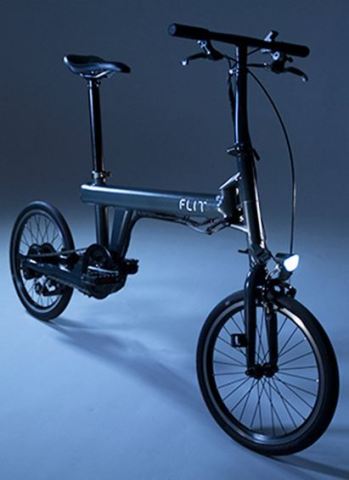 The e-bike surprisingly doesn’t look like one, especially given that the rear-wheel motor is concealed from view, and the Flit’s cylindrical battery was designed to beautifully slide into a hollow space inside the bike’s frame, hiding it from view. The bike has a unique way of also integrating suspension into it that allows the rear wheel to easily absorb any shock brought about by cycling on roads, pavements, or even rocky, gravel-y paths. Engineered to perfection by Dave Henderson, who’s background includes being an engineer at Jaguar Land Rover, the Flit-16 maximizes rigidity within a minimal design that further reduces down thanks to its three main hinges that allow you fold or unfold your e-bike in just 10 seconds.
  Boomers Daily