
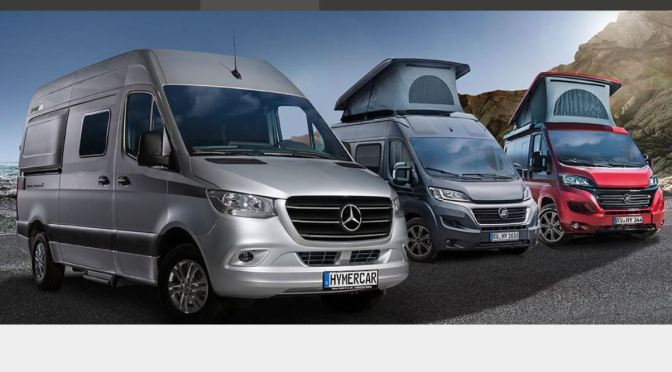
From a New Atlas online article:
Hymer certainly gave credit where it was due, recognizing BASF’s role in the opening paragraph of its VisionVenture announcement and detailing elements like the Chromacool exterior paint and Veneo Slate transforming-bathroom trim. Still, it wasn’t quite clear just how deep BASF’s participation ran. Knowing a thing or two about the power of a buzzy concept vehicle (like a bike or car), BASF released some additional information last week to squeeze a little extra press out of the VisionVenture, a star of the 2019 Caravan Salon that featured in RV, auto and tech publications and blogs all over the world.
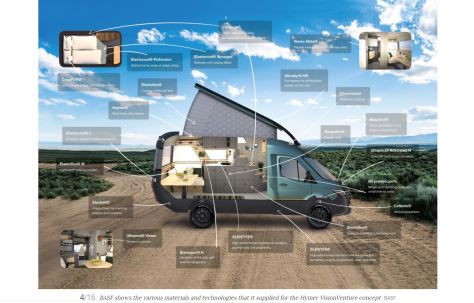
 Even with a few months of 2019 left to go, we feel confident that the Hymer VisionVenture is the coolest camper van of the year. The concept camper has absolutely captured the public’s imagination, showing how a little bit of creative tinkering can turn the art of sleeping in a van into world-class luxury travel. When Hymer announced the concept at the start of the 2019 Düsseldorf Caravan Salon, it mentioned incorporating over 20 materials and technologies from German chemical giant BASF, touching upon some of the most integral. BASF jumped in this month to further detail exactly how its tech can benefit future van lifers.
To read more: https://newatlas.com/automotive/basf-details-hymer-visionventure-camper-van/
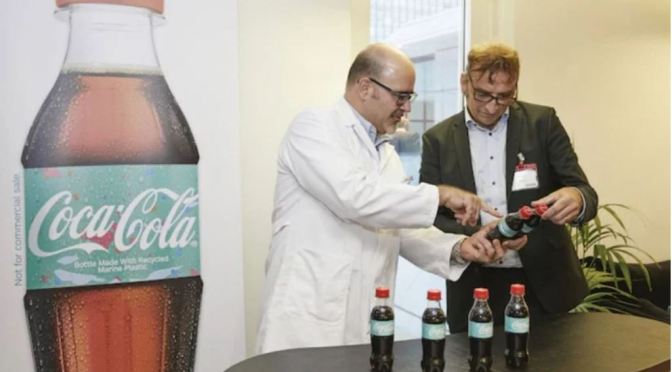
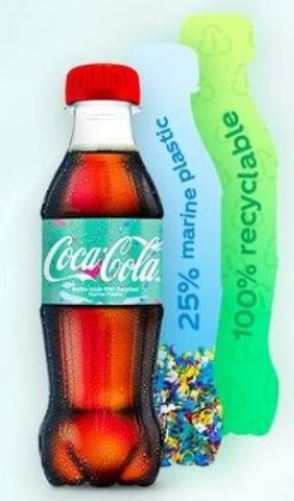 the recycling technology is the result of a partnership between coca-cola, the dutch startup ioniqa technologies and indorama ventures, one of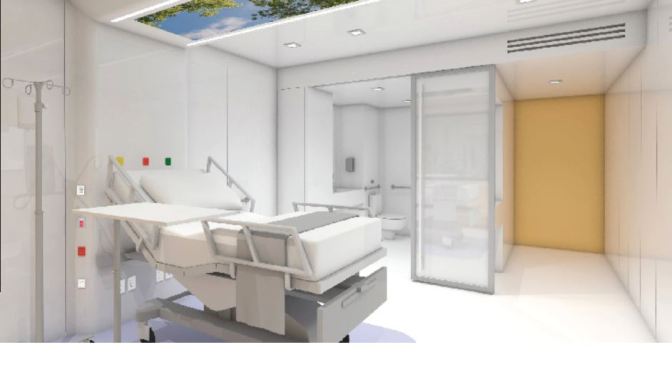
 EIR Healthcare collaborates with each hospital to customize the optimal space. Through our technology and design, doctors, nurses and any healthcare professional interacting with patients in a MedModular room are equipped to provide nothing short of excellence within every interaction. EIR Healthcare was presented with a 2018 iF Design Award for our “Hospital of the Future” professional concept.
 Scott Burger, MITEI Energy Fellow and researcher, discusses rooftop solar economics, net metering, energy poverty, and electricity costs. Show notes and transcript:
 Kaia’s iOS and Android apps were developed with the help of physiotherapists, pain management physicians, orthopedic surgeons, and clinical psychologists, the company claims, and are registered as Class 1 medical devices with the Food and Drug Administration. They serve up video clips covering basic back and COPD pain information and step-by-step physiotherapy exercises, in addition to psychological strategies, such as mindfulness and muscle relaxation.
 Volocopter builds electrically powered air taxis to get people safely and directly to their destination. The aim is to save people time and to help megacities transform their transportation systems towards a more sustainable future by adding a new mobility option for their citizens. Since its foundation in 2011, the company has built three generations of Volocopter aircraft, two of which received licenses for manned and unmanned flight with a total funding of EUR 35 million. The company has performed numerous public demonstrations of the viability of electrically powered vertical take-off and landing aircraft (eVTOL), most recently it successfully completed a flight at Helsinki International Airport.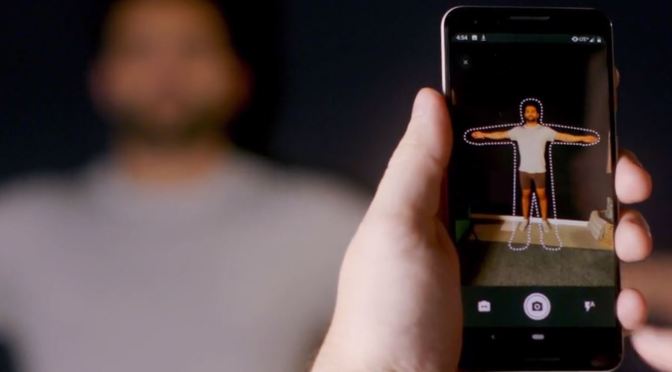
 The procedure is incredibly simple, and beats having to make an appointment with your tailor for hour-long fitting sessions and getting entangled in measuring tape. Element Pure’s AI tailor needs just two things from you. A front profile and side profile photograph, taken with a standard A4 sheet kept on the floor as reference. Using those two photographs, Element Pure can generate a 99% accurate 3D model of your torso, which the AI Tailor uses to take measurements. The result is a perfectly fitted shirt that’s been designed specifically for you. You can even pick between slim, regular, and relaxed fits, as well as choose your shirt length, depending in whether you wear your shirts tucked or untucked. The AI does the job in minutes that a tailor would take hours or even days to, with no propensity for error. The fitted, tailor-made shirt delivers to your doorstep, giving you the convenience of fast fashion, with the custom-fitting of something your tailor would make for you.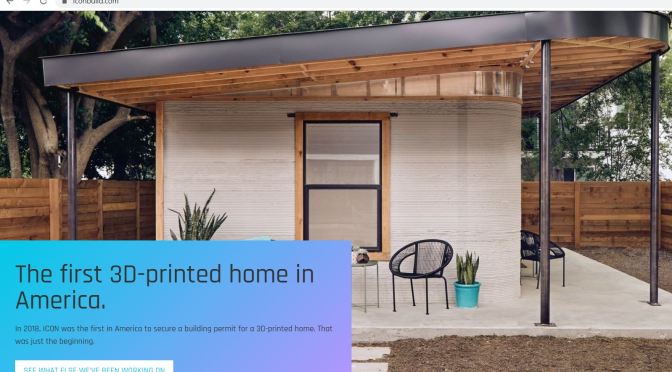
 ICON, which uses robotics, software, and advanced materials (including its proprietary “Lavacrete”) to remove numerous barriers in the contemporary building industry, debuted its first 3D printer and the
 “We are extremely proud of what we have accomplished, from the ability to 3D bioprint human cardiac tissue last summer to a mini heart with full structure now. These milestones are a testament to the hard work of our team and the proprietary process we have developed that enables this type of scientific achievement,” said Birla in a press release. “We believe we are at the forefront of whole heart bioengineering, a field that has matured quickly over the last year, and well-positioned to continue our rapid scientific advancement.”
 Boomers Daily