
Category Archives: Technology

Public Transit: NYC’s $16 Billion Subway Line Costs

CNBC (May 13, 2023) – Public transit can be extremely valuable for a city’s economy – in New York City 85% of the people who travel into the business district below 61st Street take some form of public transportation.

Chapters: 00:00 — Introduction 01:39 — Second Avenue Subway 06:45 — A national problem 08:37 — Subway costs 15:31 — Solutions

In several major cities – New York, Boston, Washington, D.C., and San Francisco – the subway and other rapid rail systems are key contributors to the prosperity of the city. In NYC for example, more than $37 billion of the Metropolitan Transportation Authority’s $54 billion budget goes to subways. But building subways in the U.S. is very expensive.

In fact, it’s the sixth most expensive country to build rail transit in the world. And even that is likely an understatement. High labor costs, overbuilt tracks and stations, and onerous regulations all jack up costs. NYC’s sheer population density makes it rather worth it – so many people ride the subway that the cost per rider is comparable to many European cities where total expenditures are substantially lower.

However, the high costs hurt the case for public transit in less dense areas of the country. Lowering those costs could go a long way toward building affordable and accessible public transit for smaller cities around the country and reducing traffic congestion, pollution and traffic accidents.

World Economic Forum: Top Stories- May 13, 2023

World Economic Forum (May 13, 2023) – This week’s top stories of the week include:

0:15 This volcanic bacteria eats CO2 – Scientists say they turn CO2 into biomass ‘astonishingly quickly’ and one day could help remove CO2 from the atmosphere. The microbes were discovered off the coast of the Italian island of Vulcano where the ocean is rich in CO2. They bubble up from volcanic vents on the seafloor. The microbes were discovered by scientists from the Two Frontiers Project who found that the bugs sink in water which could help to sequester the CO2 they absorb.

1:35 This Japanese soccer league is over 80s only – It kicked off in April with 3 teams going head-to-head boasting an average age of 83.5. Among the players is ex-national team forward Mutsuhiko Nomura. His career has spanned 70 years and 18 World Cups. Now, aged 83, he patrols the midfield for Red Star. But the league’s veteran is Shingo Shiozawa. The former racing car designer plays in net for the White Bears at the tender age of 93.

3:19 Why we need economic growth – Economic growth may not be the only measure of success but in many countries, it saves lives. But economic growth need no longer happen at the expense of the planet.

6:38 Women need investment, not just empowerment – Non-profit Grameen Foundation is helping millions of people lift themselves out of poverty by teaching women how to manage money, access loans and manage their businesses. Most importantly, Bai says, women need to have the knowledge to ask the right questions.

_____________________________________________

The World Economic Forum is the International Organization for Public-Private Cooperation. The Forum engages the foremost political, business, cultural and other leaders of society to shape global, regional and industry agendas. We believe that progress happens by bringing together people from all walks of life who have the drive and the influence to make positive change.


Travel: Do Humans Or A.I. Provide Better Advice?

BBC Scotland (May 6, 2023) – Which source provides the most trustworthy tips on Glasgow’s attractions – artificial intelligence or the humans who live there? Craig Ferguson puts both options to the test.

Airline Travel: Legacy Vs Low-Cost Carriers (WSJ)

Wall Street Journal (May 3, 2023) – United Airlines flies 988 routes globally with around 30,000 departures every week. How do airlines choose where to fly when they have so many flights every week?

Video timeline: 0:00 Meet Patrick Quayle, a global network planning executive 0:27 The hub-and-spoke network structure 2:50 The linear route system, point-to-point 4:45 When to update route networks

It turns out legacy airlines like American and Delta and low-cost airlines like Southwest and Spirit use different models when planning their route networks. WSJ asked United’s global network planning expert to explain how airlines plan and manage their routes.

Art History Book Profiles: ‘The Story of Art Without Men’ Author Katy Hessel

PBS NewsHour (May 3, 2023) -How many women artists can you name? That was a question Katy Hessel, then a 21-year-old art history major, asked herself. The results were disappointing. And so she set about learning and teaching herself and then others.

Art historian, author and presenter Katy Hessel poses for photos at the Falmouth Book Festival on October 19, 2022 in Falmouth, England. Her new book "The Story of Art Without Men" showcases the lives and work of women artists from the 16th century to the present. (Photo of Hessel by Hugh R Hastings/Getty Images; book cover courtesy of W.W. Norton & Company)
Art historian, author and presenter Katy Hessel 

That resulted in her new book, “The Story of Art Without Men.” Jeffrey Brown discussed the book with Hessel for our arts and culture series, CANVAS.

World Economic Forum: Top Stories- April 29, 2023

World Economic Forum (April 29, 2023) – This week’s top stories of the week include:

0:15 Germany tackles skill gap with on-job training – Jakob Kasperidus joined wind power firm SL Naturenergie 2 years ago despite having no experience in the field. Previously, he managed an organic food shop. Now, he’s training to become a senior project developer as he works. “The first months were not that easy. It has to be said that we actually had quite a nice concept. That is, we had former or senior project developers who have been in the profession for some time now, who were always assigned a tandem junior project developer. That means I’ve had a mentor, if you will, for 2 or 2.5 years now, who then trained me bit by bit, so to speak.”

2:24 New documentary explores endometriosis – This director has endometriosis, along with millions of women. She made a movie about it. Endometriosis is a condition where cells similar to the uterus lining grow outside of the uterus. It causes severe, life-limiting pelvic pain and affects 190 million women of reproductive age globally. That’s 1 in 9 women. Yet many struggle to get their condition recognized and treated.

5:08 Scientists test honey for antibiotic potential – Honey is a traditional remedy for wound-healing due to its antimicrobial and anti-inflammatory properties. Now, scientists at Cardiff University are going back to this ancient cure to search for the next wave of bacteria-fighting medicine. The honey works as a ‘drug discovery tool’. Researchers test samples of honey for antibacterial compounds, then follow them back, using technology, to the plant species the bees visited. Many of these plants would otherwise be dismissed as weeds.

6: 32 Student designs plastic windows for Ukraine – The plastic windows can be built in just 15 minutes at a cost of €13.60 per square metre. The windows combine 4 layers of polythene sheeting with PVC piping and an ‘insulating noodle’ to create an immediate triple-glazed window which lets in enough light to live by. Millions of Ukrainians are living in bomb-damaged homes in a country where temperatures can drop to -20°C. The plastic windows were designed by Cambridge student Harry Blakiston Houston who took a break from his biotechnology PhD to start an NGO, Insulate Ukraine.

_____________________________________________

The World Economic Forum is the International Organization for Public-Private Cooperation. The Forum engages the foremost political, business, cultural and other leaders of society to shape global, regional and industry agendas. We believe that progress happens by bringing together people from all walks of life who have the drive and the influence to make positive change.

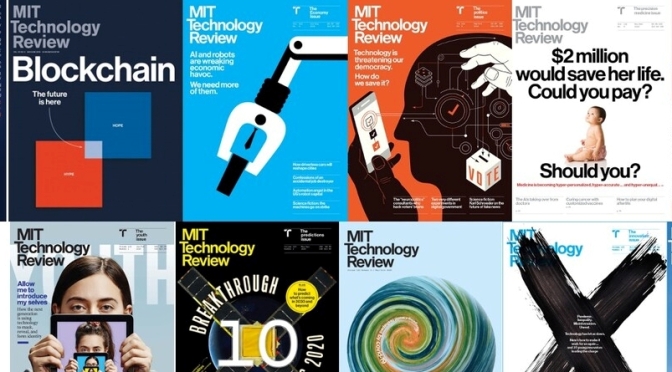
Preview: MIT Technology Review – May/June 2023

MIT Technology Review – May/June 2023: How AI is transforming the classroom. Surveilling students. Teaching the biliterate brain to read. What we’ve learned from “learning to code.” Plus keyboard obsessions, wildfire resilience, and shroom speak.

Teachers in Denmark are using apps to audit their students’ moods

surveillance on playground concept

Companies say the software can help improve well-being, but some experts worry it could have the opposite effect.

How AI is helping historians better understand our past

""

The historians of tomorrow are using computer science to analyze how people lived centuries ago.

It’s an evening in 1531, in the city of Venice. In a printer’s workshop, an apprentice labors over the layout of a page that’s destined for an astronomy textbook—a dense line of type and a woodblock illustration of a cherubic head observing shapes moving through the cosmos, representing a lunar eclipse. 

Business: How ‘Junk Fees’ Invaded The U.S. Economy

CNBC (April 25, 2023) – Americans are collectively spending nearly $65 billion on sneaky fees, according to the White House. “It really seems like companies have become addicted to junk fees,” Lina Khan, chair of the Federal Trade Commission, told CNBC.

Junk fees are making companies billions of dollars richer. Watch the video above to learn more about where junk fees hide, details of proposed changes, where policy may fall short and whether increased regulatory oversight may be enough to squash junk fees once and for all. Chapters: 0:00 Introduction 1:26 Defining ‘junk’ fees 5:34 Squashing fees 7:52 Policy problems 10:02 The future of fees

Review: How AI Is Now Disrupting Societies (DW)

DW News (April 23, 2023) – AI systems such as OpenAI’s ChatGPT are dominating headlines. There are concerns that their rise may lead to the displacement of millions of workers, blur the distinction between truth and falsehood, and amplify existing inequalities. Are the worries justified?

Business: Robots Helping Retailers Save Billions

CNBC (April 22, 2023) – Outfitted with cameras and sensors, autonomous inventory robots can verify price signs and look for out-of-stock items. Inventory is one of the biggest challenges retailers face.

Chapters: 0:002:07 Introduction 2:085:11 Chapter 1 Empty Shelves 5:129:26 Chapter 2 Inventory robots 9:2712:31 Chapter 3 The future

Missed sales from empty shelves and out-of-stock items cost U.S. retailers $82 billion in 2021, according to NielsenIQ. But an army of inventory robots is being deployed that could help retailers appease angry customers, boost sales and respond to the ongoing worker shortage.