Category Archives: Science

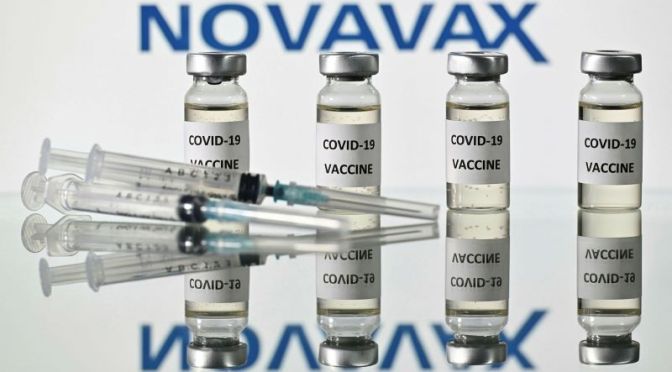
Protein Vaccine: Novavax Primes Immune System To Make Antibodies (Video)

Read more

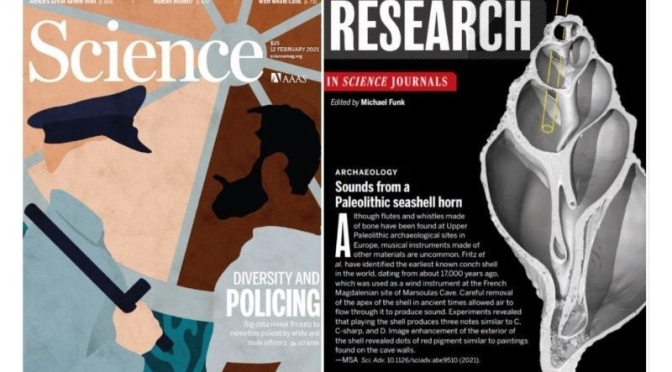
TOP JOURNALS: RESEARCH HIGHLIGHTS FROM SCIENCE MAGAZINE (FEB 5, 2021)

This week, Science celebrates the impending 20th anniversary of the publication of the draft human genome sequence—a landmark achievement by any measure…The Human Genome Project (HGP) was an internationally supported public project (Celera Genomics was the private effort that simultaneously sequenced the human genome). When the endeavor was launched in 1990, collaboration among a diverse group of scientists was essential because the sequencing was distributed across a number of international research sites.

Read full research highlights

The American Association for the Advancement of Science (AAAS, the publisher of Science) also looks forward to next week’s annual meeting, whose theme is “Understanding Dynamic Ecosystems.” At first glance, these two events may seem unrelated. But the successful completion of the human genome sequence ushered in biology’s era of “big science” and created a research ecosystem for tackling complex, technology-driven, and data-intensive multidisciplinary projects that continue to improve our understanding of cancer, the microbiome, the brain, and other areas of biology.

The Human Genome Project (HGP) was an internationally supported public project (Celera Genomics was the private effort that simultaneously sequenced the human genome). When the endeavor was launched in 1990, collaboration among a diverse group of scientists was essential because the sequencing was distributed across a number of international research sites. High-throughput technologies for DNA sequencing were critical to the project’s success, and the participation of biotech companies in the effort was instrumental in driving down the cost, speed, and throughput of generating DNA sequence. The ever-increasing amount of sequence data drove the development of mathematical and computational tools for assembling and annotating the data. Neither the laboratory scientists nor the computational scientists could have done this alone, and the convergence of these disciplines has been one of the most important legacies of the early genome efforts. There was also a commitment to train the next generation of genome scientists, and over the past 20 years, many colleges and universities have established new undergraduate and graduate programs in quantitative and systems biology. Life sciences students today graduate with a very different set of skills than they did in 2000.

Science Podcast: Human Genome Sequencing – 20 Years Of Research & Data

This week we’re dedicating the whole show to the 20th anniversary of the publication of the human genome. Today, about 30 million people have had their genomes sequenced. This remarkable progress has brought with it issues of data sharing, privacy, and inequality.

Host Sarah Crespi spoke with a number of researchers about the state of genome science, starting with Yaniv Erlich, from the Efi Arazi School of Computer Science and CEO of Eleven Biotherapeutics, who talks about privacy in the age of easily obtainable genomes. Next up Charles Rotimi, director of the Center for Research on Genomics and Global Health at the National Human Genome Research Institute, discusses diversity—or lack thereof—in the field and what it means for the kinds of research that happens. Finally, Dorothy Roberts, professor in the departments of Africana studies and sociology and the law school at the University of Pennsylvania, talks about the seemingly never-ending project of disentangling race and genomes. 

Science Podcast: Secrets Of Einsteinium, Chemicals Sap Ozone & Traffic Jams

Exploring the properties of a vanishingly-rare man-made element, and the AI that generates new mathematical conjectures.

In this episode:

01:04 Einsteinium’s secrets

Einsteinium is an incredibly scarce, man-made element that decays so quickly that researchers don’t know much about it. Now, using state-of-the-art technology, a team has examined how it interacts with other atoms, which they hope will shed new light on einsteinium and its neighbours on the periodic table.

Research Article: Carter et al.

06:28 Research Highlights

The mysterious appearance of three ozone-depleting chemicals in Earth’s atmosphere, and how ride-sharing services have failed to reduce traffic jams.

Research Highlight: Mystery on high: an ozone-destroying chemical appears in the air

Research Highlight: Uber and Lyft drive US gridlock — but not cuts in car ownership

8:38 The computer that comes up with new mathematical formulas

A team of researchers have developed artificial-intelligence algorithms that can generate new formulas for calculating the digits of key mathematical numbers like pi. Although crucial, many of these numbers remain mysterious, so it is hoped that this system will open up new avenues of questioning for mathematicians.

Research Article: Raayoni et al.

14:48 Briefing Chat

We discuss some highlights from the Nature Briefing. This time, a new theory to explain a sixty-year-old mystery surrounding the icy deaths of a group of Russian students, and the continued controversy about the chances of life on Venus.

Video: Explaining the icy mystery of the Dyatlov Pass deaths

News: Life on Venus claim faces strongest challenge yet

Covid-19 Vaccines: ‘What Can You Trust?’ (Video)

Factual and reliable information is vital to creating trust in vaccines and to overcoming the pandemic. Ed Carr, The Economist’s deputy editor, and Natasha Loder, our health policy editor, answer some of the big questions about the global vaccination drive.

Chapters 00:00​ – Challenges in vaccinating the world 00:45​ – Trust in vaccines 02:30​ – mRNA vaccines 03:23​ – Impact of variants on vaccination 04:29​ – Time between vaccine doses 06:09​ – Mandatory vaccines for travel?

Covid-19: ‘How Do The Leading Vaccines Work?’

As countries like the United States and United Kingdom inoculate their residents with never-before used vaccine technology, others, including Russia, China, and India, are investing in more traditional approaches, like inactivated coronavirus vaccines. But no matter the technique, together they have the potential to create multiple lines of defense against SARS-CoV-2. Science senior correspondent Jon Cohen explains how each of these vaccines can protect us from severe illness—and what understanding the details of our immune responses could mean for the future of human trials.

Science Podcast: Social Costs Of Carbon & The Chirps Of Mole-Rats

On its first day, the new Biden administration announced plans to recalculate the social cost of carbon—a way of estimating the economic toll of greenhouse gases. Staff Writer Paul Voosen and host Sarah Crespi discuss why this value is so important and how it will be determined.

Next up, Alison Barker, a postdoctoral researcher at the Max Delbrück Center for Molecular Medicine, talks with Sarah about the sounds of naked mole-rats. You may already know naked mole-rats are pain and cancer resistant—but did you know these eusocial mammals make little chirps to identify themselves as colony members? Can these learned local dialects make naked mole-rats a new research model for language learning? 

Science Podcast: Spinal Cord Injury Device, Hand Gestures & Saturn’s Tilt

A neuroprosthetic device restores blood-pressure control after spinal-cord injury, and identifying the neurons that help us understand others’ beliefs.

In this episode:

00:47 A neuroprosthetic restores the body’s baroreflex

A common problem for people who have experienced spinal-cord injury is the inability to maintain their blood pressure, which can have serious, long-term health consequences. Now, however, researchers have developed a device that may restore this ability, by stimulating the neural circuits involved in the so-called baroreflex.

Research Article: Squair et al.

News and Views: Neuroprosthetic device maintains blood pressure after spinal cord injury

08:27 Research Highlights

How gesticulating changes the way that speech is perceived, and a new theory of how Saturn got its tilt.

Research Highlight: Hands speak: how casual gestures shape what we hear

Research Highlight: The moon that made Saturn a pushover

10:58 A neuronal map of understanding others

Humans are very good at understanding that other people have thoughts, feelings and beliefs that are different to our own. But the neuronal underpinnings of this ability have been hard to unpick. Now, researchers have identified a subset of neurons that they think gives us this ability.

Research Article: Jamali et al.

18:04 Briefing Chat

We discuss some highlights from the Nature Briefing. This time, the science of why cats love catnip, and the struggle to identify what the mysterious celestial object StDr 56 actually is.

Science: Why cats are crazy for catnip

Syfy Wire: So what the heck is StDr 56?

Science & Wildlife: ‘The Bird Genoscape Project’

Billions of birds migrate annually across the Western Hemisphere… but if we don’t know where they go when they leave their breeding grounds, how can we protect them? By extracting DNA from individual feathers (and borrowing cutting-edge technology from the Human Genome Project) scientists can map bird migration with greater precision than ever before. The result is the Bird Genoscape Project, and it’s revolutionizing bird conservation by connecting migratory birds – and the people who care about them – across the Americas. This work was funded by the National Geographic Society. Learn more at http://www.natgeo.org.