Category Archives: Science

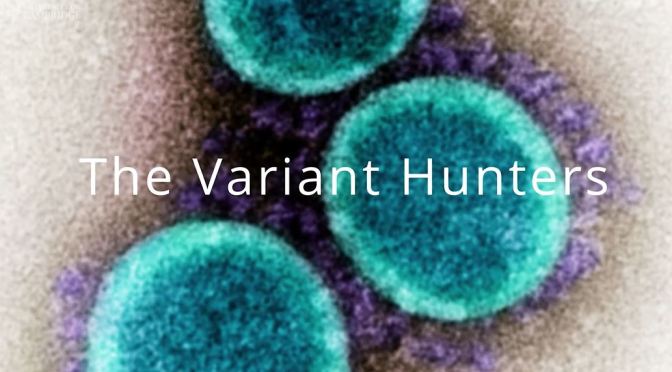
Covid-19: ‘The Variant Hunters’ – Understanding Its Spread (Cambridge)

The variant hunters are helping us to understand how and why the COVID-19 virus is spreading, allowing us to fight back against the COVID-19 pandemic.

Hear from some of the scientists behind the UK’s nationwide sequencing effort to track SARS-CoV-2. Sir Patrick Vallance (the government’s Chief Scientific Adviser) also describes how the expertise that came together during the pandemic is now recognised across the world – and why it’s crucially important to continue to sequence to be ready for future pandemics.

This pioneering work is being carried out by the COVID-19 Genomics UK (COG-UK) consortium, which comprises numerous academic institutions, four public health agencies and the Wellcome Sanger Institute, and is administered by the University of Cambridge.

“Incredibly impressive, incredibly high quality and incredibly focused on the mission to make sure that as many people benefited from the science as possible,” Sir Patrick Vallance.

Read more: https://www.cam.ac.uk/stories/variant…
Science: Whole-Genome Screening For Newborns, Active Learning For STEM

Today, most newborns get some biochemical screens of their blood, but whole-genome sequencing is a much more comprehensive look at an infant—maybe too comprehensive?

Staff Writer Jocelyn Kaiser joins host Sarah Crespi to discuss the ethical ins and outs of whole-genome screening for newborns, and the kinds of infrastructure needed to use these screens more widely. Sarah also talks with three contributors to a series of vignettes on the importance of active learning for students in science, technology, engineering, and math. Yuko Munakata, professor in the department of psychology and Center for Mind and Brain at the University of California, Davis, talks about how the amount of unstructured time and active learning contributes to developing executive function—the way our brains keep us on task. Nesra Yannier, special faculty at Carnegie Mellon University and inventor of NoRILLA, discusses an artificial intelligence–driven learning platform that helps children explore and learn about the real world. Finally, Louis Deslauriers, senior preceptor in the department of physics and director of science teaching and learning at Harvard University, laments lectures: why we like them so much, why we think we learn more from lectures than inquiry-based learning, and why we’re wrong. 

Books: ‘When We Cease To Understand The World’ By Benjamín Labatut (2021)

Science & Medicine: Story Behind The mRNA Vaccines

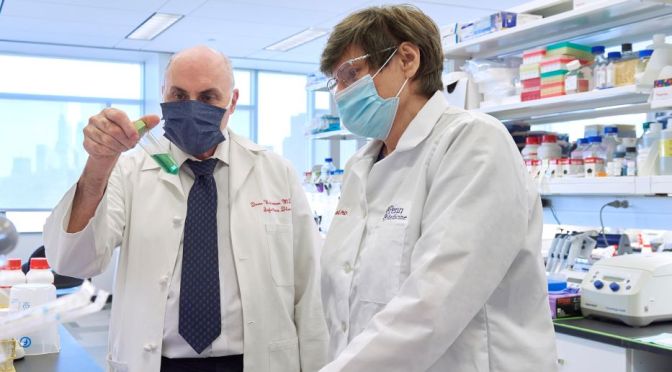
As mRNA-based COVID-19 vaccines are deployed to protect hundreds of millions of people across the world from the deadly global pandemic, the University of Pennsylvania scientists whose research breakthroughs laid the foundation for swift vaccine development have been awarded the 2021 Lasker-DeBakey Clinical Medical Research Award. Here, mRNA vaccine pioneers Drew Weissman, MD, PhD, and Katalin Karikó, PhD, share the story behind their development of this groundbreaking technology, and what it means for the future of medicine.

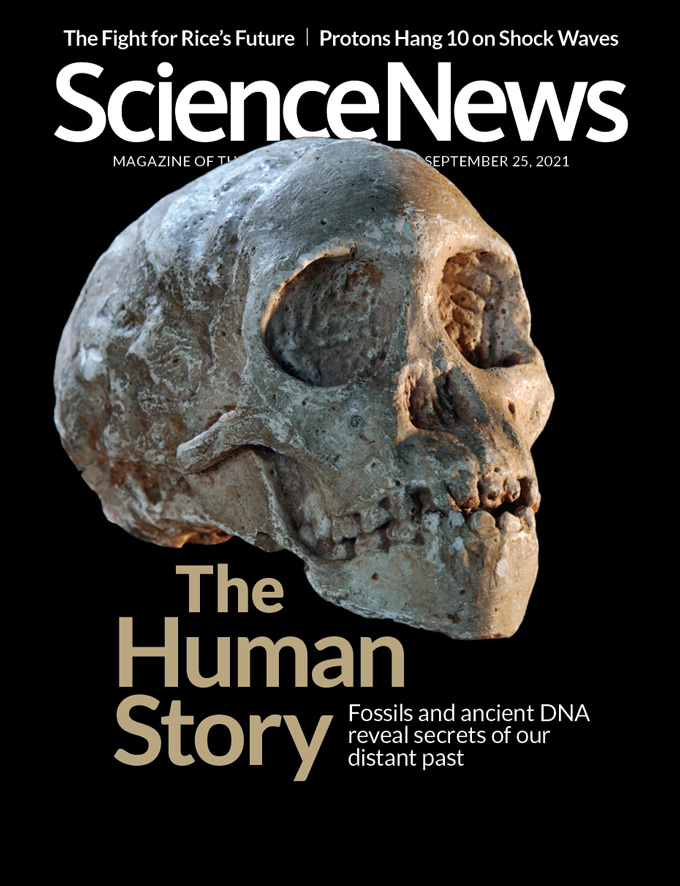
Front Covers: Science Magazine – September 24

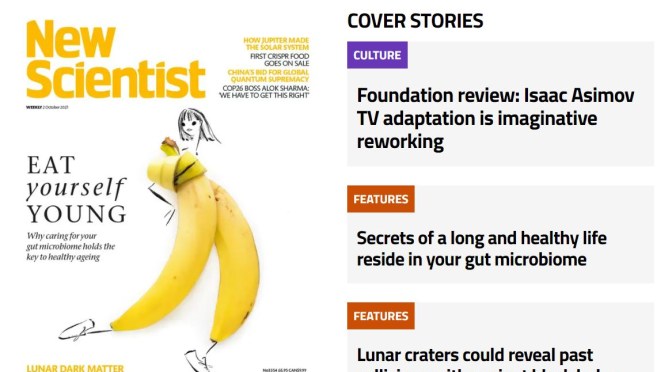
Previews: New Scientist Magazine – September 25

Science: Floating ‘Seed’ Sensors, Human Walking Pace, Genome Editing

How tiny seed-like sensors could monitor the environment, and the latest from the Nature Briefing.

In this episode:

00:45 Spinning seeds inspire floating electronics

Researchers have developed miniature electronic-chips with wings that fall like seeds, which could be a new way to monitor the environment.

Research article: Kim et al.

Video: Seed-inspired spinners ride the wind and monitor the atmosphere

06:02 Research Highlights

How humans can adjust to an energy-efficient walking pace almost without thinking, and the viral shell that excels at delivering genome-editing tools.

Research Highlight: Humans walk efficiently even with their heads in the clouds

Research Highlight: A CRISPR fix for muscles hatches from a viral shell

08:34 Briefing Chat

We discuss some highlights from the Nature Briefing. This time, the mystery of the Sun’s super-hot corona, and the latest efforts to toilet-train cows.

Physics World: The enduring mystery of the solar corona

The Guardian: Cows ‘potty-trained’ in experiment to reduce greenhouse gas emissions