
Category Archives: Reviews

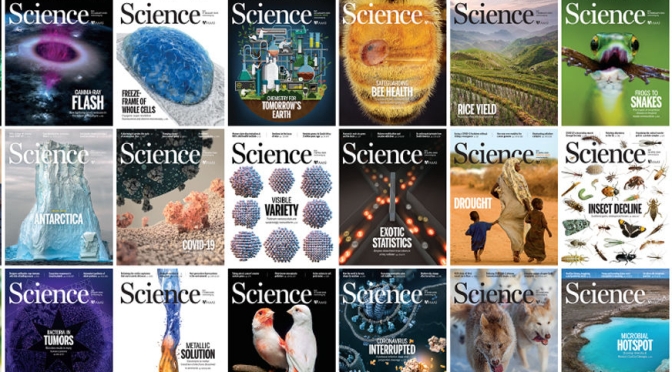
Research Preview: Science Magazine – June 16, 2023

Science Magazine – June 16, 2023 issue: A wild little penguin (Eudyptula minor) stands silhouetted against the city of Melbourne, Australia. Increasing levels of light pollution are having adverse effects on humans and the natural world.

Losing the darkness

For most of history, the only lights made by humans were naked flames. Daily life was governed by the times of sunrise and sunset, outdoor nighttime activities depended on the phase of the Moon, and viewing the stars was a common and culturally important activity. Today, the widespread deployment of outdoor electric lighting means that the night is no longer dark for most people—few can see the Milky Way from their homes. Outdoor lighting has many legitimate uses that have benefited society. However, it often leads to illumination at times and locations that are unnecessary, excessive, intrusive, or harmful: light pollution.

Potential for recovery of declining reef sharks

Data on shark populations in coral reefs raise concern and hope for recovery

Sharks and their relatives are some of the most threatened vertebrates on Earth, with approximately one-third estimated or assessed as threatened with extinction (1). This is a major problem because as predators that help keep the food web in balance, these animals play a variety of vitally important ecological roles (2) and in doing so help to keep healthy many ecosystems that humans depend on. Coral reefs provide homes for countless fish species that are vital for fisheries and are therefore an especially important ecosystem for humans—and one where the decline of shark populations seems to be especially acute

Documentary: “Waiting To Die” In North Korea (BBC)

BBC News (June 15, 2023) – Three North Koreans want to tell the world about the situation in the country. They expose, for the first time, the disaster unfolding there since the government sealed the borders more than three years ago starvation, brutal crackdowns and no chance to escape.

Under the tyrannical rule of Kim Jong Un, North Koreans are forbidden from making contact with the outside world. A spokesperson for the North Korean government has disputed the claims, which they said were “not entirely factual”.

Previews: The Economist Magazine – June 17, 2023

Image

The Economist Magazine– June 17, 2023 issue: America’s new best friend – Why India is indispensable.

Joe Biden and Narendra Modi are drawing their countries closer

India does not love the West, but it is indispensable to America

No country except China has propped up Russia’s war economy as much as oil-thirsty India. And few big democracies have slid further in the rankings of democratic freedom. But you would not guess it from the rapturous welcome Narendra Modi will receive in Washington next week. India’s prime minister has been afforded the honour of a state visit by President Joe Biden. The Americans hope to strike defence deals.

Lula’s ambitious plans to save the Amazon clash with reality

The Brazilian president faces resistance from Congress, the state oil company and agribusiness

Ukraine’s counter-offensive is making mixed progress

Its real test will come when it hits Russia’s prepared defences

Charlemagne: Why Europe’s asylum policy desperately needs rebooting

A deadly shipwreck in Greek waters highlights its dangers

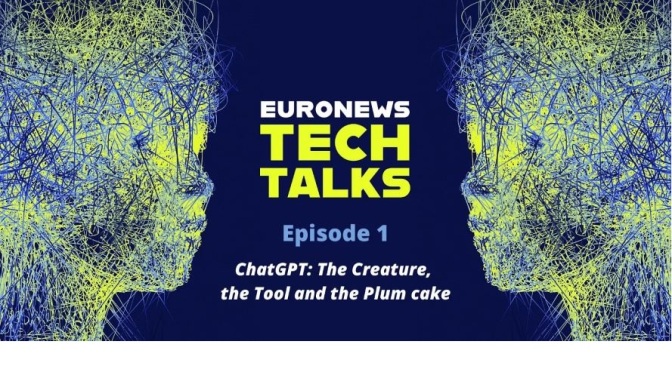
ChatGPT: Is Society Really At Risk With Generative AI?

euronews (June 15, 2023) – What does it mean to be human? An age-old philosophical question, thrown into the spotlight by the rise of #AI, which has managed to pass the sentience test created by Alan Turing.

In this first episode of Euronews Tech Talks, an Italian programmer delegates code-writing, a French artist reinvents her practice, a Cypriot student brainstorms, and a German teacher ignites minds.

Released a mere six months ago in November, ChatGPT has already become the fastest-growing consumer application. With this rapid growth, how is AI affecting life across Europe?

The education system is scrambling to catch up with #AI, but it’s not all doom and gloom for teachers. Dr. @sabinehauert and Dr. Matthew Glanville tell us about the benefits of this technology in the classroom, and how it can help diverse learners achieve their goals

Read more

Research Preview: Nature Magazine – June 15, 2023

Image

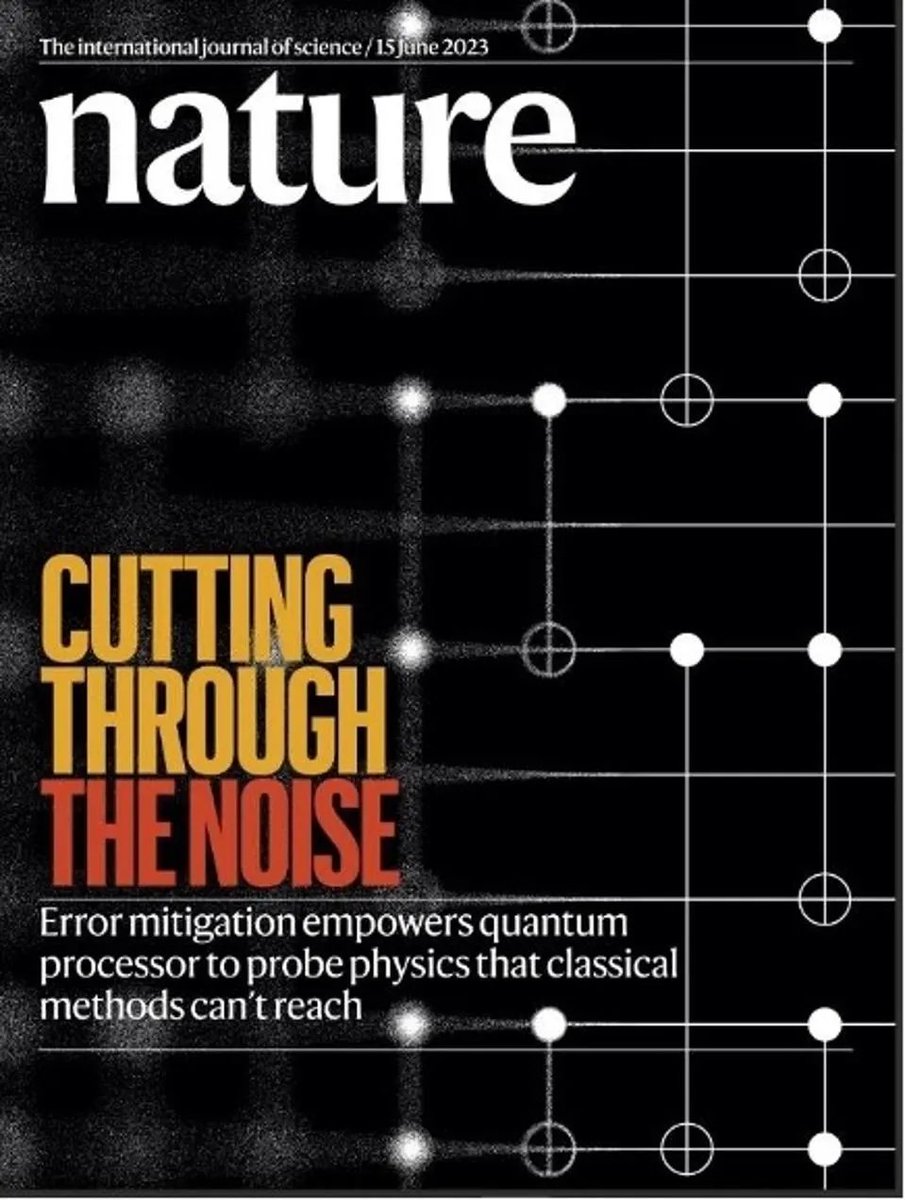
nature Magazine – June 15, 2023 issue: In this week’s issue, Abhinav Kandala and his colleagues show that it is still possible for a quantum computer to outperform a classical computer, by mitigating, rather  than correcting, the errors. 

DeepMind AI creates algorithms that sort data faster than those built by people

A replica of a game between 'Go' player Lee Se-Dol and a Google-developed super-computer, in Seoul, Korea, 2016.

The technology developed by DeepMind that plays Go and chess can also help to write code.

An artificial intelligence (AI) system based on Google DeepMind’s AlphaZero AI created algorithms that, when translated into the standard programming language C++, can sort data up to three times as fast as human-generated versions.

“We were a bit shocked,” said Daniel Mankowitz, a computer scientist at DeepMind who led the work. “We didn’t believe it at first.”

Ukraine dam collapse: what scientists are watching

Maxar satellite imagery of the destruction of the Nova Kakhovka dam and hydroelectric power facility.
Large sections of the Kakhovka dam have collapsed, unleashing catastrophic floods. Credit: Satellite image (c) 2023 Maxar Technologies via Getty

Extensive flooding could have severe consequences for farming, health and the environment.

The 66-year-old Kakhovka dam on the Dnieper River in south Ukraine collapsed on the morning of 6 June after a suspected explosion, triggering a catastrophic humanitarian and environmental crisis.

Politics: The Guardian Weekly – June 16, 2023

The Guardian Weekly (June 16, 2023) Ukraine and the Kakhovka dam burst. Plus: biting down into doughnut economics

More than a week has passed since the collapse of the Kakhovka dam in Ukraine. Only as the flood waters begin to recede is the long-term scale of the disaster becoming apparent.

With suspicion (though not yet, according to western capitals, conclusive proof) falling on Moscow, Dan SabbaghArtem Mazhulin and Julian Borger report on a human and environmental catastrophe, and what it might mean for Ukraine’s counteroffensive plans against Russia.

And amid reports of disunity among Moscow’s ruling elite, Shaun Walker went along to a gathering of exiled influential Russians who are once again daring to dream of an end to Vladimir Putin’s rule.

Green Energy: Potential & Economics Of Hydrogen

Financial Times (June 13, 2023) – In this film, the FT’s Simon Mundy explores how hydrogen – the lightest, most abundant element in the universe – could play a crucial role in the global push for net zero carbon emissions.

Video timeline: 00:00 What is Hydrogen 00:50 Green Hydrogen 02:50 Current uses of hydrogen 04:10 The concerns 05:00 The Hydrogen rainbow 05:51 Emerald Hydrogen 07.35 The investors 10:50 The policymakers 13:40 Green steel 17:35 Cleaning up aviation 22:15 The hydrogen economy of the future

From southern Spain to Swedish Lapland, we meet those at the forefront of this fast-growing space – all seeking a share of the billions to be made in the emerging hydrogen economy.

#hydrogen #greenhydrogen #EmeraldHydrogen #steel #hydrogeneconomy #zerocarbon #emission

Climate Change: A Review Of High-Tech Solutions

DW Documentary (June 13, 2023) – Can high-tech solutions help protect the climate? What would be the side effects of further human intervention in nature?

Attempts are being made to reduce the CO2 in the atmosphere with technical solutions. For example, new carbon capture technology that can extract CO2 from air and water, even if the amount currently captured is minimal and not enough to prevent the climate crisis and its consequences. Still, there is no shortage of ideas. Adding basalt rock dust to agricultural fields not only binds carbon dioxide but keeps the soil fertile.

Biochar, made from organic waste, has a similar effect. Some ideas are bolder: A protective screen of particles in the upper layers of the atmosphere could filter sunlight, as seen with the eruption of the Pinatubo volcano in the Philippines in 1991. The millions of tons of sulfur dioxide spewed into the stratosphere cooled the earth significantly.

Theoretically, aircraft could be used to deliver the particles. But experts warn that the consequences for humans and the weather would be felt worldwide and could never be fully controlled.

#documentary #dwdocumentary #climatechange

Science Review: Scientific American – July 2023 Issue

Image

Scientific American – July 2023 Issue: Smart, adaptable and loud, parrots are thriving in cities far outside their native ranges.

Parrots Are Taking Over the World

Parrots Are Taking Over the World

By Ryan F. Mandelbaum

At Brooklyn’s Green-Wood Cemetery the living get as much attention as the dead. Groundskeepers maintain the 478-acre historic landmark as an arboretum and habitat for more than 200 breeding and migratory bird species. But many visiting wildlife lovers aren’t interested in those native birds. They’re at the entryway, their binoculars trained on the spire atop its Gothic Revival arches. They’ve come to see the parrots.

Extreme Heat Is Deadlier Than Hurricanes, Floods and Tornadoes Combined

Extreme Heat Is Deadlier Than Hurricanes, Floods and Tornadoes Combined

When dangerous heat waves hit cities, better risk communication could save lives

By Terri Adams-Fuller

Exposure to extreme heat can damage the central nervous system, the brain and other vital organs, and the effects can set in with terrifying speed, resulting in heat exhaustion, heat cramps or heatstroke. It also exacerbates existing medical conditions such as hypertension and heart disease and is especially perilous for people who suffer from chronic diseases. The older population is at high risk, and children, who may not be able to regulate their body temperatures as effectively as adults in extreme conditions, are also vulnerable.

Brain Waves Synchronize when People Interact

Brain Waves Synchronize when People Interact

The minds of social species are strikingly resonant

By Lydia Denworth