Category Archives: Poetry

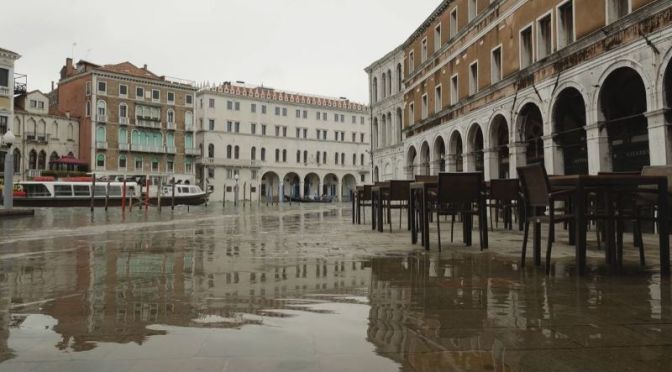
Poetic Short Films: ‘NELLA MIA CITTÀ (In my city)’ – A Tribute To Venice (Video)

Filmed, Edited and Directed by: Milton Kam

NELLA MIA CITTÀ (In my city) is my visual ode to Venice. The film observes the lagoon city and its residents during the relative scarcity of tourists in its streets. From the lustre of its famous spots to the anonymity of its quiet alleys, Venice feels as if ‘the future did not come,’ to borrow a line from the poem, which the film is based on.

Nella mia città is written by Anna Toscano and was taken from her book Doso la polvere, Milan, La Vita Felice, 2012

With music by Federico Toffano (cello), Liesl Odenweller (soprano), and Ivano Zanenghi (lute).

IN MY CITY by Anna Toscano

The future does not exist
the future does not come
in my city:
however long my step is
however much you have the favor of the wind
the number 2 does not go more than 22 km per hour.
How to get beyond the past
how not to look back
(at this speed)
with your neck always at three quarters:
time stops in piazzale Roma
so we live entangled
in the stories of peoples.
We stand, happy,
in a rearview mirror.

Poetry: Robert Frost’s ‘Stopping By Woods On A Snowy Evening’ (Video)

A short poem told from the perspective of a traveler who stops to watch the snow fall, and, in doing so, reflects on the conflict between man and nature and the wishes and obligations we face in our lives.

Written by Robert Frost, 1922.

Read by Shane Morris.

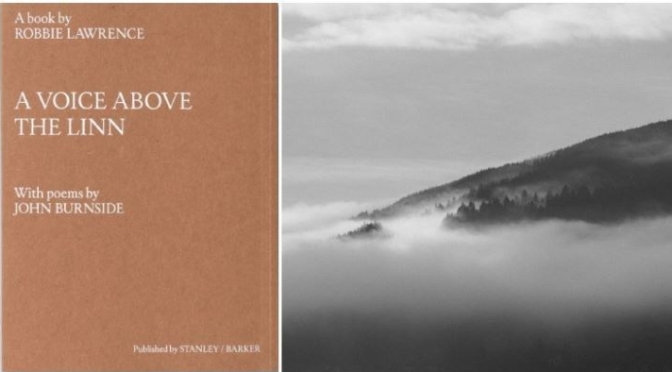
New Photography Books: ‘A Voice Above The Linn’ By Robbie Lawrence (2020)

In ‘A Voice Above The Linn’ Lawrence collaborated with the renowned poet John Burnside, who contributed four beautiful new poems to segment its chapters. 

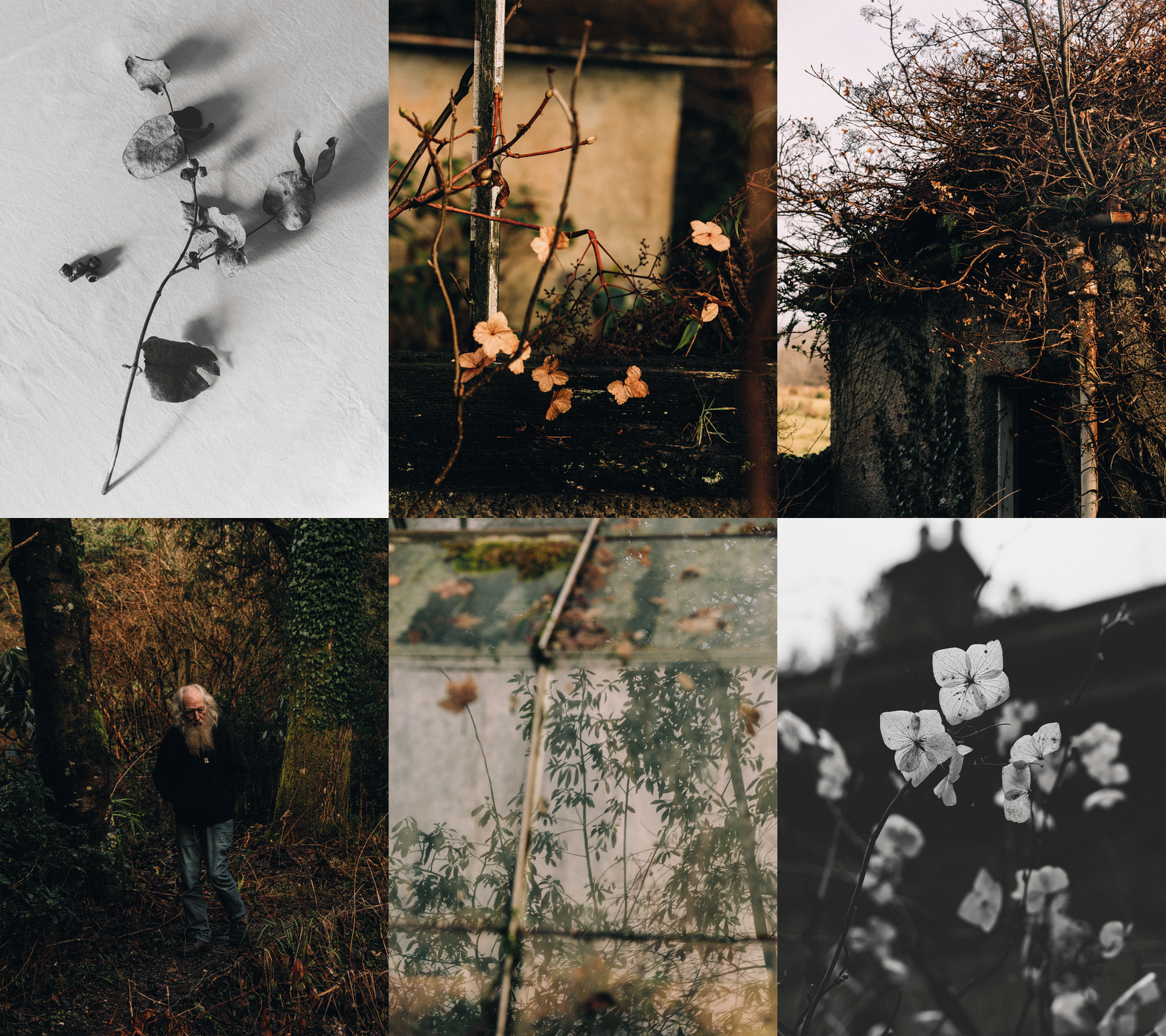
In 2016 Robbie Lawrence first travelled to a remote stretch of coastline in the west coast of Scotland, to Linn Gardens, which lies at the head of Cove Bay on the west side of Rosneath peninsula. The gardens had been run for fifty years by Jim Taggart, an avid botanist and gardener. 

Jim discovered that the region’s subtropical climate allowed him to grow plants and flowers from all over the world. His endeavours led to the estate being covered in an intricately plotted web of ferns, bamboos, Magnolias and Rhododendrons. As Jim got older, his son Jamie took over the more physical elements of maintaining the garden, including travelling abroad to research and gather new plants. On one such journey, to the northern mountainous region of Vietnam, Jamie disappeared. His body was found years later, he had evidently fallen in one of the mountain’s higher passes.  

When I first met Jim, who by this point was well into his 80s, he told me that he decided to keep the garden going as a memorial to his son. Over the past few years, I went back to visit Jim and document the garden as it passed through the seasons. Despite his age, Jim would bound around the garden, occasionally stopping to provide a lengthy anecdote about a particular fern or tree. Last summer, Jim passed away at the age of 84.” – Robbie Lawrence 

Read more

Travel Videos: ‘Je Viens’ – Hiking The Trails In Tignes, Southeastern France

“Je Viens” is a Cinematic Poem Short Film In Tignes, France Directed by Franck Pinel.

Filmed, Edited and Directed by: Franck Pinel (FKY)

Music by: Steven Gutheinz
Written by: Samuel Revol
Narrated by: Siméon Revol & Laure Revol
English Translation by: Madeleine Barter

“Between the desert peaks and the wild plains, Itinerary of the man alone; poisoned, in love, alive.”

I invite you on the trails of Tignes in Savoie, under the August sun, to breathe the fresh air! A little vastness, horizons blurred to forget for a few moments our confined lives.

A first FKY / Srevol collaboration, with a text written for the film, and read by a young Simeon with a rocky voice.

I Approach

Tightrope walking earthling
Lying heavily on rock
I look for your softness
Your suspended caresses

In my solitude, I approach

My bones follow your tracks
Along smoke-filled banks,
Burns under your sun
My masterful soul

In my solitude, I approach

My wings poisoned
by oily molecules
accept my sorrow
my ghostly pardon

In my solitude, I approach

Tightrope walking earthling
With smoky soul, I approach
I burn in your softness
Masterful earth

—————————————

Je viens

Funambule terrien,
Aimanté à la roche,
Je cherche tes douceurs,
Tes caresses suspendues.

Dans ma solitude, je viens

Mes os suivent ta piste,
Aux rivages enfumés
Je brûle sous ton soleil
Mon âme de capitaine

Dans ma solitude, je viens

mes ailes empoisonnées
de molécules pétroliennes
accepte mon désolé
mon pardon fumigène

Dans ma solitude, je viens

Funambule terrien,
A l’âme enfumée je viens
Je brûle dans ta douceur,
Terre capitaine

Tignes is a group of villages that form a high-altitude ski resort in the French Alps, near the Italian border. With nearby Val d’Isère, it’s part of the Espace Killy ski area, linked by a network of lifts. Val Claret and Tignes Le Lac villages are lively hubs, with restaurants and shops. In summer, the area offers trails, golf and a bike park, plus ski runs on the Grande Motte glacier.

Website

Poetry: ‘Song Of The Open Road’ By Walt Whitman

Read by Dave Luukkonen and Music by Tony Anderson

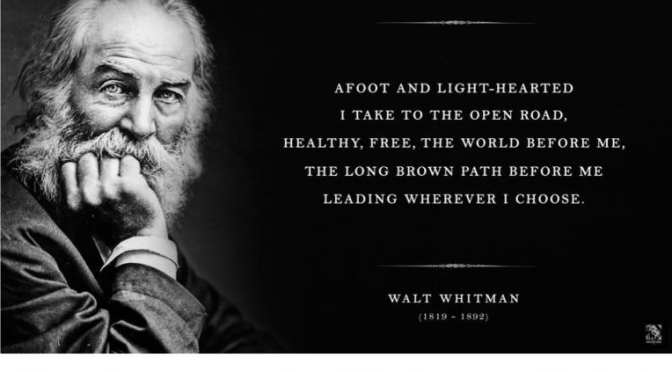
Walt Whitman is America’s world poet – a latter-day successor to Homer, Virgil, Dante, and Shakespeare, whose verse collection ‘Leaves of Grass’ marked a new era in the history of American literature.

Within Leaves of Grass, Whitman’s ‘Song of the Open Road’ engages with important themes of freedom, the self and nature. The poem begins with the speaker setting out on a long brown path “Afoot and light-hearted,” for he is done with the routines, customs, and safe behaviours of his previous life, “done with indoor complaints, libraries, querulous criticisms.”

Here, Whitman renounces a life devoted to the conventional pursuit of material success and embarks on the open road, the world before him. –

If you’d like to read the full poem, go here: https://www.poetryfoundation.org/poem…

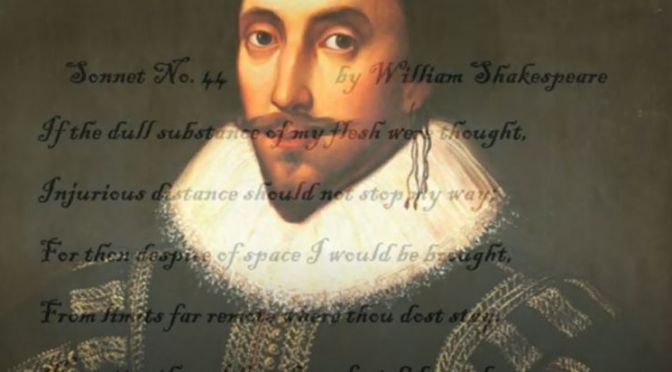
Poetry: ‘Sonnet 44’ By William Shakespeare

Read by: A Poetry Channel

Sonnet 44 is one of 154 sonnets written by the English playwright and poet William Shakespeare. It is a member of the Fair Youth sequence, in which the poet expresses his love towards a young man. Sonnet 44 is continued in Sonnet 45. 

Sonnet XLIV

If the dull substance of my flesh were thought,
Injurious distance should not stop my way;
For then despite of space I would be brought,
From limits far remote, where thou dost stay.
No matter then although my foot did stand
Upon the farthest earth removed from thee;
For nimble thought can jump both sea and land
As soon as think the place where he would be.
But ah! thought kills me that I am not thought,
To leap large lengths of miles when thou art gone,
But that, so much of earth and water wrought,
I must attend time’s leisure with my moan,
   Receiving nought by elements so slow
   But heavy tears, badges of either’s woe.

Arts & Literature: A Close Reading Of Poet Robert Frost (LRB Podcast)

LRB PodcastsIn the latest episode in their series of Close Readings, Seamus Perry and Mark Ford look at the life and work of Robert Frost, the great American poet of fences and dark woods. 
(August 4, 2020)

They discuss Frost’s difficult early life as an occasional poultry farmer and teacher, his arrival in England in 1912 amid the flowering of Georgian poetry, and his emergence as the first 20th-century professional poet, whose version of the American wilderness myth, full of mischief and foreboding, took him to packed concert halls and a presidential inauguration.

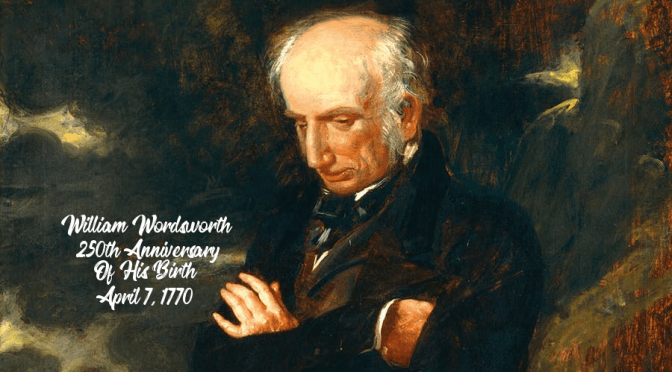
Today: 250th Anniversary Of William Wordsworth’s Birth – “That Inward Eye”

From an Apollo Magazine article (April 7. 2020):

‘They flash upon that inward eye
 Which is the bliss of solitude’
.
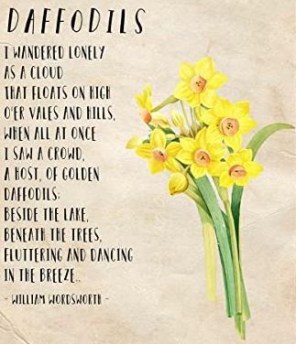
William Wordsworth Daffodils - I Wandered Lonely As A Cloud - Amazon photo‘We are fond of tracing the resemblance between Poetry and Painting,’ wrote William Wordsworth  (1770–1850) in the famous ‘Preface’ to Lyrical Ballads (1800), ‘and, accordingly, we call them Sisters.’ To speak of the ‘sister arts’ was indeed a critical platitude of the age, though as it happens Wordsworth’s attitude towards painting wasn’t normally very sisterly. 


Apollo Magazine logoWhen, in 1840 or so, a well-meaning houseguest called Margaret Gillies made a drawing of the 70-year old Mrs Wordsworth, everyone agreed that it was an excellent likeness; but her kind act was rewarded with a testy and somewhat ungracious sonnet from the sitter’s husband. He preferred to visualise Mary in her salad days: ‘’tis a fruitless task to paint for me, / Who, yielding not to changes Time has made, / By the habitual light of memory see / Eyes unbedimmed, see bloom that cannot fade, / And smiles that from their birth-place ne’er shall flee / Into the land where ghosts and phantoms be’.
.
All she possesses, as a painter, is the outward eye: ‘that inward eye’ is the poet’s hallmark, as of course Miss Gillies would have known from Wordsworth’s most famous poem, the one about the daffodils – ‘They flash upon that inward eye / Which is the bliss of solitude’. By chance we know (because Wordsworth left it on record, saying they were the best thing in the poem) that those two lines were actually contributed by Mary, so the uxoriousness of the thing is double: not only does she evade the merely visual but she also possesses the innate genius to be able to name the imaginative power that so transcends it.
.