

A selection of three essential articles read aloud from the latest issue of The Economist. This week, why it has to be Joe, green innovation (14:35) and the fight against Mexico’s Coca-Cola habit (20:10). Zanny Minton Beddoes hosts.

A selection of three essential articles read aloud from the latest issue of The Economist. This week, why it has to be Joe, green innovation (14:35) and the fight against Mexico’s Coca-Cola habit (20:10). Zanny Minton Beddoes hosts.

The weekend’s top news under scrutiny by Monocle’s editor in chief Tyler Brûlé, Rob Cox and Benno Zogg, with commentary from our editors in London and Tokyo. Plus: Christoph Amend of ‘ZEITmagazin’.

DW Radio News 24/7 reports: Death toll from earthquake in Turkey rises, a third man is arrested in terror attack in Nice, France, and other top world news.
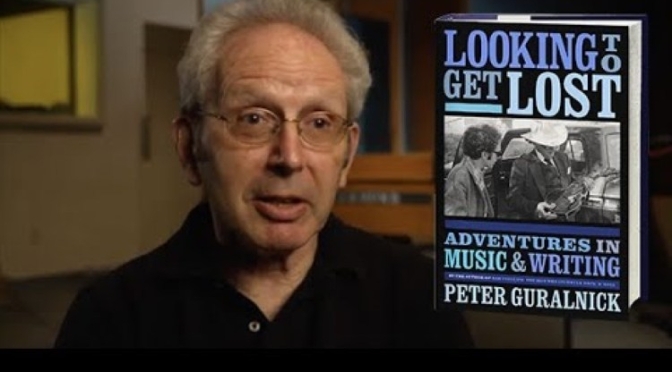
The bestselling author of Sam Phillips: The Man Who Invented Rock ‘n’ Roll and Last Train the Memphis: The Rise of Elvis Presley, this dazzling new book of profiles is not so much a summation as a culmination of Peter Guralnick’s remarkable work, which from the start has encompassed the full sweep of blues, gospel, country, and rock ‘n’ roll.
It covers old ground from new perspectives, offering deeply felt, masterful, and strikingly personal portraits of creative artists, both musicians and writers, at the height of their powers.
“You put the book down feeling that its sweep is vast, that you have read of giants who walked among us,” rock critic Lester Bangs wrote of Guralnick’s earlier work in words that could just as easily be applied to this new one. And yet, for all of the encomiums that Guralnick’s books have earned for their remarkable insights and depth of feeling, Looking to Get Lost is his most personal book yet. For readers who have grown up on Guralnick’s unique vision of the vast sweep of the American musical landscape, who have imbibed his loving and lively portraits and biographies of such titanic figures as Elvis Presley, Sam Cooke, and Sam Phillips, there are multiple surprises and delights here, carrying on and extending all the themes, fascinations, and passions of his groundbreaking earlier work.

Just this year alone, the pandemic and social justice movements have dramatically changed the trajectory of the election. So today, we’re taking a moment to acknowledge what’s different – whether it comes to what our country looks like, who is voting and how the last eight months have shaped this historic election.
Guests: Axios’ Margaret Talev, Chris Jackson, senior vice president of Ipsos Public Polling, and Mark Hugo Lopez, director of global migration and demography research at Pew Research Center.

First up, host Sarah Crespi talks to News Intern Cathleen O’Grady about the growing use of citizens’ assemblies, or “minipublics,” to deliberate on tough policy questions like climate change and abortion. Can random groups of citizens do a better job forming policy than politicians?
Next, we feature the latest of a new series of insight pieces that revisit landmark Science papers. Sarah talks with Hiruni Samadi Galpayage Dona, a Ph.D. student at Queen Mary University of London, about Charles Turner, a Black zoologist who published multiple times in Science in the early 1900s. Despite being far ahead of his time in his studies of animal cognition, Turner’s work was long overlooked—due in large part to the many difficulties facing a Black man in academia at the turn of the century. Finally, in our monthly books segment, host Kiki Sanford chats with author Pia Sorensen about her new book: Science and Cooking: Physics Meets Food, From Homemade to Haute Cuisine.

Supreme Court declines to disturb ballot deadlines in North Carolina, Pennsylvania, Hurricane Zeta makes landfall in southeastern Louisiana, and Colorado firefighters battling wildfire leave apology note after cutting fence to save home.

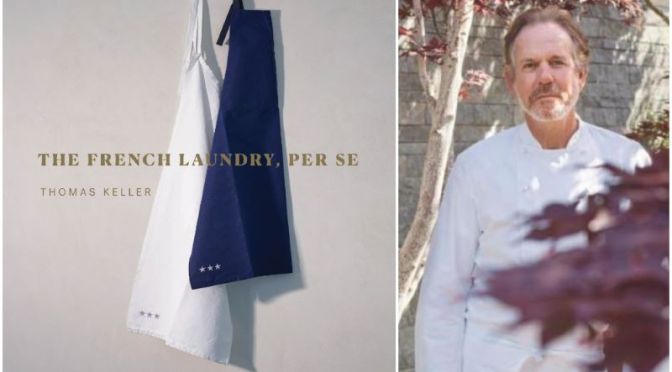
The 65-year old American chef Thomas Keller discusses his latest book, “The French Laundry, Per Se”. The restaurateur also discusses how his company has fared during the coronavirus pandemic.
Thomas Keller is an American chef, restaurateur, and cookbook writer. He and his landmark Napa Valley restaurant, The French Laundry in Yountville, California, have won multiple awards from the James Beard Foundation, notably the Best California Chef in 1996, and the Best Chef in America in 1997.

The chances of mini brains becoming sentient, herd immunity, bat-like dinosaurs, and a UK government decision threatens gender diversity in academia.
In this episode:
00:59 The ethics of creating consciousness
Brain organoids, created by culturing stem cells in a petri dish, are a mainstay of neuroscience research. But as these mini-brains become more complex, is there the chance they could become conscious, and if so, how could we tell?
News Feature: Can lab-grown brains become conscious?
09:01 Coronapod
So called ‘herd immunity’ is claimed by some as a way to break the chain of infection and curtail the pandemic. However epidemiologists say that this course of action is ineffective and will lead to large numbers of infections and deaths.
News Explainer: The false promise of herd immunity for COVID-19
20:59 Research Highlights
Volcanic ash degrades ancient art in Pompeii, and the aerial ineptitude of two bat-like dinosaurs.
Research Highlight: The volcanic debris that buried Pompeii wreaks further destruction; Research Highlight: A dead end on the way to the sky
23:22 How cutting red-tape could harm gender diversity in UK academia
The Athena SWAN scheme, designed to boost gender-equality in UK academia, has proved effective, and has been exported to countries around the world. But now a decision by the UK government to cut bureaucracy could mean that institutions pay less heed to schemes like this and threaten future efforts to increase gender diversity in UK academia.
Editorial: Equality and diversity efforts do not ‘burden’ research — no matter what the UK government says
31:00 Briefing Chat
We discuss some highlights from the Nature Briefing. This time, oncologists discover a potential new human organ, and how re-examined fossils have given new insights into the size of baby tyrannosaurs.

NPR News Now reports: More than 71 million Americans have voted early, President Trump and Joe Biden on campaign trail, and other top news.



 Boomers Daily