
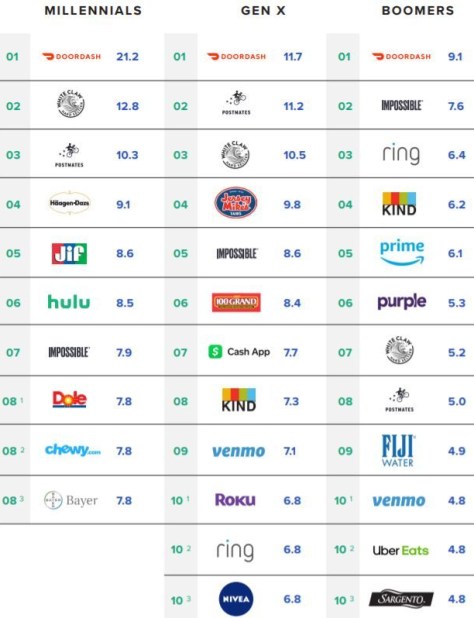
From a Morning Consult survey:
To read full report: https://morningconsult.com/wp-content/uploads/2019/12/Morning-Consult_Fastest-Growing-Brands-2019-Report_FINAL.pdf

From a Morning Consult survey:
To read full report: https://morningconsult.com/wp-content/uploads/2019/12/Morning-Consult_Fastest-Growing-Brands-2019-Report_FINAL.pdf
 After their life as research subjects, what happens to lab monkeys? Some are euthanized to complete the research, others switch to new research projects, and some retire from lab life. Should they retire in place—in the same lab under the care of the same custodians—or should they be sent to retirement home–like sanctuaries? Online News Editor David Grimm joins host Sarah Crespi to discuss recently penned legislation that pushes for monkey retirements and a new collaboration between universities and sanctuaries to create a retirement pipeline for these primates.
Sarah also talks with Dante Lauretta, principal investigator for NASA’s Origins, Spectral Interpretation, Resource Identification, Security, Regolith Explorer (OSIRIS-REx) and a professor at the University of Arizona in Tucson, about the latest news from the asteroid Bennu. Within 1 week of beginning its orbit of the asteroid, OSIRIS-REx was able to send back surprising images of the asteroid ejecting material. It’s extremely rocky surface also took researchers by surprise and forced a recalculation of the sample return portion of the craft’s mission.
To read more: https://www.sciencemag.org/podcast/debating-lab-monkey-retirement-and-visiting-near-earth-asteroid
From a Caltech online news release:
 “Such wearable sweat sensors have the potential to rapidly, continuously, and noninvasively capture changes in health at molecular levels,” Gao says. “They could enable personalized monitoring, early diagnosis, and timely intervention.”
The development of such sensors would allow doctors to continuously monitor the condition of patients with illnesses like cardiovascular disease, diabetes, or kidney disease, all of which result in abnormal levels of nutrients or metabolites in the bloodstream. Patients would benefit from having their physician better informed of their condition, while also avoiding invasive and painful encounters with hypodermic needles.
 Gao’s work is focused on developing devices based on microfluidics, a name for technologies that manipulate tiny amounts of liquids, usually through channels less than a quarter of a millimeter in width. Microfluidics are ideal for an application of this sort because they minimize the influence of sweat evaporation and skin contamination on the sensing accuracy. As freshly supplied sweat flows through the microchannels, the device can make more accurate measurements of sweat and can capture temporal changes in concentrations.
To read more: https://www.caltech.edu/about/news/wearable-sweat-sensor-detects-gout-causing-compounds
 Hear the latest science news, brought to you by Benjamin Thompson and Shamini Bundell. This week, exploring two very different issues surrounding genomic sequencing, and the latest results from NASA’s Parker Solar Probe.
In this episode:
Researchers have released the first data from an ambitious project to sequence the genomes of 100,000 people from populations across Asia. Research Article: GenomeAsia100K Consortium
Bare riverbanks make meanders move, and human activity affects picky penguins. Research Highlight: The meandering rivers that speed across barren landscapes; Research Highlight: Climate change splits two penguin species into winners and losers
Concerns are growing around the use of commercial DNA databases for state-level surveillance. Comment: Crack down on genomic surveillance
NASA’s Parker Solar Probe has sent back the most detailed information yet about the birthplace of solar wind. News: Sun-bombing spacecraft uncovers secrets of the solar wind
In No Time To Die, Bond has left active service and is enjoying a tranquil life in Jamaica. His peace is short-lived when his old friend Felix Leiter from the CIA turns up asking for help. The mission to rescue a kidnapped scientist turns out to be far more treacherous than expected, leading Bond onto the trail of a mysterious villain armed with dangerous new technology.
 Pet-supply stores had long withstood the threat posed by online shopping. That was until Chewy came along. WSJ’s Miriam Gottfried tells the story of how PetSmart responded to the new competition.
From a Radiological Society of North America release:
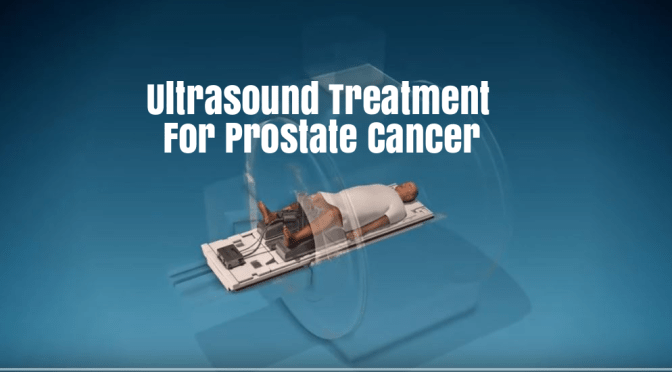
 The TACT Pivotal study of MRI-guided TULSA for whole-gland ablation in men with localized prostate cancer met its primary PSA endpoint in 96% of patients, with low rates of severe toxicity and residual GG2 disease. MRI at 12mo detected residual disease with NPV of 93%.
The new technique is called MRI-guided transurethral ultrasound ablation (TULSA) and has been under development for a number of years. The minimally invasive technology involves a rod that enters the prostate gland via the urethra and emits highly controlled sound waves in order to heat and destroy diseased tissue, while leaving healthy tissue unharmed.
To read more: https://press.rsna.org/pressrelease/2019_resources/2129/abstract.pdf
From a Kroger Press release:
 “The way our customers order and receive meals is evolving, and ClusterTruck’s innovative culinary and digital design is cracking the code for the future of profitable meal delivery,” said Yael Cosset, Kroger’s CIO. “Kroger is leveraging ClusterTruck’s advanced technology to ensure our customers don’t have to sacrifice quality and value for convenience when it comes to meal delivery. Kroger Delivery Kitchen Powered by ClusterTruck will allow our customers to access restaurant-quality fresh and delicious meals like never before and without having to pay excessive service or delivery fees.”
The Kroger Co. (NYSE: KR), America’s favorite grocer, and ClusterTruck, a software platform that powers profitable, vertically integrated delivery-only kitchens, today launched a partnership that will change the way Americans access freshly prepared meals. By offering multiple menus from one central scratch kitchen, Kroger Delivery Kitchen will deliver fresh and delicious meals on-demand without service or delivery fees.
To read more: http://ir.kroger.com/file/Index?KeyFile=401318028
From a Becker’s Hospital Review online release:
 “Today, most of the seniors we serve are utilizing easy-to-use mobile phone products and connected devices that are tailored for seniors and come with a range of relevant services,” Best Buy CEO Corie Barry said during an earnings call Nov. 26, according to a transcript from Seeking Alpha.
“We also expect to advance our commercial business where the services we provide for seniors are paid for by insurance providers. This includes services such as remote monitoring based solutions that provide meaningful insights to improve timely care and reduce the cost to serve frail seniors,” she said.
Best Buy is known as the largest specialty electronics retailer in the U.S., and a key part of its growth strategy is centered on digital health initiatives.
In the past year, Best Buy has spent roughly $1 billion on acquisitions to expand its healthcare services, according to Forbes. The company’s expansion into healthcare has helped it overcome broader declines in consumer electronic sales, according to Bloomberg.
From a UChicago News online article:
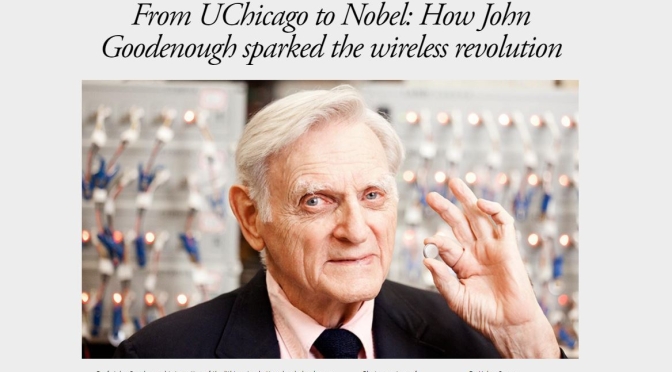
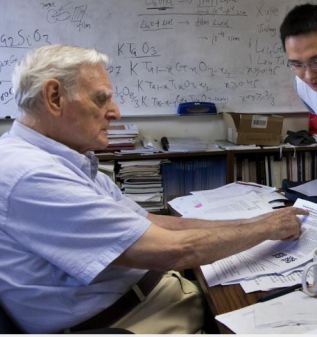 Three-quarters of a century later, at age 97, Goodenough will become the oldest person to receive the Nobel Prize in Chemistry. At a Dec. 10 ceremony in Sweden, he will be honored for pioneering breakthroughs that led to the widespread use of the lithium-ion battery—and helping spark the wireless revolution. The descendants of his batteries now power modern smartphones and hold the potential to one day sustainably harvest solar and wind power.
John B. Goodenough can still remember, word for word, what a University of Chicago professor told him when he arrived on campus following World War II: “I don’t understand you veterans,” said John A. Simpson, a new UChicago instructor who had just helped achieve the first nuclear reaction. “Don’t you know that anyone who has ever done anything significant in physics had already done it by the time he was your age—and you want to begin?”






 Boomers Daily