Food and medicine shopping is essential during the COVID-19 pandemic, but requires getting out and standing close to strangers at a time when social distancing and sheltering-in-place are recommended to slow spread of disease.
David Aronoff, MD, director of the Division of Infectious Diseases at Vanderbilt University in Nashville, explains how to minimize COVID-19 risk while shopping.
From a MedPage Today online article (April 2, 2020):
This relationship between higher glucose levels and poorer cognitive functioning extended beyond just CASI z-score, as well, Cukierman-Yaffe noted. Higher HbA1c levels were also tied to significantly poorer performance in other psychological tests, including the clock making test of executive functioning, test of discriminative ability, and for the test of verbal fluency.
Poorer glycemic control was tied to cognitive decline following a lacunar stroke in a prospective cohort study.
Among 942 individuals with type 2 diabetes who had a lacunar stroke, every 1% higher HbA1c was tied to a 0.06 drop in cognitive function at baseline measured by Cognitive Assessment Screening Instrument (CASI) z-score (95% CI -0.101 to -0.018), reported Tali Cukierman-Yaffe, MD, MSc, of Sheba Medical Center and the Sackler School of Medicine of Tel Aviv University in Israel.
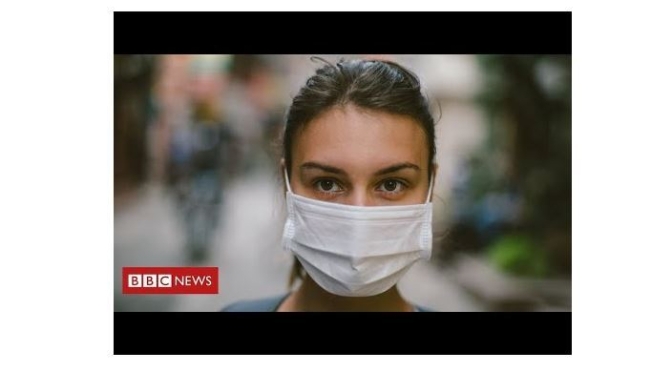
William Schaffner, M.D., Professor of Preventive Medicine and Health Policy at Vanderbilt University, answers if masks can stop a person from contracting COVID-19.
New research suggests that face masks may offer more protection against coronavirus infection than previously thought. It suggests that coughs and sneezes may be projected much further than scientists had thought possible. The World Health Organisation is considering whether to update its guidance on face masks and the White House may recommend that Americans wear them. Meanwhile in the UK hospitality companies are turning their skills to help those in need. And for the second week in a row, applause has rung out from members of the public showing gratitude to NHS staff and other workers helping to keep the country going. Sophie Raworth presents BBC News at Ten coverage from Science Editor David Shukman and Social Affairs Correspondent Alison Holt.
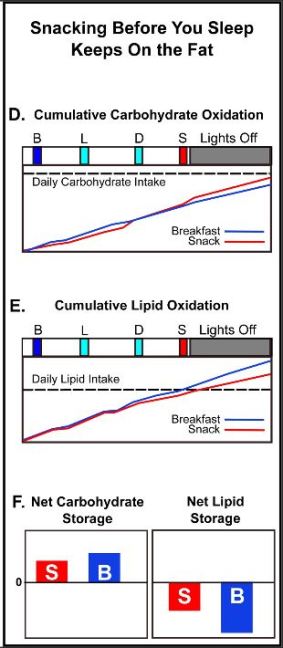
Schematic: Late-evening snacking interacts with the circadian rhythm of metabolism to inhibit LO.
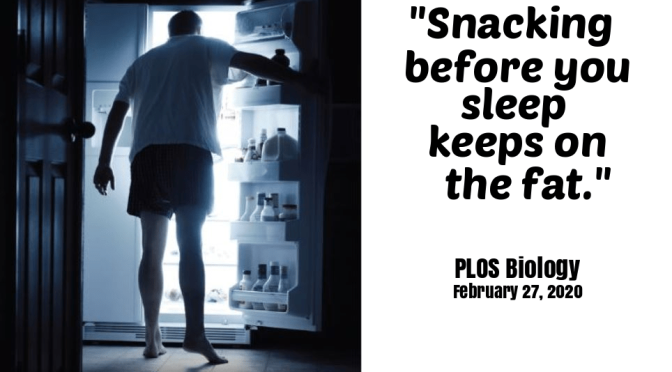
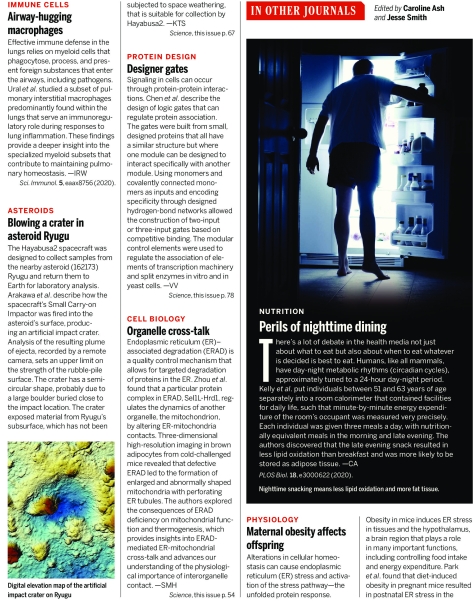
The major finding of this study is that the timing of feeding over the day leads to significant differences in the metabolism of an equivalent 24-h nutritional intake. Daily timing of nutrient availability coupled with daily/circadian control of metabolism drives a switch in substrate preference such that the late-evening Snack Session resulted in significantly lower LO compared to the Breakfast Session.
Developed countries are experiencing an epidemic of obesity that leads to many serious health problems, foremost among which are increasing rates of type 2 diabetes, metabolic syndrome, cardiovascular disease, and cancer. While weight gain and obesity are primarily determined by diet and exercise, there is tremendous interest in the possibility that the daily timing of eating might have a significant impact upon weight management [1–3]. Many physiological processes display day/night rhythms, including feeding behavior, lipid and carbohydrate metabolism, body temperature, and sleep.
These daily oscillations are controlled by the circadian clock, which is composed of an autoregulatory biochemical mechanism that is expressed in tissues throughout the body and is coordinated by a master pacemaker located in the suprachiasmatic nuclei of the brain (aka the SCN [1,4]). The circadian system globally controls gene expression patterns so that metabolic pathways are differentially regulated over the day, including switching between carbohydrate and lipid catabolism [1,3,5–9]. Therefore, ingestion of the same food at different times of day could lead to differential metabolic outcomes, e.g., lipid oxidation (LO) versus accumulation; however, whether this is true or not is unclear.
On this week’s show, Contributing Correspondent Kai Kupferschmidt talks with host Sarah Crespi about modeling coronavirus spread and the role of forecasts in national lockdowns and other pandemic policies. They also talk about the launch of a global trial of promising treatments.
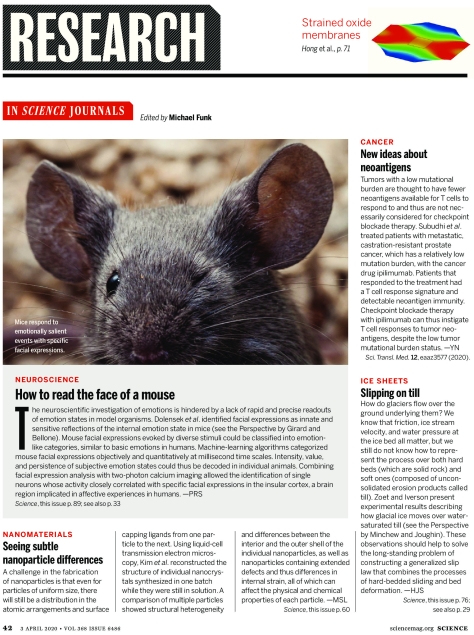
Also this week, Nadine Gogolla, research group leader at the Max Planck Institute of Neurobiology, talks with Sarah about linking the facial expressions of mice to their emotional states using machine learning.
Scientists around the world are racing to develop a vaccine for COVID-19. But experts have said it could take a year to 18 months for one to hit the market. The process for testing and approving a vaccine is long and complicated.
That can be frustrating when the coronavirus is taking more and more lives every day. But cutting corners to push a vaccine through faster can lead to devastating consequences. We know that, because it’s happened before.
This week, reassessing the age of the ‘Broken Hill skull’, and unearthing evidence of an ancient forest near the South Pole.
In this episode:
01:25 A skull’s place in history
After nearly a century scientists believe they’ve finally pinned down an age for the ‘Broken Hill skull’ hominid specimen. Research Article: Grun et al.
Digging deep below the sea-floor, researchers have uncovered evidence of a verdant forest that existed on Antarctica around 90 million years ago. Research Article: Klages et al.


 Food and medicine shopping is essential during the COVID-19 pandemic, but requires getting out and standing close to strangers at a time when social distancing and sheltering-in-place are recommended to slow spread of disease.
 This relationship between higher glucose levels and poorer cognitive functioning extended beyond just CASI z-score, as well, Cukierman-Yaffe noted. Higher HbA1c levels were also tied to significantly poorer performance in other psychological tests, including the clock making test of executive functioning, test of discriminative ability, and for the test of verbal fluency.
 These daily oscillations are controlled by the circadian clock, which is composed of an autoregulatory biochemical mechanism that is expressed in tissues throughout the body and is coordinated by a master pacemaker located in the suprachiasmatic nuclei of the brain (aka the SCN [

 On this week’s show, Contributing Correspondent Kai Kupferschmidt talks with host Sarah Crespi about modeling coronavirus spread and the role of forecasts in national lockdowns and other pandemic policies. They also talk about the launch of a global trial of promising treatments.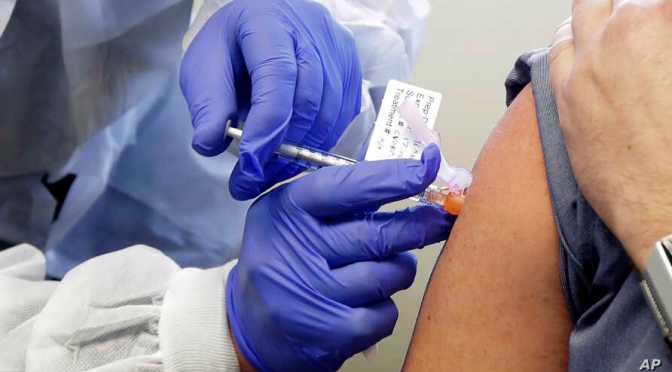
 Scientists around the world are racing to develop a vaccine for COVID-19. But experts have said it could take a year to 18 months for one to hit the market. The process for testing and approving a vaccine is long and complicated.
 This week, reassessing the age of the ‘Broken Hill skull’, and unearthing evidence of an ancient forest near the South Pole.


 Boomers Daily