Syndicated columnist Mark Shields and New York Times columnist David Brooks join Judy Woodruff to discuss the latest news, including public opinion of the nationwide protests over police treatment of black Americans, President Trump’s response and use of force to dispel protesters and the reaction of prominent military leaders to his handling of the situation.
First up this week, Staff Writer Meredith Wadman talks with host Sarah Crespi about how male sex hormones may play a role in higher levels of severe coronavirus infections in men. New support for this idea comes from a study showing high levels of male pattern baldness in hospitalized COVID-19 patients.
Next, Jason Qian, a Ph.D. student in the systems biology department at Harvard Medical School, joins Sarah to talk about an object-tracking system that uses bacterial spores engineered with unique DNA barcodes. The inactivated spores can be sprayed on anything from lettuce, to wood, to sand and later be scraped off and read out using a CRISPR-based detection system. Spraying these DNA-based identifiers on such things as vegetables could help trace foodborne illnesses back to their source. Read a related commentary piece.
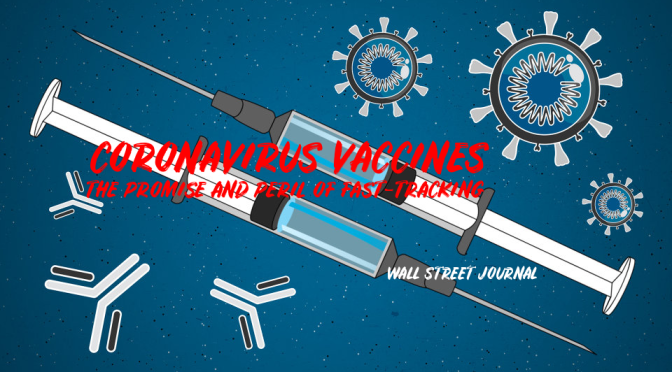
As the coronavirus continues to spread around the globe, companies and academic labs are racing to develop a vaccine that would help society get back to normal. But there could also be costs to moving too quickly.
WSJ’s Daniela Hernandez explains. Photo illustration: Laura Kammermann
Syndicated columnist Mark Shields and New York Times columnist David Brooks join Judy Woodruff to discuss the latest political news, including former Vice President Joe Biden’s comments on the death of George Floyd and what action it should prompt, President Trump’s approach toward Twitter and truth and the milestone of 100,000 American deaths from COVID-19.
President Trump’s preferred coronavirus treatment is the focus of a new study suggesting it could cause more harm than good, but not everybody agrees. We discuss the fallout as trials around the world are paused and countries diverge over policy advice.
12:12 Are we rushing science?
Coronavirus papers are being published extremely quickly, while normally healthy scientific debate is being blown up in the world’s press. Is there a balancing act between timely research and accurate messaging?
18:49 One good thing
Our hosts pick out things that have made them smile in the last week, including hedgerow brews and a trip into the past using AI.
First up this week, Staff Writer Jennifer Couzin-Frankel talks with host Sarah Crespi about a rare inflammatory response in children that has appeared in a number of COVID-19 hot spots.
Next, Julian Dowdeswell, director of the Scott Polar Research Institute and professor of physical geography at the University of Cambridge, talks with producer Meagan Cantwell about tracing the retreat of Antarctica’s glaciers by examining the ocean floor. Finally, Kiki Sanford interviews author Danny Dorling about his new book, Slowdown: The End of the Great Acceleration―and Why It’s Good for the Planet, the Economy, and Our Lives.



 First up this week, Staff Writer Meredith Wadman talks with host Sarah Crespi about
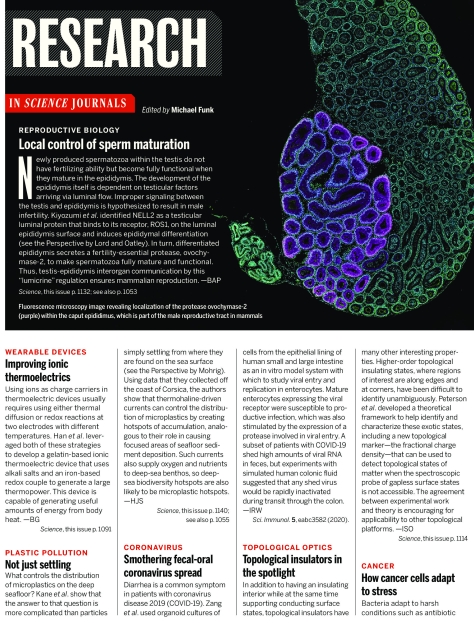
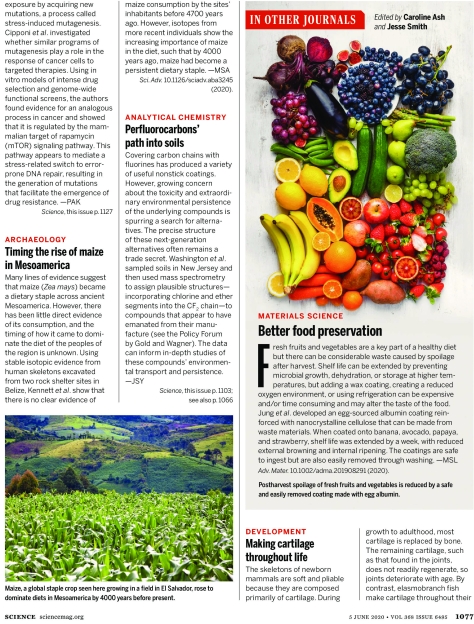

 This week, Nature looks at a new method to grow hairy skin in a dish, and new research takes aim at the RNA world hypothesis.
 A selection of three essential articles read aloud from the latest issue of The Economist. This week, how the

 President Trump’s preferred coronavirus treatment is the focus of a new study suggesting it could cause more harm than good, but not everybody agrees. We discuss the fallout as trials around the world are paused and countries diverge over policy advice.
 Boomers Daily