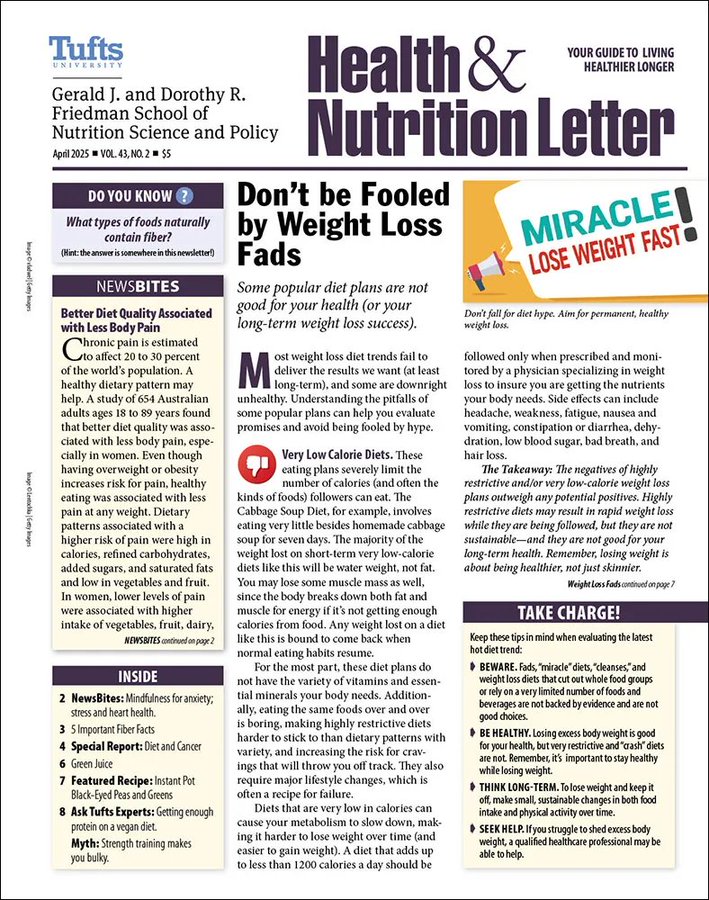
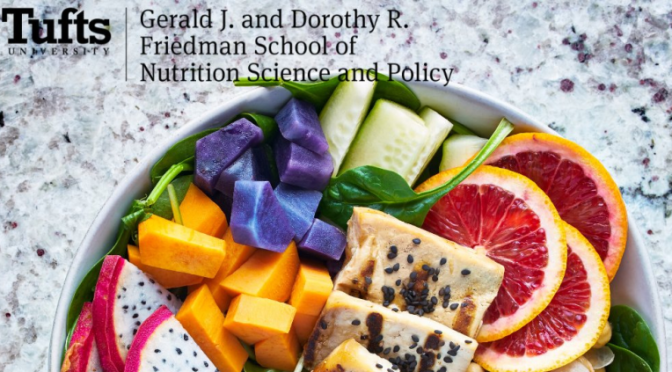
TUFTS HEALTH & NUTRITION LETTER (March 24, 2025): The April 2025 issue feature…

TUFTS HEALTH & NUTRITION LETTER (March 24, 2025): The April 2025 issue feature…
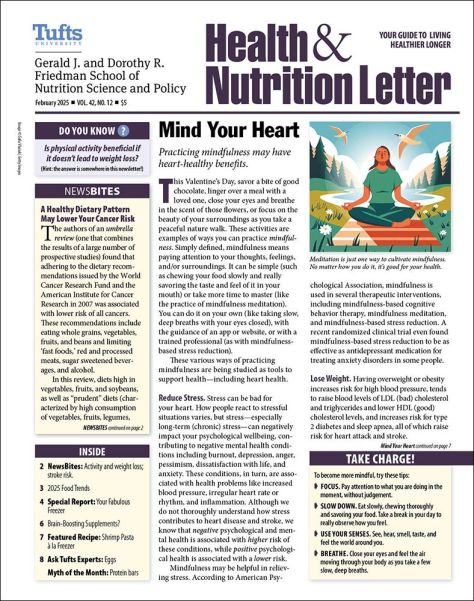
TUFTS HEALTH & NUTRITION LETTER (January 27, 2025):
Practicing mindfulness may have heart-healthy benefits.
This Valentine’s Day, savor a bite of good chocolate, linger over a meal with a loved one, close your eyes and breathe in the scent of those flowers, or focus on the beauty of your surroundings as you take a peaceful nature walk. These activities are examples of ways you can practice mindfulness.
Some emerging food trends have potential health benefits—with some caveats.
Most of the promises made about these products lack proof.
About 25 percent of adults over 50 take a supplement that promises to improve cognition or cognitive health. As long as these products don’t say they improve or treat diseases like Alzheimer’s or other dementias, they are allowed to make any claims they want—without having to prove they work. So, which marketing claims should you believe?


Johns Hopkins Magazine (December 6, 2024): Microplastics are among and in us; meet opera composer and hitmaker Kevin Puts; the science of seeing faces in nature; addressing the epidemic of eatings disorders in America, and more…

Next to opioid use disorder, anorexia is the most deadly mental health illness. In all, 5% of patients will die within the first four years of diagnosis as a result of heart failure, organ shutdown, low blood sugar, or suicide. The Eating Disorders Coalition reports that every 52 minutes, at least one person loses their life as a direct result of an eating disorder.

Maya Dizack, BSPH ’24 (ScM), set out years ago on a journey down the Mississippi River to see how widespread microplastics were in this major body of water. Her findings were more alarming than expected. But just how concerned
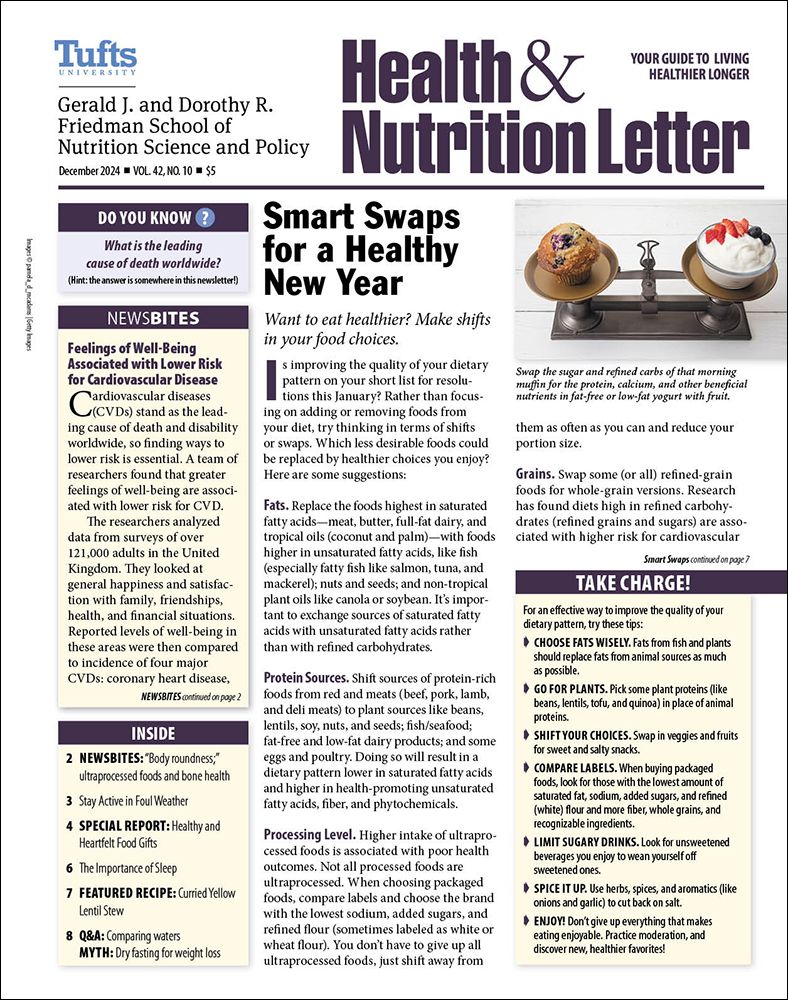
Tufts Health & Nutrition Letter (November 27, 2024): The new issue features…
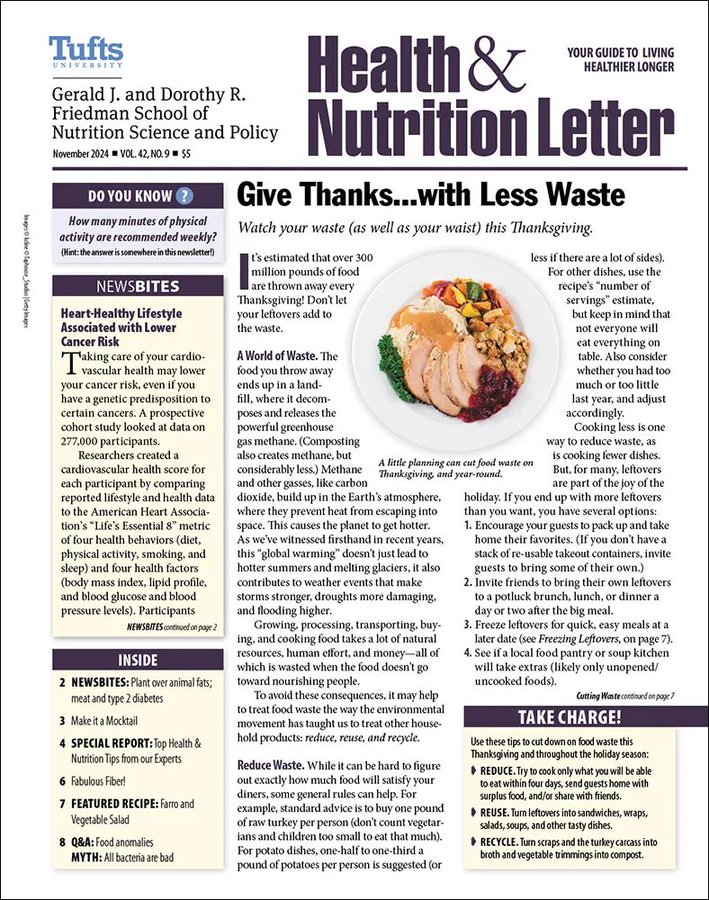
Tufts Health & Nutrition Letter (October 28, 2024): The new issue features ‘Give Thanks…with Less Waste’…
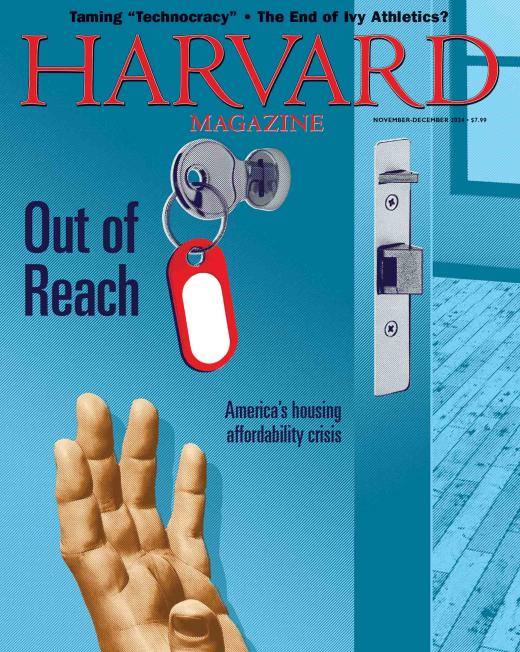

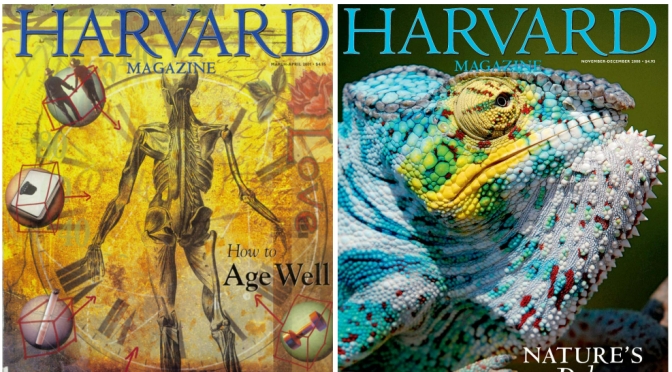
HARVARD MAGAZINE (October 15, 2024): The latest issue features ‘Out of Reach’ – America’s housing affordability crisis…
America’s housing problem—and what to do about it by Jonathan Shaw
Latanya Sweeney confronts our all-consuming “technocracy.” by Lydialyle Gibson
College sports are changing. Will Harvard athletics? by Max J. Krupnick


AI has returned chipmaking to the heart of computer technology, says Shailesh Chitnis


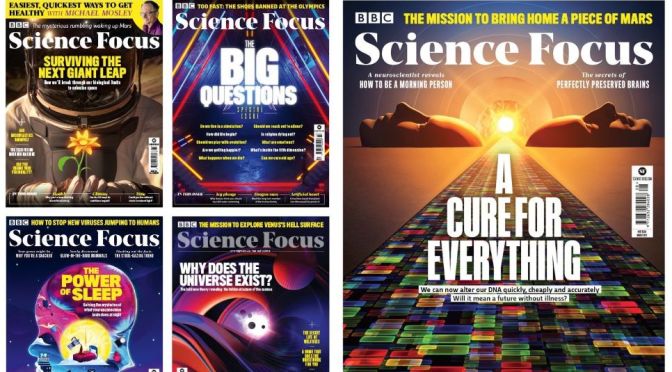
The technical knowledge of Egyptian architects once again exceeds expectations. Was Egypt’s oldest pyramid, the Step Pyramid of Djoser, built using some seriously high-tech kit? And what’s with the huge, unexplained cavity that’s been discovered in the Great Pyramid of Giza?
Meet the creatures for whom time has almost stood still. These animals give us a glimpse into what life was like millions of years ago, and show us just how resilient some groups have been to the calamitous events that have consigned others – such as the dinosaurs – to extinction.
There’s a mysterious object hurtling at one million miles per hour across the Milky Way. It’s moving so fast that it could exit the Milky Way entirely – and scientists are still trying to figure out what it is. Not quite a planet and not quite a star, so what is it?
The Proba-3 mission aims to unravel the mysteries of the Sun’s atmosphere by creating artificial eclipses on demand. But achieving this feat means teaching two spacecraft to perform a complicated dance with an unprecedented level of precision. If the mission is successful, scientists will be able to study the Sun’s corona in unprecedented detail, ushering in a new era for space observation.
Impostor syndrome: Ever feel like you’re an impostor, who’s bluffing their way through life? You’re not alone. Even the world’s most brilliant minds suffer from the fear of being ‘found out’. But what causes impostor syndrome? And more importantly, how can you overcome it?
Q&A: Boost your general knowledge! This issue: How do I break free of blame culture? How often should I change my toothbrush? How are identical twins created? Did dinosaurs have fleas? Why does my computer screen look so weird when I take a picture of it? What’s the smelliest animal? And more.
Sleep gadgets: A bad night’s sleep can follow you for days, making you tired and grumpy. Our tech experts have rounded up the best gadgets to help perfect your sleep routine and make the most of your shut-eye.
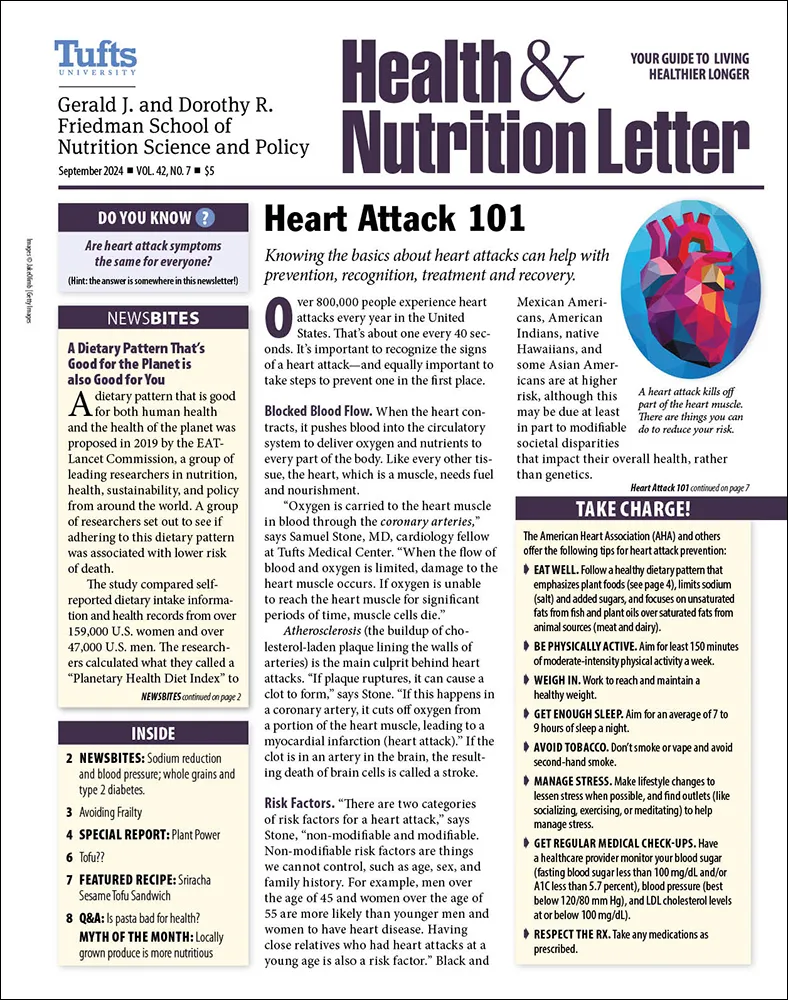

Tufts Health & Nutrition Letter (September 3, 2024): The new issue features Heart Attack 101; Avoiding Frailty; Special Report: Plant Power Tofu??; Is pasta bad for health? and Locally grown produce is more nutritious…
Physical frailty in older age can be avoided. Start now.
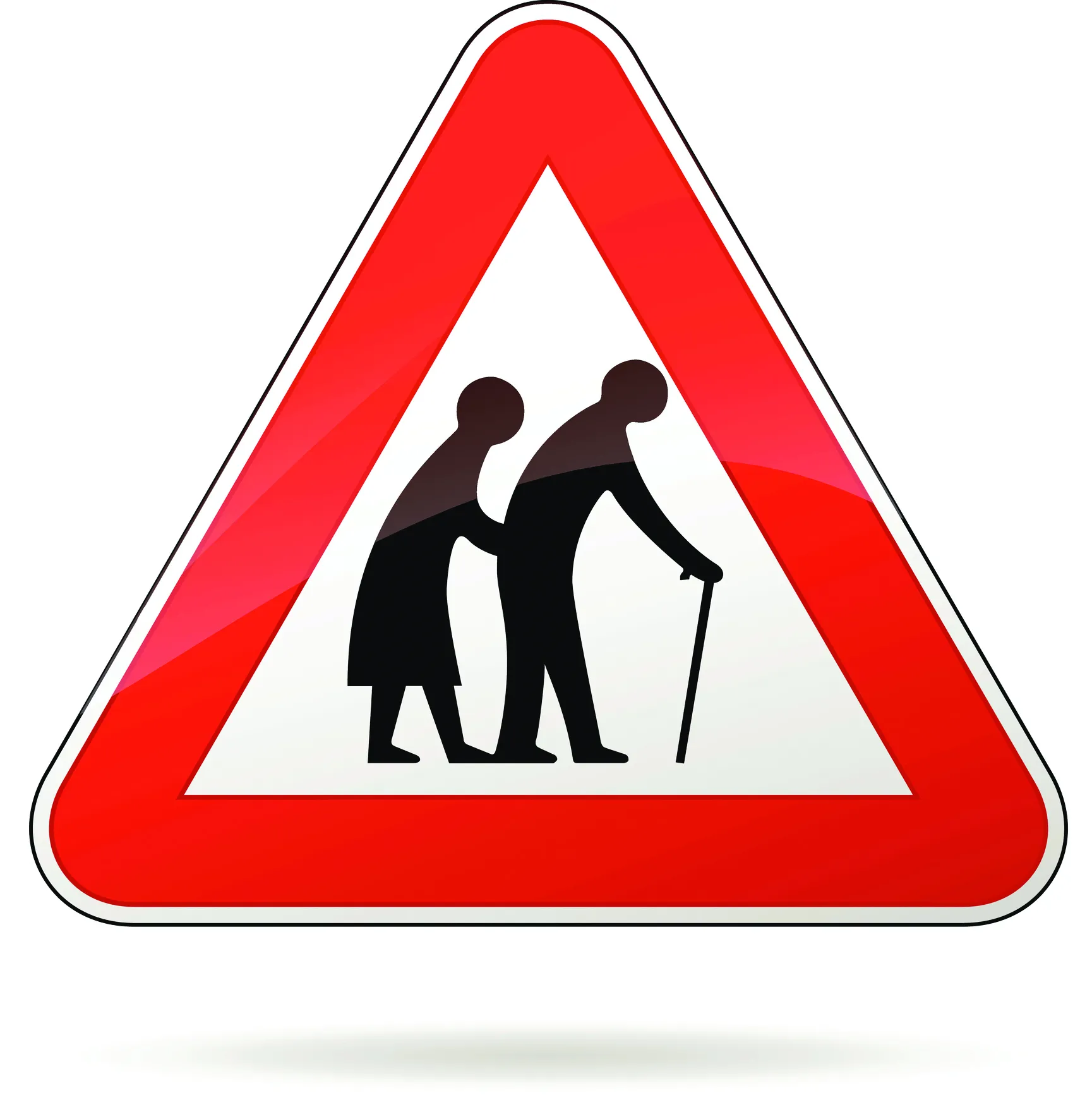
We all lose muscle and strength as we age. Frailty is something more. It can take away your health, your vitality, and your independence. But it’s not inevitable.


 Boomers Daily


