Category Archives: Documentaries

Celebrity Culture: History Of The Côte d’Azur, France

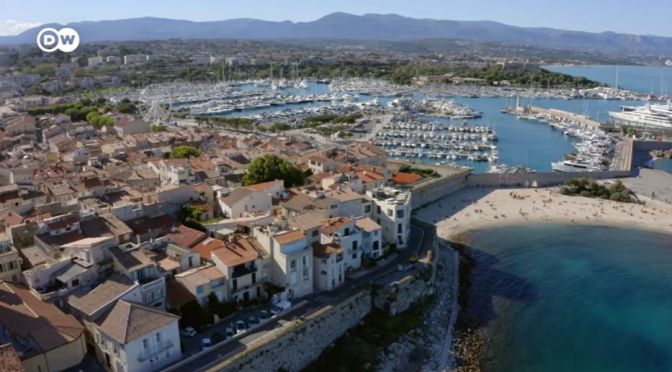
The Côte d’Azur stands for glamour and luxury, for film festivals and stars, for yachts and villas. The most famous personalities of the last century met here. The Côte owes its unique mythos to their loves and passions.

The Côte d’Azur boasts a breathtakingly gorgeous landscape. But its mythos is more than the sum of it beautiful parts. The whole world associates the narrow coastal strip on the French Mediterranean coast with sun, stars and scandals. In Saint Tropez, a former fishing town, a new and newly sensual art of living was popularized thanks to the young Brigitte Bardot.

On the eastern part of the coast, Oscar winner Grace Kelly conquered the principality of Monaco with her marriage to Prince Rainier. The matchmaker? The Greek shipowner Aristotle Onassis, who wanted to burnish the dwarf state’s image. One of the most glamorous film festivals in the world was established in Cannes. After that, it seemed everyone came to the Côte. At the Hôtel du Cap-Eden-Roc in Antibes, the paths of the famous crossed again and again.

For 150 years the hotel has been home to artists, queens and kings, divas and stars. Since 1969, the hotel has been owned by the German industrialist family Oetker. Maja Oetker describes her personal memories of the past 50 years. To this day, the Côte d’Azur has lost none of its appeal. It is more than just a place: it is an entire mythos.
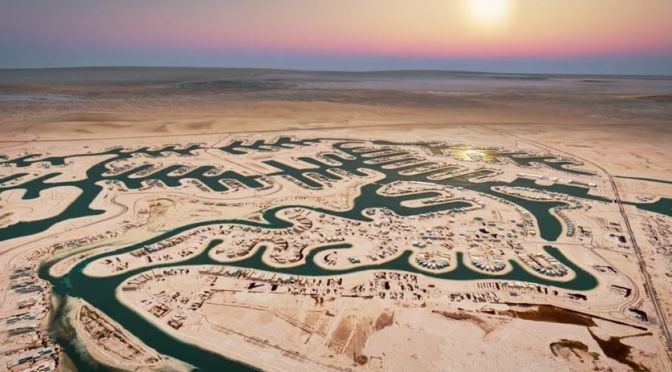
Engineering: Sabah Al Ahmad Sea City, Kuwait

In this city almost every resident has their own beach access on a lagoon that leads directly into the sea. But constructing such a city meant overcoming tremendous engineering problems.

Sabah Al Ahmad Sea City is a city in Khiran Kuwait built with canals forming 200 kilometres (120 mi) of artificial shoreline. The city houses up to 250,000 residents.[1][2] The city was inaugurated in mid 2016.[3][4] The artificial islands that make up the area are unusual because they were built excavating large channels in desert land rather than using reclaimed land. The city is considered a pioneering project in the region due to its environmentally sustainable construction techniques.[5][6]

The first phase of the project was opened to the sea in 2004.[5] The multi-billion dollar development is within a 25 year construction period with ten phases.[1] Sabah Al Ahmad Sea City is the first urban area in Kuwait built entirely by the private sector.

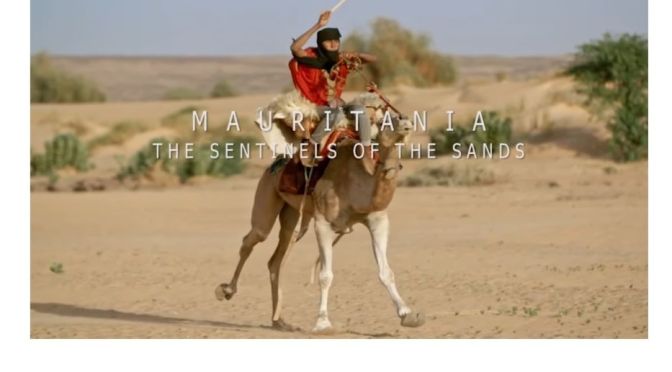
Travel & Culture: Desert Peoples Of Mauritania (HD)

Mauritania, officially the Islamic Republic of Mauritania, is a sovereign state in Northwest Africa. It is bordered by the Atlantic Ocean to the west, Western Sahara to the north and northwest, Algeria to the northeast, Mali to the east and southeast, and Senegal to the southwest.

In human cultures in general, and perhaps particularly in Africa, the landscape is the first shrine of tradition. From the sand dunes of Mauritania to the currents of River Senegal, to the Lions of the Beninese savannah to the spirits of the forests of Gabon, this series explores the origin, the nature and the survival of deep links between several populations in West Africa and their habitat.

Each episode takes us to discover an emblematic landscape: the river (Senegal), the desert (Mauritania), the forest (Gabon) and the savannah (Benin). A compass of escape and meeting which rests on two main pillars: the spectacular character of the places, often classified with the UNESCO world heritage, and the charisma of the main characters who are transmitters of their respective traditions.

Views: American Arctic’s Disappearing Traditions

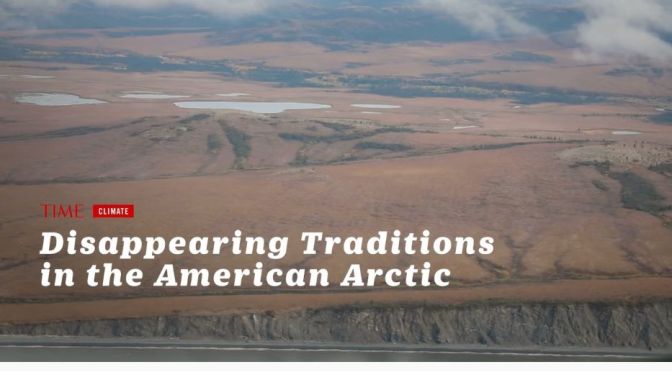
To Laureli Ivanoff, climate change is far from an abstract idea. As an Iñupiat writer living in the remote Alaskan town of Unalakleet, she’s seen firsthand the warming planet’s tangible impact on her culture’s food traditions, some of the only practices to survive colonization. “Ice fishing or hunting or just going out and enjoying ourselves, there’s no way to really do that if there isn’t any snow,” she says.

Animals that rely on snow and sea ice, such as the ugruk—or bearded seal—are harder to find as sea ice melts, leaving subsistence hunters concerned for their livelihoods. Although local native communities have weathered many historic hardships before, Ivanoff believes the challenges ahead are unprecedented. “Already every year, we’re wondering, ‘Is the ocean ice going to form?

Read more about climate change’s impact on the American Arctic : https://ti.me/3MqmwOe

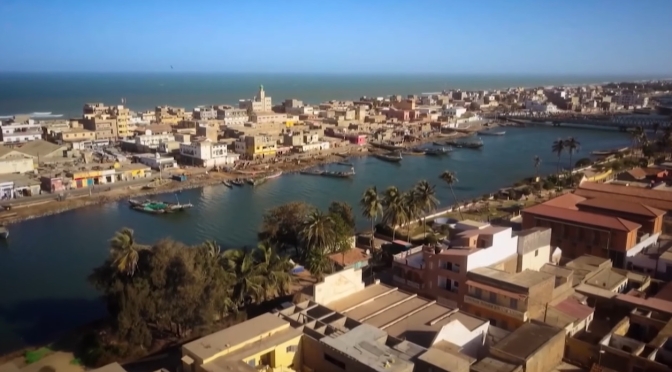
Western Africa Cultures: Along The Senegal River

In human cultures in general, and perhaps particularly in Africa, the landscape is the first shrine of tradition. From the sand dunes of Mauritania to the currents of River Senegal, to the Lions of the Beninese savannah to the spirits of the forests of Gabon, this series explores the origin, the nature and the survival of deep links between several populations in West Africa and their habitat.

Each episode takes us to discover an emblematic landscape: the river (Senegal), the desert (Mauritania), the forest (Gabon) and the savannah (Benin). A compass of escape and meeting which rests on two main pillars: the spectacular character of the places, often classified with the UNESCO world heritage, and the charisma of the main characters who are transmitters of their respective traditions.

Analysis: Drinking Water – Is The World Drying Up?

Only 0.3 percent of the Earth’s total water supply is suitable for human consumption. Ominously, this precious resource is beginning to shrink. Natural water reservoirs are drying up due to climate change.

Glaciologist Daniel Farinotti surveys melting glaciers in the Swiss Alps. If glaciers continue to melt at the current rate, he says, there will be no ice left by the end of the century. The disappearance of glacial meltwater would have fatal consequences. From the heights of the Swiss Alpine glaciers, the documentary travels down to the seafloor, off the coast of Malta. Here, the crew of the German expedition ship “Sonne” wants to track down mysterious freshwater deposits in the Mediterranean.

Next up is Peru where, in a bid to counteract the threat of water shortages, work is underway on projects that use ancient Incan methods.

Africa Views: ‘Safari Train’ From Tanzania To Zambia

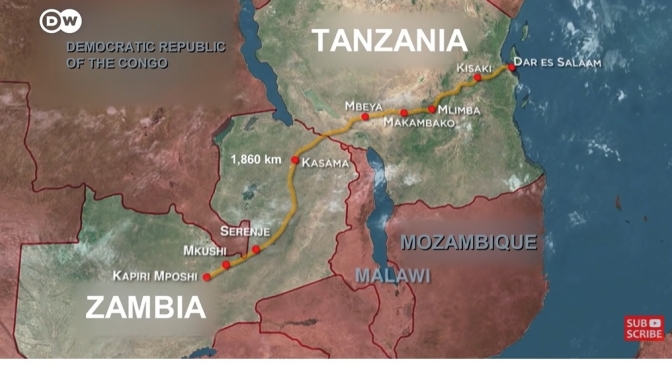
1970 marked the start of construction work on the Tanzania-Zambia Railway, or “Tazara” for short. Some 1,860 km of tracks were laid through thick forest, uninhabited savannah and mountainous terrain as part of one of Africa’s boldest infrastructure projects.

The route was inaugurated in 1976. It links the coastal city of Dar es Salam in northeastern Tanzania with the town of Kapiri Mposhi in central Zambia. Local people have an affectionate nickname for it – “Uhuru” or freedom, symbolizing the people’s hope for a more self-determined life.

But some of the stations along the line have been out of operation for years. Drivers always need to be on the lookout for monkeys, elephants, lions, hippos and giraffes. For passengers, the ticket includes a free safari. Leaving the Selous Game Reserve behind, the Tazara enters the most dangerous and spectacular section of the route.

Drone footage shows dramatic images of a largely unknown area sliced through by the railway line.

Rainforests: Indigenous People Struggle In Brazil

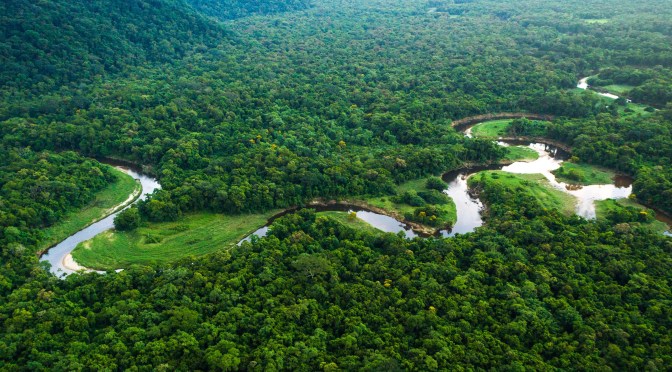
“They used to kill us with guns, now they kill us with deforestation and dams.” The Brazilian government’s failure to protect the Amazon forest is forcing the Munduruku indigenous people to take action against land grabs and illegal logging – and try to save the rain forest on their own.

In an unprecedented movement led by Chief Juarez Saw Munduruku, for the last six years indigenous people have been fighting the theft and destruction of their forest home. Since 1970, 20% of the Brazilian Amazon has been deforested. Logging and forest fires are threatening a further 20%. Scientists say that at 40% deforestation, we will reach the point of no return. The forest will be lost forever, replaced by savannahs – and the environmental consequences will be catastrophic.

The Amazon is often known as ‘the lungs of the planet,’ producing 6% of the world’s oxygen. It is no secret that the rainforest has been losing a dramatic fight against an array of threats, encouraged by capitalism, consumerism and greed – both legal and illegal.

In today‘s Brazil, some 600,000 square kilometers of land – an area about the size of France — are farmed by farmers who don’t officially own it. The military dictatorship (1964-1985) encouraged them to settle on state-owned land, but the farmers never became legal owners. As a result, speculators now seize the areas, clear the forests, then resell the plots with forged title deeds. This land grab, known as “grilagem” in Portuguese, has led to uncontrolled forest clearing and fierce conflicts.

The documentary was shot from 2014 to 2020, under three different Brazilian governments. It provides deep insights into the drama of the illegal occupation of state land and forest areas by organized crime groups. Several indigenous peoples have united under Juarez Saw Munduruku, leader of the Munduruku people, in a last-ditch bid to save the planet’s most important forest.

Views: Saving The White Rhinos Of South Africa

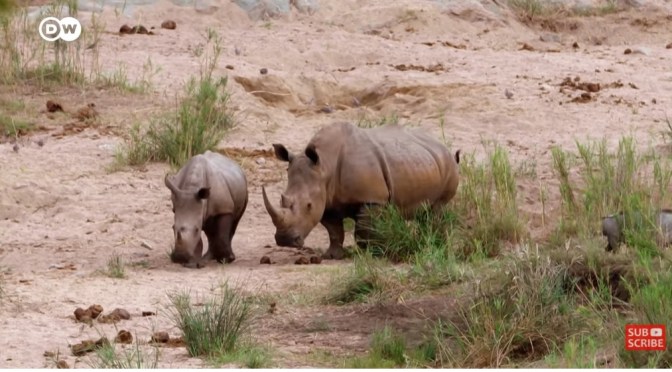
Poachers kill at least one rhino a day in South Africa. Their horns are in huge demand on the black market, and are worth more than gold. Anti-poaching squads are now increasingly better equipped: with night-vision equipment, drones and thermal imaging cameras.

Covering some 20,000 km2, Kruger National Park is one of the largest game reserves in Africa. It’s home to the biggest population of white rhinos in South Africa – and also the highest number of rhinos killed by poachers. One major problem for ranger teams is their small size in comparison to the vast area of territory involved. Another is the widespread poverty in the many villagers bordering the park – and it’s here that you ultimately have to begin if you want to win the battle to save the rhinos.

Vince Barkas has 30 years’ experience working in wildlife conservation, and little confidence in the current system’s effectiveness in protecting rhinos. In 1992 he founded the anti-poaching unit “Protrack”. Its teams operate in the Greater Kruger, which includes private wildlife reserves neighboring the national park.

Over the decades he says he’s seen no change, despite rangers being better armed and equipped, and wants to see new options: “We’ve shot poachers, arrested poachers, beaten up poachers. Everything. But we’ve never sat down and spoken.” Vince Barkas believes in the power of dialog rather than violence. He and his son Dylan made their way to Mozambique – where many of the poachers who kill rhinos in the Kruger National Park hail from.

Their journey takes them to the town of Massingir, where Barkas Snr. first began talking to poachers a number of years ago. The problem, he says, is rooted in the very concept of wildlife conservation: “We’ve made wildlife a rich white man’s thing – where white people hunt and benefit from it, and go to lodges etc. And we’ve kept black people out of it – behind a fence. We’ve got to change that approach.”

Hawaiian Views: Hoa ‘Āina O Mākaha Farm, Oahu

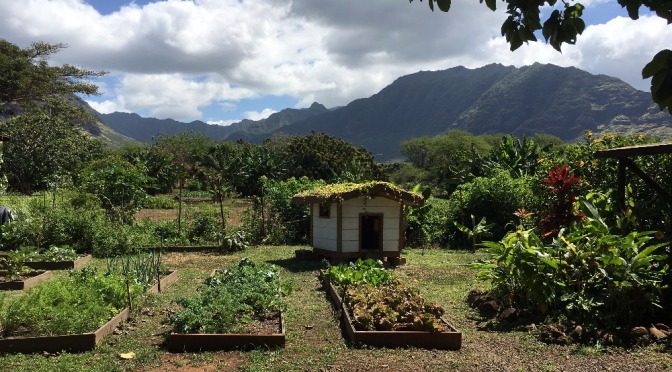
EYES OF THE LAND celebrates the spirit of Hoa ‘Āina O Mākaha, an ever-evolving community resource and sanctuary that has become a template for educational farms on O’ahu.

Born in the small village of Uggiate in Italy, and originally serving as a Catholic Priest in the Philipines, Gigi Cocquio helped found HAOM in 1979, nurturing it as executive director and caretaker, alongside his wife Judy, for the past 40+ years.

This film honors the legacy of what has been built, the seeds of hope that have been planted, and the many lives that have been touched.

hoaainaomakaha.org

Directed, Filmed, & Edited by Rob Lau
Story Design by Emily Lau
Aerial Cinematography by Bayly Buck
Additional Aerials by Valen Ahlo
Additional Camera by Valen Ahlo & Oz Go
Additional Footage by ʻŌiwi TV
Sound by Rob Lau & Chris Balidio
Music by Tiny Music “Ask the Right Question” l Peter Sandberg “Dismantle” | Tall Heights “Keeps Me Light Instrumental” | Judah Earl “Dreaming in Color Instrumental”
Archival Photos Courtesy of Gigi Cocquio & Ed Greevy
Special thanks to Jasmine Joy, Judy Seladis-Cocquio, Kelsey Thornberry, Puanani Burgess, & the Hoa ‘Āina Staff