Category Archives: Culture

Movie Nostalgia: The Grooming Habits Of James Bond 007 In The Early Films

From a Gentleman’s Journal online article:
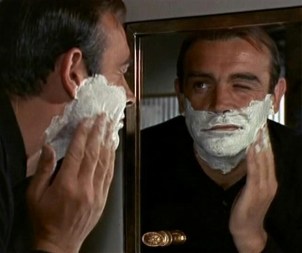
79b6e821de28787d8d2f7cff79febddc“He went into the bathroom and had an ice-cold shower and washed his hair with Pinaud Elixir, that prince among shampoos, to get the dust of the roads out of it…”

“There was everything in the bathroom — Floris Limes Bath Essence for men and Guerlain bathcubes for women.”

In Ian Fleming’s From Russia, With Love, there is a terrific exchange between James Bond and Tatiana Romanova — a Soviet corporal who takes up with the British agent. On a sleeper train out of Turkey, the two are readying themselves for the day ahead and Romanova, noticing that 007 doesn’t wear cologne, asks him why this is.

“We wash,” replies Bond, drier than a martini. And this clean-cut, neatly clipped and slightly stinging response sums up the superspy’s attitude to his grooming routine. It’s a thoroughly English approach; leaning on trusted, heritage brands — and not preoccupied with overly strong scents or convoluted bits of kit. So this got us thinking: if a pared-back, simple grooming routine was good enough for MI6’s finest, surely it should be good enough for us?

To read more: https://www.thegentlemansjournal.com/article/we-followed-james-bonds-grooming-routine-for-a-week-this-is-what-happened/
Trends In Healthy Living: Copenhagen, Denmark Is The “Global Exemplar Of Bicycle Culture”

From a New York Times online article:

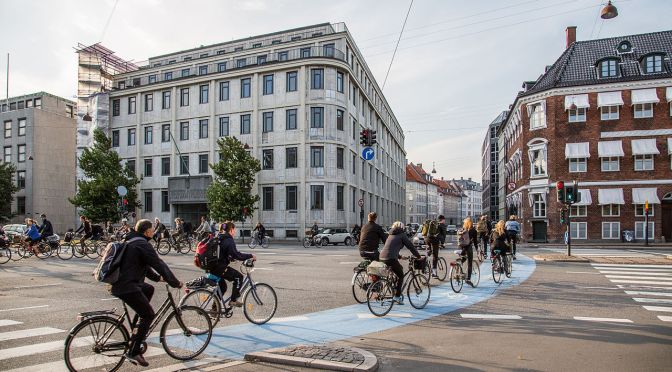
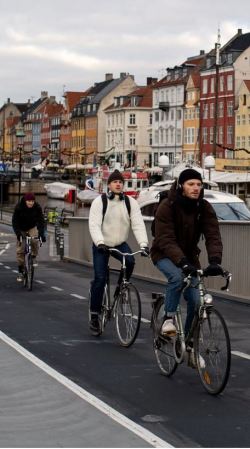
Copenhagen Cyclists Betina Garcia for The New York TimesCopenhagen’s legendary bicycle setup has been propelled by all of these aspirations, but the critical element is the simplest: People here eagerly use their bicycles — in any weather, carrying the young, the infirm, the elderly and the dead — because it is typically the easiest way to get around.

Copenhagen’s status as a global exemplar of bicycle culture owes to the accommodating flatness of the terrain and the lack of a Danish auto industry, which might have hijacked the policy levers. Trouble also played a role.

Nearly half of all journeys to school and work in Copenhagen take place on bicycles. And people like it that way.

The global oil shock of the 1970s lifted the price of gasoline, making driving exorbitantly costly. A dismal economy in the 1980s brought the city to the brink of bankruptcy, depriving it of finance to build roads, and making bicycle lanes an appealingly thrifty alternative.

To read more: https://www.nytimes.com/2019/11/09/world/europe/biking-copenhagen.html

New Science Podcasts: Archaeologists Study Slavery In Caribbean, “WEIRD” Psychology

scimag_pc_logo_120_120 (2)Most historical accounts of slavery were written by colonists and planters. Researchers are now using the tools of archaeology to learn more about the day-to-day lives of enslaved Africans—how they survived the conditions of slavery, how they participated in local economies, and how they maintained their own agency. Host Sarah Crespi talks with Contributing Correspondent Lizzie Wade about a Caribbean archaeology project based on St. Croix in the U.S. Virgin Islands and launched by the founders of the Society for Black Archaeologists that aims to unearth these details. Watch a related video here.

Sarah also talks with Jonathan Schulz, a professor in the Department of Economics at George Mason University in Fairfax, Virginia, about a role for the medieval Roman Catholic Church in so-called WEIRD psychology—western, educated, industrialized, rich, democratic. The bulk of psychology experiments have used participants that could be described as WEIRD, and according to many psychological measures, WEIRD subjects tend to have some extreme traits, like a stronger tendency toward individuality and more friendliness with strangers. Schulz and colleagues used historical maps and measures of kinship structure to tie these traits to strict marriage rules enforced by the medieval Catholic Church in Western Europe. Read related commentary.


World Affairs Podcasts: French President In China, Demographics In Texas And Public Groping In Japan (The Economist)

The Intelligence EconomistThis week our correspondent joined Emmanuel Macron on his visit to China. The French president is stretching his diplomatic wings, and has some striking views about Europe’s place in the world. The state of Texas has been reliably Republican for decades, but its demographics are changing; could it at last turn blue? And how Japan is dealing with its epidemic of public-transport groping.



Cinematic Short Films: “The Heartbeats Of Memory” Directed By Nono Ayuso (2019)

Filmed, Edited and Directed by: NONO AYUSO

The Heartbeats Of Memory Cinematic Poem Short Film By NONO AYUSO 2019

The Memory: Roberta Coppa
VO Artist: Chloe Dunn

“It starts with a journey.
Imagine a film that captures every instant
And for each frame, a memory.”

The Heartbeats Of Memory Cinematic Poem Short Film By NONO AYUSO 2019

Music and Sound Design: Paulo Gallo

Grading: Fran Cóndor
Compositing and VFX: Damian Todd
Graphic Design: Nico Ordozgoiti

Shot in Super 8 in Japan. April-June 2019.

The Heartbeats Of Memory Cinematic Poem Short Film By NONO AYUSO 2019

Website: https://nono.film/

Science & Civilization: The Genetic History Of Roman Empire Revealed (Phys.Org)

From a Phys.org online article:

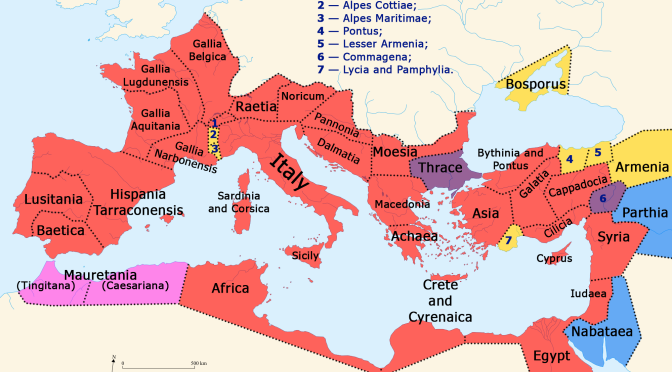
Roman EmpireThere was a massive shift in Roman residents’ ancestry, the researchers found, but that ancestry came primarily from the Eastern Mediterranean and Near East, possibly because of denser populations there relative to the Roman Empire’s western reaches in Europe and Africa.

The next several centuries were full of turmoil: the empire split in two, diseases decimated Rome’s population and a series of invasions befell the city. Those events left a mark on the city’s population, which shifted toward western European ancestry. Later, the rise and reign of the Holy Roman Empire brought an influx of central and northern European ancestry.

Scholars have been studying Rome for hundreds of years, but it still holds some secrets—for instance, relatively little is known about the ancestral origins of the city’s denizens. Now, an international team led by researchers from Stanford University, the University of Vienna and Sapienza University of Rome is filling in the gaps with a genetic history that shows just how much the Eternal City’s populace mirrored its sometimes tumultuous history.

To read more: https://phys.org/news/2019-11-genetic-history-rome.html

Science & Culture: Human’s Early Ancestors, Digital Transformation (Economist Podcasts)

The Economist BabbageScientists believe they have located the ancestral home of one of humanity’s early ancestors—in northern Botswana. Tom Siebel, a Silicon Valley veteran and the founder of C3.ai, explains how digital transformation stops companies from going extinct. And, host Kenneth Cukier takes a trip to the Natural History Museum in London to learn about bias in species collection
Nostalgia: “Abbey Road” – 50 Years Since The Beatles Walked Off Stage (1969)

From a New Yorker Magazine online article:

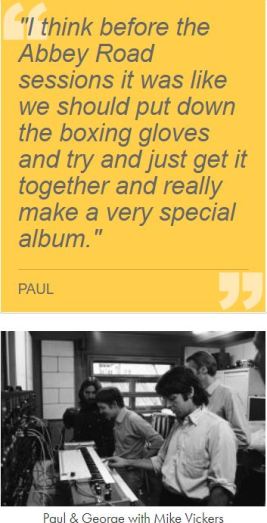
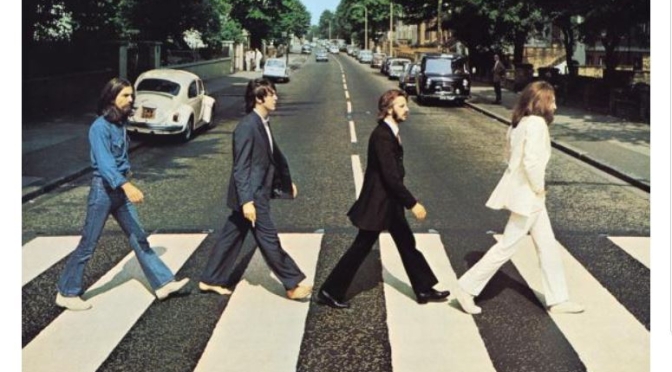
Beatles Abbey Road Quote from Paul McCartney“Abbey Road” was the Beatles’ last word—the final recordings by the most popular and influential artists of the nineteen-sixties. Now, on the occasion of its fiftieth anniversary, “Abbey Road” has been expertly remixed by Giles Martin, George Martin’s son and protégé, and reissued in a super-deluxe edition that comes with an archive of studio outtakes and a hundred-page book of essays and liner notes that chronicle how the recordings were made. “The Beatles are good even though everybody already knows that they’re good,” the classical composer Ned Rorem observed in 1968, alluding to how the band’s immense popularity confounded the usual notions of discriminating taste. If anyone needs to be reminded of this, this new edition of “Abbey Road” should do the trick.

In the spring of 1969, Paul McCartney telephoned George Martin to ask if he would be willing to work with the Beatles on a new album they planned to record in the months ahead. Martin, who was widely regarded as the most accomplished pop-record producer in the world, had overseen the making of all nine albums and nineteen singles that the Beatles had released in Britain since their début on E.M.I.’s Parlophone label, in 1962. His reputation was synonymous with that of the group, and the fact that McCartney felt a need to ask him about his availability dramatized how much the Beatles’ professional circumstances had changed since the release of the two-record set known as the White Album, in the fall of 1968. In Martin’s view, the five months of tension and drama it took to make that album, followed by the fiasco of “Get Back,” an ill-fated film, concert, and recording project that ended inconclusively in January, 1969, had turned his recent work with the Beatles into a “miserable experience.”

To read more: https://www.newyorker.com/culture/culture-desk/when-the-beatles-walked-offstage-fifty-years-of-abbey-road?utm_campaign

Cultural Destinations: The Huntington Library Launchess Centennial Celebration September 5

From The Huntington Library news release:

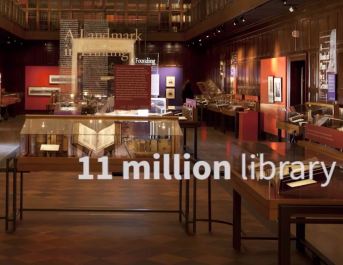
The Huntington Library and Gardens 100th CentennialThe Huntington’s Centennial Celebration kicks off on Sept. 5, 2019, with a special event for press and Southern California civic, higher education, and cultural leaders—a number of whose institutions are also celebrating significant anniversaries. Huntington President Karen R. Lawrence will host the celebration, sharing key news announcements and highlighting plans for the centennial year and beyond. The formal program will include a panel discussion with thought leaders on some of the big ideas shaping the future, brief presentations by Huntington leadership from each collection area, and a special musical performance interpreting sheet music from the Harold Bruce Forsythe collection. Public visitors will enjoy music in the gardens by Todd Simon and members of his Angel City All-Star Brass Band from noon to 2 p.m.

The Sept. 5 event will set the stage for a yearlong series of exhibitions, public programs, new initiatives, and more—inviting people with a range of interests to engage with the venerable institution’s collections and the connections they offer while exploring the interdisciplinary ideas that will shape the next 100 years. The Centennial Launch’s program reflects the interdisciplinary lens of The Huntington’s incomparable collections.

To read more click on the following link: https://www.huntington.org/news/centennial-celebration-sept-5

Top Literary Podcasts: Critic James Wood On The British, “Etonian Entitlement” And Brexit

London Review of Books PodcastsJames Wood: These Etonians

James Wood recalls his time at the college, with David Cameron, Boris Johnson, Jacob Rees-Mogg and others.

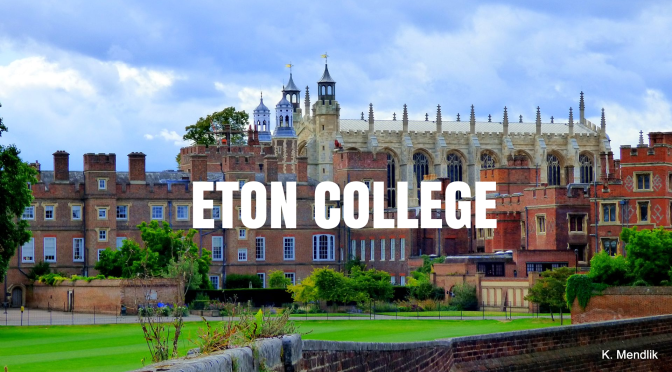
Even at a place like Eton, it didn’t seem likely that anyone in my year would actually become prime minister. At school, everyone is ‘ambitious’, everyone loudly stretching upwards, but perhaps true ambition has a pair of silent claws. None of us identified David Cameron as the boy marching inexorably towards Downing Street. When he became Tory leader in 2005, I had difficulty recalling him: wasn’t he that affable, sweet-faced, minor fellow at the edge of things? I remembered him as quite handsome, with the Etonian’s uncanny ability to soften entitlement with charm. Mostly, he was defined by negatives: he wasn’t an intellectual or scholar, a rebel, a musician, a school journalist or writer, even a sportsman.

Website: https://play.acast.com/s/londonreviewpodcasts/6baeeb08-0fd4-4149-af9d-7074e15b6244