


Some botanists maintain that peas are capable of associative learning, others that tropical vines have a sort of vision. If plants possess sentience, what is the morally appropriate response?
The Light Eaters: How the Unseen World of Plant Intelligence Offers a New Understanding of Life on Earth by Zoë Schlanger
The Nation of Plants by Stefano Mancuso, translated from the Italian by Gregory Conti
Planta Sapiens: The New Science of Plant Intelligence by Paco Calvo with Natalie Lawrence
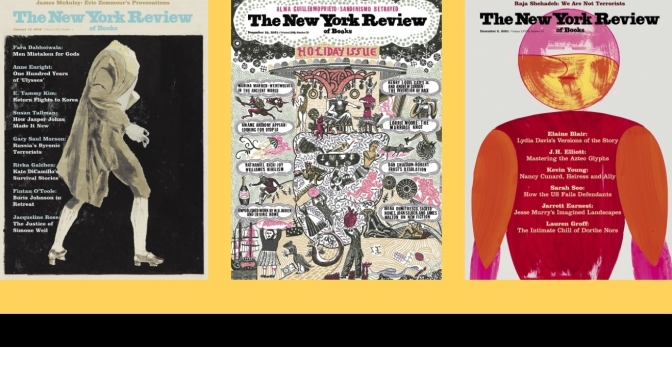
A collection of excerpts from women’s diaries written over the past four centuries offers a vast range of human experience and a subtle counterhistory.
Secret Voices: A Year of Women’s Diaries edited by Sarah Gristwood
The painter Paula Modersohn-Becker’s ascension to greater visibility raises questions about how we assess artistic talent, how reputations are made, and how we reevaluate once-neglected artists, particularly women.
Paula Modersohn-Becker: Ich bin Ich/I Am Me an exhibition at the Neue Galerie, New York City, June 6–September 9, 2024, and the Art Institute of Chicago, October 12, 2024–January 12, 2025
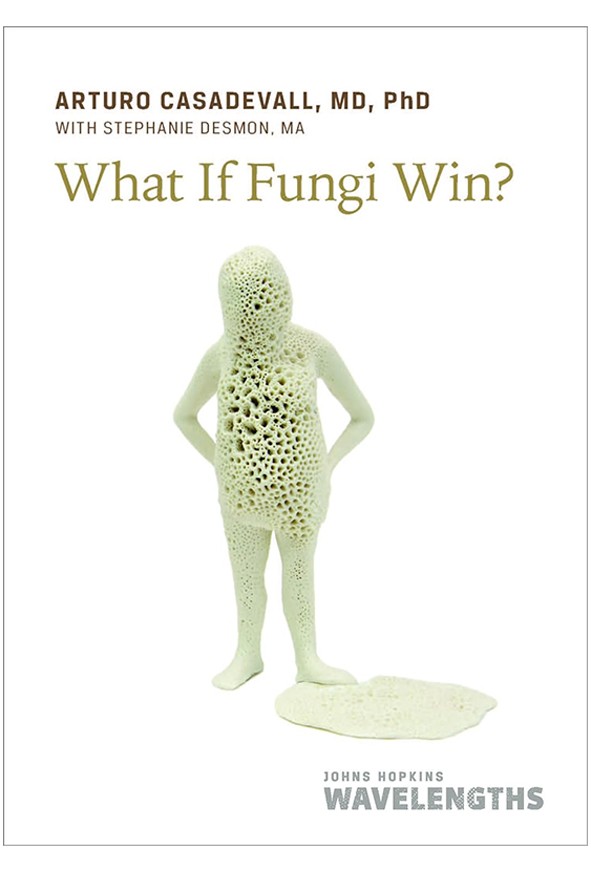
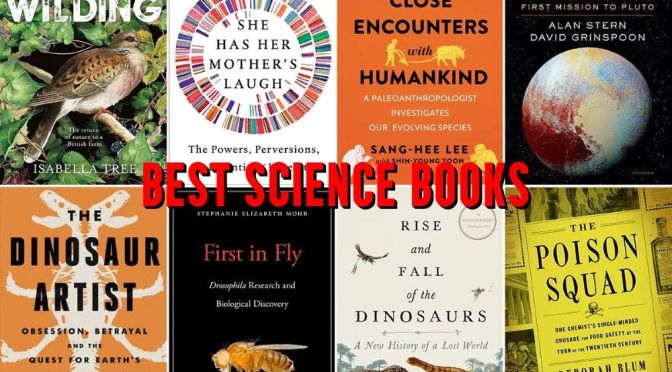
Arturo Casadevall Johns Hopkins Univ. Press (2024)
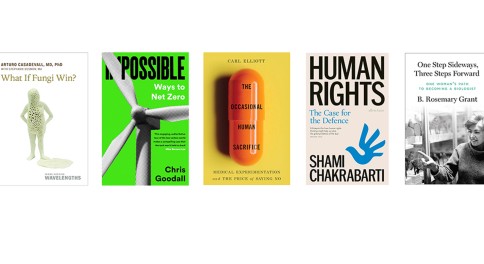
Earth’s largest organism, the ‘Humongous Fungus’, thrives under the floor of Malheur National Forest in Oregon. Sprung from a tiny spore 8,000 years ago, it weighs an estimated 31,500 tonnes spread over 10 square kilometres, sucking in nutrients from trees. Fungi are regarded as being more closely related to animals than to plants. “Fungi and humans share nearly 50% of their DNA,” observes epidemiologist Arturo Casadevall, in his brilliant book exploring the properties of fungi that are both fruitful and deadly to humans.

Chris Goodall Profile (2024)
Net-zero carbon emissions by 2050 are the global goal. China leads the world in installing wind- and solar-energy capacity, comments businessperson and environmental writer Chris Goodall, in this realistic but hopeful analysis of the technological and attitudinal challenges that all nations face in achieving net zero. The UK laundry company Oxwash — founded in 2018 by a university student tired of broken washing machines — provides services fuelled by renewable electrical power and gas from anaerobic digesters of farm waste.

Shami Chakrabarti Allen Lane (2024)
International agreements on fundamental human rights, such as entitlement to a fair trial and free speech, are now under threat in Europe, the United States and elsewhere. Shami Chakrabarti, a human-rights lawyer and former director of the UK National Council for Civil Liberties, considers how to defend these rights. How can “global inequality, conflict, climate catastrophe and the new and under-governed continent of the Internet” be tackled without global values and higher laws, or ways to enforce them?
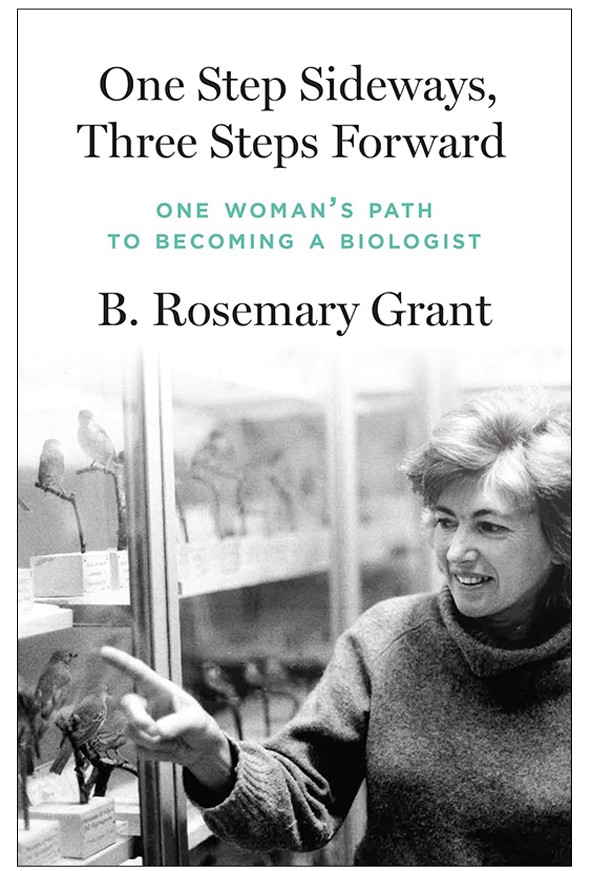
Rosemary Grant Princeton Univ. Press (2024)
A scientific life “requires critical thinking, following exceptions to your pet theory, respect for others and strong ethical values”, concludes evolutionary biologist Rosemary Grant. Her memoir tells of a girl fascinated by birds and fossils, who later formed a celebrated team with her biologist husband Peter. While raising a family, the couple studied Darwin’s finches in the Galapagos Islands, Ecuador, for six months each year from 1973 to 2012. They revealed visible natural selection in a bird’s lifetime — contrary to Charles Darwin’s initial thinking.
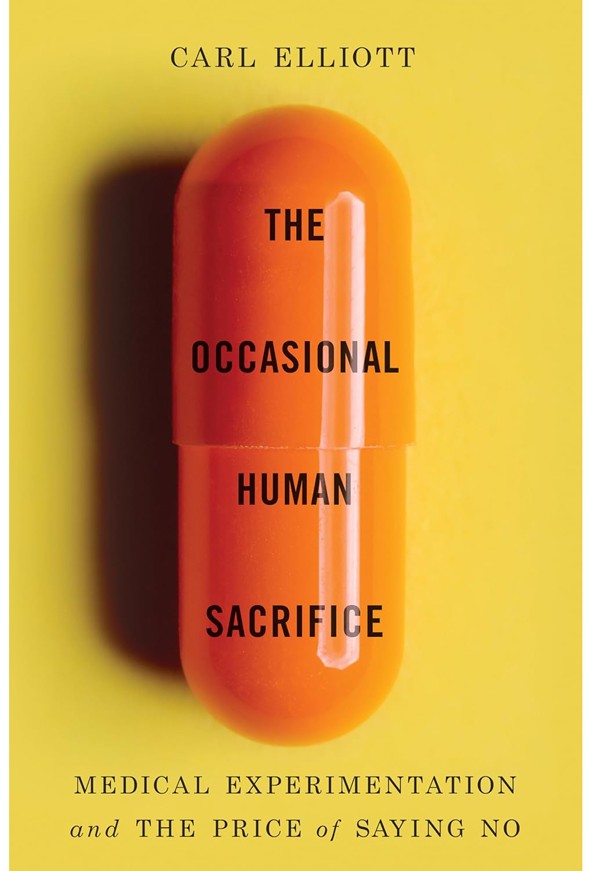
Carl Elliott W. W. Norton (2024)
Bioethicist Carl Elliott’s analysis of medical malpractice begins grippingly: “Let me present my credentials as a coward.” He then lists the times he failed to object to mistreatments as a medical student, followed by his frustrating campaign to publicize a case of suicide at his university in which a psychiatrist enrolled a patient in a dubious drug study. These experiences illuminate six historical cases of “occasional human sacrifice” caused by people’s alleged consent to participate in programmes that they did not comprehend.
Nature 633, 277 (2024)
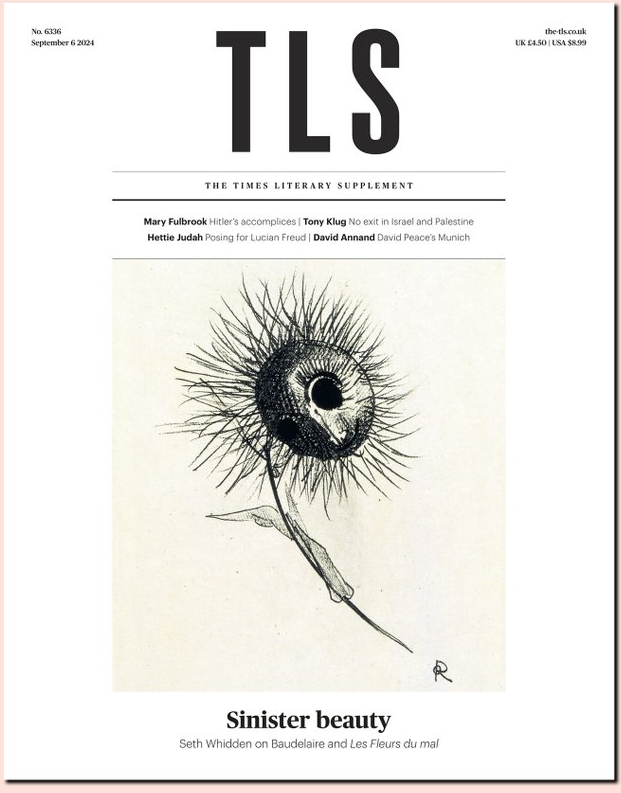
Times Literary Supplement (September 4, 2024): The latest issue features ‘Sinister Beauty’ – Baudelaire and Les Fleurs du Mal; Hitler’s accomplices; No exit in Israel and Palestine; Posing for Lucian Freud and David Peace’s Munich…


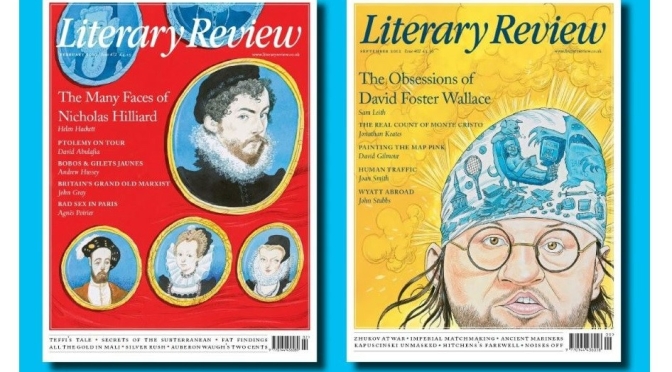
Literary Review – September 3, 2024: The latest issue features @claire_harman on female detectives; @WomackPhilip on childhood reading; Georgina Adam on art market scandal; @dannykellywords on ageing rockstars and @mathewparris3 on the Queen
‘If there is an occupation for which women are utterly unfitted, it is that of the detective,’ claimed the Manchester Weekly Times in 1888 – already behind the times, it seems, as women had been acting the part for years, albeit invisibly. They had started to feature in detective fiction too. It was studying the burgeoning market in ‘lady detective’ stories post-1860 that led Sara Lodge to wonder who the fantasy sleuths were modelled on, and why the Victorians found them so disturbing and alluring.
It is hard to think of a person more qualified to write this book. In addition to being an art historian, a prolific writer, a lecturer and a broadcaster, James Stourton is also a former chairman of Sotheby’s UK. He joined the auction house in 1979 and left in 2012 to become a senior fellow at the Institute of Historical Research.
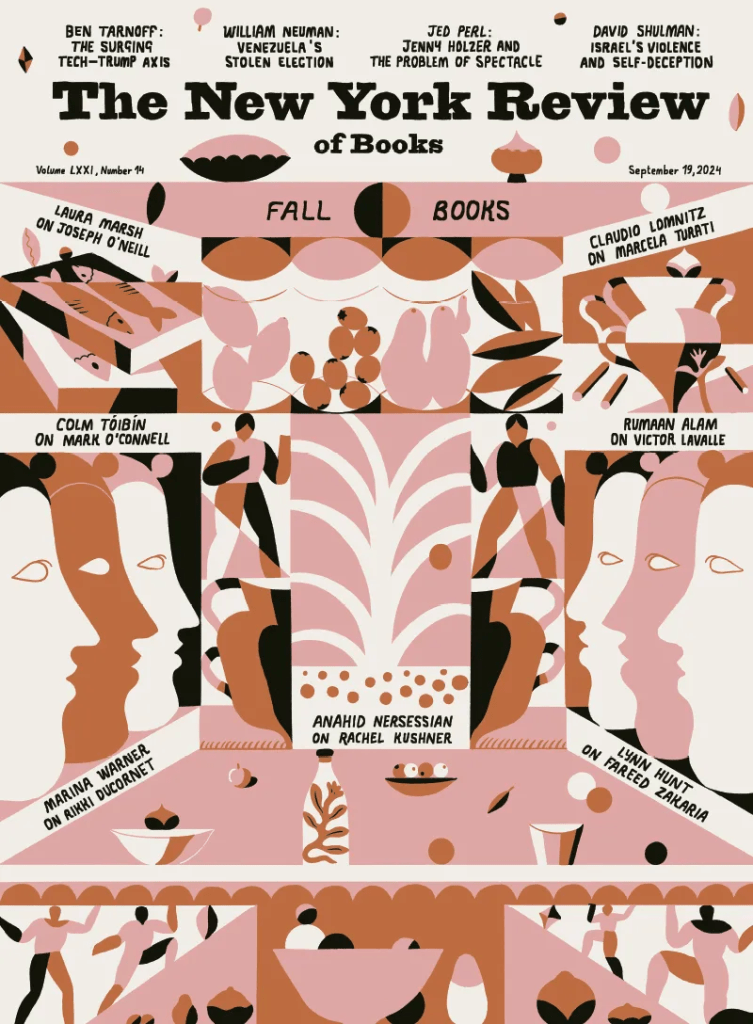
Creation Lake by Rachel Kushner
Rachel Kushner’s fourth novel tells the story of a spy-for-hire who infiltrates the ranks of a radical French commune.
Why have right-wing ideas found such an eager audience among tech elites during Biden’s presidency?
During the last half-century, artists, curators, and scholars have been increasingly preoccupied with the idea of spectacle and with how to embrace, critique, or co-opt the power of work that envelops and overwhelms the viewer.
Jenny Holzer: Light Line – An exhibition at the Solomon R. Guggenheim Museum, New York City, May 17–September 29, 2024
Tricks of the Light: Essays on Art and Spectacle by Jonathan Crary
The Avant-Gardists: Artists in Revolt in the Russian Empire and the Soviet Union, 1917–1935 by Sjeng Scheijen
Reading the Constitution: Why I Chose Pragmatism, Not Textualism by Stephen Breyer
In his new book, Reading the Constitution, Stephen Breyer criticizes recent Supreme Court decisions on issues such as abortion and gun rights as the product of rigid and imperfect reasoning rather than of ideology, and he argues for a more pragmatic jurisprudence.

Times Literary Supplement (August 21, 2024): The latest issue features ‘Angels at her table’ – C.K. Stead and Kirsty Gunn on Janet Frame’s singular voice; Pat Barker and Mark Haddon’s modern myths; Rethinking incarceration; How art comes about; Sleep science; Hypochondria and literary reputations….
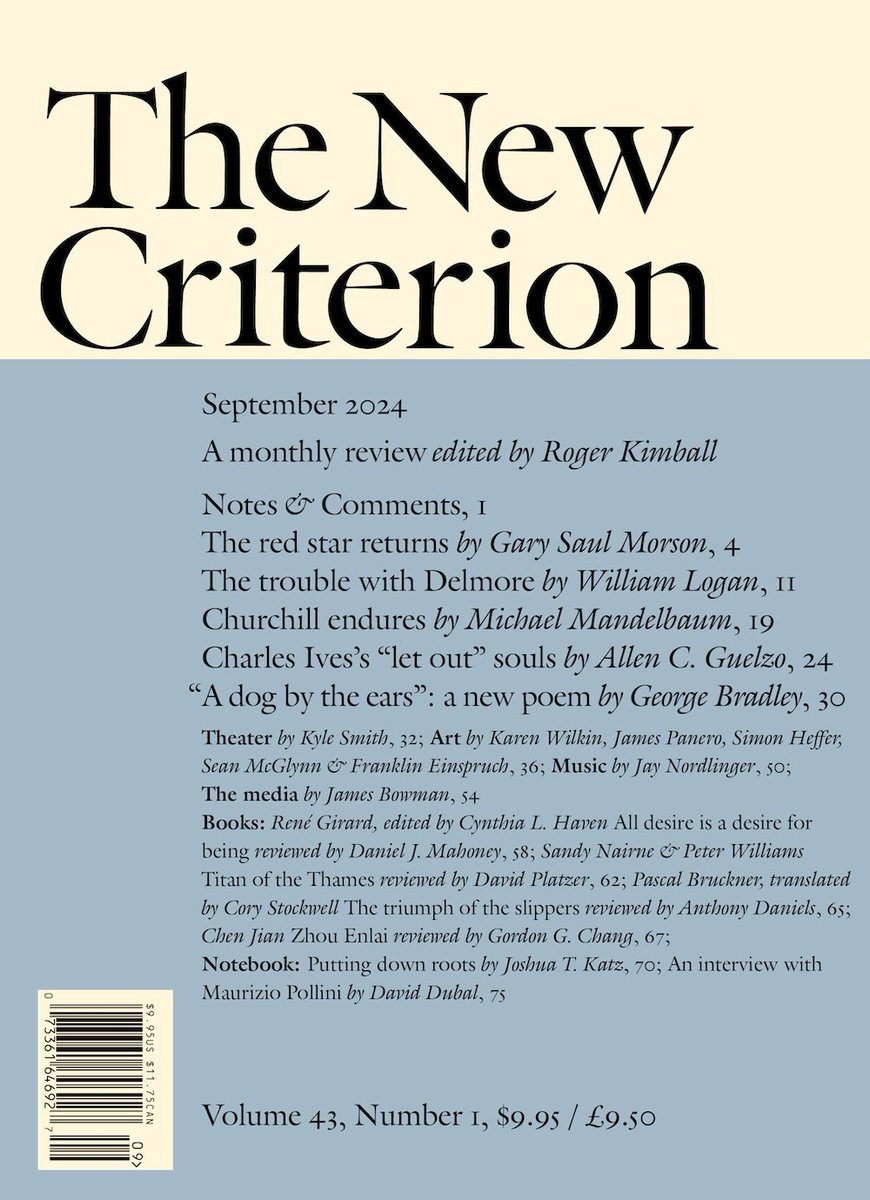
On John Constable’s The Hay Wain & the foundations of the West.
We write as The New Criterion’s annual period of aestivation enters its home stretch. The cicadas are buzzing, the days are noticeably shorter, and the leaves—some of them—are already edged with brown. Certain summers feature quiet expanses of lazy days. This one was different. In July, Donald Trump, except for the tip of his right ear, dodged a would-be assassin’s bullet; Joe Biden dropped (or, we now know, was pushed) out of the 2024 presidential race but, as of this writing, remains president; Kamala Harris, Biden’s vice president, stepped into the vacancy and magically became the new candidate for president, choosing the Minnesota governor Tim Walz as her running mate.
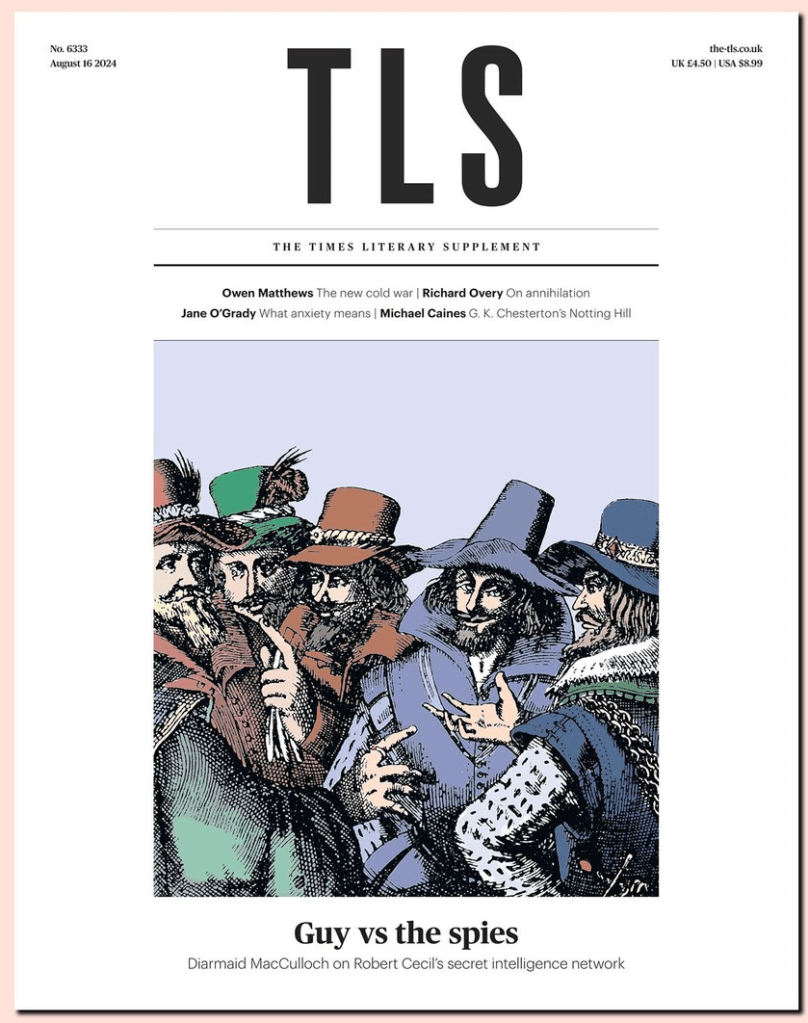
Times Literary Supplement (August 14, 2024): The latest issue features ‘Guy vs the Spies’ – Robert Cecil’s secret intelligence network; The new Cold War; On annihilation; What anxiety means; G.K. Chesterton’s Notting Hill…
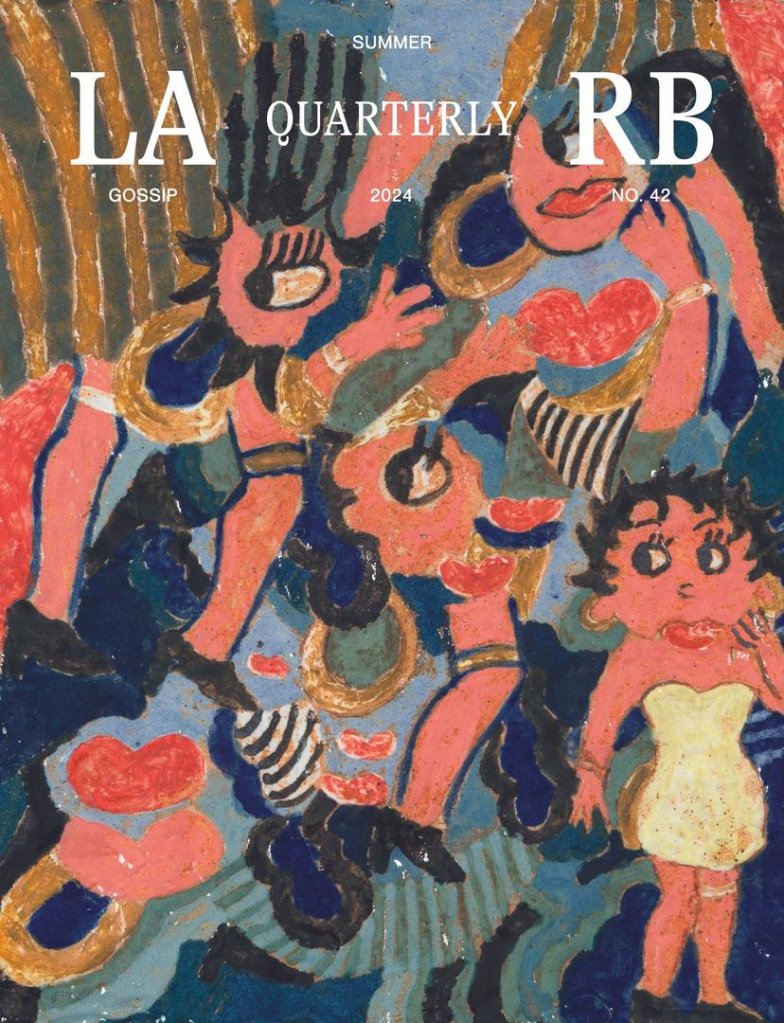

Rhian Sasseen swipes right on behalf of a fictional porn addict;
Francesca Peacock roots through the archives for a deeper understanding of scandal and speech;
Ruth Madievsky closes the gate on her college rumor mill;
and Emmeline Clein recounts an “American Icarus story” spelled out in diet pills and rhinestones.
Francesca Peacock roots through the archives for a deeper understanding of scandal and speech in an essay from the LARB Quarterly issue no. 42, “Gossip.”


 Boomers Daily