

From a Variety.com online article:
 Fox has been selling 30-second ads in the event for between “north of $5 million” to as much as $5.6 million, Winter says. In contrast, CBS sought between $5.1 million and $5.3 million for a package of inventory in its 2019 broadcast of the event. Meanwhile, Fox is seeking between $2 million and $3 million for the most expensive advertising slots in its pre- and post-game coverage.
Madison Avenue is giving new consideration to the Super Bowl, the annual media extravaganza that it has seemed less excited about in recent years.

Fox Sports has sold all its available commercial inventory in Super Bowl LIV, slated to be broadcast from Miami Gardens, Florida, on February 2, 2020. It’s the first time in half a decade that the network showing the big game hasn’t had to go down to the wire to dispense with its high-priced ad slots, and suggests advertisers have found new appeal in the live telecast in an era when most of TV’s best-known programming has a significant component of on-demand viewership.
To read more: https://variety.com/2019/tv/news/super-bowl-commercials-2020-fox-sell-out-1203415238/?recip_id=1124968&lyt_id=1124968


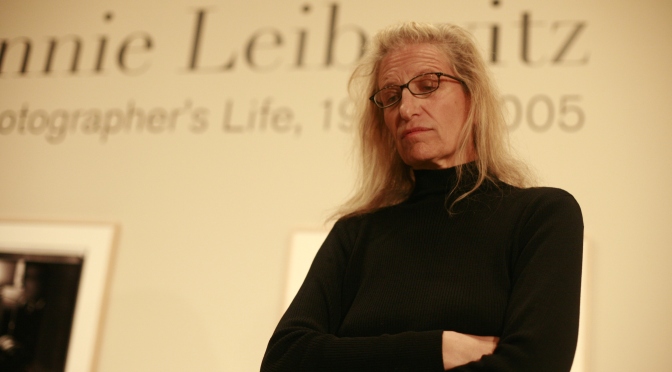
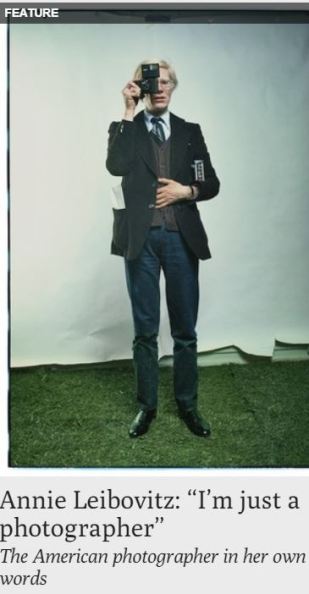 I chose to call myself a portrait photographer because labels were always being thrown on me. When I was at Rolling Stone I was a ‘rock-and-roll photographer’, at Vanity Fair I was a ‘celebrity photographer’. You know, I’m just a photographer. I realised I wasn’t really a journalist. I have a point of view and, while these photographs that I call portraits can be conceptual or illustrative, that keeps me on the straight and narrow. So I settled on this brand called ‘portraits’ because it had a lot of leeway. But I don’t think of myself that way now: I think of myself as a conceptual artist using photography.
 I remember going to the Factory in 1976 and watching Andy Warhol work. I’d been there before, earlier in the 70s, photographing Joe Dallesandro and Holly Woodlawn, and then Paul Morrissey. Warhol was a fixture of New York. It was just shocking when he died, because he was everywhere. I don’t know how he did it, but he was out at everything. You felt that if he was at a place you were at, then you were at the right place.
 One of the most successful artists of the Italian Renaissance, Titian was the master of the sixteenth-century Venetian school and admired by his royal patrons and fellow artists alike. Several of his contemporaries, including the authors and art theorists Giorgio Vasari, Francesco Priscianese, Pietro Aretino, and Ludovico Dolce, wrote accounts of Titian’s life and work.
 In this episode, Getty assistant curator of paintings Laura Llewellyn discusses what these “lives” teach us about Titian and the artistic debates and rivalries of his time. All of these biographies are gathered together in Lives of Titian, recently published by the Getty as part of our Lives of the Artists series.
 The complementary pair—Onassis the sophisticate, and Simon the nervous hippie—were close until Onassis died in 1994. Over a sprawling conversation, Simon discussed seeing the “goofy” side of Onassis, what she misses about performing and what she envied about Onassis.

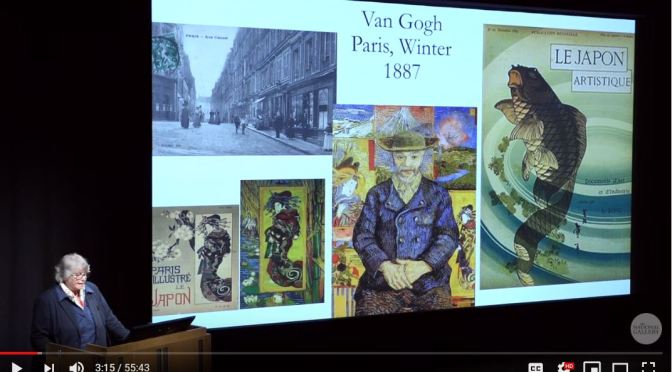

 The Credit Suisse Exhibition: Gauguin Portraits 7 October 2019 – 26 January 2020 Book tickets online and save, Members go free: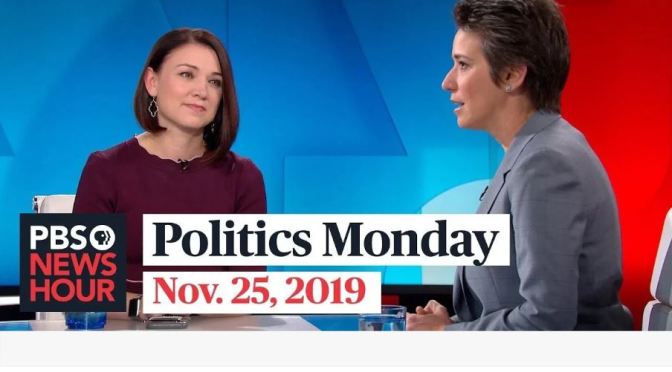
 NPR’s Tamara Keith and Amy Walter of the Cook Political Report join Judy Woodruff to discuss the latest political news, including whether two weeks of public impeachment hearings have shifted public opinion about President Trump and the investigation into his Ukraine policy, potential pressure on Republican lawmakers and the late entrance of Michael Bloomberg into the 2020 Democratic race.
 Netflix has risen from obscurity to be one of the most powerful media companies in the world with more than 150 million global subscribers. It has launched critically acclaimed hits such as House of Cards, The Crown and Unbelievable, as well as showcasing the back catalogues of popular television series. But as part of its rapid growth, the company has racked up huge debts.

 Jencks’s book grew out of his PhD thesis, supervised by Reyner Banham at the University of London in the late 1960s, and paved the way for his later, more explicitly polemical The Language of Post-Modern Architecture (1977). In this bestselling book, Jencks set out his stall for a pluralist architecture that rejected what he saw as modernism’s reductive ‘univalent’ approach, swapping it for a symbolically rich and historically engaged ‘multivalent’ postmodernism. For good or bad it became the defining book of its era, an unabashed rejection of mainstream modernism that ushered in a new architectural style.
 Modern Movements in Architecture (1973) by Charles Jencks was one of the first books on architecture I read, a birthday present given to me the summer before I started my degree. In some ways, it spoiled things: I thought all architecture books would be that much fun. Modern Movements in Architecture is a complex and sophisticated history, but it wears its learning lightly. It relates architecture to a wider cultural discourse and it is unafraid to be critical, even of some architects, such as Mies van der Rohe, who were previously considered to be above criticism.
 Boomers Daily