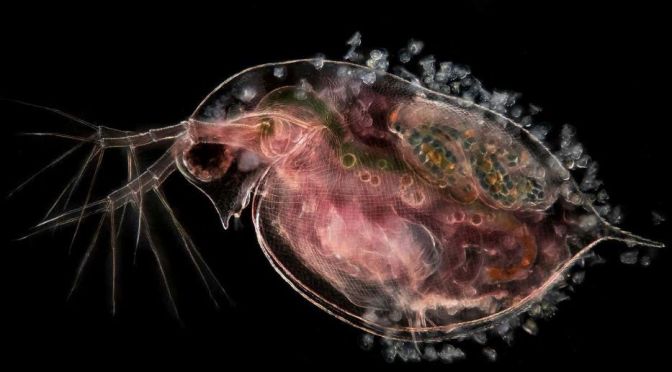
Photography: The ‘Micro-Beauty’ Of Plankton

Plankton form the base of marine and freshwater food webs. They consist of phytoplankton (plants) and zooplankton (animals). Their name derives from the Greek word for “drifter”, since they are too tiny to fight tides or currents. Phytoplankton oxygenate the ocean through photosynthesis, enabling marine animals to thrive, and produce about half the world’s oxygen.  Yet despite their abundance and fundamental role for life on Earth, their microscopic nature makes them easy to ignore. 

“The most exciting thing of the whole project was the discovery of this parallel, beautiful, strange, complex world, ” says photographer Jan van IJken, “there’s so much beauty around the corner that you’re not aware of”. Inspired by the microscopic beauty of plankton – and their predators, van IJken embarked on a photo and film project called Planktonium.  Over a year, he collected a diverse array of species from various Dutch waters, including puddles, lakes and seas, “Every time it was [a] new discovery”, he says. “There’s such a diversity, it makes you humble”. 

Back in his studio, Van IJken used various microscope and photography techniques, including dark field microscopy and timelapse photography to capture the “beauty, fine detail and incredible shapes” of his subjects. To add impact to the film, he commissioned Norweigan musician, Jana Winderen to create a soundscape, made using aquatic audio recordings including of fish, icebergs, small crustaceans which made a crackling sound and even the sounds of “fish howling to the moon”.

Read more: https://www.newscientist.com/article/…
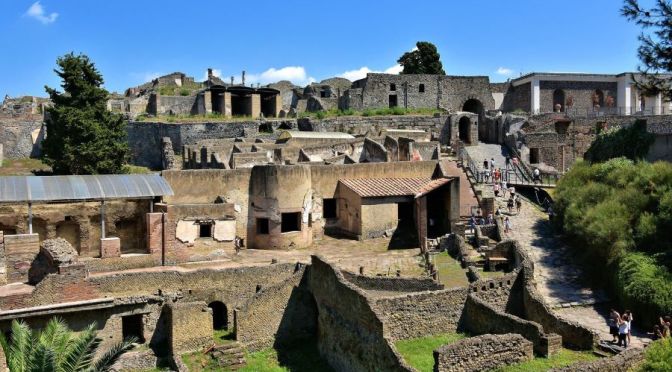
Walking Tour: Roman Ruins At Pompeii, Italy (4K)

The archaeological ruins of Pompeii, Campania, Italy walking tour in 4k. January 2, 2022.

Pompeii is a vast archaeological site in southern Italy’s Campania region, near the coast of the Bay of Naples. Once a thriving and sophisticated Roman city, Pompeii was buried under meters of ash and pumice after the catastrophic eruption of Mount Vesuvius in 79 A.D. The preserved site features excavated ruins of streets and houses that visitors can freely explore

Video timeline: 00:00 Preview 01:27 Piazza Anfiteatro (Entrance) 04:00 Anfiteatro / Amphitheater 11:00 Praedia di Giulia Felice 14:00 Via dell’Abbondanza 16:25 Casa di Octavius Quartio 20:50 Via di Castricio 23:10 Via dell’Abbondanza 24:00 Taverna di Sotericus 25:36 Casa di Trebio Valente 27:25 Casa del Frutteto 29:00 Casa di Giulio Polibio 29:45 Casa e Thermopolium di Vetutius Placidus 33:20 Thermopolium di Asellina 34:30 Casa degli Epidii 39:36 Panoramic view of Pompeii 43:30 Via dell’Abbondanza 45:25 Via Stabiana 46:35 Casa del Citarista 50:00 Porta di Stabia (Gate of Stabia) 52:20 Teatro Piccolo (Small Theater) Odeion 53:03 Quadriportico dei Teatro o Caserma dei Gladiatori (Quadriportico of the Theater or Barracks of the Gladiators) 54:30 Teatro Grande 1:04:05 Terme Stabiane (Stabian Baths) 1:11:50 Forum 1:24:50 Granaries of the Forum (Casts) 1:28:30 The garden of the fugitives (Casts) 1:30:00 Necropoli di P. Nocera

Design: Modular E-Bike Powered By Hydrogen

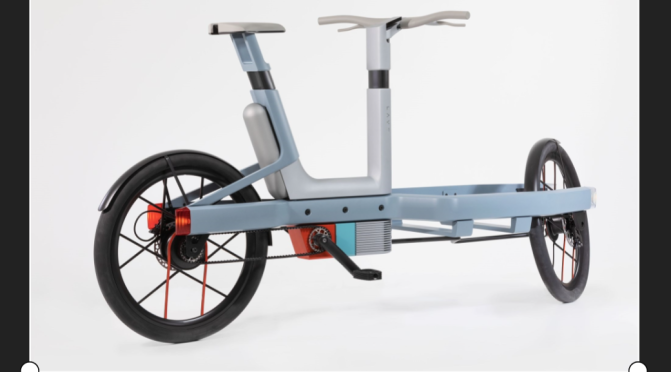
StudioMOM developed the LAVO bike, a compact modular transport concept powered by green hydrogen:

  • We designed it as a toolkit for a new emission-free mode of transport.
  • The form language is that of a means of transport. Not of a bicycle.
  • All technical elements can be assembled like Lego blocks.
  • The concept is easily adaptable: from city bike to transport bike for small business use.
  • The technology has been cleverly incorporated into the frame. Just look at the lighting units.
  • The top frame is designed to be ergonomically adjustable for everyone.
  • The unique Elian steering hub provides excellent riding characteristics, rigidity and comfort.

Read more

Japan Views: Snow Monkey Park In Heavy Snowfall

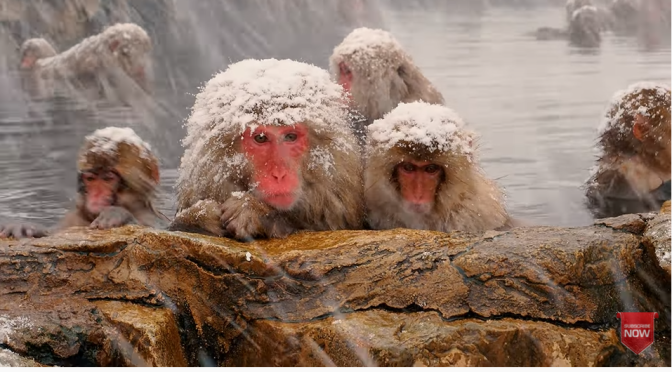
Located at the base of Joshinetsu Kogen National Park, the Jigokudani Monkey Park – often referred to as the Snow Monkey Park – is home to a very special troop of monkeys. Created in 1964, the park was established as a conservation area in which the monkeys, Japanese macaques to be exact, would have a refuge within what was already their natural habitat. Once in the park, the naturally-curious monkeys observed humans using the hot spring of a nearby guesthouse and before long, started copying the behaviour. The rest as they say, is history.

Morning News: Nuclear Weapons, Theranos CEO Conviction, David Bowie

Why are the world’s most heavily armed nations trying to stop the build-up of nuclear weapons? 

Plus: we explore the significance of Elizabeth Holmes’s conviction, review the Swiss papers and find out why David Bowie’s estate has sold the publishing rights to his “entire body of work”.

Walks: Diamond District In Antwerp, Belgium (4K)

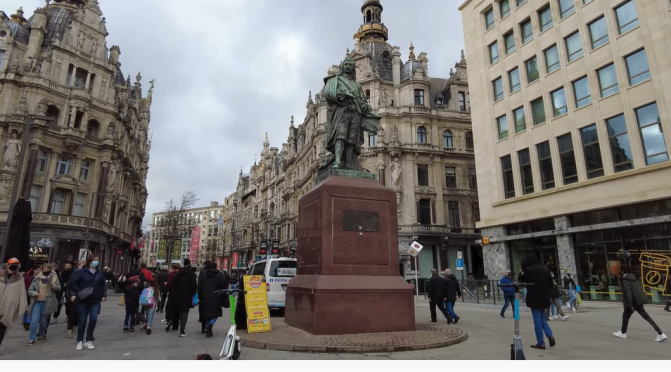
Antwerp is a port city on Belgium’s River Scheldt, with history dating to the Middle Ages. In its center, the centuries-old Diamond District houses thousands of diamond traders, cutters and polishers. Antwerp’s Flemish Renaissance architecture is typified by the Grote Markt, a central square in the old town. At the 17th-century Rubens House, period rooms display works by the Flemish Baroque painter Peter Paul Rubens. 

Cities: Dubai’s Radical 2040 Urban Master Plan (Video)

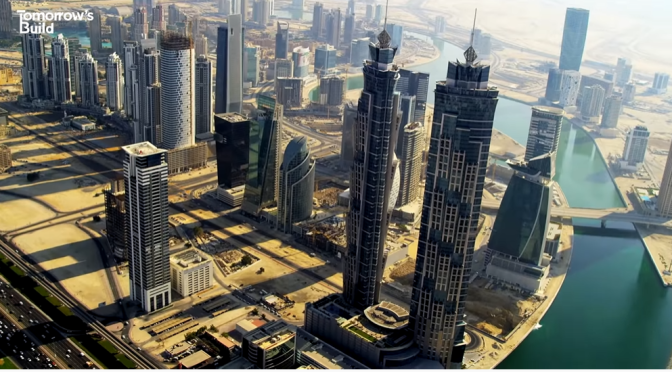
The Dubai 2040 Urban Master Plan maps out a comprehensive plan for a sustainable urban development in Dubai. It focuses on enhancing people’s happiness and quality of life and reinforcing Dubai as a global destination for citizens, residents and visitors over the next 20 years.  

The plan has a strategic structural layout, integrating all urban development master plans in the emirate and aligned it with Dubai’s strategic economic priorities and the needs of the future.

Dubai 2040 Urban Master Plan is the seventh development plan for the emirate since 1960. Between 1960 and 2020, the population of Dubai has multiplied 80 times from 40,000 in 1960 to 3.3 million while the urban and built area of the emirate increased 170-fold from 3.2 square km.

Covers: France-Amérique Magazine – January 2022

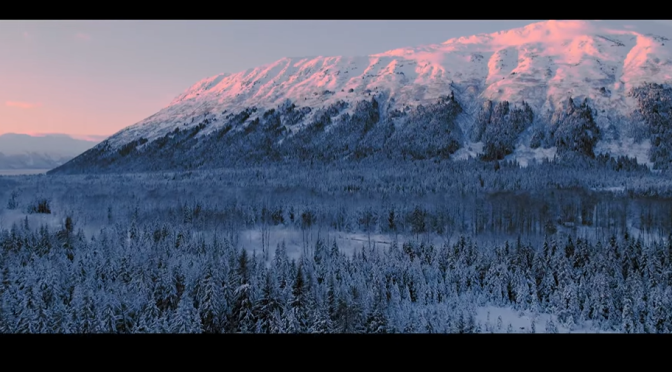
Winter Views: Denali National Park, Alaska (4K)

This film was shot near Anchorage, Alaska in December 2021.

December 2021 was the snowiest December on record in the nearby Denali National Park, bringing over 6ft of snow and unusually freezing temperatures. During the filming, temperature repeatedly dropped below -20F (-30C). In addition to the challenging weather conditions, December days are the shortest in the year. In Anchorage, the sun rises after 10 AM and sets around 3 PM, while barely rising above the lofty peaks on the horizon.