The documentary film Slovenia Green presents Slovenia’s green story and, through the stories of locals, destination representatives, and tourism providers, tell viewers that Slovenia is a safe destination with a sustainable offer and unspoiled nature.
The film follows a cyclist on a Slovenia Green Gourmet Route, a cycling route created in 2021 in cooperation between the Slovenian Tourist Board and the Slovenia Green Consortium and the destinations it passes through. This route takes the cyclist among sustainable food providers in Slovenia from Ljubljana to Posočje, Goriška Brda, Vipava Valley, and Karst, and back through the capital to Sevnica, Podčetrtek, Ptuj, and Maribor. It takes place exclusively between destinations with the Slovenia Green Destination label – a label that recognizes destinations that pay particular attention to responsible tourism development and sufficiently meet the criteria of the international Green Destinations standard.
Film Director: Andro Kajzer, Matej Lavka & Miha F Kalan Production Company: Zveza Karata Film Client: Slovenian Tourist Board
Two million year-old DNA found in frozen soil has been sequenced, revealing a surprising picture of an ancient landscape. Extinct creatures including, unexpectedly, elephant-like mastadons turn out to be among the beasts roaming Greenland. Researcher Eske Willerslev explains how DNA found in the environment can be used to reconstruct the past as so-called ‘eDNA’ becomes a vital tool for palaeontologists.
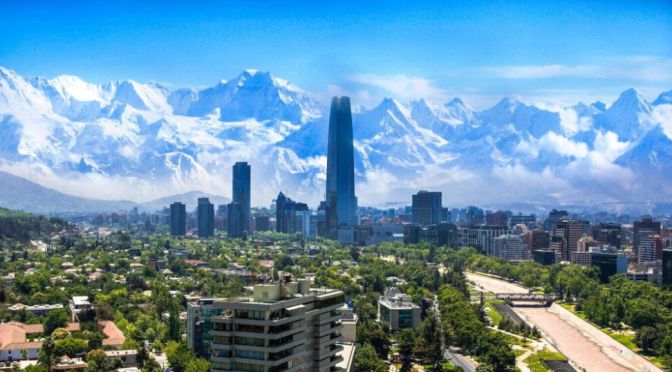
Santiago, capital of Chile. It lies on the canalized Mapocho River, with views of high Andean peaks to the east.
The city was founded as Santiago del Nuevo Extremo (“Santiago of the New Frontier”) in 1541 by the Spanish conquistador Pedro de Valdivia. The area was inhabited by the Picunche Indians, who were placed under the rule of the Spanish settlers. The original city site was limited by the two surrounding arms of the Mapocho River and by Huelén (renamed Santa Lucía) Hill to the east, which served as a lookout.
Greater Santiago contains Chile’s greatest concentration of industry. The main products are foodstuffs, textiles, shoes, and clothes; metallurgy and copper mining are also important. The city also has an active financial sector, including a stock exchange, the major banks with hundreds of branches, and many insurance companies.
Santiago is the centre of the nation’s railroads. Highways and roads connect the city with the ports of San Antonio to the west and Valparaíso to the northwest, thus providing an outlet to the Pacific Ocean. The city has a subway system, and air services are provided by the international airport at Pudahuel and the airport at Los Cerrillos, which handles domestic flights. There are also two smaller civil airports—Lo Castillo and Tobalaba—as well as El Bosque, a military airport.
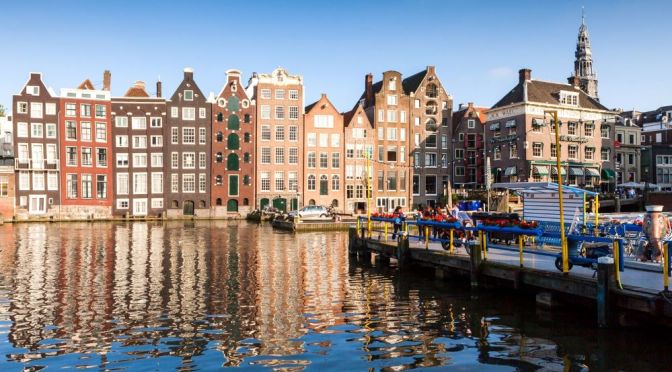
December 2022 – De Pijp (English: The Pipe) is a neighbourhood of Amsterdam, Netherlands. It is located directly south of Amsterdam’s city centre and it is part of the borough Amsterdam-Zuid, in a part of the city known as the Old South (Oud Zuid). It is served by De Pijp metro station.
Most streets in De Pijp are named after Dutch painters, like Jan Steen, Frans Hals, Ruysdael and Vincent van Gogh. Diamantbuurt, Nieuwe Pijp and Oude Pijp are the three districts composing the area. The busiest street market of the Netherlands, the Albert Cuyp Market, is located in De Pijp. It is open six days per week and attracts tourists.
The former Heineken brewery is also a local tourist attraction; the former town hall of Nieuwer-Amstel is one of De Pijp’s most notable monuments. Next to the former Heineken brewery is the Marie Heinekenplein, which has a number of bars and cafes. Along the canal Ruysdaelkade, there is a small red-light district.
DW Travel – Where can you find half-timbered houses, German beer, and Black Forest cake in South America? Colonia Tovar. DW’s Joel Dullroy visited the Venezuelan tourist attraction, where he felt transported back to the heart of the Black Forest. The town has a population of roughly 20,000 people, and was founded by German immigrants around 150 years ago. Not much has changed there since then.
Colonia Tovar is a town of Venezuela, capital of the municipality Tovar in Aragua state. It is located about 65.5 km west of Caracas. It was founded on April 8, 1843, by a group of 390 immigrants from the then independent state of the Grand Duchy of Baden.
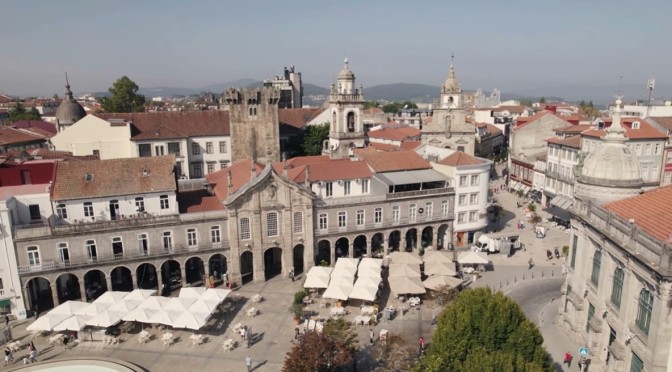
Mesmerizing Time – Braga is a city in the far north of Portugal, northeast of Porto. It’s known for its religious heritage and events. To the east, Bom Jesus do Monte complex has a neoclassical church atop an elaborate 17-flight stairway. In the city center, medieval Braga Cathedral is home to a sacred art museum and the Gothic-style Kings’ Chapel. Nearby, the imposing Archbishop’s Palace overlooks Santa Barbara Garden.
Architectural Digest – We gave interior designers Lula Galeano, Laura Hodges, and Alvin Wayne a photo of the spacious bedroom – then asked each of them to create a design for it in their particular style, however they pleased. Three artists, one canvas, each bringing something different to space. See which designer comes closest to creating the bedroom you see in your dreams.
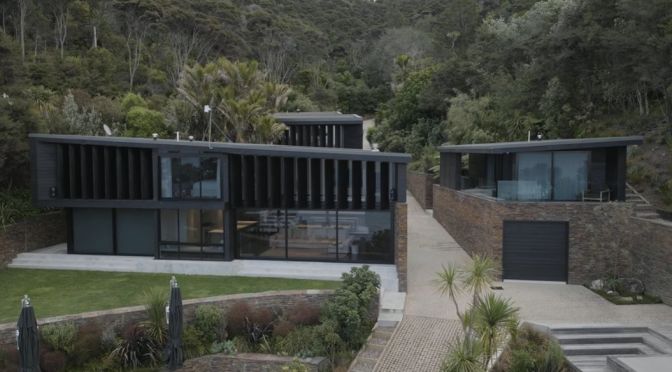
The Local Project (December 6, 2022) – On the far side of Waiheke Island – just off the coast of Auckland, New Zealand – a cabin house becomes an escape for its occupants, offering unparalleled views of the island and ocean.
Video timeline: 00:00 – Introduction to the Wooden Cabin House 00:37 – The Meaning and History Behind Waikopua 01:17 – The Original Weatherboard Bach 01:48 – A Walkthrough of the Cabin House 02:15 – Establishing Relationships Between Architect and Builder 02:37 – A Reflection of the Beach 03:35 – A Special Customised Feature 03:54 – The Method Behind the Design 04:26 – Controlling the Light 04:51 – A Durable and Evolving Material Palette 05:35 – Dash’s Collaboration Method
With architecture and interior design from Daniel Marshall Architects (DMA) and construction by Dash Build, Waikopua reinstalls a resilience through its built form and establishes a connection to the surrounding land. Originally a colonial farming site, DMA and Dash Build relay a connection to the site’s history by positioning the cabin house to embrace the green life that surrounds it.
Forming the design moving forward, the foliage and island landscape provide the basis for the modern and sculptural extensions of the home. Referencing the home’s previous iteration, the architect and builder have employed the same aluminium louvers and double-height space of the original home. With the consistency of interior design choices and detailing of weatherboards, a refined touch seamlessly transpires through each room and building.
Inspired by the idea of a campsite, the Waiheke Island cabin house takes the forms of separate accommodation units. The main pavilion houses the kitchen, living and dining rooms downstairs, whilst upstairs provides a shared bunk room and bedrooms that are detailed with honeyed timber accents to further relay the connection to the surrounds. Located just behind the main pavilions, the guest house is a separate living area, allowing for a sense of a privacy within the campsite-inspired layout. Nestled between the main pavilions, a weatherboard and concrete deck allows for an informal gathering space where guests can relax and enjoy the island life.
From entrance, the driveway becomes the focal point, used as both a guide for guests and allowing for unencumbered sightlines down to the ocean. To embrace natural light, DMA and Dash Build employed elements upon the exterior of the home to harness the changing sunlight. Able to be admired from sea, large louvered fins have been fixed at a set angle to stop the harsher light of day from coming in and provide the owners a space of reprieve.
Moreover, the materials used upon the exterior have been selected for durability against the intense environment of salt spray and the changing weather. From the black weatherboards that blend with the fauna to the tiles that reference the surrounding rockface, Waikopua by DMA and Dash Build evolves and further embeds itself into the landscape over time.
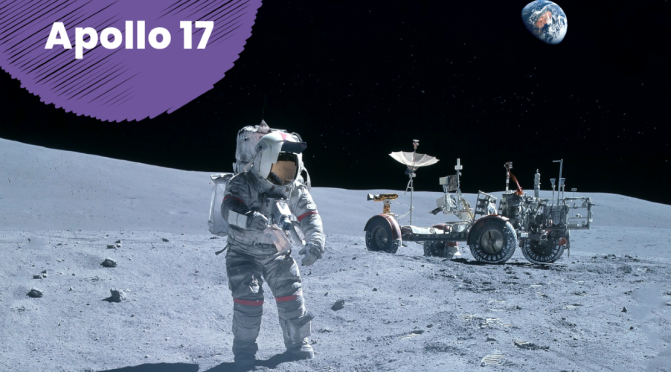
NASA Goddard – This video celebrates the 50th anniversary of Apollo 17 by talking with Lunar Module Pilot Jack Schmitt about the significance of that mission and how it laid the groundwork for future human exploration of the Moon.
Jack also discusses how the Lunar Reconnaissance Orbiter, which launched in 2009, has helped reinterpret Apollo-era data and given us new information about the lunar terrain that will help pave the way for the upcoming Artemis missions.
Apollo 17 was the sixth and final Apollo mission to land on the Moon. Following a 2-hour 40-minute delay, it launched at 11:33 p.m. CST on December 6, 1972, the only night launch of the Apollo program. Prior missions had explored the Moon’s early volcanic history and the role of large impact basins such as Imbrium. Accordingly, Apollo 17 was planned to collect ancient highlands crustal material far from the Imbrium basin and to search for possible young lunar volcanic activity, which would help to constrain our knowledge of the Moon’s thermal evolution.
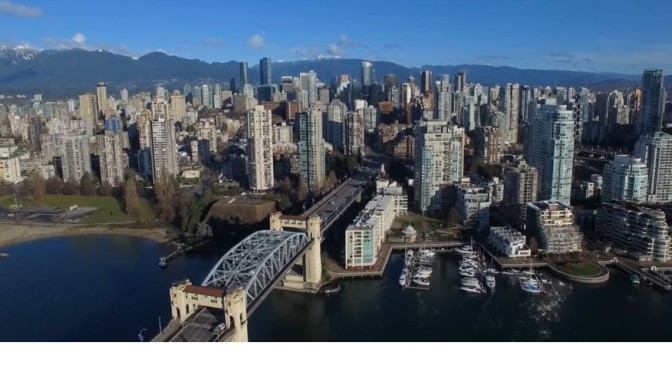
TYLER WALKS (December 2022) – Vancouver, city, southwestern British Columbia, Canada. It is the major urban centre of western Canada and the focus of one of the country’s most populous metropolitan regions. Vancouver lies between Burrard Inlet (an arm of the Strait of Georgia) to the north and the Fraser Riverdelta to the south, opposite Vancouver Island. The city is just north of the U.S. state of Washington. It has a fine natural harbour on a superb site facing the sea and mountains. Pop. (2011) 603,502; metro. area, 2,313,328; (2021) 662,248; metro. area, 2,642,825.
History
The region had long been inhabited by several Native American (First Nations) peoples when a trading post, Fort Langley, was set up by the Hudson’s Bay Company in 1827 near the mouth of the Fraser River. Few people of European descent lived in the area until the late 1850s, when the town of New Westminster (now a suburb of Vancouver) was established near the site of the original fort (in 1839 the fort itself had been relocated a little farther upstream).
Thousands of miners, mostly from California, flooded into the region in the 1860s, attracted by the gold rush in the Cariboo Mountains to the northeast. Besides the Scottish, who were very influential in Vancouver’s early years, Americans had a notable impact on the city. The suggestion to name it Vancouver was made by an American, William Van Horne, president of the Canadian Pacific Railway.
And the city’s most-often elected mayor (nine nonconsecutive terms from 1919 to 1933), L.D. Taylor, was originally from the United States. Moreover, the first important industry in the area, a sawmill on Burrard Inlet, was owned by an American. Finally, the first major industry not reliant on local natural resources, a still-active sugar refinery, was started by an American.
News, Views and Reviews For The Intellectually Curious











 Boomers Daily