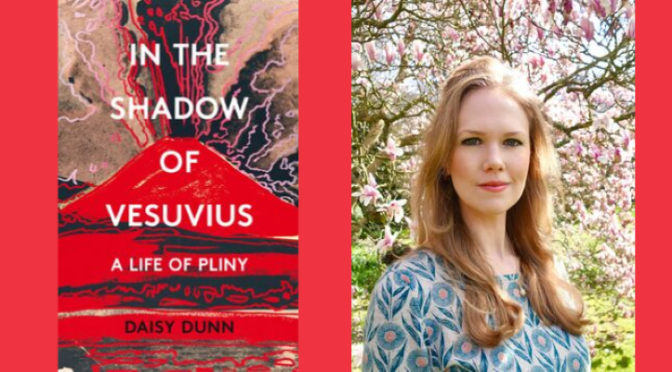
In the year 79 CE, Pliny the Elder set out to investigate a large cloud of ash rising in the sky above the Bay of Naples. It was the eruption of Vesuvius, and Pliny did not survive.
“I think we can all empathize with someone who’s like a son, or in this case, an adopted son, trying to kind of make his own mark and escape the shadow of his father, and leave something on the world of his own.”
A trailblazing naturalist, he is best remembered today for his multivolume encyclopedia of Natural History,and we are able to retrace his final hours thanks to a vivid account by his nephew, Pliny the Younger. Inspired by his beloved uncle, the young Pliny became a lawyer, senator, poet, and representative of the emperor. His published letters are fascinating reflections on life and politics in the Roman Empire.
In this episode, Daisy Dunn, classicist and author of The Shadow of Vesuvius: A Life of Pliny,and Kenneth Lapatin, curator of antiquities at the Getty Museum, discuss the two Plinys and their profound impact on our understanding of ancient Rome.
NPR News Now reports: Facebook removing accounts associated with Russian efforts to influence 2020 election, CDC halts evictions until December and other top news.
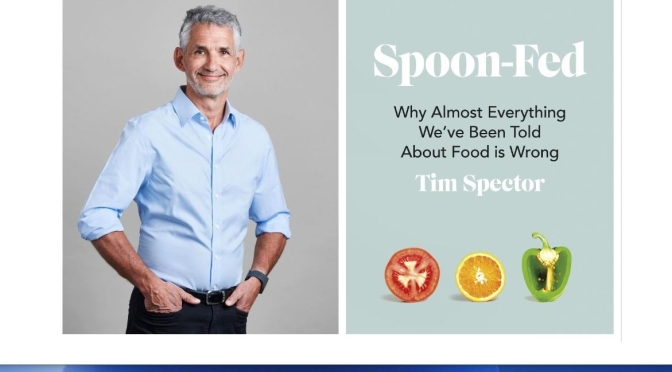
According to a recent study, obesity increases the risk of dying of Covid-19 by nearly 50%. Governments around the world are now hoping to encourage their citizens to lose weight. But with so much complex and often contradictory diet advice, as well as endless food fads, it can be hard to know what healthy eating actually looks like.
How many pieces of fruit and vegetables should you eat a day? Will cutting out carbs help you lose weight? Is breakfast really the most important meal of the day? Speaking to Tim Spector, professor of genetic epidemiology at King’s College London about his new book Spoon-Fed, Madeleine Finlay asks why we’re still getting food science wrong, and explores the current scientific evidence on snacking, supplements and calorie labels.
Tim Spector is a Professor of Genetic Epidemiology and Director of the TwinsUK Registry at Kings College, London and has recently been elected to the prestigious Fellowship of the Academy of Medical Sciences. He trained originally in rheumatology and epidemiology. In 1992 he moved into genetic epidemiology and founded the UK Twins Registry, of 13,000 twins, which is the richest collection of genotypic and phenotypic information worldwide. He is past President of the International Society of Twin Studies, directs the European Twin Registry Consortium (Discotwin) and collaborates with over 120 centres worldwide. He has demonstrated the genetic basis of a wide range of common complex traits, many previously thought to be mainly due to ageing and environment. Through genetic association studies (GWAS), his group have found over 500 novel gene loci in over 50 disease areas. He has published over 800 research articles and is ranked as being in the top 1% of the world’s most cited scientists by Thomson-Reuters. He held a prestigious European Research Council senior investigator award in epigenetics and is a NIHR Senior Investigator. His current work focuses on omics and the microbiome and directs the crowdfunded British Gut microbiome project. Together with an international team of leading scientists including researchers from King’s College London, Massachusetts General Hospital, Tufts University, Stanford University and nutritional science company ZOE he is conducting the largest scientific nutrition research project, showing that individual responses to the same foods are unique, even between identical twins. You can find more on https://joinzoe.com/ He is a prolific writer with several popular science books and a regular blog, focusing on genetics, epigenetics and most recently microbiome and diet (The Diet Myth). He is in demand as a public speaker and features regularly in the media.
NPR Up First reports: President Trump travels to Kenosha, Wisconsin to meet with law enforcement as protesters continue to call for police reform. Also, New York City schools were set to open next week, but one of the largest teachers unions in the country is considering a strike. And, India is pushing forward with reopening it’s economy despite record-breaking cases, quickly becoming the global epicenter of the pandemic.
This Morning with Gordon Deal reports: Portland mayor urges restraint, renunciation of violence, Hurricane Laura’s power outages could last a month, and Girl Scouts use money they earned selling cookies to make PPE.
President Trump accepts the Republican nomination from the White House South Lawn with hundreds in the audience huddled together without masks. Also, clean up continues as Hurricane Laura leaves a trail of devastation. And, Japan’s longest serving Prime Minister Shinzo Abe steps down because of his deteriorating health.
Staff Writer Paul Voosen talks with host Sarah Crespi about how Arctic sea ice is under attack from above and below—not only from warming air, but also dangerous hot blobs of ocean water.
Next, Damien Fordham, a professor and global change ecologist at the University of Adelaide, talks about how new tools for digging into the past are helping catalog what happened to biodiversity and ecosystems during different climate change scenarios in the past. These findings can help predict the fate of modern ecosystems under today’s human-induced climate change. And in our books segment, Kiki Sanford talks with author Carl Bergstrom about his new book: Calling Bullshit: The Art of Skepticism in a Data-Driven World.







 Boomers Daily