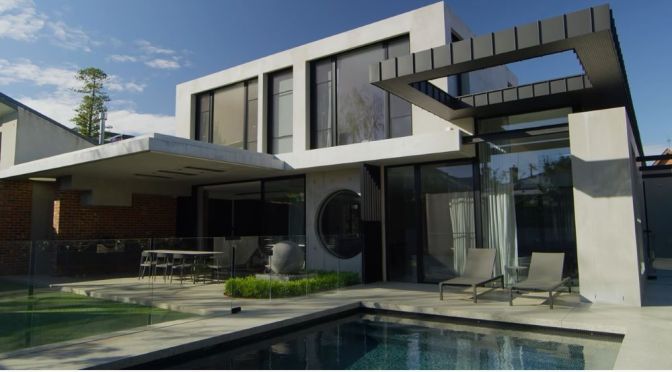
Evolving from a symmetrical design, Round Choreography is a playful geometric home with a familial tenor. With the architecture, interior design and build undertaken by mckimm, the forever house sees a clear design intent rigorously executed.
00:00 – Introduction to the Forever Home 00:38 – Designing with Unique Geometries 01:08 – In-Situ Concrete 01:40 – Intuitive Design 02:14 – Wellness and Gym Area 02:31 – Collaborative Approach to Design 03:28 – The Material Palette 04:07 – What the Architect’s Are Most Proud Of
Settled into the leafy suburb of Malvern, Round Choreography is named in homage to the original floorplan of the home that flourished into the completed forever house. Geometric in nature, the interiors celebrate a circular motif, visible from the kitchen to the ensuite and the internal courtyard of the home’s lower level.
As architect, interior designer and builder, mckimm’s construction team had intimate knowledge of the design intent, enabling efficiency to undertake strenuous tasks to deliver the desired forever house. The unique frameless window in the living area is a particular triumph. The practical nature of the forever house extends to its materiality. mckimm chooses a durable palette comprised of concrete, timber and stone to express a commitment to longevity whilst celebrating aesthetic rawness.
Polished concrete flooring with hydronic heating meets walls of the same material, creating an architecturally consistent envelope. Designed in the knowledge that the clients are growing their family, Round Choreography captures the excitement of embedding oneself in a location. The light-filled forever house marks the beginning of family life.
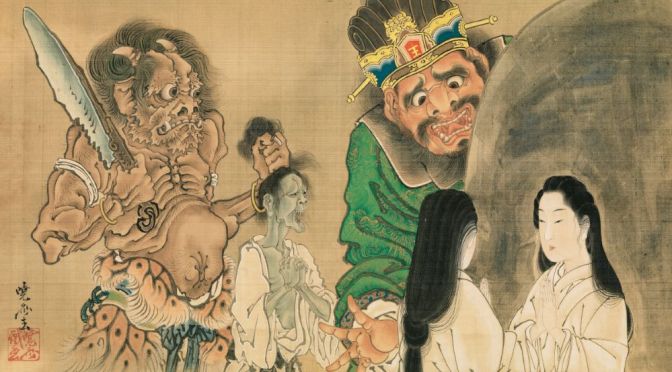
The Japanese painter Kawanabe Kyōsai (1831–1889) was one of the most innovative artists of his day. He lived during a turbulent time, experiencing the downfall of the Tokugawa shogunate (the hereditary military government) and the new imperial regime’s reforms to modernise and Westernise the country. Kyōsai’s drive to capture the world with his brush earned him the nickname ‘demon of painting’ – which he lived by.
Kyōsai, as a highly trained painter, was proficient in traditional methods and subjects. He broke with convention by blurring the established boundary between ‘serious’ and comic pictures. Traditionally, complex painting techniques were reserved for literary classics, historical and legendary figures, auspicious themes and religious images. Comic pictures were typically produced in a lighter, more fluid style.
Kyōsai often saw humour in ‘serious’ subjects and introduced comic and everyday content in highly finished, detailed paintings. The selection in this room demonstrates Kyōsai’s range and skill across diverse genres. Subjects include animals, monsters, ghosts, protective deities and Buddhist icons. Some paintings display powerful Kano-style ink techniques, others depict humorous creatures – recalling works by his first teacher, Utagawa Kuniyoshi, and referencing medieval picture scrolls. He can be seen exploring Western techniques such as perspective, shading and the study of anatomy, which attests to his insatiable curiosity and desire to push beyond tradition.
Kyōsai had a keen interest in society, and captured contemporary events in his pictures with humour and piquancy. His satirical prints from the 1860s, the period leading up to the collapse of the shogunate regime, reflect widespread anxiety about the political turmoil, economic instability and foreign presence. He channelled the febrile atmosphere into dynamic images of frog battles, monster parties and wildly dancing tengu (mischievous, semi-human creatures). Under the new Meiji government, the sudden influx of Western-style culture greatly shocked many Japanese, after over 260 years of relative isolation.
Kyōsai’s comic pictures express both the excitement of the new era, with modern technologies such as the telegraph and trains, and a certain scepticism towards those who blindly followed the new trends. The government’s policy of hiring European and American specialists to teach at new institutions in Japan brought the painter a personal benefit. The British architect Josiah Conder (1852–1920) became his pupil around 1881, and remained a student, patron and friend until Kyōsai’s death in 1889.
In nineteenth-century Japan, artists often produced works impromptu in front of an audience. The creative process was appreciated as a performance. At commercially organised calligraphy and painting parties called shogakai, attendees would pay for admission, and once inside, could ask the artists to create works for them at no extra charge. These gatherings were frequently a platform for collaboration. Multiple painters would complete a picture together or a calligrapher would inscribe a poem by the painter’s work. Kyōsai often depicted a scene of art viewing, and the artworks within the image would be painted by other artists.
Collaboration has always been an important part of the creative process in Japan, among artist friends or between teacher and pupils, sharing and marking the occasion. Event flyers, newspaper articles and anecdotes attest that Kyōsai was famous for his speedy, skilful and witty performances. The parties involved copious alcohol. Kyōsai loved saké and his brush became even more playful and expressive when intoxicated. Josiah Conder wrote in his master’s obituary: ‘under the influence of BACCHUS some of his strangest fancies, freshest conceptions and boldest touches were inspired.’
Brașov is a city in the Transylvania region of Romania, ringed by the Carpathian Mountains. It’s known for its medieval Saxon walls and bastions, the towering Gothic-style Black Church and lively cafes. Piaţa Sfatului (Council Square) in the cobbled old town is surrounded by colorful baroque buildings and is home to the Casa Sfatului, a former town hall turned local history museum.
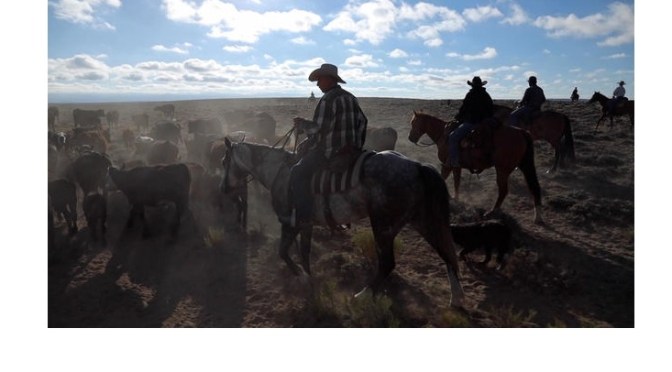
Bill Whitaker saddles up for one of the last enduring symbols of the Old West, a Wyoming cattle drive that travels the same route pioneered 125 years ago.
Upper Green River Valley, Wyoming
Predating most federal land management agencies, the Green River Drift cattle trail has been continuously used since the 1890s by the Upper Green River Cattle Association ranchers to get cattle from spring pasture on the desert to summer pasture in the forest. Chilly fall weather causes the cattle to “drift” back out of the forest to return to their home ranches. The trail, 58 miles long with 41 miles of spurs, crosses BLM, State of Wyoming, National Forest, and private properties. It has played a pivotal role in the development of ranching in the area as well as in the development of relationships between Federal agencies that manage grazing allotments and private property owners. The Drift was listed on the National Register in November, 2013. Because it is still being used much as it has for more than 100 years, the Drift was listed as a Traditional Cultural Property (TCP), the first ranching related TCP in the nation.
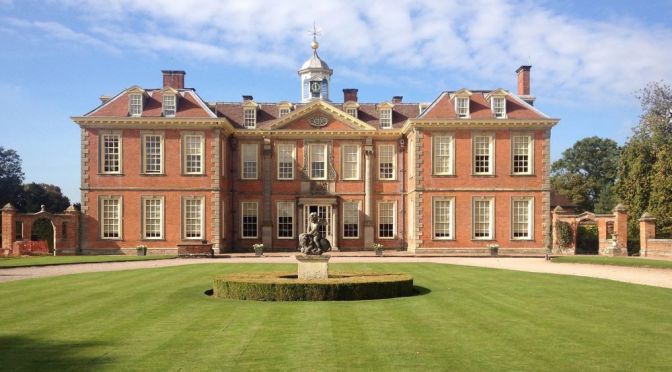
The gardens at Hanbury Hall in Worcestershire are thought to be one of the most faithful recreations of the formal style used by 18th-century garden designer George London.
Watch this video to find out how the National Trust has created a sunken parterre, bowling green and veg garden using plans made in 1730. You’ll learn about how rhythmic planting scales, ordered planting and bare soil have been used to revive a long-forgotten style and approach.
The National Trust protects and cares for places so people and nature can thrive. Everyone can get involved, everyone can make a difference. Nature, beauty, history. For everyone, for ever.
This remarkable painting by Michel Corneille the Elder has been hidden away from view for at least the past 110 years and is a truly exceptional rediscovery for French painting of the 17th century. After a recent restoration, the artist’s signature has been re-exposed so that now this impressive work can be confidently attributed to the early French Classicist.
This episode of Anatomy of a work of art, discover The Death of Virginia, taken from Roman historian Livy and recounts the death of Virginia, daughter of a centurion in the Roman army. This rediscovery will be one of the highlights of our sale Tableaux Dessins Sculptures 1300-1900, Session I, Including Treasures from the Antony Embden Collection.
Complementing the Australian climate, Brighton East 4 is a mid-century inspired home crafted to meet the demands of a young family. Designed and built by Inform with architecture by Pleysier Perkins, the house takes inspiration from Palm Springs.
00:00 – Introduction to the Mid-Century Inspired Home 00:56 – The Client Brief 01:20 – Walking Through the Home 02:02 – Interior Design Style 02:43 – The Island Bench 03:04 – Colour Palette and Materiality 03:36 – Collaboration between the Client, Architect and Builder 04:06 – The Feel of the Home 04:41 – Successfully Meeting the Client Brief
Settled into the same-named Melbourne suburb, Brighton East 4 articulates quintessential Australian living. As a mid-century inspired home, the residence has an informal, open-plan layout and natural materiality, including the use of stone and timber.
Architecturally, Brighton East 4 curves, further evidencing its existence as a mid-century inspired home. Present in both the external and internal architecture, curves effortlessly unify the outdoor and indoor aspects of the home, creating fluidity and softness. Natural materials are a key feature of a mid-century inspired home and are incorporated throughout the project.
Behind the staircase sits a feature wall of stack-bond brickwork, whilst the bathroom sees terrazzo used generously. In the kitchen, the island bench sports an elegant stone top, with slatted timber battens at its base. Showcasing their proficiency in architecture and interiors, Inform and Pleysier Perkins craft a comfortable residence with a strong sense of spatial flow. As a mid-century inspired home, Brighton East 4 testifies to its Palm Springs influence through a natural and restrained materiality.
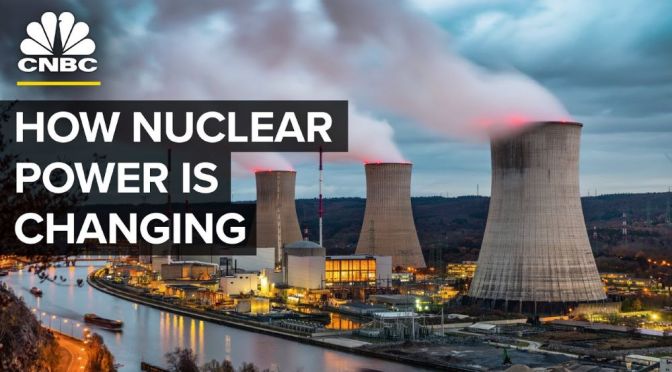
For some, nuclear power may conjure images of mushroom clouds or bring back memories of disturbing nuclear disasters like Chernobyle and Fukushima. But despite public fear around nuclear power, the technology has proved to be an emission-free, reliable way to produce large amounts of electricity on a small footprint.
As a result, sentiments about the technology are beginning to change. Both the U.S. government and private companies including X Energy, NuScale and, Bill Gates-backed, TerraPower are pouring money into developing, what they say will be smaller, safer nuclear reactors. CNBC visited Idaho National Laboratory to see the Marvel microreactor firsthand and learn what such developments could mean for the future of nuclear power.
After humankind discovered nuclear fission, the first applied use was the atomic bomb. The study of fission for electricity production came later. In December 1953, President Dwight D. Eisenhower gave his fateful Atoms for Peace speech, an impassioned plea to reconstitute the power of the atomic bombs dropped in World War II for a more noble cause.
“Against the dark background of the atomic bomb, the United States does not wish merely to present strength, but also the desire and the hope for peace,” Eisenhower told the United Nations. Almost 70 years later, the tension between those end uses still underlies the space today. From the 1950s through the 1970s, the United States dramatically increased its nuclear energy generation.
But the Three Mile Island accident in 1979 and Chornobyl meltdown in 1986 changed the landscape, spurring fear that nuclear energy could not be controlled safely. Since the 1980s, nuclear energy capacity and generation in the U.S. has largely stayed flat. Today, the country’s fleet of nuclear power reactors produces only 19% of the country’s electricity, according to the government’s Energy Information Administration.
In more recent times, the Fukushima Daiichi accident in Japan in 2011 — and earlier this year the capture of nuclear power plants in Ukraine by invading Russian forces — have added to public concerns. But despite its fraught origin story and the psychological effect of high-profile accidents, nuclear energy is getting a second look. That’s largely because nuclear energy is clean energy, releasing no greenhouse gasses.
Meanwhile, the world is seeing more of the effects of climate change, including rising global temperatures, increased pollution, wildfires, and more intense and deadly storms. “We need to change course — now — and end our senseless and suicidal war against nature,” Antonio Guterres, the secretary-general of the United Nations, said in Stockholm on Thursday. “There is one thing that threatens all our progress. The climate crisis. Unless we act now, we will not have a livable planet,” Guterres said. “Scientists recently reported that there is a 50-50 chance that we could temporarily breach the Paris Agreement limit of 1.5 degrees Celsius in the next five years.”
This video shows the areas to the north and south of Myrtle Beach City Limits, Little River(3:44), Cherry Grove, North Myrtle Beach, Garden City Beach, Murrells Inlet, and Pawleys Island.
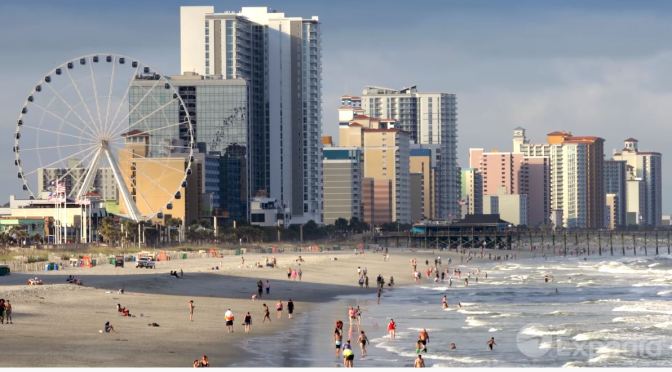
Myrtle Beach, a city and vacation resort on South Carolina’s Atlantic coast, is the hub of the Grand Strand, a 60-mile string of beaches. It’s also known for its celebrity-designed golf courses. Along its beachfront boardwalk are arcades, souvenir stands and restaurants, as well as the old-fashioned Family Kingdom amusement park and the SkyWheel, one of the country’s tallest Ferris wheels.
Marine iguanas are the only modern lizards that hunt for food above and below water. Due to natural selection, they have adapted to survive in deep underwater meadows. With the ability to hold their breath for half an hour and sharpen their claws to grip slippery rocks, they are able to thrive in the chilly underwater temperatures that many cold-blooded reptiles could not survive.
News, Views and Reviews For The Intellectually Curious





 Boomers Daily