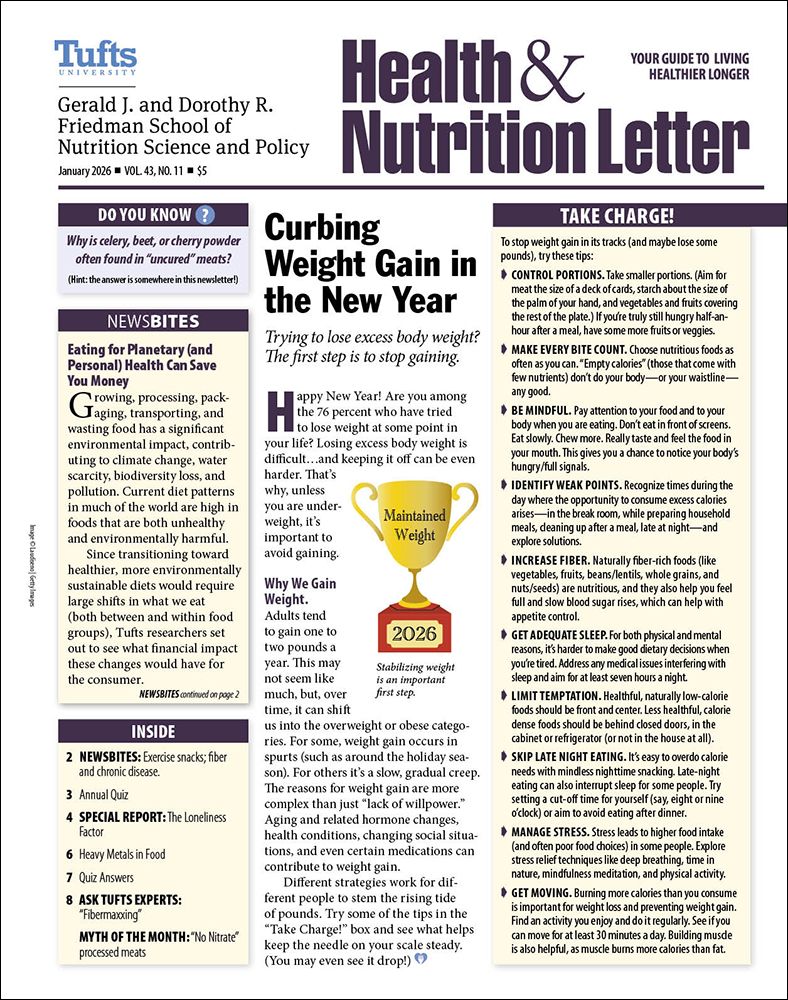
Happy New Year! Are you among the 76 percent who have tried to lose weight at some point in your life? Losing excess body weight is difficult…and keeping it off can be even harder. That’s why, unless you are underweight, it’s important to avoid gaining.
Dietary Patterns High in Fiber Associated with Lower Risk for Chronic Disease
Dietary patterns higher in fiber intake are associated with lower risk for multiple chronic diseases. Researchers analyzed a large collection of data to determine the strength of the relationship between eating fiber-rich foods and health.
What to Know About Heavy Metals in Food
Trace amounts of heavy metals can show up in everyday foods—but with a balanced, varied dietary pattern, there’s little reason for worry.
Q: What is an elimination diet? Can it be used for weight loss?
A: Alicia Romano, MS, RD, CSNC, a registered dietitian/nutritionist with the Frances Stern Nutrition Center who specializes in gastrointestinal diseases and food allergies, answers: “I’m glad you asked this question! Elimination diets are sometimes used as diagnostic or treatment tools. They are not for weight loss.
Less than 7% of the U.S. adult population has good cardiometabolic health, a devastating health crisis requiring urgent action, according to research led by a team from @TuftsNutrition. https://t.co/fDnypaSwgS
— Tufts University (@TuftsUniversity) July 5, 2022
Less than 7% of the U.S. adult population has good cardiometabolic health, a devastating health crisis requiring urgent action, according to research led by a team from the Friedman School of Nutrition Science and Policy at Tufts University in a pioneering perspective on cardiometabolic health trends and disparities published in the July 12 issue of the Journal of the American College of Cardiology. Their team also included researchers from Tufts Medical Center.
Researchers evaluated Americans across five components of health: levels of blood pressure, blood sugar, blood cholesterol, adiposity (overweight and obesity), and presence or absence of cardiovascular disease (heart attack, stroke, etc.). They found that only 6.8 percent of U.S. adults had optimal levels of all five components as of 2017-2018.
News, Views and Reviews For The Intellectually Curious






 Boomers Daily