The bleeding edge … LookX uses a piece of crumpled paper as a prompt to create buildings in the style of Frank Gehry (left) and Zaha Hadid (right). Composite: Tim Fu
It’s revolutionizing building – but could AI kill off an entire profession? Perhaps not, finds our writer, as he enters a world where Corbusier-style marvels and 500-room hotels are just a click away
Oliver Wainwright – The Guardian (August 7, 2023):A handful of little green blocks flashes up on the screen, filling a building site with a neat grid of uniform cubes. One second they form rows of towers, next they morph into low-rise courtyards, then they flip back into long slender slabs, before cycling through hundreds of other iterations, in a hypnotic high-speed ballet of bristling buildings.
“You don’t even have to do much” … Patrik Schumacher-generated designs for ZHA using Midjourney. Photograph: Zaha Hadid Architects
I watch this while on a Zoom call with Wanyu He, an architect based in Shenzhen, China, and the founder of XKool, an artificial intelligence company determined to revolutionise the architecture industry. She freezes the dancing blocks and zooms in, revealing a layout of hotel rooms that fidget and reorder themselves as the building swells and contracts. Corridors switch sides, furniture dances to and fro. Another click and an invisible world of pipes and wires appears, a matrix of services bending and splicing in mesmerising unison, the location of lighting, plug sockets and switches automatically optimised. One further click and the construction drawings pop up, along with a cost breakdown and components list. The entire plan is ready to be sent to the factory to be built.
The Guardian (June 12, 2023) – The nation’s 10 favourite walks this year were calculated by OS through data collected from its OS maps app between April 2022 and April 2023.
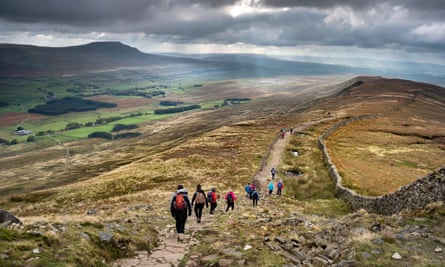
A true hiking adventure, test yourself by clambering the peaks of Ingleborough, Pen-y-ghent and Whernside and down again during a day-long challenge. You’ll walk past aqueducts, lakes, rivers and moorlands and witness stunning North Yorkshire scenery throughout. The views from the summit of Whernside during sunset are a sight to behold.
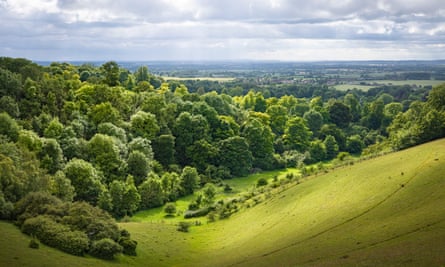
The walk starts by taking you through a conservation area surrounded by woodland and a nature reserve. Roam through fields, along wide country tracks and underneath canopies of ancient trees with most of the walking in the countryside and very little along roads.
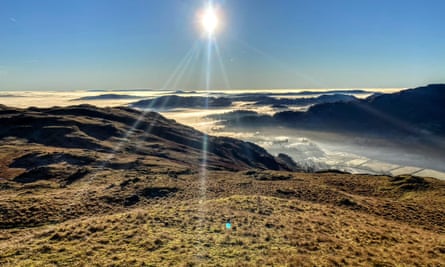
The circular route from Grasmere to Pavey Ark, one of the Langdale Pikes, and back offers the perfect combination of relatively easy terrain underfoot and outstanding views throughout. Highlights include the views from near Blea Rigg up Langdale Valley to Bowfell, and down the Great Langdale valley towards Windermere.
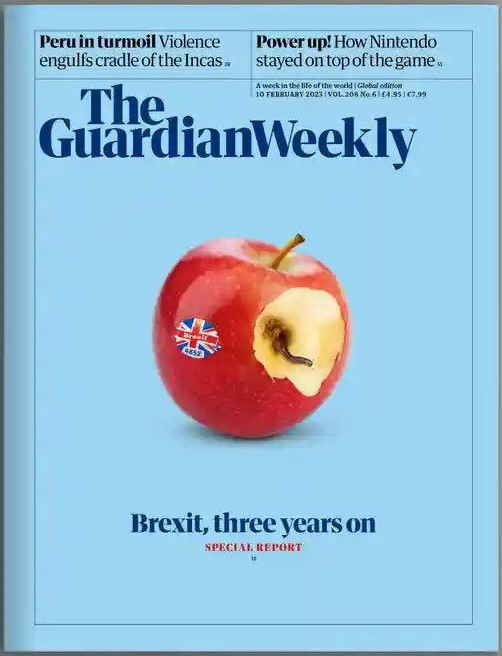
The Guardian Weekly (February 10, 2023) – Three years have passed since Britain officially left the European Union, but the country feels a long way from the “sunlit uplands” once memorably envisioned by Boris Johnson. Indeed, according to several polls released last week, more of the British population than ever are unhappy with the outcomes of Brexit – including, crucially, those who voted for it in the first place.
The Observer’s Michael Savage and Toby Helm consider what’s behind the upsurge in “Bregret” and ask what realistic hopes exist of Britain ever returning to the bloc. Then, opinion writer Nesrine Malik warns that, while many on the left may see validation in the current trends, it’s important to understand many of the UK’s structural problems stem from before the time of the Brexit referendum in 2016.
The Guardian Weekly (February 3, 2023) – In the trenches of eastern Ukraine, much of the conflict with Russia has been frozen for several months now. But, as the northern winter moves on, that could be about to change. The initial invasion has been followed by a period of attrition, and a third phase of the war now appears imminent.
Military activity along parts of the front is increasing and it is assumed that, sooner or later, one side will try to break the deadlock. The question, as Julian Borger writes this week for the Guardian Weekly magazine’s big story, is who will strike first and where?
As Julian explains, it is likely to be “an all-out battle for decisive advantage using combined arms … to overcome fixed positions. Europe has witnessed nothing of its sort since the second world war.”
That’s not to say there aren’t signs of anxiety among Ukraine’s regional allies, though. Germany’s decision last week to send its Leopard tanks to Ukraine may yet prove critical in the coming battle, but as German journalist Jan-Philipp Hein points out, Berlin’s military support for Kyiv remains far from wholehearted.
In the UK, the sacking of Nadhim Zahawias Tory chairman over an undeclared tax dispute while he was the chancellor (and thus in charge of tax collection) kept the pressure on prime minister Rishi Sunak, political editor Pippa Crerar reports; while in Opinion, Nesrine Malik says the episode reveals much about Britain’s networks of power and influence.
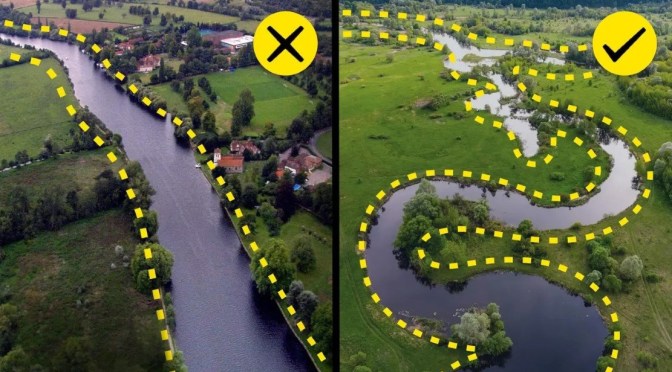
The Guardian – The quintessential image of a river you might recognize from post cards and paintings – nice and straight with a tidy riverbank – is not actually how it is supposed to look.
It’s the result of centuries of industrial and agricultural development. And it’s become a problem, exacerbating the impact of both extreme flooding and extreme drought. Josh Toussaint-Strauss looks into how so many rivers ended up this way, and how river restoration is helping to reestablish biodiversity and combat some of the effects of the climate crisis.
Given the relentlessly grim nature of the news this year, it’s hardly surprising that escapism in the form of cosy crime continues to challenge traditional crime/thriller bestsellers, with Richard Osman’s third Thursday Murder Club mystery, The Bullet That Missed (Viking), riding high in the charts. The last 12 months have seen a bumper crop of excellent books at the cosy end of the spectrum, from Ajay Chowdhury’s second crime novel, The Cook (Harvill Secker), set against the backdrop of an east London curry house, to veteran Canadian author Louise Penny’s 18th Armand Gamache novel,A World of Curiosities(Hodder & Stoughton).
Inventiveness appears to be on the rise, too. Janice Hallett’s second novel, The Twyford Code (Viper), told in transcribed audio files retrieved from an iPhone, succeeds in being fiendishly clever and very moving. Authors such as Gillian McAllister, whose Wrong Place Wrong Time (Michael Joseph) is an ingeniously plotted murder mystery in which time travels backwards, and Gabino Iglesias, whose high-octane southern noir thriller The Devil Takes You Home (Wildfire) has supernatural elements, are also giving the genre a welcome shot in the arm. Others have approached familiar tropes from new angles: the main character in CS Robertson’s The Undiscovered Deaths of Grace McGill (Hodder & Stoughton) is not a cop but a “death cleaner”.
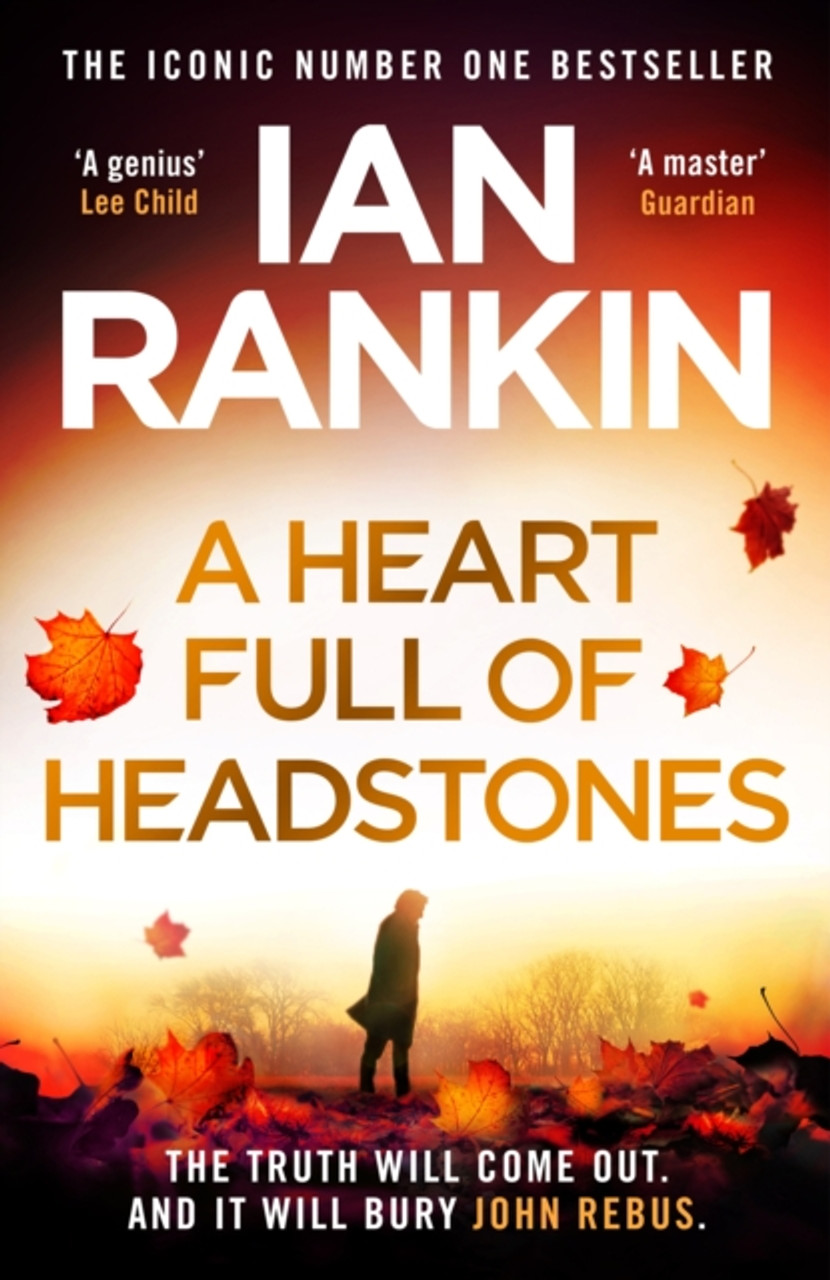
Recent revelations have meant that the British public’s growing distrust of the police is very much a part of the UK’s permacrisis. Ian Rankin, creator of maverick cop John Rebus, commented recently that there are “big questions” for authors who write police procedurals. “In the current state of the world, how can you write about a police officer and make them the goody, when we look around us and see that so often the police are not the goodies?” In his latest Rebus novel, the splendid A Heart Full of Headstones (Orion), an officer who has been charged with domestic violence tries to make a deal by stitching up dodgy colleagues.
The year has been punctuated by the collective groans of crime fiction critics as the results of yet another male celebrity’s lockdown diversion landed on their doormats (presumably the female celebrities were too busy home schooling). The most impressive of these is Frankie Boyle’sMeantime(John Murray): set in Glasgow during the aftermath of the 2014 referendum on Scottish independence, it’s both funny and moving.
There have been plenty of excellent non-celebrity debuts. Standouts include Patrick Worrall’s complex spy thriller The Partisan (Transworld); Conner Habib’s Hawk Mountain (Transworld), a paranoid and unsettling tale of masculinity in crisis; and Wake (Hodder & Stoughton), Australian newcomer Shelley Burr’s sensitive exploration of the aftermath of trauma in a parched outback town. Katie Gutierrez’s More Than You’ll Ever Know (Michael Joseph) is an intelligent and nuanced examination of the complicated relationship between a true-crime writer and her subject, a female bigamist. And The Maid by Nita Prose (HarperCollins) will have you rooting for its titular heroine, neurodivergent Molly, as she finds herself caught up in a web of deception at the fancy Regency Grand Hotel.
There have been strong additions to other long-running and well-loved police series, such as Give Unto Others (Hutchinson Heinemann), the 31st novel to feature Donna Leon’s Commissario Brunetti, and The Murder Book (Little, Brown), 18th outing for Mark Billingham’s Tom Thorne. More recent additions to the police procedural canon include Elly Griffith’s DI Harbinder Kaur, who had her third outing in Bleeding Heart Yard(Quercus), and Alan Parks’s shambolic, mid-70s Glaswegian detective Harry McCoy, who had his fifth in May God Forgive (Canongate). Maror by Lavie Tidhar (Apollo), an epic, multi-generational thriller set in Israel, with an enigmatic cop at its centre, is also well worth the read.
Highlights in historical crime include Blue Water (Viper) by Leonora Nattrass, a shipboard thriller set in 1794, and The Lost Man of Bombay (Hodder & Stoughton), the third in Vaseem Khan’s excellent series set in post-partition India. Alternative history has been well served by the thoroughly chilling Queen High (Quercus), CJ Carey’s sequel to last year’s superb Widowland, which imagines a postwar Britain under Nazi rule.
Although translated crime fiction seems thinner on the ground at the moment, the quality is high: standouts include Olivier Norek’s impressive policier Breaking Point (MacLehose, translated from French by Nick Caister) and Antti Tuomainen’s delightfully funny The Moose Paradox (Orenda, translated from Finnish by David Hackston). All in all, the genre seems in good shape: a broader church, less formulaic and more exciting.
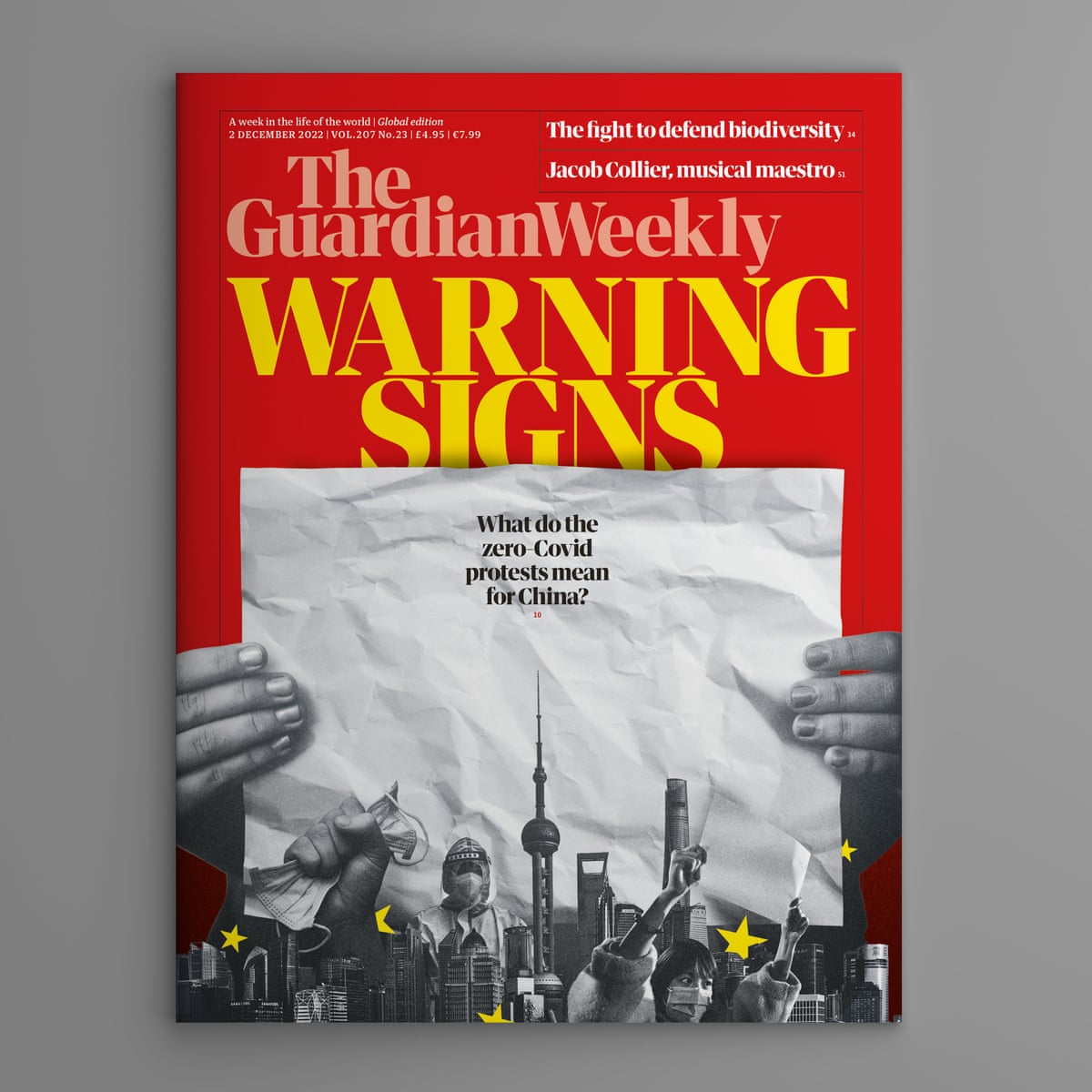
Discontent over China’s zero-Covid suppression policy came to a head last weekend in a series of unprecedented protests across the country. The civil disobedience – remarkable just for the fact it was happening at all in a state where such behaviour is rarely tolerated – seemed to have been smothered by police by the start of the week. Even so it revealed to the world signs of a hitherto unseen fracture in China’s totalitarian political system.
From one Cop to another: hot on the heels of the recent climate conference comes this month’s global summit on biodiversity, which is being held in Montreal. To set the scene, biodiversity reporter Phoebe Weston explains how the damage done to the natural world is a tale of decline spanning thousands of years. Can delegates at Cop15 seize their chance to change the narrative?
With five Grammy awards off the back of four albums spanning everything from folk to jazz and pop, the British multi-instrumentalist Jacob Collier is a global phenomenon. But despite being feted by music royalty including Stormzy, Chris Martin and Herbie Hancock, the 28-year-old has kept a relatively low profile. Global music critic Ammar Kalia takes a trip into Collier’s colourful, polyharmonic world of quarter-tones and non-standardised pitch.
This biography of Britain’s shortest-serving prime minister was overtaken by events, but its lively style and air of authority illuminates her failings
Inside Guardian Weekly – For readers of the Guardian Weekly magazine’s North American edition this week, the cover focuses on the Democrats’ precarious hopes in the midterm elections. Elsewhere, the spotlight shines on the Cop27 climate summit in Egypt.
The US midterm elections next weekcould see a Republican party still dominated by Donald Trump gain control of both the House of Representatives and the Senate. David Smith asks whether an intervention by former president Barack Obama could give a late kickstart to the Democrats’ hopes.
Cautious optimism followed the last Cop conferencein Glasgow, where an international roadmap was agreed to keep the world within 1.5C of global heating. On the eve of this year’s summit, however, a slew of alarming reports have shown that carbon emissions are still rising.
News, Views and Reviews For The Intellectually Curious

















 Boomers Daily