Cornwall. Less Agatha Christie and more Poldark, you’ll stumble upon secluded fishermens’ villages and dilapidated copper mines perched on gustcliffs. The sea is never far. Seagulls’ cries echo wherever you go.
And sheep decide to block your way on some lonesome road outside an unpronouncable town. Of course, there’s fish and chips (too much fish and chips). It’s pure bliss.
Giovannoni describes it as “immersive omnidirectional” sound with richer bass. “It feels like you’re inside the song,” says one wide-eyed subject in Inmergo’s user testing video.
Water rather than air carries sound in designer Rocco Giovannoni’s Inmergo headphones, which promise rich audio even for people who are hard of hearing.
A 2019 graduate of the Royal College of Art’s MA in Design Products, Giovannonidesigned the soft silicone headphones to improve upon current bone-conduction audio technology.
Now, researchers have developed a fast-acting skin patch that efficiently delivers medication to attack melanoma cells. The device, tested in mice and human skin samples, is an advance toward developing a vaccine to treat melanoma and has widespread applications for other vaccines.
Nearly 100,000 new cases of melanoma are diagnosed annually, and 20 Americans die every day from it. Now, researchers have developed a skin patch that efficiently delivers medication within one minute to attack melanoma cells. The device, tested in mice and human skin samples, also could be adapted to deliver other vaccines.
“Our patch has a unique chemical coating and mode of action that allows it to be applied and removed from the skin in just a minute while still delivering a therapeutic dose of drugs,” says Yanpu He, a graduate student who helped develop the device. “Our patches elicit a robust antibody response in living mice and show promise in eliciting a strong immune response in human skin.”
The SC-1 is designed to transform what was a mere means of mobility into an all-new opportunity for entertainment. Sony and Yamaha Motor will deploy it to provide fun new diversions at venues such as golf courses, amusement parks, and commercial facilities.
Like its prototypes, the SC-1 features image sensors capable of vision beyond that of human capacity on all sides of the vehicle.
Tokyo, Japan— Sony Corporation announced today the joint development with Yamaha Motor Co., Ltd., of the SC-1 Sociable Cart, a vehicle that delivers a new mobility experience. Sony and Yamaha Motor plan to launch services using this model in Japan in fiscal 2019. The vehicle was developed solely for the purpose of providing a new mobility experience, and it will not be made available for sale.
A single KFC franchise — the one near the SunTrust Park baseball stadium in Atlanta — will, starting Tuesday, offer meatless chicken from the plant-based food company Beyond Meat. The deal makes KFC the first fast-food restaurant to serve plant-based chicken.
It’s a huge step forward for both companies — and for chickens, nearly 50 billion of which are raised in factory farms in the US annually.
“KFC is an iconic part of American culture and a brand that I, like so many consumers, grew up with. To be able to bring Beyond Fried Chicken, in all of its KFC-inspired deliciousness to market, speaks to our collective ability to meet the consumer where they are and accompany them on their journey. My only regret is not being able to see the legendary Colonel himself enjoy this important moment,” said Ethan Brown, founder and CEO of Beyond Meat, in the press release announcing the deal.
From an InterestingEngineering.com online article:
Martin Cooper of Motorola made the first publicized handheld mobile phone call on a prototype DynaTAC model on April 3, 1973. This is a reenactment in 2007.
With encouragement from his boss, Motorola’s chief of portable communication products John Mitchell, Cooper and engineers at Motorola produced the working prototype for the first cell phone. On April 3, 1973, before stepping into a news conference in Manhattan to demonstrate the new device that would go on to revolutionize communications, Cooper placed the first cell phone call in history.
While cell phones are a fairly modern invention–if you consider 1973 ‘modern’–the idea of a telephone that could travel with you is as old as the telephone itself. For decades though, the best anyone could offer were bulky two-way radio devices that were essentially walkie-talkies that filled the trunk of your car, but a couple of key engineering developments and a classic American business rivalry would help lay the foundation for the device that revolutionized the way people communicate.
A startup called Bumblebee Spaces is trying to make micro apartments more appealing by adding movable furniture. Beds, wardrobe and drawers are stored up on the ceiling, to be lowered quietly on white suspension cords at the touch of a tablet, like a scene change on a theatre stage. In theory this frees up floor space. Once he’s raised his bed in the morning, Dabdoub sometimes does yoga and meditation. In the evening, he can sit on the couch and project Netflix onto a blank wall, which would otherwise be occupied by the bed’s headboard.
Bumblebee is putting a new twist on the Murphy bed, a mattress that folds down from the wall. That bed was named after another inventor in San Francisco, William Lawrence Murphy, who was living in a tiny one-room apartment in the early 1900s. According to lore, he was trying to woo an opera singer who refused to come to his bedroom. So he devised a way to fold up his mattress into the wall and convert the bedroom into a lounge. Lust fuelled innovation.
From an MIT Technology Review article by Joseph F. Coughlin:
Technologists, particularly those who make consumer products, will have a strong influence over how we’ll live tomorrow. By treating older adults not as an ancillary market but as a core constituency, the tech sector can do much of the work required to redefine old age. But tech workplaces also skew infamously young. Asking young designers to merely step into the shoes of older consumers (and we at the MIT AgeLab have literally developed a physiological aging simulation suit for that purpose) is a good start, but it is not enough to give them true insight into the desires of older consumers. Luckily there’s a simpler route: hire older workers.
Of all the wrenching changes humanity knows it will face in the next few decades—climate change, the rise of AI, the gene-editing revolution—none is nearly as predictable in its effects as global aging. Life expectancy in industrialized economies has gained more than 30 years since 1900, and for the first time in human history there are now more people over 65 than under 5—all thanks to a combination of increasing longevity, diminished fertility, and an aging Baby Boom cohort. We’ve watched these trends develop for generations; demographers can chart them decades in advance.
Here’s how Airport’s service works: A passenger checks in online. The company collects the bags from their doorstep after confirming the person’s identity. The driver puts the bag in a coded, tamperproof, and trackable security bag, the company said. The driver delivers the luggage to the airport, where they check in the bag.
AirPortr has handled 113,251 bag shipments. Two years ago, the startup landed British Airways as a customer. It also works with Virgin Atlantic, American Airlines, and other carriers. This year, EasyJet began offering the AirPortr service at London’s Luton airport.
“Business is seeing really good year-over-year growth,” said founder and CEO Randel Darby. “This year we expect airline revenues to double. We plan to scale the product to become a network proposition with our airline partners.”
AirPortr has 15 workers at its London headquarters. It has about 30 others handling operations, customer support, and logistics.
The difference is simple. There is nothing else like Living Vehicle. Every inch is designed and built without compromise. Our mission is to create a Net-Zero vehicle capable of supporting the best possible human life. No energy in, no waste out. We are guided by this vision and grow closer to this goal every single day.
Going far beyond industry standards, 2020 introduces a Living Vehicle with unprecedented capabilities. We’ve partnered with the most advanced and innovative products from the military, disaster relief and marine sectors and now have several patents pending. From being able to power the AC with solar to technologies that create life sustaining resources, the 2020 model is a true functional work of art.
Guided by the design virtues of quality, functionality and beauty, our goal is to create a travel and living experience that is uniquely yours, in the most advanced, luxurious and capable vehicle on earth.





 Giovannoni describes it as “immersive omnidirectional” sound with richer bass. “It feels like you’re inside the song,” says one wide-eyed subject in
 Now, researchers have developed a fast-acting skin patch that efficiently delivers medication to attack melanoma cells. The device, tested in mice and human skin samples, is an advance toward developing a vaccine to treat melanoma and has widespread applications for other vaccines.
 The SC-1 is designed to transform what was a mere means of mobility into an all-new opportunity for entertainment. Sony and Yamaha Motor will deploy it to provide fun new diversions at venues such as golf courses, amusement parks, and commercial facilities.
 A single KFC franchise — the one near the SunTrust Park baseball stadium in Atlanta — will, starting Tuesday, offer meatless chicken from the plant-based food company Beyond Meat. The deal makes KFC the first fast-food restaurant to serve plant-based chicken.


 A startup called Bumblebee Spaces is trying to make micro apartments more appealing by adding movable furniture. Beds, wardrobe and drawers are stored up on the ceiling, to be lowered quietly on white suspension cords at the touch of a tablet, like a scene change on a theatre stage. In theory this frees up floor space. Once he’s raised his bed in the morning, Dabdoub sometimes does yoga and meditation. In the evening, he can sit on the couch and project Netflix onto a blank wall, which would otherwise be occupied by the bed’s headboard.
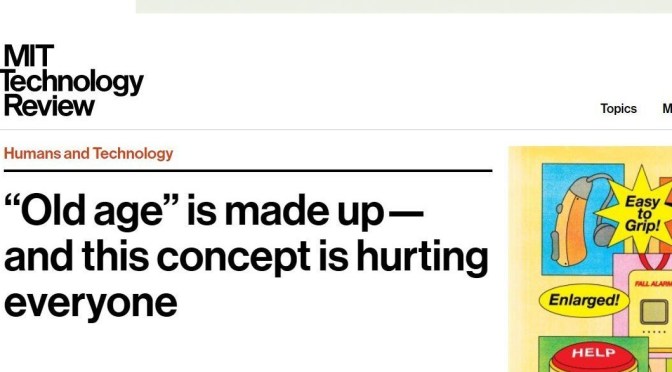
 Technologists, particularly those who make consumer products, will have a strong influence over how we’ll live tomorrow. By treating older adults not as an ancillary market but as a core constituency, the tech sector can do much of the work required to redefine old age. But tech workplaces also skew infamously young. Asking young designers to merely step into the shoes of older consumers (and we at the MIT AgeLab have literally developed a physiological aging simulation suit for that purpose) is a good start, but it is not enough to give them true insight into the desires of older consumers. Luckily there’s a simpler route: hire older workers.
 Here’s how Airport’s service works: A passenger checks in online. The company collects the bags from their doorstep after confirming the person’s identity. The driver puts the bag in a coded, tamperproof, and trackable security bag, the company said. The driver delivers the luggage to the airport, where they check in the bag.
 The difference is simple. There is nothing else like Living Vehicle. Every inch is designed and built without compromise. Our mission is to create a Net-Zero vehicle capable of supporting the best possible human life. No energy in, no waste out. We are guided by this vision and grow closer to this goal every single day.
 Going far beyond industry standards, 2020 introduces a Living Vehicle with unprecedented capabilities. We’ve partnered with the most advanced and innovative products from the military, disaster relief and marine sectors and now have several patents pending. From being able to power the AC with solar to technologies that create life sustaining resources, the 2020 model is a true functional work of art.
 Boomers Daily