
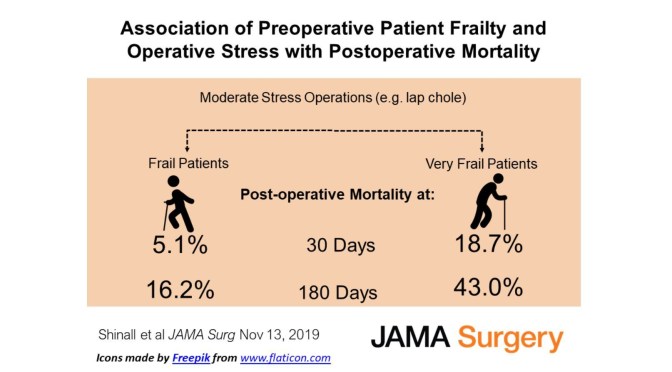
From a New York Times online article:
 “Our data indicate that there are no low-risk procedures among patients who are frail,” Dr. Hall and his co-authors concluded in their study.
Dr. Hall’s research, recently published in JAMA Surgery, has found that frail, older adults are more likely than other patients to die after even supposedly minor procedures — and even when the surgery goes well, without complications.
After operations, frail patients find it harder than others to regain strength and mobility, and to return to independent lives. Doctors and researchers assess frailty in a variety of ways. Geriatricians often measure things like gait and grip strength, and look for unintended weight loss and exhaustion.
To read more: https://www.nytimes.com/2019/12/13/health/frail-elderly-surgery.html

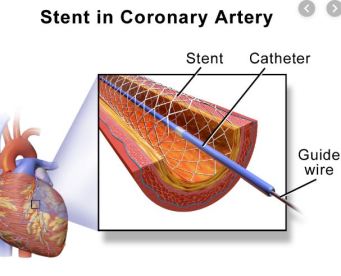 “For patients with severe but stable heart disease who don’t want to undergo these invasive procedures, these results are very reassuring,” said
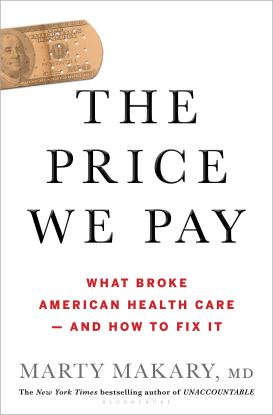 Dr. Makary examines the practice of performing unnecessary vascular procedures in a chapter of his new book, “The Price We Pay,” published Sept. 10. In it, he describes what seems to be the “predatory” practice of some doctors seeking out patients at health screenings in churches.
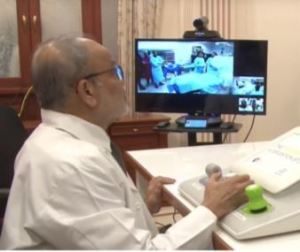 “Remote procedures have the potential to transform how we deliver care when treating the most time-sensitive illnesses such as heart attack and stroke. The success of this study paves the way for large-scale, long-distance telerobotic platforms across the globe, and its publication in Lancet’s EClinicalMedicine demonstrates the transformative nature of telerobotics,”



 Orthopedic surgeon Dr. Daniel Thuillier looks at the options to treat severe ankle pain from nonsteroidal anti-inflammatory drugs to surgery including ankle replacement and ankle fusion.
 Boomers Daily