

Preview: New Scientist Magazine – Oct 15, 2022

Take an animated look inside the neuron, and learn how scientists are addressing brain disease. With approximately 86 billion neurons in the brain, humans contain the most complex communications network imaginable. To address diseases of brain development and degeneration, neuroscientists are investigating how and why this network breaks down, and what can be done to repair it.
One area of study is dendrites, which are the tree-like structures of neurons, that receive electrical impulses. Researchers are carefully mapping out brain circuits and uncovering how connectivity changes can result in defects of the visual system or behavioral problems. The core section of the neuron is the cell body. Genetic engineering tools are revealing how mutations impact brain development and contribute to autism spectrum disorder or rare, inherited forms of neurological disease.
The transmission of nerve impulses occurs along the axon, which is insulated, much like an electrical wire, by a fatty layer called the myelin sheath. Scientists have invented a medicine to stop the immune system from mistakenly attacking this layer, which occurs during multiple sclerosis. Other molecules currently in development instruct the body to regenerate the sheath and repair damage. The axon also transports valuable cellular cargo, such as neurotransmitters, along tracks from one end of the neuron to the other.
Researchers are testing drug candidates for their ability to remove molecular traffic jams when this transport system fails, as often occurs in Parkinson’s and Alzheimer’s disease. The axon terminals make connections called synapses with other cells, using neurotransmitters as signals. Some scientists are evaluating how finely tuning the receptors for these chemicals could ease depression and anxiety.
Others are finding ways to promote the regrowth of lost synapses, which could halt neurodegeneration. From genetics to behavior, neuroscience is accelerating new interventions for the most challenging disorders of the nervous system.
Learn more: https://www.scripps.edu/
Trio helped launch new quantum revolution
By sequencing ancient hominins’ DNA, Pääbo explored “what makes us uniquely human”
Observers study debris from DART’s crash into a space rock and wait to see how much the asteroid was deflected

After NASA’s DART asteroid-deflection experiment, a fully funded telescope for detecting space rocks is an equally pressing priority.
Although the marine ‘carbon sink’ is bigger than expected, it is still inadequate to keep global warming at bay.
The rise in electric-vehicle ownership could overload the electric grid unless charging becomes a daytime activity.
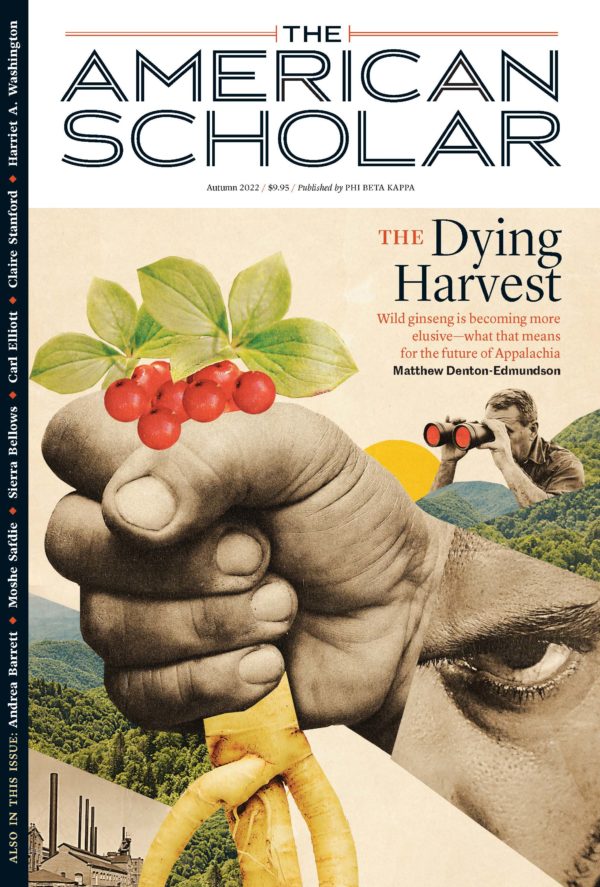
Harvesting wild ginseng has sustained Appalachian communities for generations—so what will happen when there are no more plants to be found?
A medication prescribed for Parkinson’s and other diseases can transform a patient’s personality, unleashing heroic bouts of creativity or a torrent of shocking, even criminal behavior
Covid-19 has contributed to a crisis in America’s classrooms, but the problems predate the pandemic and are likely to outlast it
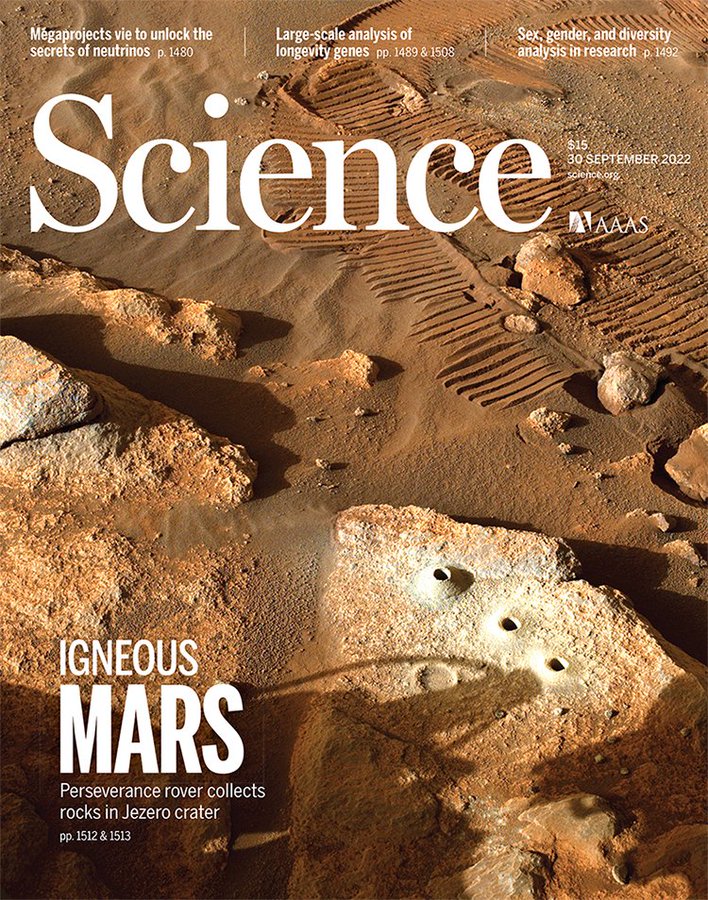
Genetically diverse mice and cross-species comparison uncover links to longevity
Emerging subvariants are more immune evasive than ever
After doubts grew, blockbuster Nature paper is withdrawn over objections of study team
Tenure delays and pandemic impact statements could backfire, some fear
Leader of Russia’s largest chipmaker elected president after incumbent’s sudden withdrawal
Judges reject claims that defendants defrauded agencies by not disclosing China ties

Millions of people struggle with insomnia, but the sleep disorder is now a solvable problem – and the most effective therapy might involve your smartphone rather than sleeping pills

Scientists identify a neuronal pathway in rats that drives ‘social grooming’, a behaviour that helps to hold animal communities together.
As high-level winds shift, heat and heavy rain can persist.
Crystalline device could be used to visualize voltages with high resolution, speed and stability.
The trees that provide the raw material for chocolate have a higher yield when the groves are accessible to certain species.
A family tree of sea cows suggests that the dugong traversed an ocean to reach its present habitat.
Ground-based robots have potential for helping in the construction industry, but they are limited by their height. In this week’s issue, Mirko Kovac, Robert Stuart-Smith and their colleagues introduce highly manoeuvrable aerial robots that can perform additive 3D construction tasks. Inspired by natural builders such as wasps and bees, the researchers created BuilDrones (as shown on the cover) that can work in an autonomous team to perform 3D printing tasks using foam- or cement-based materials. They also created ScanDrones to assess the quality of the structures
being built. The team hopes that this approach of ‘aerial additive manufacturing’ could help to build structures in difficult to access areas.
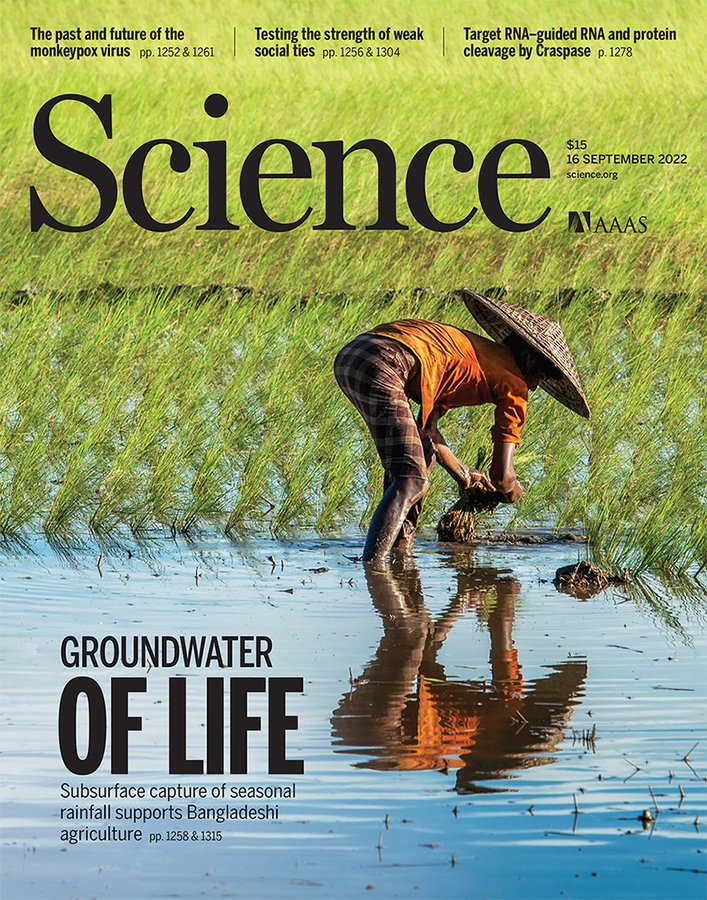
Seasonal monsoon rainfall replenishes groundwater reserves in the Bengal basin of Bangladesh thanks to the region’s seemingly counterintuitive intensive dry-season irrigation practices, a new Science study finds.
Supercomputing and accelerator centers struggle with surging gas and electricity prices
Initiative to explore whether coronavirus lingers in patients
Decades of complaints have gone unheeded by NSF and contractors managing operations, employees say
As New York state declares an emergency, experts are far more worried about a resurgence in low-income countries
Read that and more in this week’s issue: https://fcld.ly/dt1xr77
Deaths and sufferings are not a failure of technology or knowledge, but a failure of will.
But carbon dioxide emissions resulting from the global reservoir-building spree in the 1960s and 1970s are falling.
A fossilized pile of small bones is probably a meal that an animal heaved up 150 million years ago.
Surrounding an ion of curium with radiation-resistant clusters of other ions allows scientists to study the scarce substance.
Some female white-necked jacobins nab good feeding spots by adopting the flashy plumage of their bigger, brasher male counterparts.
A high-sugar diet unbalances the microbiome, so the body makes fewer of the gut immune cells that help to prevent metabolic disorders.


 Boomers Daily