Tag Archives: Raphael

Reviews: ‘The Week In Art’

The Week In Art Podcast (December 6, 2024): The Art Newspaper’s editor, Americas, Ben Sutton, and our art market editor, Kabir Jhala, are in Florida and report on the sales and the mood on the first VIP day at Art Basel Miami Beach.

On 8 December, the cathedral of Notre-Dame in Paris will reopen, more than five years after the fire that partly destroyed it. Ben Luke talks to one of the architects responsible for its rise from the ashes, Pascal Prunet. And this episode’s Work of the Week is The Madonna and Child with Saints (1526-27) by Parmigianino, better known as The Vision of Saint Jerome.

The painting this week returned to public display for the first time in 10 years, in a new exhibition at the National Gallery in London, following conservation, and we talk to Maria Alambritis, the show’s co-curator.

Art Basel Miami Beach, until Sunday, 8 December.

Notre-Dame reopens on Sunday, 8 December.

Parmigianino: The Vision of Saint Jerome, National Gallery, London, until 9 March 2025
Reviews: ‘The Week In Art’

The Week In Art Podcast (November 15, 2024): UK museums are at a moment of transformation with a new generation of directors taking the helm at several of the major national institutions in London. So for this landmark 300th episode, we felt it was a good moment to look at the challenges and opportunities for museums now and in the future.

We invited Gus Casely-Hayford of V&A East, Nicholas Cullinan of the British Museum and Karin Hindsbo of Tate Modern to join our host Ben Luke for a wide-ranging discussion.

Reviews: ‘The Week In Art’

The Week In Art Podcast (November 8, 2024): This week: two exhibitions in London are showing remarkable works made during the Renaissance. At the King’s Gallery, the museum that is part of Buckingham Palace, Drawing the Italian Renaissance offers a thematic journey through 160 works on paper made across Italy between 1450 and 1600.

Ben Luke talks to Martin Clayton, Head of Prints and Drawings at the Royal Collection Trust, about the show. At the Royal Academy, meanwhile, the timescale is much tighter: a single year, 1504 to be precise, when Michelangelo, Leonardo and Raphael were all in Florence. We talk to Julien Domercq, a curator at the Academy, about this remarkable crucible of creativity.

And this episode’s Work of the Week is a magnum opus of Renaissance textiles: the Battle of Pavia Tapestries, made in Brussels to designs by Bernard van Orley, and currently on view in an exhibition at the de Young Museum in San Francisco. Thomas Campbell, the director of Fine Arts Museums of San Francisco, talks to The Art Newspaper’s associate digital editor, Alexander Morrison, about the series.

Drawing the Italian Renaissance, King’s Gallery, Buckingham Palace, London, until 9 March 2025

Michelangelo, Leonardo, Raphael: Florence, c.1504, Royal Academy of Arts, London, 9 November-16 February 2025

Art and War in the Renaissance: The Battle of Pavia Tapestries, de Young Museum, San Francisco, US, until 12 January; Museum of Fine Arts, Houston, Texas, spring 2025

Subscription offer: get three months for just £1/$1/€1. Choose between our print and digital or digital-only subscriptions. Visit theartnewspaper.com to find out more

Reviews: The Week In Art

This week: Quiet as It’s Kept, the 80th edition of the Whitney Biennial, is now open to the public at the Whitney Museum of American Art in New York. 

The Art Newspaper’s associate editor Tom Seymour, Americas editor Ben Sutton and staff reporter Gabriella Angeletti gather to discuss it. As the latest incarnation of the show Afro-Atlantic Histories is unveiled at the National Gallery of Art in Washington DC, we speak to its curator, Kanitra Fletcher, about the gallery’s approach to this complex subject. And the National Gallery in London’s long-planned Raphael blockbuster, postponed due to the pandemic, is finally open, so for this episode’s Work of the Week, we speak to Tom Henry, one of the curators of the show, about the Self-Portrait with Giulio Romano (1519-20), one of the Renaissance master’s final paintings.

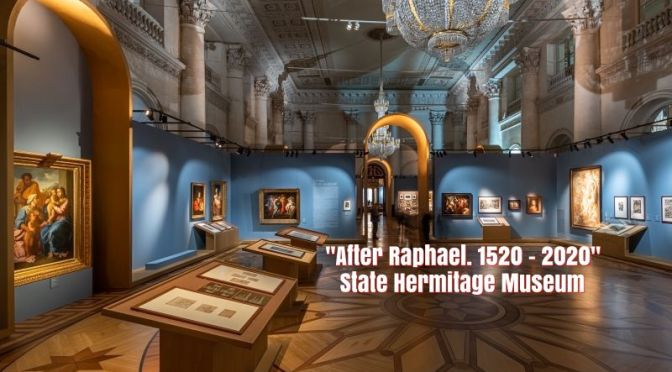
Art: ‘After Raphael. 1520 -2020’ – State Hermitage Museum, Russia (Video)

A film about the Exhibition “After Raphael. 1520 – 2020” at the State Hermitage Museum. Director of the film – Manas Sirakanyan. The film was made with the support of the U.S. Ambassadors Fund for Cultural Preservation, U.S. Embassy Moscow and the Hermitage Museum Foundation (USA)

Raphael is the most influential artist of the Modern Era. Over the course of five centuries, exponents of Mannerism and Academicism, Caravaggisti and masters of the Baroque, Romantics and Modernists have invariably compared their own work with Raphael’s legacy. What is the cause of such fame? What did his name represent in this or that historical period, and what does it represent today? What connects the artist’s followers in different centuries? The exhibition in the Hermitage is an attempt to answer those questions and to look at the art of the past 500 years through the lens of Raphael’s influence.

The large-scale display includes more than 300 exhibits – paintings, graphic art, sculpture and applied art from the Hermitage’s own stocks and twelve other collections in Russia and Western Europe. They include both famous masterpieces and previously unknown works. Dozens of paintings and pieces of graphic art are leaving the museum’s storerooms and being presented to the public for the first time, while a whole number of the exhibits are going on show after painstaking restoration in the Hermitage’s workshops.

The display opens with works by the master himself: a painting and drawings from European collections. Without claiming to be a full representation of the artist’s oeuvre, they serve to set the tone, as it were, and after viewers have “tuned themselves in” it will be easier for them to identify echoes of Raphaelesque harmony in the works from later centuries. The choice of graphic art for this purpose reveals another dimension to the main metaphor: it is specifically the beauty of the clear, precise line, so evident in the drawings made by the master’s own hand, that lies at the foundation of the aesthetics of Raphael himself and many of his followers.

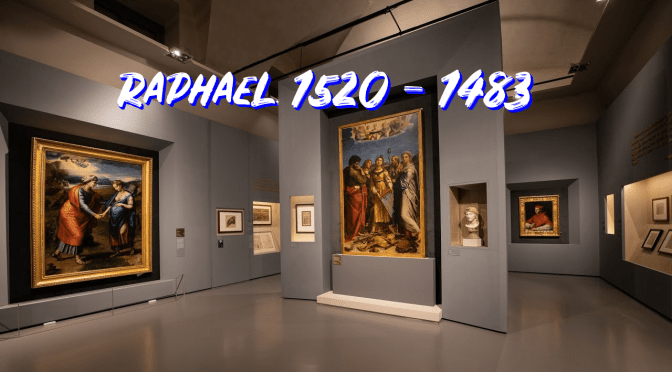
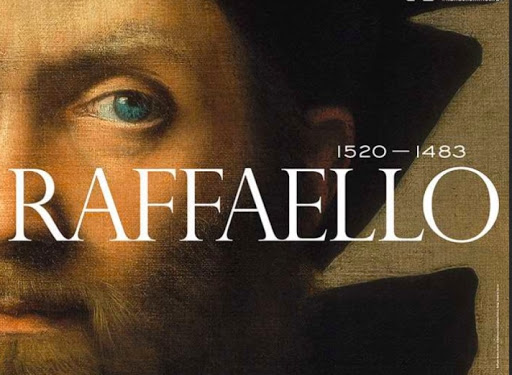
World’s Top Exhibitions: “Raphael 1520-1483”, Rome’s ‘Scuderie del Quirinale’

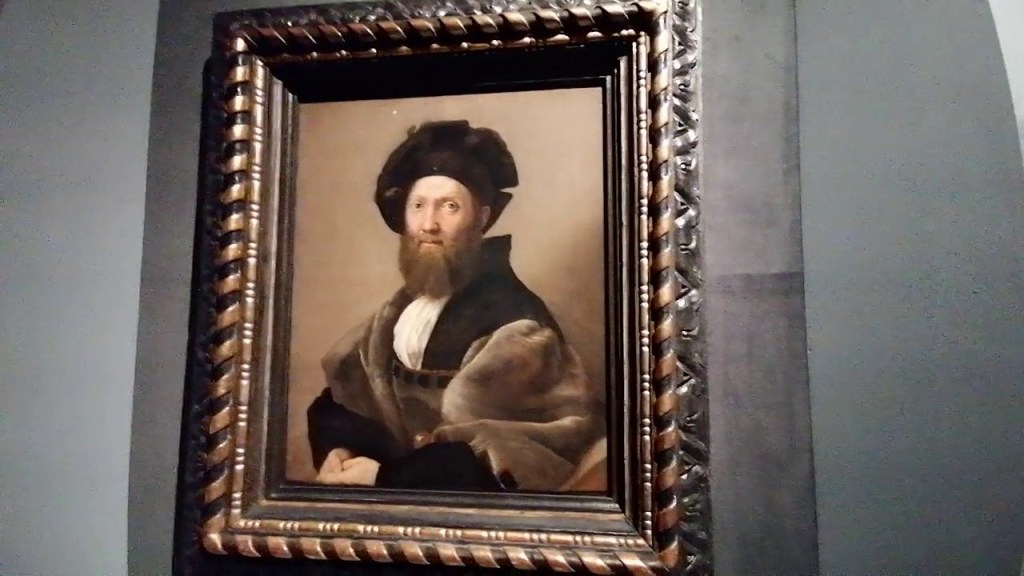
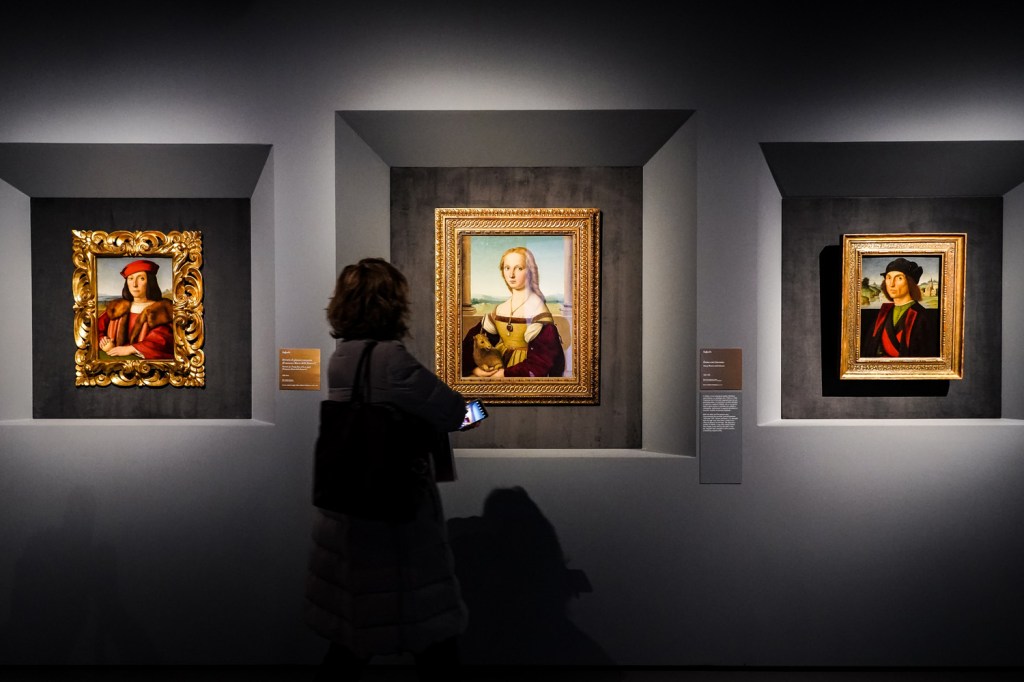
Five hundred years after the death of Raphael Sanzio, Italy pays homage to the supreme Renaissance artist with a great exhibition at the Scuderie del Quirinale. Raphael died in Rome on 6 April 1520 and it is in Rome that he owes his universal fame. It is therefore particularly significant that this national tribute should take place in the city where the artist from Urbino fully expressed his formidable talent, and where his life suddenly ended at only 37 years of age. 

More than one hundred masterpieces that are autographed or, in any event, are attributable to Raphaelesque ideas shall be gathered together at the Scuderie for the first time, including paintings, cartoons, drawings, tapestries and architectural projects.They will be joined by an equal number of works for comparison and context (sculptures and other ancient artefacts, Renaissance sculptures, codices, documents and precious masterpieces of applied art) amounting to a total of 204 works on display, including 120 paintings and drawings by Raphael himself.

Read more

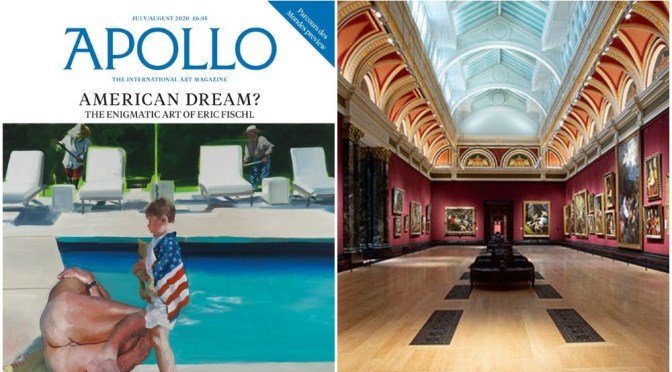
Arts & Literature: “Apollo Magazine – July 2020”

Apollo Magazine logo

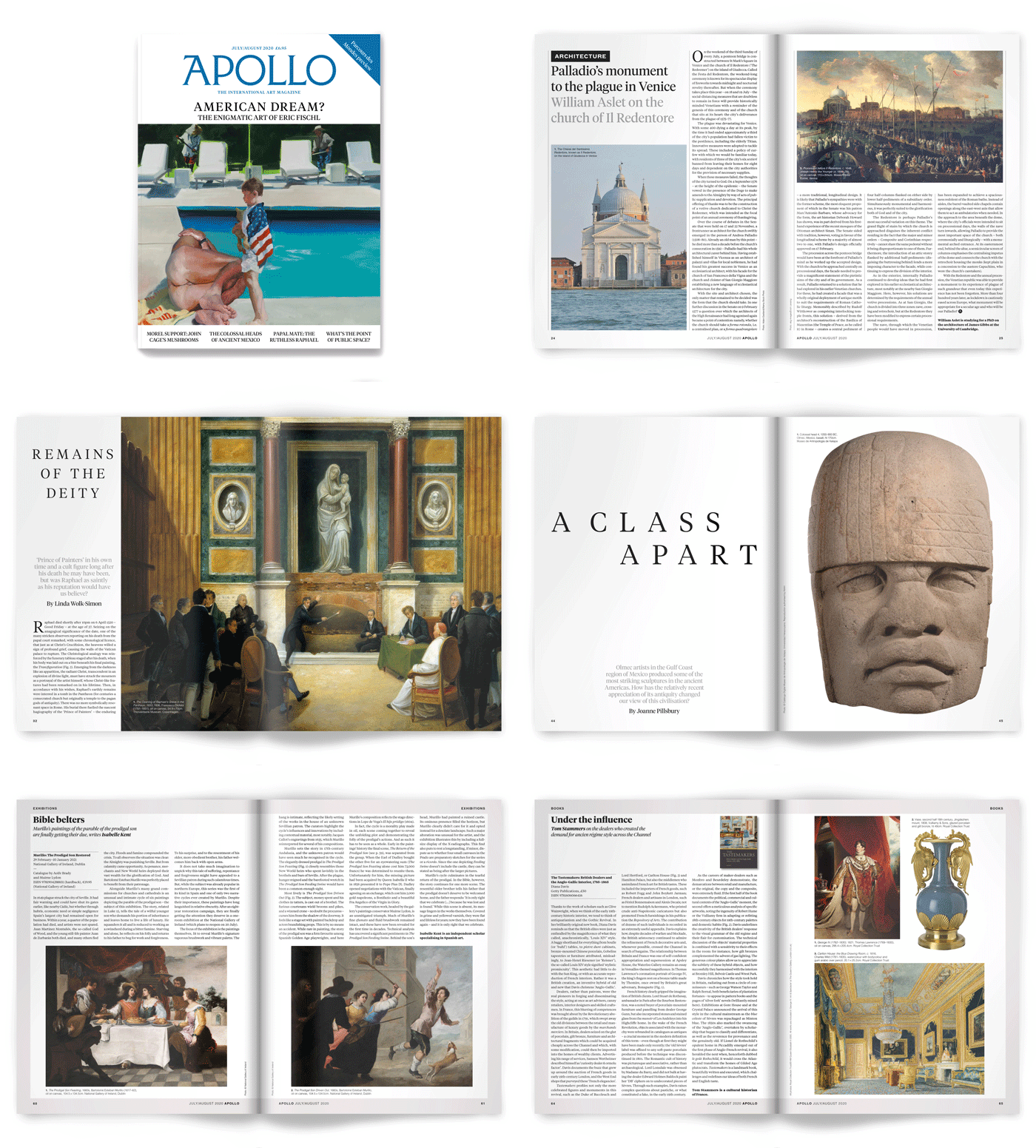
INSIDE THE ISSUE
FEATURES | Eric Fischl interviewed by Thomas MarksLinda Wolk-Simon on the life and legacy of Raphael; Joanne Pillsbury on the art of the Olmecs; Samuel Reilly on private restitution of colonial-era artefacts; Christopher Turner on shopfronts and gallery facadesJosie Thaddeus-Johns on John Cage’s mushrooms
REVIEWS | Isabelle Kent on Murillo at the National Gallery of Ireland; Tom Stammers on the British fashion for French interiors; James Lingwood on Stephen Shore’s photographs; Robert O’Byrne on The Buildings of Ireland
MARKET | Melanie Gerlis on art businesses after lockdown; a preview of Parcours des Mondes; and the latest art market columns from Susan Moore and Emma Crichton-Miller
PLUS | Rowan Moore and Tamsin Dillon on the future of public spacesSusan Moore on the mysterious ‘Barbus Müller’ sculptures; William Aslet on Palladio’s monument to the plague in Venice; Robert O’Byrne on Apollo and the Second World War