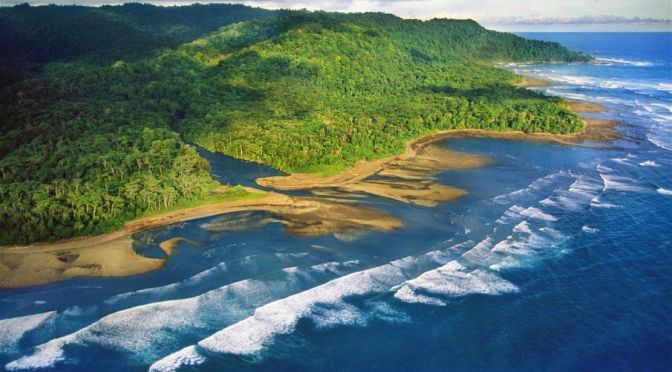
Corcovado National Park in Costa Rica is the backpacking experience of a lifetime. It encompasses the only remaining old growth wet forests on the Pacific coast of Central America, and 13 major ecosystems including lowland rain forest, highland cloud forest, jolillo palm forest, and mangrove swamps, as well as coastal marine and beach habitats.
There is a good chance of spotting some of Costa Rica’s shyest and most endangered inhabitants here; Baird’s Tapirs, Jaguars, Scarlet Macaws, Harpy Eagles, Red-backed squirrel monkeys and White-lipped Peccaries. It is wet, remote and rugged, but the trails are relatively good, and the camping areas near the ranger stations are grassy and well drained.
Costa Rica is a rugged, rainforested Central American country with coastlines on the Caribbean and Pacific. Though its capital, San Jose, is home to cultural institutions like the Pre-Columbian Gold Museum, Costa Rica is known for its beaches, volcanoes, and biodiversity. Roughly a quarter of its area is made up of protected jungle, teeming with wildlife including spider monkeys and quetzal birds.
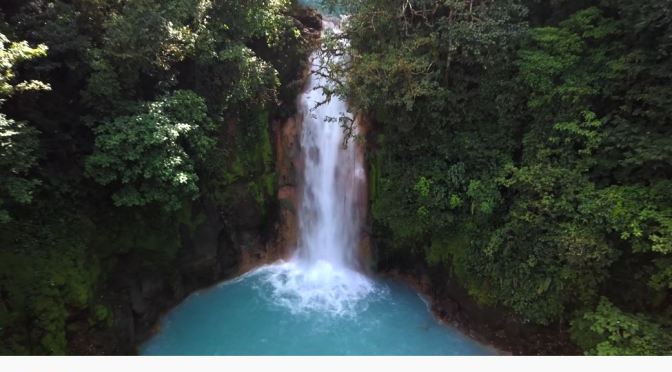
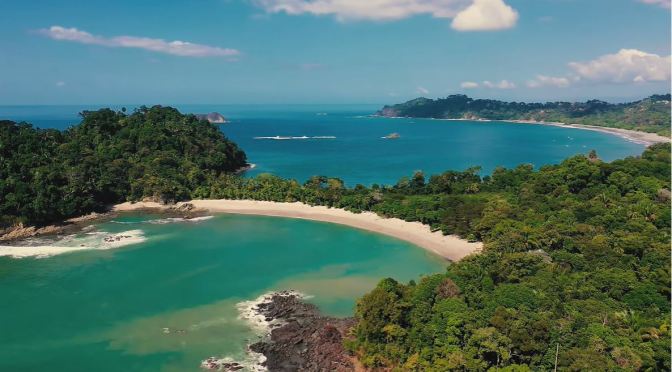
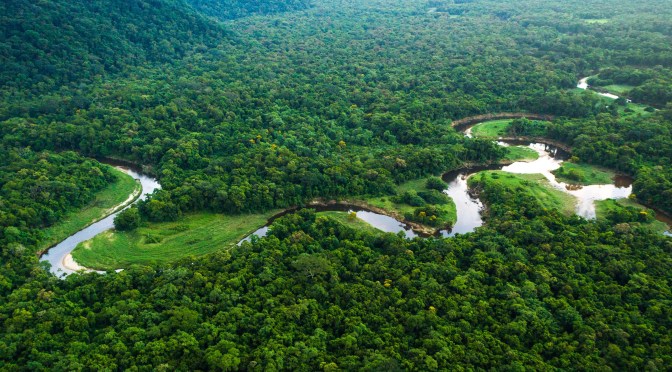
Video timeline: 0:00 intro of costa rica 0:03 Yellow snake curled 0:06 Aerial view of irazu volcano 0:08 Snake python 0:11 Cinematic view of oak tree 0:16 Close up view of iguana 0:22 skydiving in Costa Rica 0:26 nauyaca waterfalls 0:31 galloping horse 0:39 Aerial view of pavon bay 0:46 waterfall rio celeste 0:50 Close up iguana 0:53 Drone view of palm oil 0:58 tree frog 1:01 Trachycephalus 1:04 Montezuma Beach 1:09 Oka tree 1:13 naped snake 1:18 Blue Yellow Macaw 1:23 Green Python 1:28 Rio celeste waterfall 1:35 meanders river 1:45 Bilobatum 1:49 punta banco Beach 1:57 irazu volcano 2:05 Close up view of butterfly 2:08 Corcovado 2:13 Playa Zancudo 2:21 manuel antonio 2:32 Green iguana 2:46 tortoiseshell 2:59 Costa Rica rainforest 3:05 quetzal Bird 3:11 Sloth 3:16 Irazu volcano 3:22 paragliding 3:29 skydiving 3:34 la paz waterfall 3:43 whales 3:50 Coto river Aerial view 4:02 Aerial costarica 4:10 Beautiful parrots 4:18 Forest Frog 4:25 Rain forest 4:29 iguana 4:35 Wild lizard 4:40 flamingos 4:47 capucinus 4:55 Rain forest 5:02 capuchin 5:09 Violetear
Four bike riders travel to the verdant lands of Costa Rica. With 90% humidity and an average daily temperature of 31º, the conditions posed a challenge but it was the terrain that proved the biggest test. From unexpected river crossings and unrelenting rainstorms to forging new friendships and fortuitous cafe finds, the Costa Rican climate and its contagious ‘Pura Vida’ perspective set up one very special trip.
Costa Rica is a rugged, rainforested Central American country with coastlines on the Caribbean and Pacific. Though its capital, San Jose, is home to cultural institutions like the Pre-Columbian Gold Museum, Costa Rica is known for its beaches, volcanoes, and biodiversity. Roughly a quarter of its area is made up of protected jungle, teeming with wildlife including spider monkeys and quetzal birds.
Gabon’s soul lies hidden beneath a thick green mantle, the source of most of the Gabonese traditions, medicines, spirituality, and resources. A precious heritage that a small number of men and women protect.
We meet Kombo, a Babongo hunter, and Juste, who is in touch with the forest spirits. In human cultures in general, and perhaps particularly in Africa, the landscape is the first shrine of tradition.
From the sand dunes of Mauritania to the currents of River Senegal, to the Lions of the Beninese savannah to the spirits of the forests of Gabon, this series explores the origin, the nature and the survival of deep links between several populations in West Africa and their habitat.
For the first time a virgin birth has taken place in a mammal – a female mouse has given birth without any input from a male. The team explains how CRISPR gene editing has been used to create embryos from unfertilised eggs.
Taking a much-needed trip off the planet, the team discusses two stories from Mars, one from NASA’s Perseverance rover and another from China’s Zhurong rover. We also present an audio space-quiz you can take part in! Thanks to NASA/JPL-Caltech/LANL/CNES/CNRS/ISAE-Supaéro for the audio clips.
On the pod are Rowan Hooper, Penny Sarchet, Matt Sparkes, Adam Vaughan and Richard Webb. To read about these stories and much more, subscribe at newscientist.com/podcasts.
“They used to kill us with guns, now they kill us with deforestation and dams.” The Brazilian government’s failure to protect the Amazon forest is forcing the Munduruku indigenous people to take action against land grabs and illegal logging – and try to save the rain forest on their own.
In an unprecedented movement led by Chief Juarez Saw Munduruku, for the last six years indigenous people have been fighting the theft and destruction of their forest home. Since 1970, 20% of the Brazilian Amazon has been deforested. Logging and forest fires are threatening a further 20%. Scientists say that at 40% deforestation, we will reach the point of no return. The forest will be lost forever, replaced by savannahs – and the environmental consequences will be catastrophic.
The Amazon is often known as ‘the lungs of the planet,’ producing 6% of the world’s oxygen. It is no secret that the rainforest has been losing a dramatic fight against an array of threats, encouraged by capitalism, consumerism and greed – both legal and illegal.
In today‘s Brazil, some 600,000 square kilometers of land – an area about the size of France — are farmed by farmers who don’t officially own it. The military dictatorship (1964-1985) encouraged them to settle on state-owned land, but the farmers never became legal owners. As a result, speculators now seize the areas, clear the forests, then resell the plots with forged title deeds. This land grab, known as “grilagem” in Portuguese, has led to uncontrolled forest clearing and fierce conflicts.
The documentary was shot from 2014 to 2020, under three different Brazilian governments. It provides deep insights into the drama of the illegal occupation of state land and forest areas by organized crime groups. Several indigenous peoples have united under Juarez Saw Munduruku, leader of the Munduruku people, in a last-ditch bid to save the planet’s most important forest.
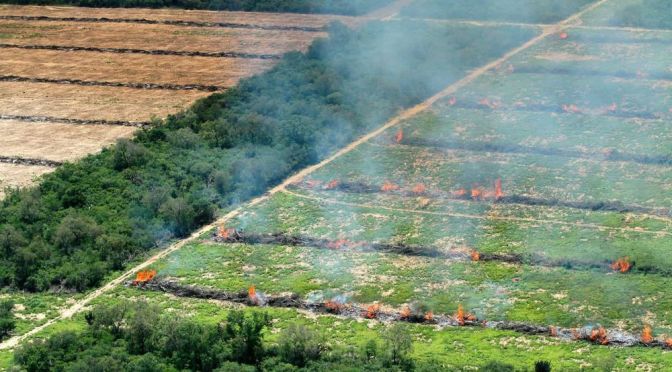
Paraguay might be one of the world’s first countries to lose its rainforest because of a confluence of factors including inequality, corruption, drug trafficking, and climate change. The South American nation offers a stark warning for what the planet stands to lose if it doesn’t act to protect its natural resources.
Paraguay is a landlocked country between Argentina, Brazil and Bolivia, home to large swaths of swampland, subtropical forest and chaco, wildernesses comprising savanna and scrubland. The capital, Asunción, on the banks of the Paraguay River, is home to the grand Government Palace and the Museo del Barro, displaying pre-Columbian ceramics and ñandutí lacework, the latter available in many shops.
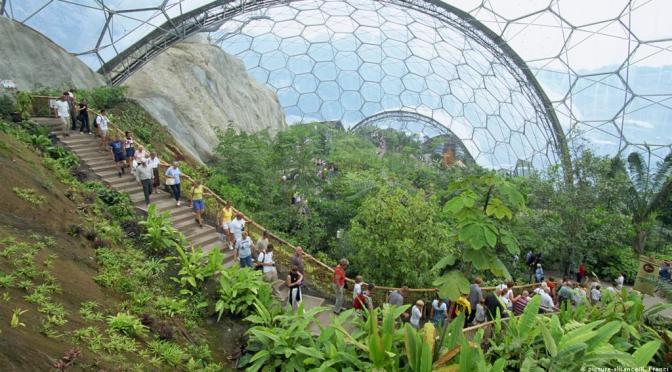
There’s a rainforest in Europe? Apparently, yes – and it’s called the Eden Project! It houses the world’s largest covered rainforest, beneath a giant dome.
But it’s not an amusement park, but rather an educational centre and environmental organisation. The concept: Only those who experience and engage with the beauty of nature can also protect it. That’s why 100,000 plants from all over the world have been brought here, where they cover an area of some 50 hectares.
Not only the sheer number of plants is impressive, the building itself is, too: Two geodesic domes span the site as greenhouses – like massive soap bubbles sticking together. Our Euromaxx reporter Hendrik Welling visits the record-breaking Eden Project and to explore its biotopes and rainforest.
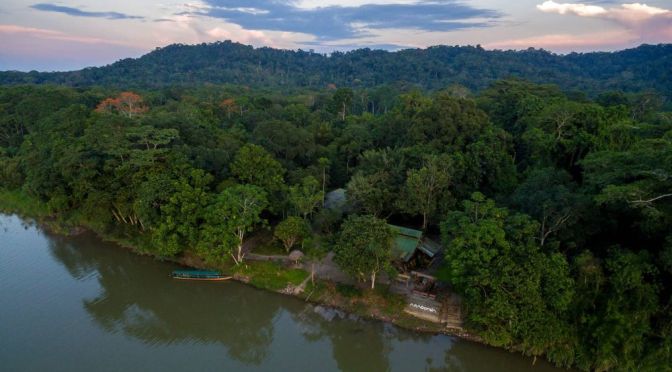
Ecuador is a country straddling the equator on South America’s west coast. Its diverse landscape encompasses Amazon jungle, Andean highlands and the wildlife-rich Galápagos Islands. In the Andean foothills at an elevation of 2,850m, Quito, the capital, is known for its largely intact Spanish colonial center, with decorated 16th- and 17th-century palaces and religious sites, like the ornate Compañía de Jesús Church.
Video timeline: 00:16 – Mindo Valley 00:42 – Pailon del Diablo Waterfall 01:39 – Quilotoa Vulcano Lake 01:59 – Crowned woodnymph bird 02:19 – White-necked jacobin bird 03:07 – Time-lapse of the sky above Quito 03:44 – Cotopaxi National Park 04:57 – Golden tanager bird 05:17 – Andes Mountains 05:38 – Cayambe Volcano 06:23 – Amazon Rainforest
Costa Rica is a rugged, rainforested Central American country with coastlines on the Caribbean and Pacific. Though its capital, San Jose, is home to cultural institutions like the Pre-Columbian Gold Museum, Costa Rica is known for its beaches, volcanoes, and biodiversity. Roughly a quarter of its area is made up of protected jungle, teeming with wildlife including spider monkeys and quetzal birds.
News, Views and Reviews For The Intellectually Curious



 Boomers Daily