

Gift shops are like the final exhibit of an art museum. They’re often located toward the exit and are unmissable on your way out the door. Souvenirs inside can range from Vincent Van Gogh socks to giant stuffed soup cans to Mona Lisa rubber ducks.
But how do gift shop curators decide what to sell? Stocking decisions often revolve around how curators want visitors to perceive the art lining museum walls. When you see a certain piece of art on a lot of merchandise, that usually means curators think that artwork is important. And thanks to a psychological phenomenon called the mere-exposure effect, the more you see that art, the more you begin to think it’s important.
Read more about this from Micaela Marini Higgs at Vox: https://www.vox.com/the-goods/2018/11…



 can develop a conditioned fear of not being able to sleep, which puts them in a state of hyperarousal when they attempt to fall asleep. This makes their inability to sleep a self-fulfilling prophecy.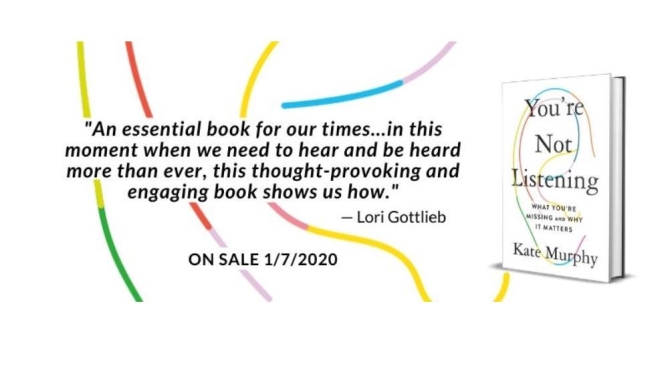
 “When you listen and really grasp what another person is saying, your brainwaves and those of the speaker are literally in sync. By looking at brain scans, neuroscientists have found that the greater overlap and similarity of neural impulses between speaker and listener, the greater the understanding. It’s observable, measurable proof of listening, comprehension, and connection. You know it’s happening when you have that “Oh I get it” moment or sense of clarity when someone else is talking. You’re on the same wavelength, even if you don’t necessarily agree.”
 Listen to the latest from the world of science, brought to you by Benjamin Thompson and Nick Howe. This week, the embattled field of social priming, and the latest sounds from a big acoustic meeting.
 Most historical accounts of slavery were written by colonists and planters. Researchers are now using the tools of archaeology to learn more about the
  Boomers Daily