From a The Architectural Review online article (April 9, 2020):
 The sleep industry caters to a working consumer’s wish to sleep less, yet sleep more productively, and accommodates transnational industry which has joined the state as a custodian of biopolitics. Jonathan Crary’s 24/7 spells out in detail how the state and a capitalist economy are encroaching stupendously on the private sphere, in which sleep was one of the last vestiges of unfettered time.
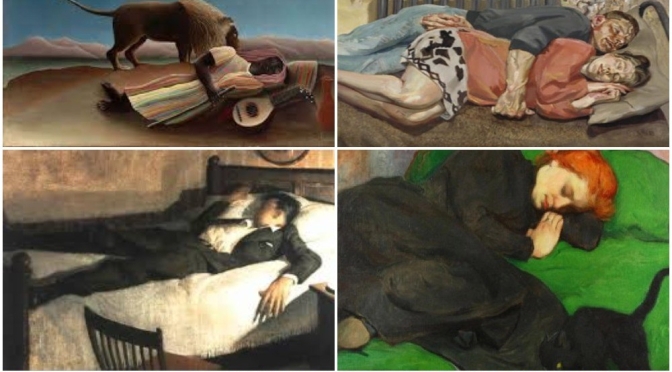
About 15 years ago, someone calculated the financial loss US companies incurred through workers’ illicit practice of sleeping on the job. Indeed, the trope of the lazy sleeper is an old one, resignified at present in our more than callous attitude towards the homeless, whose sleeping bodies punctuate many a journey to and from work.
Even in this most passive stance – someone simply disregarding normative codes and regulations by giving in to a physical need – sleep seems suspiciously subversive. Less an act than a way of being, the sleeper, by sleeping when and where it is not condoned, challenges everyone else, who is doing/working/functioning/functionalised. Contrary to the tree falling in the forest, the sleeper in the workplace or in public space affects and thus ever so slightly transforms those around them.
Read more


 The association between poor overall sleep quality and greater consumption of added sugars observed in the current study aligns with previous findings that intakes of confectionary and sugar‐sweetened beverages were higher in middle‐aged Japanese women reporting poor, compared with good, sleep quality.
 “There are two important takeaways from this paper. One is that poor sleep is associated with brain immune dysregulation or dysfunction,” says Lim, the corresponding author for the paper.
 Boomers Daily