Nearly 3.5 million acres of land have burned in California, making this the largest wildfire season recorded in the state’s history – and it’s only September. Fires are still raging up the entire west coast, air quality remains unhealthy, and entire forests have been decimated.
Our relationship with forests and fire is changing and will play a big role in how forests evolve.
Plus, how colleges are reopening without a surge in infections.
And, with the start of the Jewish New Year, synagogue High Holy Day services are going virtual.
Guests: Axios’ Bryan Walsh, Alison Snyder, and Erica Pandey and Benjy Renton, senior at Middlebury College.
Staff Writer Kelly Servick joins host Sarah Crespi to discuss how jail and prison populations in the United States have dropped in the face of coronavirus and what kinds of scientific questions about public health and criminal justice are arising as a result.
This Morning With Gordon Deal reports: Hurricane Sally weakens to tropical storm, smoke from West Coast fires spurs health advisories, and how parents and students can navigate the technical challenges of online learning.
Nature podcast discusses: Mapping the migration of the Vikings, a leading Covid-19 vaccine trial was abruptly halted and the world’s smallest ultrasound device.
In this episode:
00:45 Following the Viking footprint across Europe
To better understand who the Vikings were, and where they went, researchers have mapped genomes from hundreds of archaeological artifacts. Research Article: Margaryan et al.
Scientists have developed an ultrasound detector which is smaller than the wavelength of sound it detects, providing highly detailed imaging at a cellular level; Research Article: ; Research Article: Shnaiderman et al.
This Morning With Gordon Deal reports: At least 35 dead as fires continue to rage across the west, the Gulf Coast braces for Tropical Storm Sally and how to build a resilient business during a pandemic.
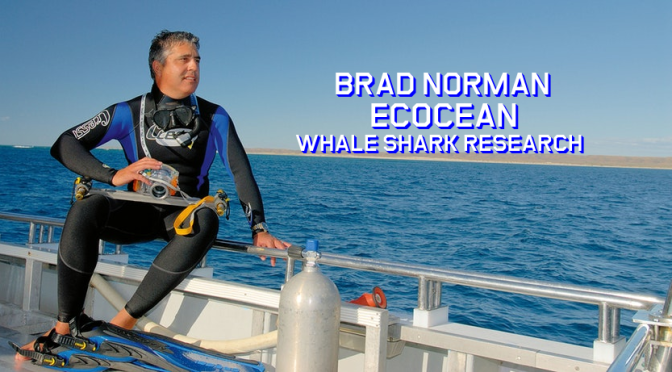
The whale shark is the largest fish in the world, recognisable by its celestial markings. Australian scientist Brad Norman has been tracking this elusive and endangered creature by using technology designed to study stars, as well as images collected through ecotourism.
ECOCEAN (Australia) is a globally recognised, non-government, not-for-profit organization based in Western Australia working towards scientific research, education and conservation of the marine environment. It’s flagship species, the whale shark, is an iconic animal for marine conservation being the world’s largest fish.
ECOCEAN (Australia) was founded in 1995 by marine conservation biologist Brad Norman and was incorporated in 2006. Brad also helped in the establishment of the partner organisation WildMe (USA) who manage the global whale shark photo-identification library – Wildbook.
Deadly wildfires rage in Western states, GOP ‘Skinny’ bill on coronavirus aid is blocked by Democrats, and 9/11 responders give assist to coronavirus essential workers.
News, Views and Reviews For The Intellectually Curious












 Boomers Daily