Tag Archives: Museum of Modern Art

Profiles: American Artist Ed Ruscha – “NOW THEN” Exhibition At MoMA NYC

CBS Sunday Morning (November 12, 2023) – The largest exhibition ever of works by Ed Ruscha, one of the most celebrated American artists of the postwar era, is now on display at the Museum of Modern Art in New York City.

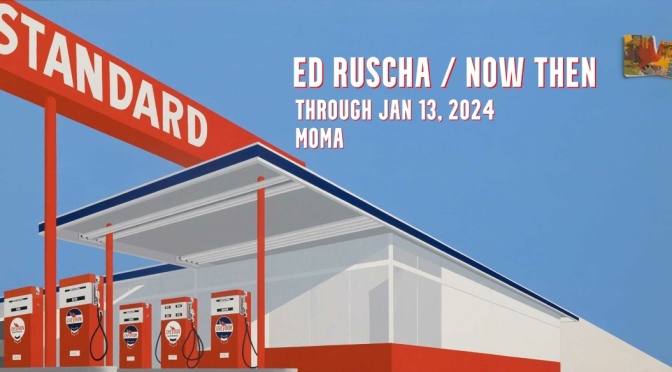
ED RUSCHA / NOW THEN

Through Jan 13, 2024

Ruscha, now 85, talks with correspondent David Pogue about collecting much of his life’s work into one retrospective; the cryptic nature of many of his paintings; and his use of unusual materials (like chocolate and axle grease).

“I don’t have any Seine River like Monet,” Ed Ruscha once said. “I’ve just got US 66 between Oklahoma and Los Angeles.” ED RUSCHA / NOW THEN will feature over 200 works—in mediums including painting, drawing, prints, photography, artist’s books, film, and installation—that make use of everything from gunpowder to chocolate. Exploring Ruscha’s landmark contributions to postwar American art as well as lesser-known aspects of his more than six-decade career, the exhibition will offer new perspectives on a body of work that has influenced generations of artists, architects, designers, and writers.

In 1956, Ruscha left his hometown of Oklahoma City and drove along interstate highway 66 to study commercial art in Los Angeles, where he drew inspiration from the city’s architecture, colloquial speech, and popular culture. Ruscha has recorded and transformed familiar subjects—whether roadside gasoline stations or the 20th Century Fox logo—often revisiting motifs, sites, or words years later. Tracing shifts in the artist’s means and methods over time, ED RUSCHA / NOW THEN  underscores the continuous reinvention that has defined his work.
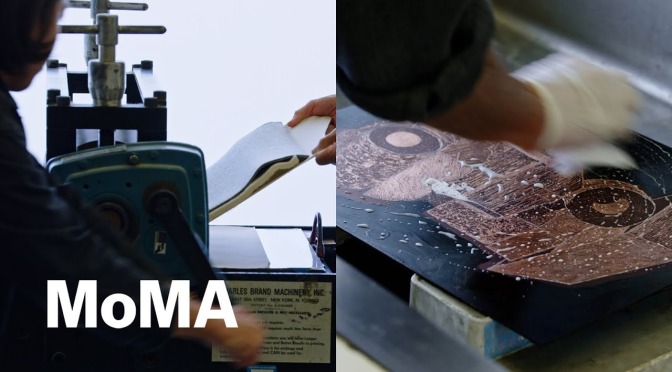
The Arts: The ‘Etchings’ Of A Master Printer (MoMA)

The Museum of Modern Art (October 17, 2023) – What makes a 500-year-old printing process new? Master printer and publisher Jacob Samuel has brought etchings—prints created by transferring ink from a metal plate to paper—into the 21st century through collaborations with more than 60 contemporary artists. In this video, we filmed Samuel making his last print.

As he inks, hand wipes, and rolls his final print through the press, he reflects on his philosophy. “My goal is to leave no fingerprints,” he says. All you see is the artist’s work. I’m just another pencil. I’m just another brush. But I want the pencil to be sharpened really well. I want the brush to be sable. And to do that and be completely spontaneous, I trust the materials.”

Art Exhibitions: ‘Georgia O’Keeffe -To See Takes Time’

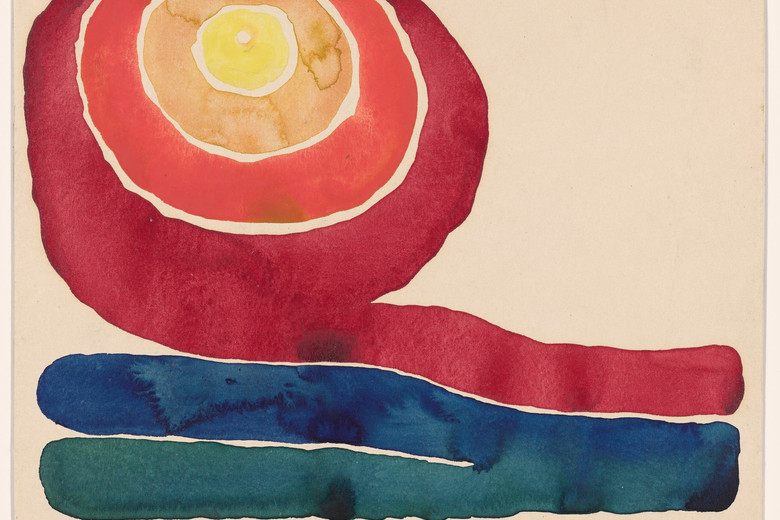
Georgia O’Keeffe. Evening Star No. III. 1917. Watercolor on paper on board: 8 7/8 x 11 7/8" (22.7 x 30.4 cm). The Museum of Modern Art, New York. Mr. and Mrs. Donald B. Straus Fund

The Museum of Modern Art (April 10, 2023) – “To see takes time,”  Georgia O’Keeffe once wrote. Best known for her flower paintings, O’Keeffe (1887-1986) also made extraordinary series of works in charcoal, pencil, watercolor, and pastel.

Georgia O’Keeffe – To See Takes Time

April 9 to August 12, 2023

Reuniting works on paper that are often seen individually, along with key paintings, this exhibition offers a rare glimpse of the artist’s working methods and invites us to take time to look.

Best Photos of the Day
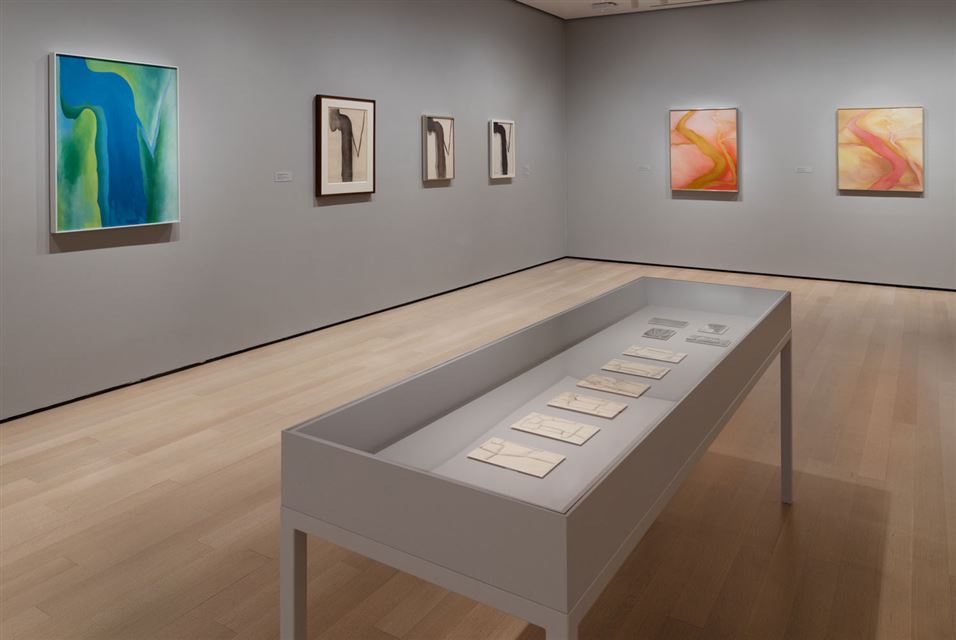
Installation view of Georgia O’Keeffe: To See Takes Time, on view at The Museum of Modern Art, New York from April 9 through August 12, 2023. Photo by Jonathan Dorado.

Over her long career, O’Keeffe revisited and reworked the same subjects, developing, repeating, and transforming motifs that lie between observation and abstraction. Between 1915 and 1918, a breakthrough period of experimentation, she made as many works on paper as she would during the next four decades, producing progressions of bold lines, organic landscapes, and frank nudes, as well as the radically abstract charcoals she called “specials.”

Even as she turned increasingly to painting, important series—including flowers in the 1930s, portraits in the ’40s, and aerial views in the ’50s—reaffirmed her commitment to working on paper. Drawing in this way enabled O’Keeffe to capture not only nature’s forms but its rhythms: tracing the sun’s spiraling descent in vividly hued pigment, or committing to velvety black the shifting perspective as seen from an airplane window.

Discover the important role working on paper played in Georgia O’Keeffe’s life and career.

Art History: The ‘Dance (I)’ By Henri Matisse (1909)

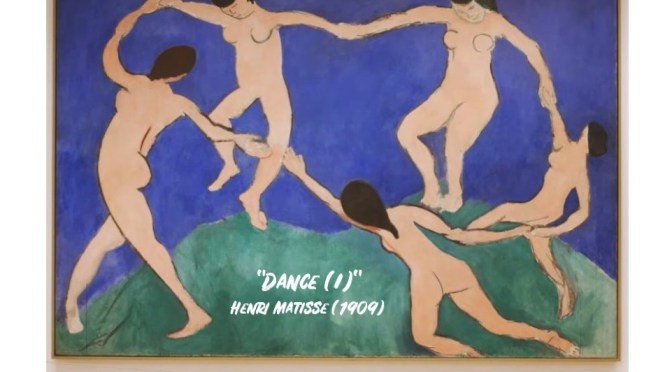
The Museum of Modern Art (March 17, 2023) – In our latest ArtSpeaks episode, Eana Kim, Vilcek Fellow in Paintings and Sculpture chose Henri Matisse’s “Dance (I)” because his work led her life in an unexpected direction.

“What really struck me was Matisse’s journey from mastering all the academic skills to unlearning everything to create his own art,” Kim says. “He really tried to dig into and explore the fundamental elements, like forms and colors. He was looking into something more essential to create something pure. I needed to follow that path.”

In the online edition of MoMA’s ArtSpeaks program, we invite staff members, artists, and special guests to share personal impressions of an artwork in the galleries. Here, curator Eana Kim examines Matisse’s iconic expression of pleasure and joy.

Reviews: ‘The Week In Art’

March 3, 2023: as the Art Dubai fair opens, The Art Newspaper’s acting digital editor Aimee Dawson tells us about this latest edition, its ongoing commitment to displaying the art of the global south and its continued focus on digital art.

The Museum of Modern Art in New York opens the largest media exhibition it has ever staged, Signals: How Video Transformed the World on 5 March. It looks at how artists around the globe have used video as a networked technology capable of reaching huge audiences but also how they have employed video to reflect on or engage in activism and urgent political developments.

We talk to the show’s curators, Stuart Comer and Michelle Kuo. And this episode’s Work of the Week is a coffee pot and milk jug from 1960 by Lucie Rie, the great modernist potter. Eliza Spindel, co-curator of the exhibition Lucie Rie: The Adventure of Pottery at Kettle’s Yard in Cambridge, UK, tells us about these objects and Rie’s life and work.Art Dubai until 5 March.Signals: How Video Transformed the World, Museum of Modern Art, New York, 5 March-8 July.Lucie Rie: The Adventure of Pottery, Kettle’s Yard, Cambridge, UK, 4 March-25 June. 

Art Exhibits: ‘The Red Studio’ By Henri Matisse

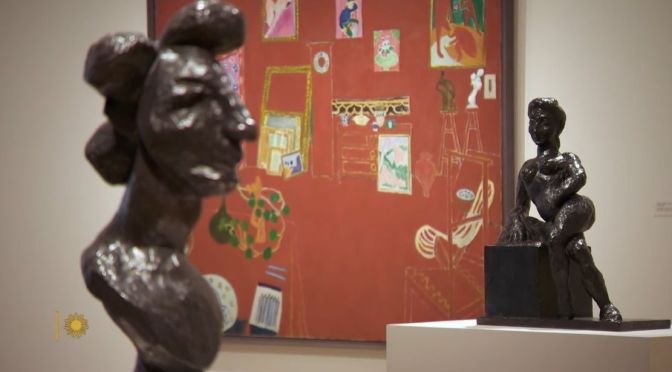
Henri Matisse’s landmark painting “The Red Studio” documented the artworks displayed in his workspace just outside Paris as it existed in 1911. For the first time since then, almost all the individual pieces depicted in his painting have been reunited for an installation at New York’s Museum of Modern Art. Correspondent Rita Braver reports.

Art: Vasudeo S. Gaitonde’s “Painting 4” – The Abstract Artist ‘Haven From Chaos’

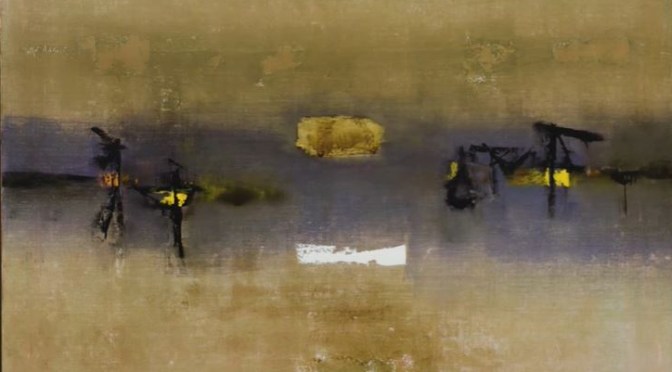
Cara Manes, Associate Curator in the Department of Painting and Sculpture, discovers a haven from the chaos of the everyday amid the “silence” and imperfection of Vasudeo S. Gaitonde’s “Painting, 4.”

Vasudeo S. Gaitonde was regarded as one of India’s foremost abstract painters. He received the Padma Shri Award in 1971.

Art Exhibitions: ‘Cézanne Drawing’ – MoMA (Video)

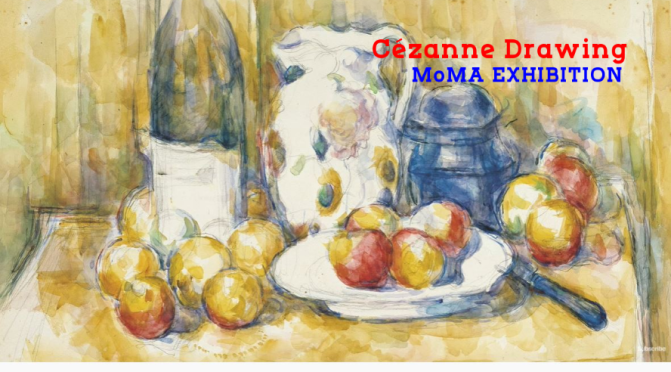
Best known as a painter, Paul Cézanne (1839–1906) produced some of his most radically original works on paper. Cézanne Drawing brings together more than 250 rarely shown works in pencil and kaleidoscopic watercolor from across the artist’s career, along with key paintings, that together reveal how drawing shaped Cézanne’s transformative modern vision.

Learn more: https://www.moma.org/calendar/exhibit…

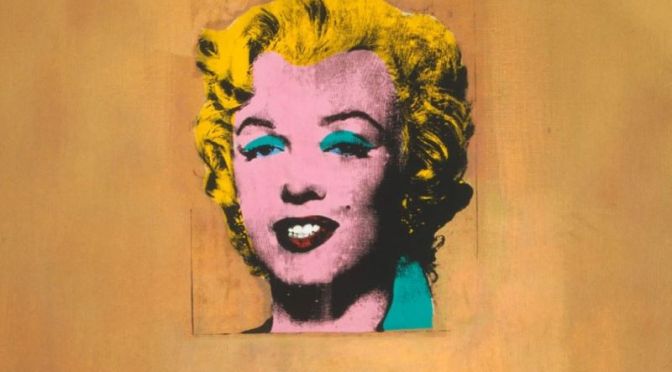
Inside Artworks: ‘Marilyn Monroe’ By Andy Warhol

In 1967, Warhol established a print-publishing business, Factory Additions, through which he published a series of screenprint portfolios on his signature subjects. Marilyn Monroe was the first one. He used the same publicity still of the actress that he had previously used for dozens of paintings. Each image here was printed from five screens: one that carried the photographic image and four for different areas of color, sometimes printed off-register. About repetitions Warhol said, “The more you look at the same exact thing, the more the meaning goes away, and the better and emptier you feel.”

Art History: “Félix Fénéon: The Anarchist And The Avant-Garde” (MoMA)

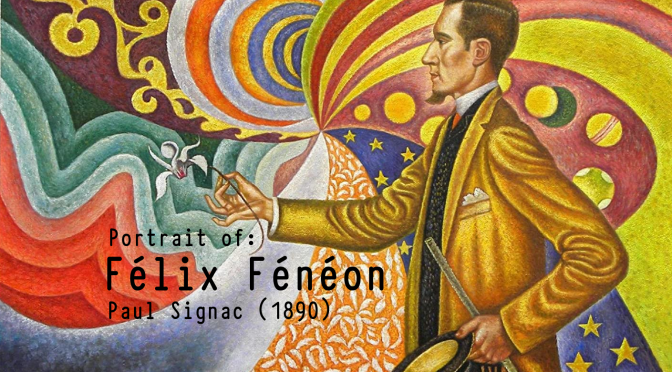
“It would not be a commonplace portrait at all, but a carefully composed picture, with very carefully arranged colors and lines. A rhythmic and angular pose. A decorative Félix, entering with his hat or a flower in his hand.”

With these words, in 1890, Paul Signac described to Félix Fénéon the extraordinary portrait he was dedicating to him. In it, Signac paid homage to Fénéon’s distinctive appearance, his generous but enigmatic personality, and his innovative approach to modernism.

This painting, a masterpiece in the Museum’s collection, will be the centerpiece of Félix Fénéon, the first exhibition dedicated to Fénéon (1861–1944). An art critic, editor, publisher, dealer, collector, and anarchist, Fénéon had a wide-ranging influence on the development of modernism in the late 19th and early 20th centuries.

In the late 1880s, he played a key role in defining the new movement known as Neo-Impressionism, a term he coined himself, whose artists, including Signac, used tiny dabs of color that would mix in the eye of the viewer. Over the next five decades, he championed the careers of artists from Georges-Pierre Seurat and Signac to Pierre Bonnard, Henri Matisse, and Amedeo Modigliani.

He amassed a renowned collection of paintings by these artists and many others, and he was also a pioneering collector of art from Africa and Oceania. The exhibition will feature some 130 objects, including major works that Fénéon admired, championed, and collected, as well as contemporary photographs, letters, and publications that trace key chapters in his biography. Together these works reveal the profound and lasting legacy of Fénéon’s keen eye and bold, forward-looking vision.