
Tag Archives: mRNA

Research Preview: Science Magazine – July 28, 2023

Image

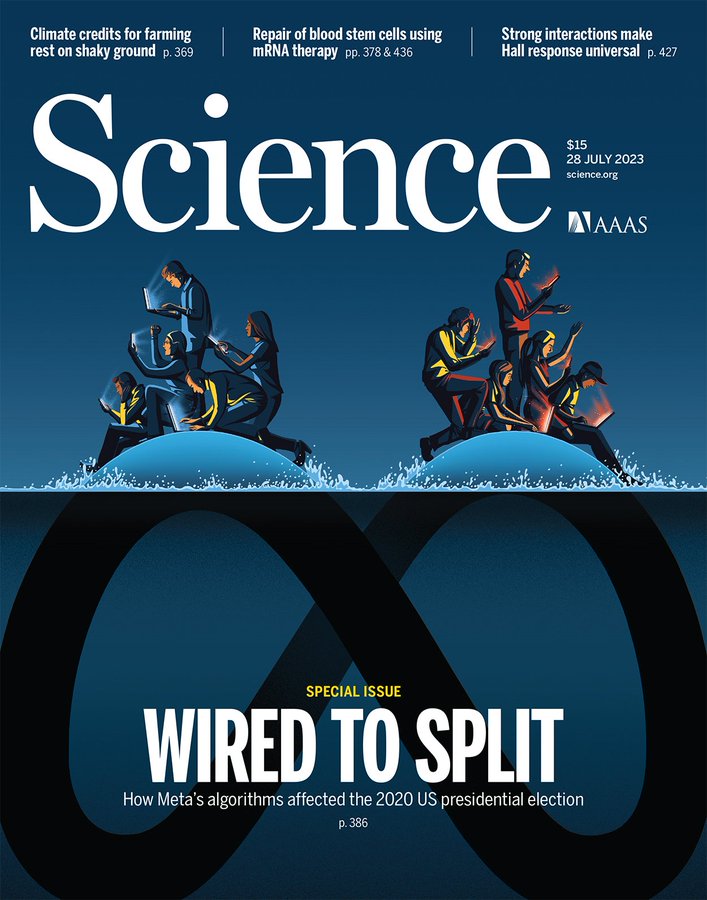
Science Magazine – July 28, 2023 issue: This artwork depicts social media users that are engaged (and often enraged) from the “left” (liberals, blue) and the “right” (conservatives, red) perched on Meta’s logo. Social media algorithms personalize users’ online experiences, recommending engaging content that will interest them and possibly spark outrage.

Social media and elections

The advent of social media forever changed how we consume news. At least half of Americans rely on it for news, and Facebook (owned by parent company Meta) is the most popular. Meta’s Facebook and Instagram platforms are funded through advertisements and generate more revenue when users spend more time on their platforms. To make platforms alluring and increase screen time, tech companies operate on business models that incentivize algorithms that are designed to elevate eye-catching content to the top of users’ feeds—content that captures attention and may go “viral” by stimulating “engagement” through comments, likes, and resharing.

Origin of diamond-bearing eruptions revealed

Deep mantle waves from continental rifting trigger mysterious kimberlite volcanoes

‘I should have done better.’ Stanford head steps down

Probe clears Marc Tessier-Lavigne of misconduct but criticizes lab culture and lack of “appetite” for corrections
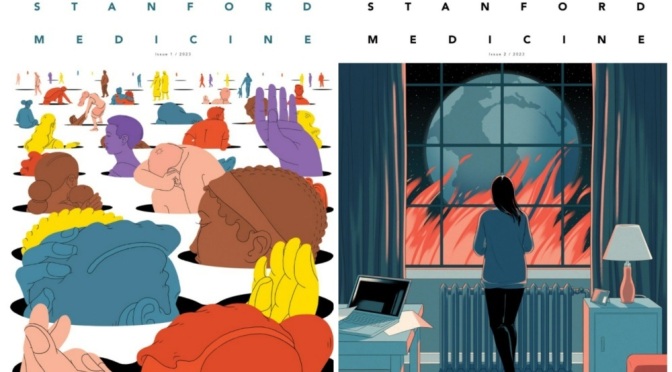

Cover: Stanford Medicine Magazine – Summer 2023

Image

Stanford Medicine Magazine (Summer 2023) – The new issue of Stanford Medicine magazine explores how the environment and health interact — and ways to counter negative impacts.

Special delivery – mRNA moves past COVID-19

Cover for Special delivery

Catastrophe occasionally apologizes for itself by coughing up a consolation prize. World War II gave us penicillin. So, let’s count our blessings.

By Bruce Goldman

The COVID-19 pandemic, from which we’re still struggling to emerge, has expanded our working vocabulary, gifting the public lexicon with new, if admittedly mostly gloomy, words and concepts. (Examples: spike protein, intubation, N95, rapid antigen test.) We may not flood our speech with these terms, but we’re at least passingly familiar with them now.

Sniff – Making sense of smell

Cover for Sniff

Among the human senses, smell — or more formally, olfaction — is often considered the most dispensable. In a recent survey, 1 in 6 college students said they would rather lose their sense of smell than their little left toe, and 1 in 4 would forgo their sense of smell to keep their phone.

By Nina Bai

But for people who’ve found themselves suddenly unable to smell — a more common predicament since the COVID-19 pandemic — the loss can be surprisingly, profoundly devastating.

Covid-19: How BioNTech Used Its Cancer Research To Create A Vaccine (CNBC)

Over a month and a half before the World Health Organization officially declared a pandemic, BioNTech CEO Uğur Şahin met with his wife, BioNTech’s co-founder and chief medical officer Özlem Türeci, and together they agreed to redirect most of the company’s resources to developing a vaccine. Up until that point, BioNTech was little-known internationally and primarily focused on developing novel cancer treatments. The founders were confident in the potential of their mRNA technology, which they knew could trigger a powerful immune response. That confidence wasn’t necessarily shared by the broader medical community. No mRNA vaccine or treatment had ever been approved before. But the couple’s timely breakthrough was actually decades in the making. CNBC spoke with Şahin and Türeci about how they, along with Pfizer, created a Covid-19 vaccine using mRNA.

Science & Medicine: Story Behind The mRNA Vaccines

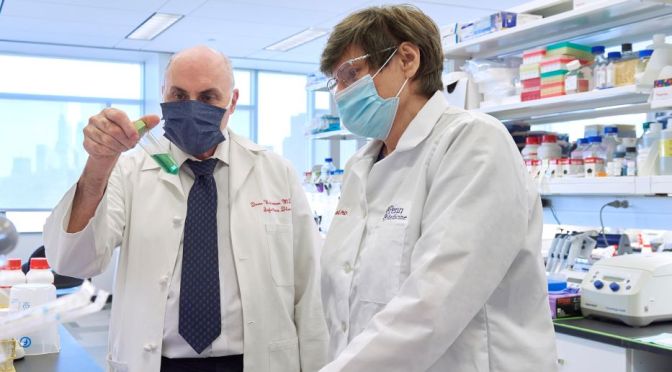
As mRNA-based COVID-19 vaccines are deployed to protect hundreds of millions of people across the world from the deadly global pandemic, the University of Pennsylvania scientists whose research breakthroughs laid the foundation for swift vaccine development have been awarded the 2021 Lasker-DeBakey Clinical Medical Research Award. Here, mRNA vaccine pioneers Drew Weissman, MD, PhD, and Katalin Karikó, PhD, share the story behind their development of this groundbreaking technology, and what it means for the future of medicine.

Biotechnology: ‘mRNA Could Change The World’

The dream of mRNA persevered in part because its core principle was tantalizingly simple, even beautiful: The world’s most powerful drug factory might be inside all of us.

Like so many breakthroughs, this apparent overnight success was many decades in the making. More than 40 years had passed between the 1970s, when a Hungarian scientist pioneered early mRNA research, and the day the first authorized mRNA vaccine was administered in the United States, on December 14, 2020. In the interim, the idea’s long road to viability nearly destroyed several careers and almost bankrupted several companies.

Read full article in The Atlantic

Covid-19: Penn Medicine Explains mRNA Vaccines

Vaccines are about to change the world…again. mRNA Vaccines are currently being used to battle COVID-19, and have the potential to eradicate diseases like HIV, herpes, sickle cell anemia, and even cancer. Learn how the vaccines work and where the technology could be headed in this explainer video.

Currently, the Pfizer-BioNTech and Moderna vaccines for COVID-19 use the mRNA technology developed at Penn by infectious disease expert Drew Weissman, MD, PhD, along with longtime research collaborator Katalin Karikó, PhD, an adjunct associate professor. Dr. Weissman has been studying mRNA vaccines for decades. This technology could change the way future vaccines are made to prevent countless other diseases.

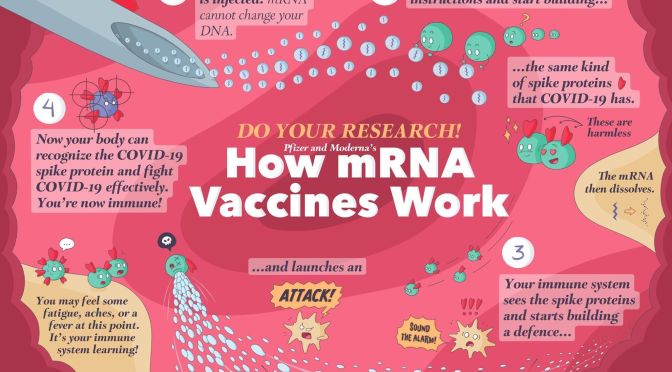
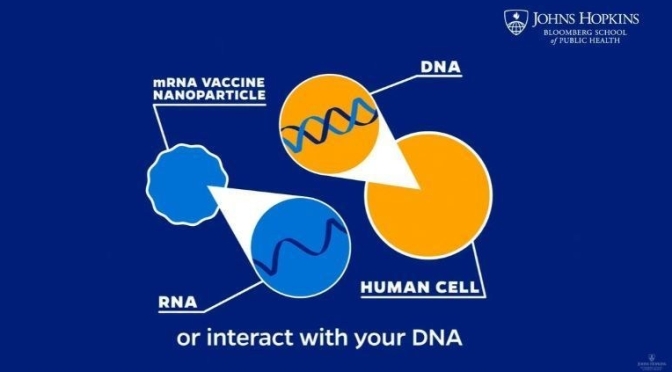
Covid-19: ‘How mRNA Vaccines Work’ (Video)

Messenger RNA—or mRNA—vaccines have been in development for decades, and are now approved for use against COVID-19. Here’s how they work and what you should know about them. Visit https://www.jhsph.edu/covid-19​ for even more resources.